Open an old pantry cupboard and you may find a surprising companion tucked into a flour canister: a dried bay leaf. The practice is simple—place a whole leaf in or near stored flour, supposedly to discourage pantry pests such as flour beetles and weevils. It’s an appealing idea because bay leaves are inexpensive, familiar, and already on hand in many kitchens.
But what can this traditional trick really do? Bay leaves may add a strong scent to a storage container, yet they are not a dependable pest-control method and won’t rescue flour that’s already infested. Here’s how people use the trick, how to try it sensibly, and—more important—what actually helps keep flour fresh and unwanted insects out of the pantry.
What the Bay Leaf and Flour Trick Involves
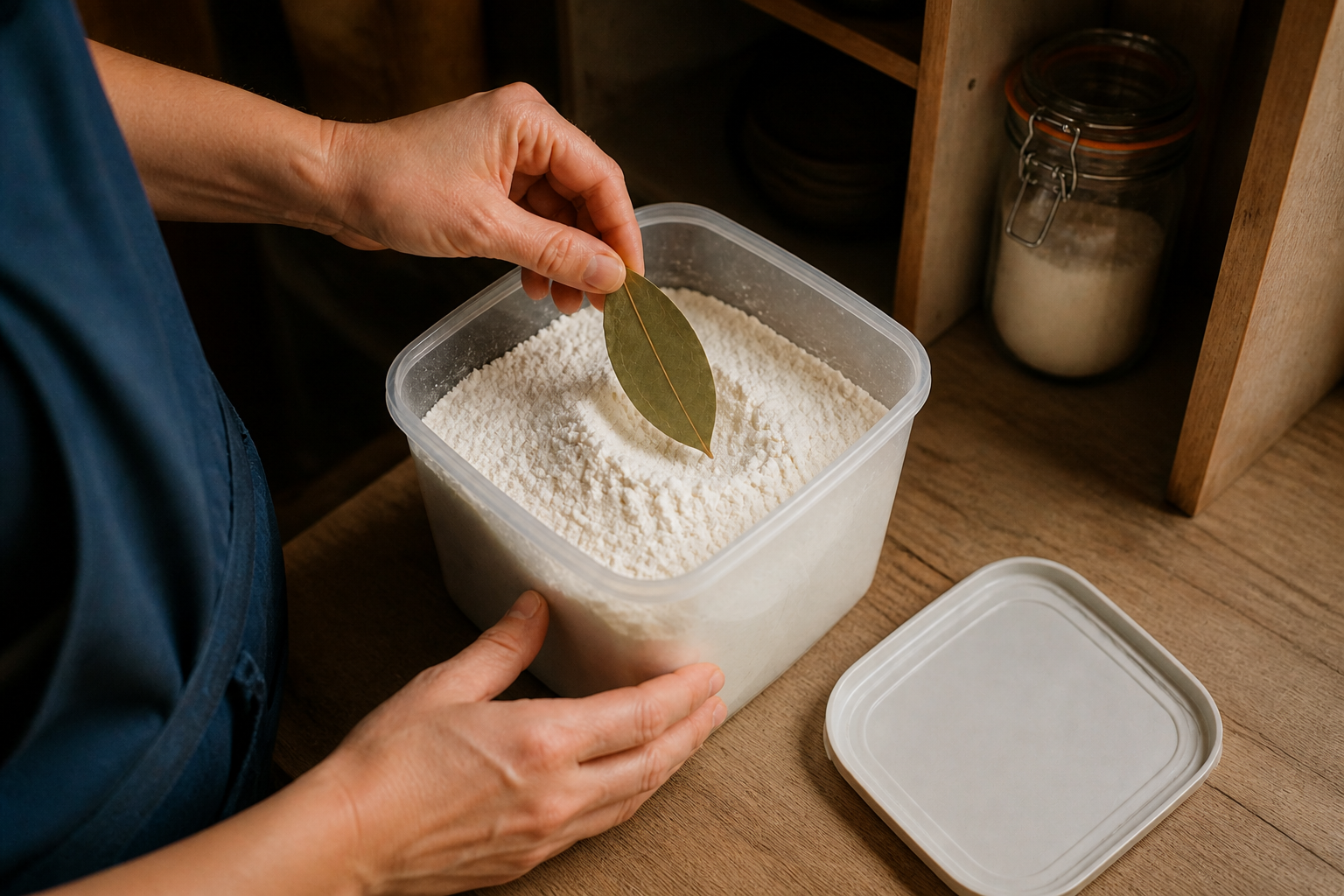
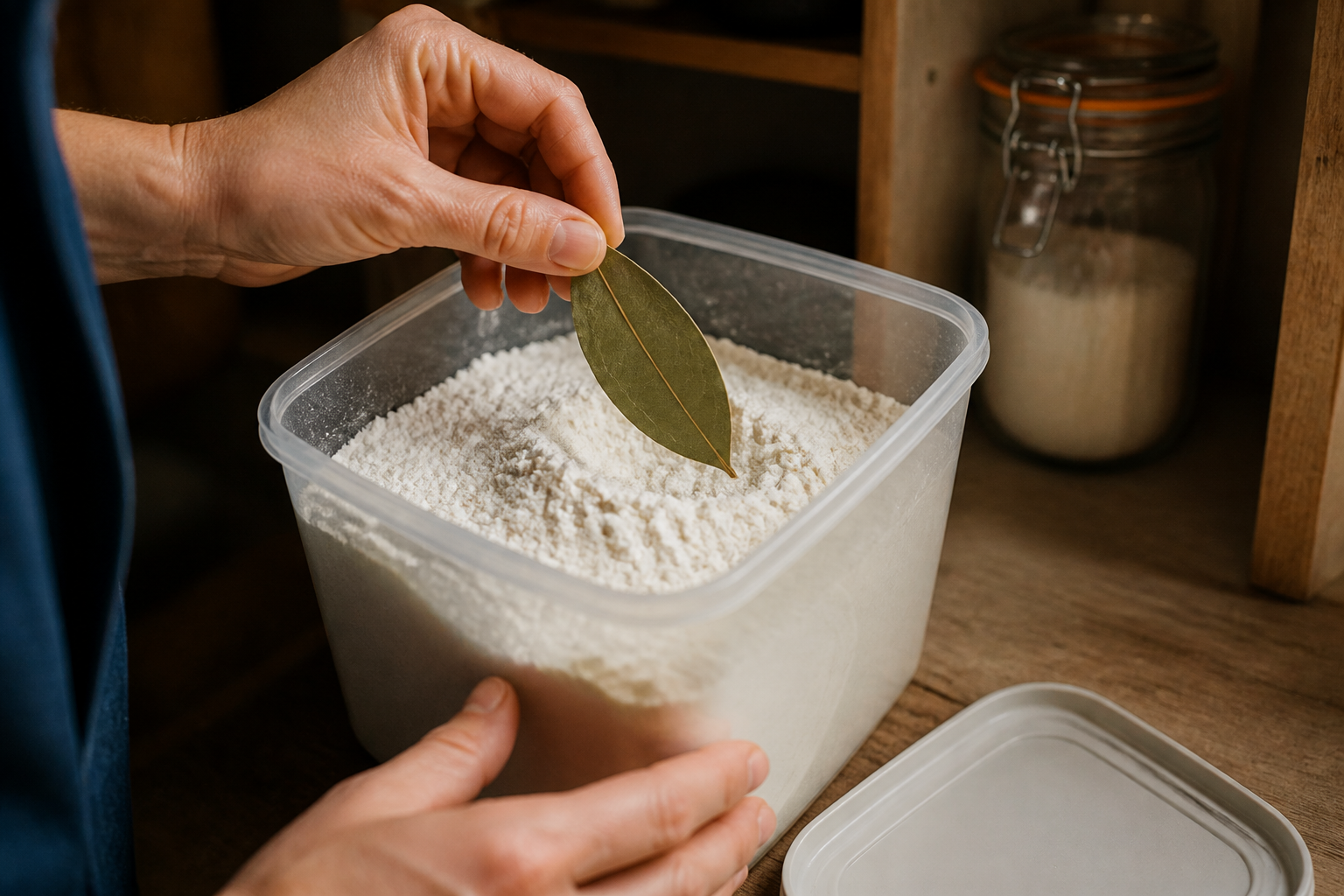
The basic method is to put one or two dried, whole bay leaves in a container of flour or in the cupboard where flour is stored. Some people rest a leaf on top of the flour; others tuck one between the container and its lid or place it on a nearby shelf. The idea is that bay’s pungent aroma may make the area less inviting to certain pantry insects.
Bay leaves are commonly used to flavor soups, stews, and sauces. Their aroma comes from naturally occurring compounds, but that doesn’t make a bay leaf a proven insect repellent. People continue the pantry custom because it is easy to try, not because it offers a guaranteed barrier.
Why People Put Bay Leaves in Flour
Flour and other dry goods can attract pantry pests, including beetles, weevils, and moths. Insects may enter through a package before it reaches your kitchen, or they may find their way into a loosely closed container. A bay leaf is sometimes used as a low-cost extra precaution, especially in cupboards where flour, rice, cereal, or dried beans are kept.
There’s an important distinction: a leaf might be used in hopes of discouraging pests, but it does not kill eggs or insects already in the flour. It also won’t seal gaps in packaging or stop a determined infestation. Think of it as an optional traditional touch—not the main defense.
How to Try the Trick
If you’d like to use a bay leaf with your flour, keep the process clean and simple:
-
- Start with fresh flour. Check the package for tears, dampness, webbing, clumped flour, or insects. If you see signs of pests, don’t try to cover them with a leaf; discard the affected food and inspect nearby dry goods.
-
- Choose a clean, dry leaf. Use one whole dried bay leaf for a standard household container. For a large storage bin, you can use two. Avoid crumbling the leaf, which can leave small pieces throughout the flour.
-
- Use an airtight container. Transfer the flour to a clean container with a snug lid. Place the leaf on top of the flour, or tuck it inside the lid area if that keeps it from being buried.
-
- Label and date the container. This makes it easier to keep track of how long the flour has been stored and rotate older supplies first.
-
- Check the flour regularly. When you open the container, look for insects, fine webbing, unusual clumps, or an off smell. Replace the leaf if it becomes damp, dusty, or broken—but remember that replacing it does not substitute for inspecting the flour.
Some cooks prefer not to put anything directly into flour. In that case, set a whole bay leaf on the pantry shelf beside the sealed container. It may scent the cupboard, but the same limitation applies: the leaf should not be relied on to prevent pests.
Better Ways to Protect Flour
Good storage habits do more than a bay leaf can. Keep flour in a clean, dry, airtight container, and store it away from heat, direct sunlight, and moisture. A cool cupboard is usually suitable for flour you use regularly. Don’t scoop with a damp measuring cup, and wipe up spills that could attract insects.
When you bring home a new bag, inspect it before storing it. If you want an added precaution, some people place newly purchased flour in the freezer for several days before transferring it to a sealed container. Keep the flour protected from moisture and strong food odors, and allow a cold container to come closer to room temperature while still sealed before opening it. This helps reduce the chance of condensation forming inside.
Buy a quantity you can use while it’s still in good condition, and follow the package’s storage guidance. Whole-wheat flour, for example, contains more natural oils than refined white flour and may become stale sooner, so refrigeration or freezing can be useful for longer storage. Airtight packaging is especially important in the refrigerator or freezer, where flour can absorb odors and moisture.
What to Do If You Find Pantry Pests
If you spot insects or webbing, inspect nearby packages of flour, cereal, pasta, nuts, dried fruit, and pet food. Discard infested items in a sealed bag and remove them from the home. Vacuum cupboard corners, shelf supports, and cracks, then empty the vacuum promptly and wipe the shelves clean.
Move unaffected dry goods into tightly sealed containers and keep checking them. If pests keep appearing, look for another infested package or a gap where insects may be entering. A bay leaf won’t solve an active infestation, and adding one to questionable flour can make it harder to notice that the food needs to be discarded.
Flavor and Food-Safety Considerations
A whole bay leaf can transfer a faint aroma to nearby food, particularly if it sits in flour for a long time. If you notice a flavor you don’t want, remove the leaf or keep it outside the flour container. Never grind the leaf into the flour as a pest-control measure.
Dried bay leaves are tough and can have sharp edges. They’re generally removed from cooked dishes before serving, rather than eaten whole. Take the leaf out before measuring or baking, and discard it if it breaks into pieces. Also, don’t use a leaf that is damp, moldy, or visibly dirty.
A Small Tradition, Not a Surefire Shield
Storing bay leaves with flour is an easy, inexpensive pantry custom, and you can try it if you enjoy traditional household tricks. Just keep expectations realistic: the scent may be unwelcome to some pests, but a leaf cannot guarantee protection or eliminate insects already present.
For dependable everyday care, focus on clean shelves, airtight containers, regular inspections, and sensible storage. If you add a bay leaf, treat it as a small extra—not a substitute for those practical steps.