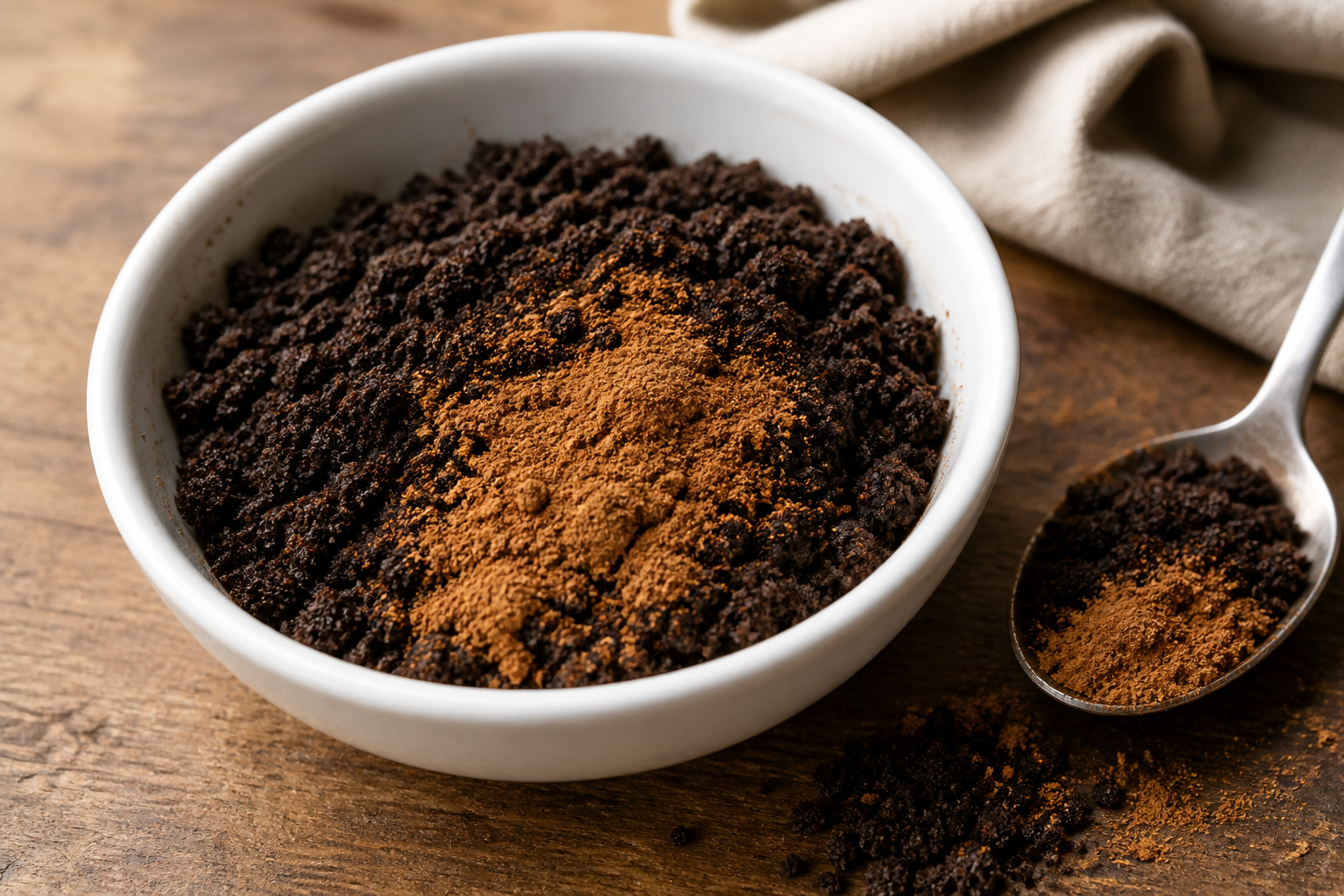
There is something satisfying about finding a second use for ingredients already sitting in the kitchen. Coffee grounds and cinnamon certainly sound like a promising pair: one has a familiar roasted aroma, the other brings warm spice. Together, they can be handy for a few small household jobs, from freshening a trash bin to tinting a piece of craft paper.
The key is to keep expectations sensible. This combination is not a disinfectant, a miracle garden treatment, or a cure for stubborn odors. It works best for simple tasks where a little fragrance, mild abrasion, or extra organic material is useful—and where you can clean up easily afterward.
What Coffee Grounds and Cinnamon Do Together
Coffee grounds provide texture and a lingering coffee scent. Cinnamon, usually used as a small pinch of ground spice, adds a sweet, warm aroma. The mixture can be used damp for a brief scrubbing job or completely dry for odor-control experiments, compost, and crafts.
For most household uses, start with dry grounds. Spread used grounds in a thin layer on a plate or baking sheet and let them air-dry fully, or dry them in an oven on low heat while keeping a close eye on them. Damp grounds can develop mold, especially when left in a closed container.
Seven Practical Ideas for Coffee Grounds and Cinnamon
1. Make a small refrigerator odor cup
Put two or three tablespoons of thoroughly dried coffee grounds in a small, stable, open container. Add a small pinch of cinnamon, then set the container toward the back of the refrigerator where it will not tip or touch food.
This may help soften mild lingering smells, while the cinnamon adds its own scent. It will not fix a spill or spoiled food, so clean the source first. Replace the mixture every week or two, or sooner if it smells stale or gets damp. Keep it away from children and pets, and do not let the mixture touch uncovered food.
2. Freshen a trash or recycling bin
After washing and completely drying a small trash can, place a shallow dish of dry grounds with a pinch of cinnamon near the bottom, under the liner. For a bin that gets wet, put the mixture in a breathable paper filter or small fabric pouch instead of leaving loose powder behind.
Think of this as a light freshener, not a substitute for taking out the trash or rinsing the bin. Change it regularly, and discard it if it becomes damp. Avoid sprinkling loose grounds into the can, where they can make a mess when the liner is changed.
3. Rub lingering food smells from your hands
After chopping garlic or onions, mix about a teaspoon of coffee grounds with a few drops of dish soap and a pinch of cinnamon. Gently rub your hands for a few seconds, then rinse thoroughly and wash as usual.
The grounds provide mild texture, while the cinnamon contributes fragrance. This is not for cracked, irritated, or sensitive skin: cinnamon can bother some people, and grounds may feel scratchy. Skip the cinnamon if you are unsure how your skin will react, and keep the mixture away from your eyes.
4. Add coffee grounds to the compost pile
Used coffee grounds can be added to a home compost pile or bin in moderate amounts. Mix them with other compost materials rather than dumping in a thick, packed layer. A light dusting of cinnamon is fine if you have some on hand, but it is not necessary for composting.
Balance matters more than this particular pairing. Add a variety of kitchen scraps and dry materials, and follow the guidance for your compost system. Do not assume cinnamon will prevent every compost problem, and avoid adding grounds that have been mixed with dairy, oils, or other ingredients unsuitable for your setup.
5. Create a simple dry sachet for a cupboard
For a mild kitchen scent, place a tablespoon or two of fully dry grounds and a small pinch of cinnamon inside a paper tea filter or breathable fabric pouch. Tie it closed and set it in a cupboard or near the trash area—not directly against clothing, linens, or anything that could stain.
The aroma will be subtle and may fade quickly. Check the sachet every few days for moisture or mustiness, and replace it if it no longer smells fresh. Keep it away from food packaging and open containers; this is a fragrance pouch, not a food-safe storage method.
6. Tint paper for a craft project
Coffee and cinnamon can lend plain paper a soft, uneven brown tone for a card, gift tag, or scrapbook project. Stir one tablespoon of coffee grounds and a small pinch of cinnamon into about half a cup of warm water. Let it steep for several minutes, then strain out the solids so they do not leave gritty marks.
Brush or dab the liquid onto plain paper and let it dry flat. Test a scrap first: the color varies depending on the coffee, paper, and amount applied. Keep the mixture away from finished furniture and fabrics, since it can stain, and do not use it on documents you need to preserve.
7. Scrub a sturdy, washable pot
For a stubborn mark on a sturdy, nonporous pot or roasting pan, mix a teaspoon of grounds with a little dish soap and a pinch of cinnamon. Use a soft cloth or sponge to scrub gently, then rinse well and wash the item as usual.
Grounds can scratch delicate finishes, so do not use this on nonstick cookware, polished surfaces, or anything with a coating you want to protect. Cinnamon mainly adds scent; it does not disinfect the pan or replace proper washing. Put the used grounds in the trash or compost rather than washing a large amount down the drain, where they may collect.
Keep the Mixture Dry, Modest, and Easy to Clean Up
For odor projects and sachets, dry the grounds completely and use only a little cinnamon. Store any extra dry mixture in a sealed container in a cool, dry place, clearly marked so no one mistakes it for fresh coffee or a food ingredient. Discard it if it becomes damp, clumpy, or musty.
Cinnamon powder can irritate skin, eyes, and airways, so avoid breathing in a cloud of it and wash your hands after handling. Keep all mixtures away from pets and small children, and do not apply them to plants as a guaranteed pest treatment. Grounds can affect soil when used carelessly, and cinnamon does not make a dependable substitute for a garden remedy.
A Useful Little Kitchen Experiment
Coffee grounds and cinnamon are most useful together for modest jobs: adding a warm scent, providing a little texture, or making a simple craft wash. They will not replace cleaning, careful composting, or purpose-made products when those are needed.
Try one small project at a time, use dry grounds where possible, and stop if the scent or texture does not suit your home. Sometimes the best household trick is simply finding a practical use for leftovers—without expecting them to do more than they can.