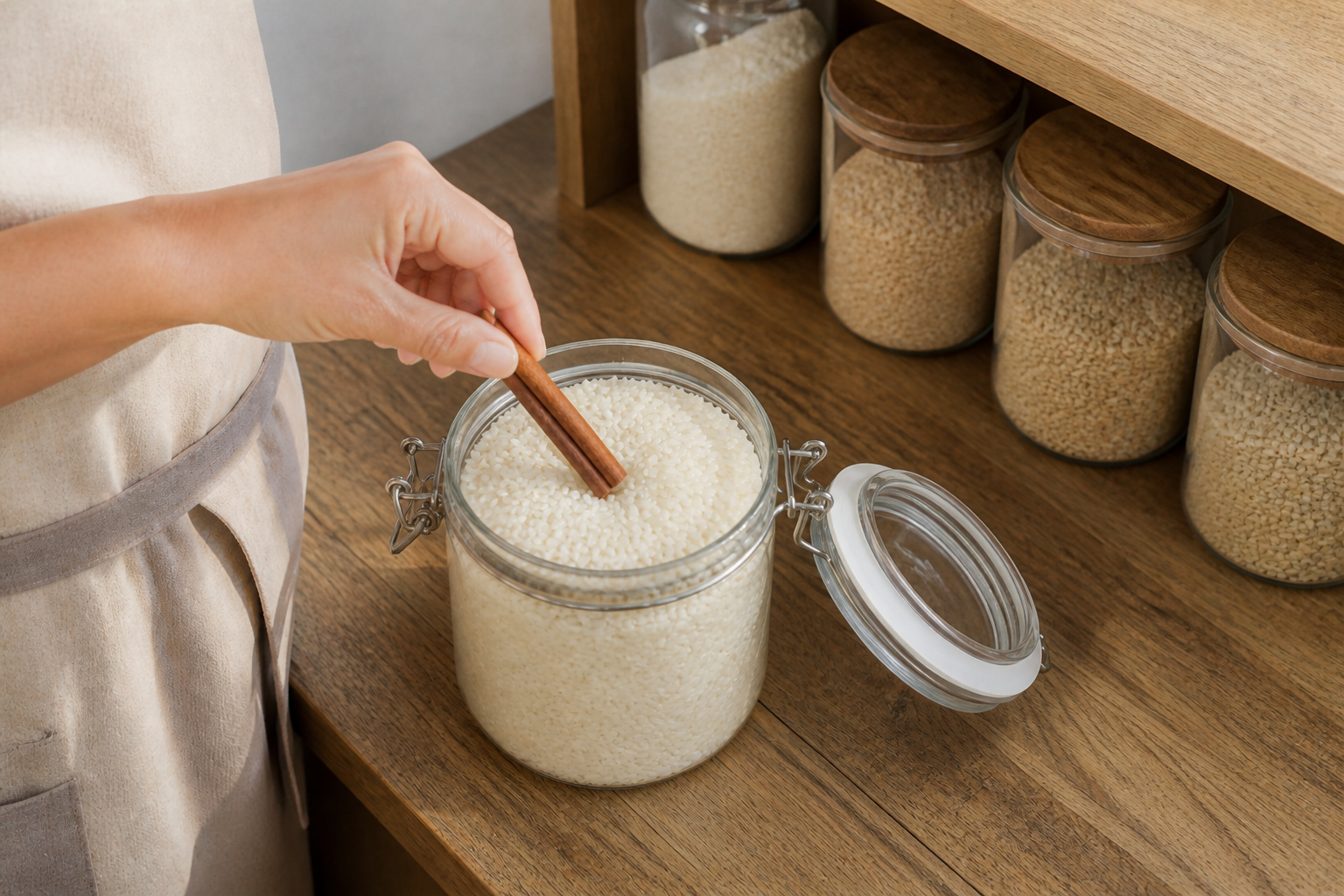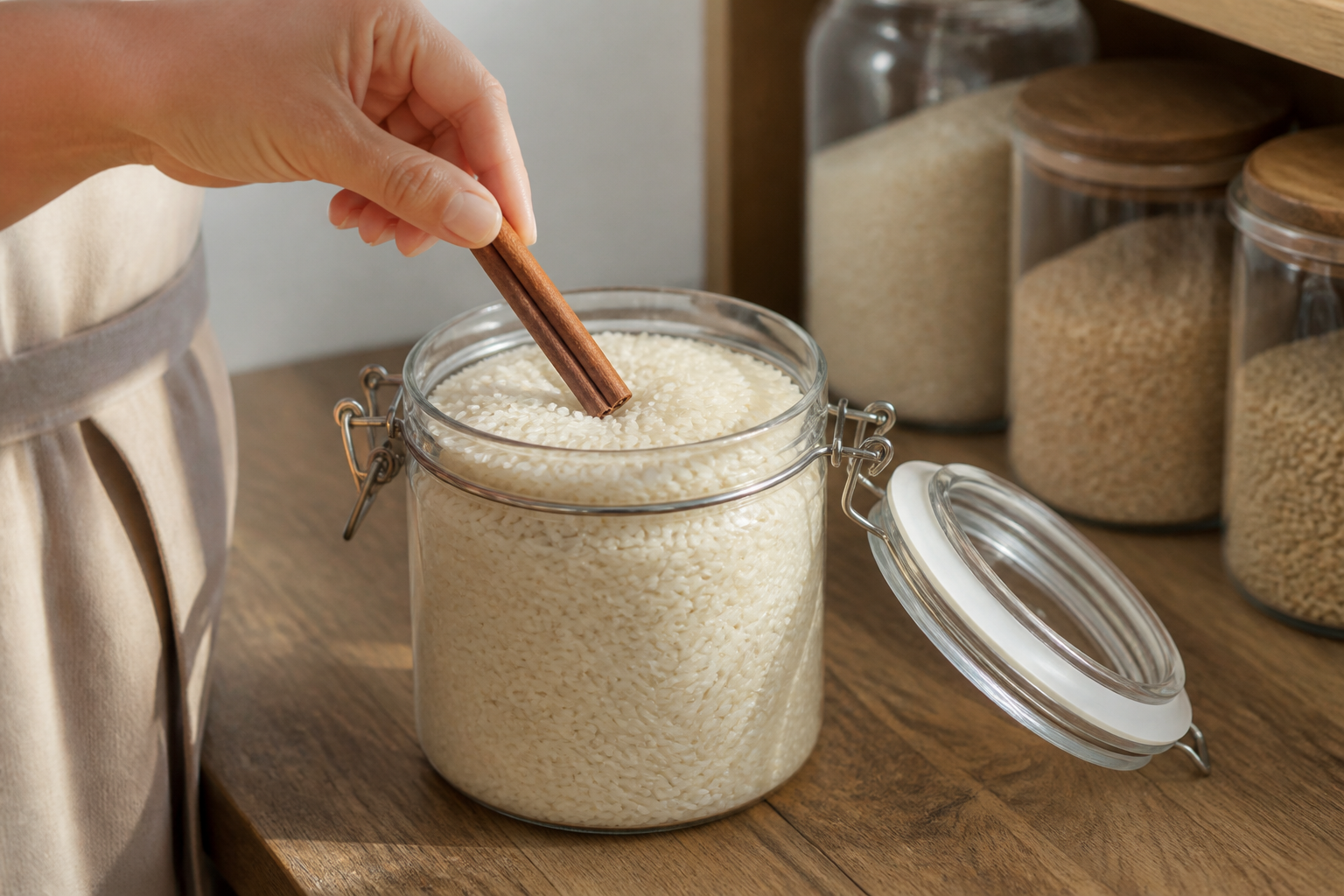
A cinnamon stick tucked into a jar of rice is the sort of kitchen trick that invites questions. Is it there to flavor the rice, freshen the pantry, or keep tiny insects away? For generations, home cooks have used familiar spices in practical ways, and cinnamon’s strong, pleasant scent makes it an appealing addition to a storage jar.
The idea has some common-sense appeal, but it is worth separating tradition from dependable food storage. A cinnamon stick may lend a faint aroma and is sometimes used in hopes of discouraging pantry pests. It is not a guaranteed pest treatment, though, and it cannot make damp or poorly stored rice safe. Here is what the custom may do, how to try it neatly, and what matters more for keeping rice in good condition.
Why Put a Cinnamon Stick in a Rice Jar?
The best-known reason is to discourage insects such as pantry moths or rice weevils. Cinnamon has a strong natural aroma, and some people believe that scent makes a jar less inviting to pests. It is a familiar household practice, but a cinnamon stick should not be treated as a proven barrier or a substitute for a tightly sealed container.
There are simpler reasons, too. A whole cinnamon stick can add a gentle scent to a pantry, and some cooks enjoy the subtle fragrance it may give rice. The flavor transfer is usually modest, but it can be noticeable, especially if the stick stays in the jar for a long time or the rice is used in a mild dish.
There is no need to assign the tradition a precise origin. People have long kept aromatic spices in kitchens, and passing along practical household habits is part of how customs endure. The useful takeaway is that cinnamon may be a pleasant extra, while careful storage does the real protective work.
What a Cinnamon Stick Can—and Cannot—Do
A dry, whole cinnamon stick may make the rice jar smell inviting and may be worth trying if you like the fragrance. But its scent does not reliably keep every pantry insect away. Pests can enter through gaps, arrive in food packaging, or already be present in a newly purchased dry good.
Cinnamon also does not absorb enough moisture to protect rice from damp conditions, prevent mold, or extend its shelf life. If rice smells musty, looks damp, or shows signs of insects, adding a spice will not fix the problem. The same goes for rice stored near a warm stove or in a humid cupboard.
How to Add Cinnamon to a Rice Jar
If you would like to try the custom, keep it simple. One clean, dry stick is plenty for a typical household jar. Choose a food-grade stick from a fresh package, rather than a decorative item that may have been treated or handled for display.
Set up the jar
Start with a clean, completely dry, food-safe container with a close-fitting lid. Pour in fresh rice, add one whole cinnamon stick, and close the lid securely. If you are transferring rice from its original bag, check the grains and the package first for damaged seams, webbing, clumps, or insects.
Store the jar in a cool, dry cupboard away from sunlight, the oven, the dishwasher, and other sources of heat or steam. Labeling the container with the rice type and purchase or refill date can make it easier to rotate older rice to the front and use it first.
Check and refresh
Every few weeks, inspect the jar and its contents. Look for insects, fine webbing, unusual clumps, moisture, or an off smell. Replace the cinnamon stick if its aroma has faded, or remove it sooner if you no longer want its scent in the rice. There is no special replacement schedule that guarantees protection.
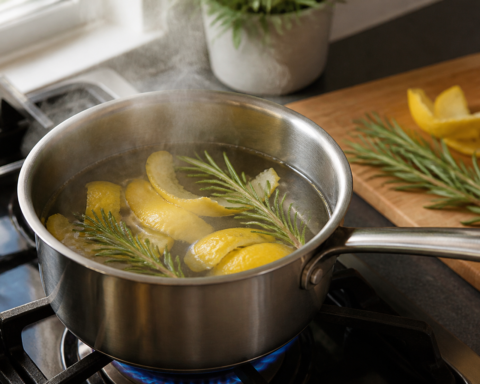
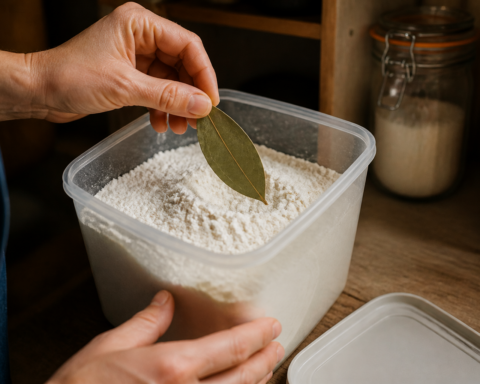
If you want rice without any cinnamon aroma, keep the stick in a small, clean, food-safe sachet that allows air to pass through, or simply skip it. Do not use a damp cinnamon stick, and do not add water, essential oils, or fresh herbs to a storage jar of dry rice.
Better Ways to Keep Rice Fresh and Pest-Free
The most reliable step is an airtight container. A sturdy jar or food-storage canister with an intact lid helps keep out pantry insects, moisture, and kitchen odors. It also makes it easier to notice a problem than leaving rice in an open bag folded over on a shelf.
Keep the storage area clean and dry. Wipe up spilled grains promptly, and occasionally check nearby flour, cereal, beans, nuts, and pet food, since pantry pests can move among stored foods. If you find insects, discard affected food in a sealed bag, then clean the shelf and inspect neighboring packages. Avoid spraying insecticides where food is stored.
For extra peace of mind, some people freeze newly purchased dry grains for several days before putting them in the pantry. If you choose to do this, keep the rice sealed and let it return to room temperature before opening the package or container; this helps avoid condensation. It is an optional precaution, not a replacement for inspecting food and storing it in a sealed container.
Rice quality also depends on the type. White rice generally keeps its quality longer in a cool, dry pantry than brown rice, which contains more natural oils and can become stale sooner. Follow the package guidance, and consider refrigerating or freezing brown rice if you will not use it promptly.
What to Do If You Find Bugs in Rice
If you spot live insects, larvae, webbing, or other signs of an infestation, do not rely on cinnamon to solve it. Seal the affected rice in a bag and discard it. Then inspect nearby dry goods, clean the cupboard thoroughly, and transfer sound foods to airtight containers.
When in doubt about rice that has become damp, smells unpleasant, or appears moldy, throw it away. Do not taste it to decide whether it is safe. Cinnamon can cover up a mild odor, so trust what you see and how the rice has been stored rather than the smell of the spice.
A Pleasant Tradition, with Practical Limits
Putting a cinnamon stick in a rice jar is an easy, old-fashioned touch that may add a little fragrance and a sense of kitchen comfort. If you enjoy it, use one clean, dry stick and keep an eye on the rice. Just remember that the cinnamon is a companion to good storage—not a dependable pest repellent or a way to rescue spoiled food.
A tightly closed container, a cool and dry cupboard, and occasional checks are still the best everyday habits. Those simple steps do more to protect your rice than any spice tucked inside the jar.