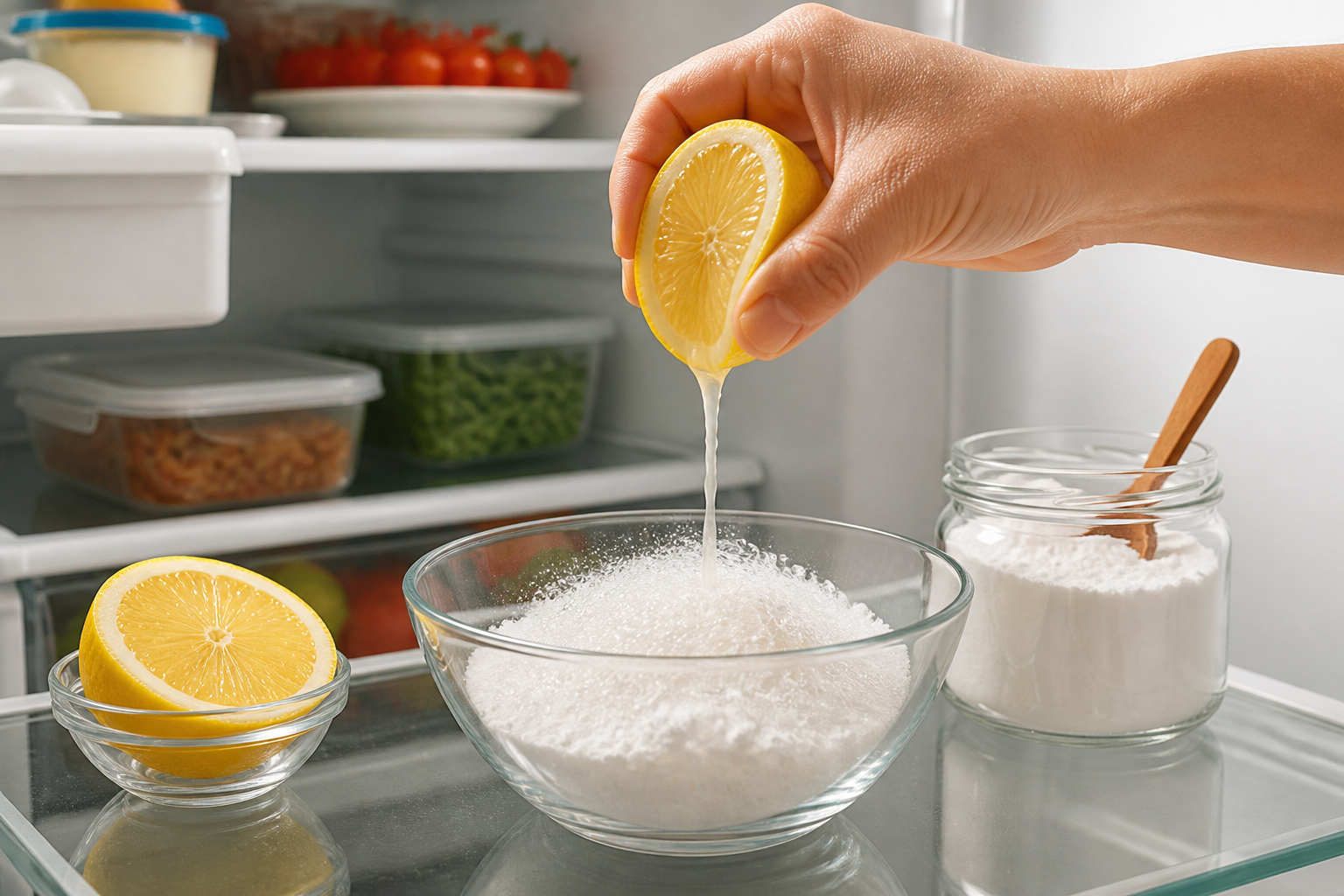
There is something appealing about a refrigerator trick made with two familiar kitchen staples. Add lemon juice to baking soda, watch it fizz, and it seems as though you have made a powerful, natural deodorizer in seconds. The combination has a lively reputation online and in old-fashioned household advice—but what does it actually do once it goes in the fridge?
The short answer: lemon and baking soda can be useful separately, but mixing them does not create a supercharged odor fighter. The fizz is a real chemical reaction, and understanding it can help you choose the right way to freshen a refrigerator, clean a small mess, or simply avoid a disappointing kitchen experiment.
What Happens When Lemon Meets Baking Soda?
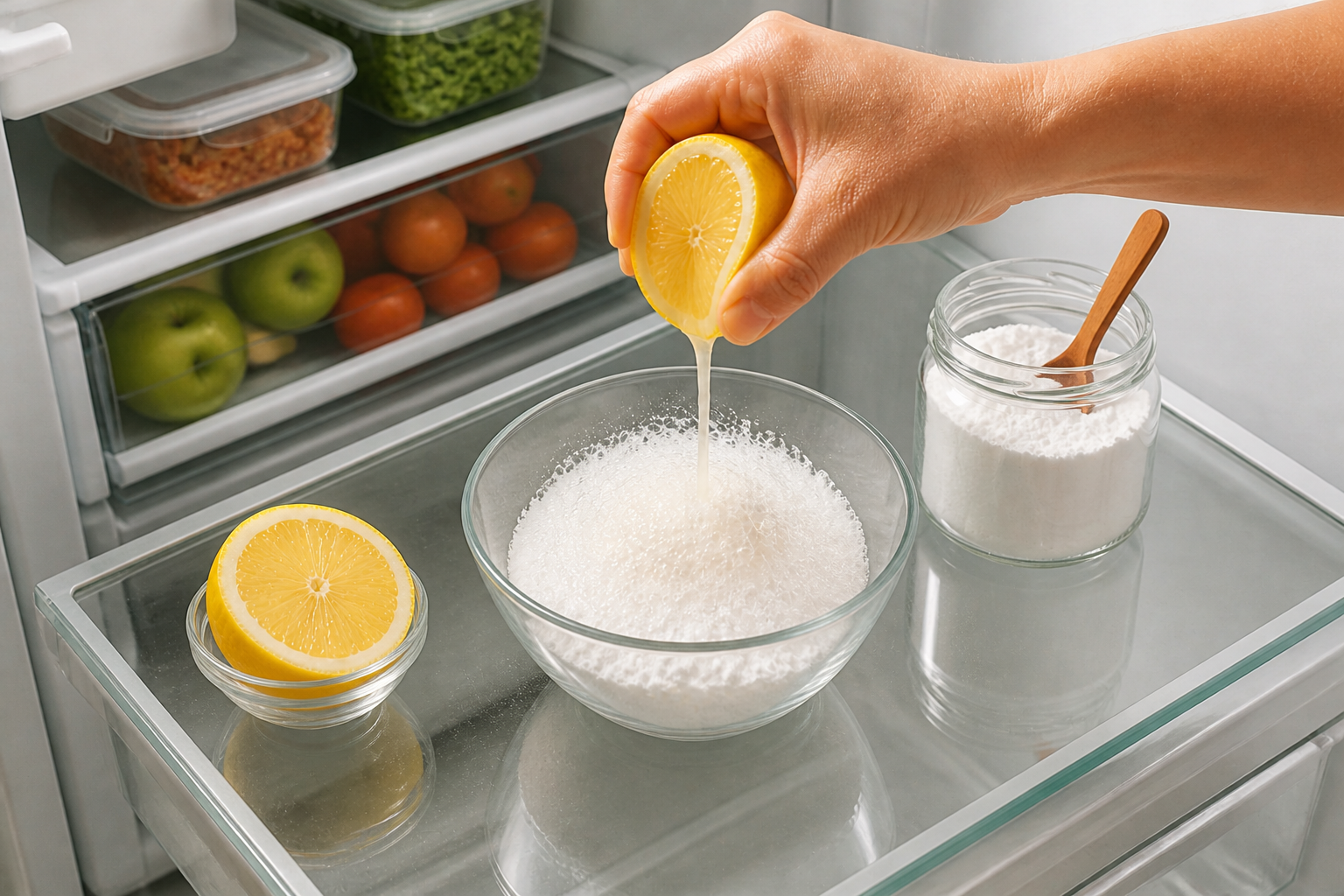
Lemon juice is acidic, while baking soda is alkaline. When they meet, they react and release bubbles of carbon dioxide—the same gas that makes the familiar foaming show. The reaction also produces water and sodium citrate.
That bubbling can loosen a little grime when the mixture is used right away, but it does not last. As the reaction runs its course, the lemon juice and baking soda partly neutralize each other. You are left with a wet mixture, not a long-lasting deodorizing powerhouse.
Why the Refrigerator Trick Gets Attention
A lemon smells fresh, and baking soda has a long-standing place in refrigerator-care advice. Put the two together and it is easy to see why the combination sounds like a smart, inexpensive solution to lingering food odors.
In practice, the lemon mainly contributes fragrance. A cut lemon or a little lemon juice may make the fridge smell brighter for a short time, but that pleasant scent can cover up an odor without removing its source. Baking soda may help with some odors when it is fresh and exposed to air, but its effect is limited—especially if the refrigerator contains a spill, spoiled food, or a dirty shelf.
Mixing the ingredients also reduces the advantage of keeping baking soda dry and available to interact with odors. If your goal is a fresher refrigerator, use the ingredients separately and deal with the source of the smell first.
A Better Way to Use Baking Soda in the Fridge
For everyday odor control, place fresh baking soda in a clean, shallow, open container or use a refrigerator deodorizing box designed to let air circulate. Keep it away from moisture and food spills, and mark the date so you know when you put it in.
-
- Use a modest amount: A small bowl with several tablespoons of baking soda can serve as a simple, temporary option. A commercial refrigerator box is convenient if you prefer a covered design with a vented surface.
-
- Give it room: Place it on a stable shelf where it will not be knocked over or touched by food.
-
- Replace it regularly: Follow the package directions. If you are using a household box as a deodorizer, replacing it about every three months is a common rule of thumb.
-
- Do not cook with it afterward: Once baking soda has been used in the refrigerator, keep it for cleaning or discard it rather than using it in a recipe.
A fresh lemon half can provide a light citrus scent for a short period, but treat it like any other cut produce: keep it in a small dish, check it often, and discard it if it dries out, grows mold, or develops an unpleasant smell. It is not a substitute for cleaning.
How to Clean a Smelly Refrigerator Step by Step
If an odor is persistent, cleaning is more effective than trying to cover it. Before you begin, check the refrigerator temperature; the U.S. Food and Drug Administration recommends keeping it at or below 40°F. A clean, cold refrigerator helps protect food as well as control smells.
-
- Find the source. Check leftovers, produce drawers, condiment containers, and packages for leaks or food past its prime. Throw away anything questionable.
-
- Move food safely. Place perishable items in a cooler while you clean, particularly if the job will take more than a few minutes.
-
- Remove shelves and drawers. Wash removable parts with warm water and dish soap. Let cold glass shelves warm slightly before washing so a sudden temperature change is less likely to cause damage.
-
- Wipe the interior. Use warm water with a small amount of dish soap, or follow the refrigerator maker’s cleaning instructions. For a mild baking soda cleaning solution, stir about two tablespoons of baking soda into a quart of warm water.
-
- Rinse and dry. Wipe away any cleaner residue with a clean, damp cloth, then dry surfaces before returning the shelves and food.
-
- Check hidden spots. Clean spills in drawer tracks and around door seals, where drips can linger. Use a soft cloth and avoid scrubbing or stretching the seal.
Use lemon juice only when it suits the surface and you can rinse it off. Acids can harm some materials, including natural stone, and may affect certain finishes. When in doubt, check the appliance manual and test a cleaner on a small, inconspicuous area.
What to Expect—and What Not to Expect
A bowl of baking soda may help with mild, everyday odors, but it cannot fix every smell. Strong odors can cling to spills, plastic containers, door seals, or other surfaces. A sour or rotten smell may point to food that needs to be discarded, while an odor that persists after a thorough cleaning may require a closer look at the appliance.
The lemon-and-baking-soda mixture is also not a disinfectant. The visible foam can be satisfying, but fizz alone does not mean a surface has been sanitized. For routine refrigerator care, soap and water are usually a sensible starting point; follow the manufacturer’s advice for any stronger cleaner.
Simple Precautions for a Safer Kitchen
-
- Never store the lemon-and-baking-soda reaction in a tightly sealed bottle or jar. The reaction releases gas, and pressure can build in a closed container.
-
- Do not mix baking soda or lemon juice with bleach or other household cleaners.
-
- Keep loose powders and cleaning mixtures away from uncovered food, and wipe up spills promptly.
-
- Use clean dishes for deodorizing ingredients, and discard cut lemon before it spoils.
-
- When an odor returns quickly, look for the cause instead of adding more fragrance.
Lemon and baking soda get attention because they are inexpensive, familiar, and fun to watch in action. For a fresher refrigerator, though, the best approach is simpler: remove old food, clean spills, use fresh baking soda on its own if you like, and keep the appliance cold. The little fizz can be entertaining; a clean fridge is what makes the lasting difference.