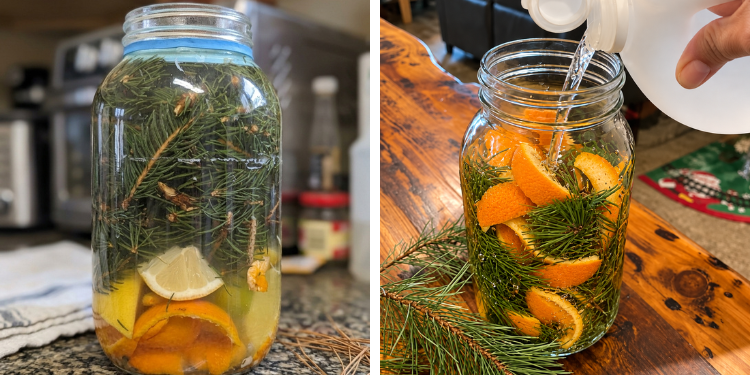
If you glance into the pantries or laundry rooms of eco-conscious homemakers during the cooler autumn and winter months, you might discover a simple glass jar stuffed tightly with fresh evergreen pine needles, sliced orange peels, and clear liquid.
While it looks like a seasonal botanical display or a rustic craft project, combining pine needles and orange peels inside a jar is one of the most practical, non-toxic household hacks available.
By steeping the essential oils and natural acids found in pine needles (Pinus) and orange peels (Citrus sinensis) in white vinegar or witch hazel, you create a powerful, dual-action all-natural household cleaner, disinfectant, and room deodorizer.
This zero-waste botanical infusion replaces harsh chemical sprays with a crisp, forest-and-citrus scent that cleans surfaces naturally.
The Science: Why Pine and Orange Work So Well Together
To understand why this botanical combination is so widely recommended, it helps to look at the complementary chemistry of pine needles, orange peels, and vinegar.
1. D-Limonene from Orange Peels
Orange peels are packed with concentrated D-limonene, a naturally occurring terpene found in citrus cold-pressed oils.
D-limonene is a potent, non-polar solvent capable of breaking down stubborn grease, sticky sticker residue, soap scum, and buildup on household surfaces without synthetic detergents.
2. Alpha-Pinene and Antimicrobial Terpenes from Pine
Pine needles contain high concentrations of alpha-pinene and beta-pinene, volatile hydrocarbons responsible for the distinct, sharp aroma of pine forests.
Pinene compounds possess natural antibacterial, antifungal, and antiviral properties. Combined with the natural acetic acid of distilled white vinegar, pine needle compounds effectively kill household odor-causing bacteria on non-porous surfaces.
3. Neutralizing the Harsh Smell of Vinegar
Distilled white vinegar is an exceptional non-toxic cleaner, but its sharp, pungent odor offends many people. Infusing vinegar with the heavy essential oils of pine and citrus neutralizes the harsh vinegar smell, leaving behind a warm, uplifting, timber-citrus fragrance.
4 Main Reasons People Recommend Pine and Orange Jar Infusions
1. An All-Purpose, Non-Toxic Kitchen Degreaser
The combination of citrus D-limonene and acetic acid creates an exceptional degreasing agent.
When strained and poured into a spray bottle, the infusion cuts through baked-on grease on stovetops, range hoods, microwave interiors, and dining tables without leaving toxic chemical residues where food is prepared.
2. Eliminating Pet and Food Odors Naturally
Unlike commercial aerosol sprays that mask odors with synthetic fragrances and volatile organic compounds (VOCs), the pine-orange infusion neutralizes odor molecules at the source.
Spraying it near trash cans, shoe racks, pet areas, or bathroom tiles kills odor-causing microbes while leaving a crisp forest scent.
3. Eco-Friendly, Zero-Waste Living
Infusing vinegar with kitchen scraps (orange peels) and backyard botanicals (fallen pine needles) turns waste into a valuable household product.
It eliminates the need for single-use plastic cleaner bottles and keeps synthetic chemicals out of municipal waterways.
4. Natural Insect Repellent for Countertops
Both D-limonene and alpha-pinene act as natural insect deterrents. Wiping down kitchen counters and windowsill thresholds with this infusion deters ants, fruit flies, and gnats from establishing scent trails inside your home.
Natural Cleaner Infusion Matrix
| Material | Key Active Compound | Primary Benefit |
| Orange Peels | D-Limonene | Solves grease, breaks down sticky residue |
| Pine Needles | Alpha-Pinene & Eucalyptol | Antimicrobial defense, woodsy freshness |
| White Vinegar | Acetic Acid (5%) | Dissolves mineral scale, neutralizes bases |
Step-by-Step: How to Make Pine and Orange Cleaner
Making your own botanical cleaner jar takes under ten minutes:
Important Usage Guidelines
-
Avoid Natural Stone: Because vinegar contains acetic acid, do not use this cleaner on unsealed natural stone like marble, granite, or limestone, as acid can etch porous stone surfaces over time.
-
Great for Glass and Metal: It works exceptionally well on glass windows, stainless steel appliances, ceramic tiles, and laminate countertops!
Putting pine needles and orange peels in a jar is an easy, budget-friendly habit that turns natural ingredients into a safe, effective, and wonderful-smelling home cleaner.