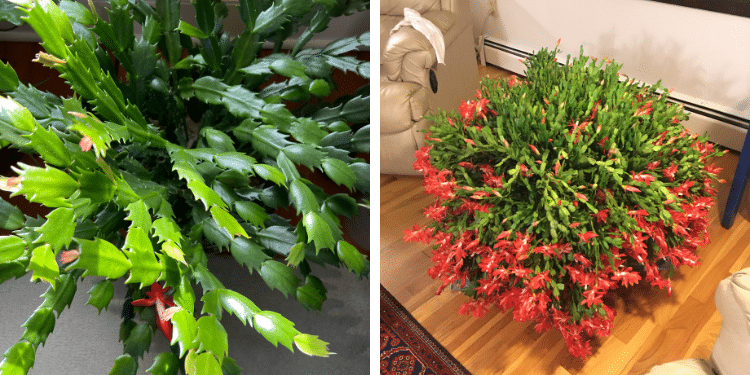
October is one of the most important months of the year for your Thanksgiving cactus.
For most of the year, this popular houseplant is fairly forgiving. But if you want those beautiful pink, red, white, orange, or purple flowers to appear around Thanksgiving, what you do in early to mid-fall can make a big difference.
Thanksgiving cactus (Schlumbergera truncata) doesn’t bloom simply because November arrives.
Flowering is strongly influenced by long nights, cooler temperatures, appropriate watering, and the plant’s overall condition.
That’s why a Thanksgiving cactus sitting in a brightly lit living room until midnight every night may stay green and healthy yet refuse to produce the spectacular display you expected.
October is your opportunity to help trigger those flower buds.
Here are 7 things to do with your Thanksgiving cactus in October for a beautiful holiday bloom.
1. Give It Longer, Uninterrupted Nights
This may be the most important thing you do in October.
Thanksgiving cactus is a short-day—or more accurately, long-night—plant. Longer periods of darkness help trigger flower-bud formation.
During fall, nature normally provides increasingly long nights.
The problem is that indoor plants don’t always experience natural darkness.
Living-room lamps, kitchen lights, hallway lights, and other artificial lighting can interrupt the plant’s nighttime period.
What should you do?
Beginning in early fall, give your Thanksgiving cactus approximately 12–14 hours of uninterrupted darkness each night while buds are being initiated.
You might place it in a room that remains naturally dark overnight or another suitable location where household lights won’t repeatedly interrupt the dark period.
During the day, return it to good light if necessary.
October note: You don’t necessarily need to put the plant inside a closet. A naturally dark room at night can work perfectly well.
Consistency is the important part.
Try to maintain this routine for several weeks while buds develop.
2. Let It Experience Cooler Nights
Light isn’t the only signal Thanksgiving cactus uses.
Cooler fall temperatures can also encourage flowering.
These plants often respond well when nighttime temperatures drop compared with their summer conditions.
A slightly cooler room, enclosed porch that remains within a safe temperature range, or location near a bright window may provide useful fall conditions.
But don’t confuse cool with freezing.
Thanksgiving cactus is a tropical plant and should be protected from frost.
Avoid extremes.
Don’t place it directly beside a freezing window, outside during frosty nights, or in the path of a cold draft.
Likewise, don’t put it directly above a radiator or heating vent.
Quick note: Warm indoor temperatures combined with long evenings of artificial light can make bud initiation more difficult.
Think of October as the month when you’re trying to imitate natural fall conditions:
Longer nights + somewhat cooler temperatures = a strong flowering signal.
3. Adjust Watering as Growth Slows
Thanksgiving cactus isn’t a desert cactus.
That’s an important distinction.
Unlike many desert cacti, Schlumbergera originates from humid forest environments, where it grows in organic material around trees and rocks.
So you shouldn’t treat it exactly like a barrel cactus and leave it completely dry for months.
However, it also doesn’t want constantly saturated potting mix.
During October, allow the upper portion of the growing medium to begin drying before watering again.
Then water thoroughly and allow excess water to drain from the container.
Never let it sit in water.
If your plant is inside a decorative outer pot, check it after watering.
Water can collect invisibly at the bottom.
Pour it away.
October watering note: Don’t follow a rigid “water every seven days” schedule. Temperature, light, pot size, humidity, and growing medium all affect how quickly your plant dries.
Check the soil instead.
Too much water can encourage root problems, while allowing the plant to remain severely dry for extended periods can also stress developing buds.
Aim for moderation.
4. Give It Bright Light During the Day
Long nights don’t mean your Thanksgiving cactus wants darkness around the clock.
During daytime hours, give it plenty of bright, indirect light.
A location near a bright window can work well.
Gentle morning sun may also be tolerated, but be careful with intense direct sunlight, particularly if the plant isn’t accustomed to it.
Why does daytime light matter?
The plant still needs to photosynthesize and produce energy.
You’re not trying to starve it of light.
You’re creating a clear difference between:
Bright days
and
Long, dark nights.
Quick tip: Once you find a location that provides good daytime light and reliable nighttime darkness, try to keep conditions consistent.
October isn’t the ideal time to repeatedly move the plant between dramatically different environments.
5. Ease Up on Fertilizer
October isn’t the time to pour on high-nitrogen fertilizer hoping it will somehow create more flowers.
Excessive nitrogen can encourage leafy vegetative growth rather than helping the plant transition into flowering.
If you’ve been feeding your Thanksgiving cactus during spring and summer, fall is generally the time to reduce or pause regular feeding as you encourage bud formation.
Don’t try to “force” flowers with fertilizer.
Flowering depends heavily on environmental cues, particularly light and temperature.
A healthy plant needs adequate nutrition, but more fertilizer isn’t automatically better.
October note: Fertilizer cannot compensate for nights that are too short, excessive watering, or stressful temperatures.
Once flowering is finished and active growth eventually resumes, you can return to an appropriate feeding routine.
6. Stop Moving It Around Once Buds Appear
This is where patience becomes important.
After several weeks of favorable fall conditions, inspect the tips of the flattened stem segments.
You may notice tiny buds beginning to develop.
Once that happens, resist the temptation to constantly relocate the plant.
Thanksgiving cacti have a reputation for dropping buds when conditions suddenly change.
Bud drop can be associated with environmental stress such as:
- Sudden temperature changes
- Very dry conditions
- Excessive watering
- Abrupt changes in light
- Hot drafts
- Cold drafts
- Repeated relocation
If the plant is happy and developing buds, leave it alone as much as possible.
Bud-setting note: Once buds appear, consistency becomes more important than trying to find the “perfect” location every few days.
Keep watering appropriately and protect the plant from dramatic environmental changes.
7. Inspect It for Pests and Root Problems
Before flowering begins, give your Thanksgiving cactus a quick health inspection.
Look closely between the segments and around the base of the plant.
Watch for common houseplant pests such as mealybugs and scale.
Also pay attention to the plant itself.
Healthy segments should generally feel firm rather than extremely shriveled or soft and mushy.
If the plant looks wilted, don’t immediately water.
Check the soil first.
A wilted plant in bone-dry soil may indeed need water.
But a wilted plant sitting in constantly wet potting mix may be experiencing root problems.
Adding more water in that situation can make matters worse.
Important note: Wilting doesn’t always mean thirst.
Look at the entire situation – soil moisture, drainage, roots, temperature, and light – before deciding what the plant needs.
Don’t Repot It Just Before Blooming Unless Necessary
October isn’t usually the ideal time for unnecessary repotting if your Thanksgiving cactus is preparing to flower.
Repotting can disturb the roots and change moisture conditions at exactly the time you’re trying to keep the plant’s environment stable.
Thanksgiving cactus can tolerate being somewhat snug in its container.
If drainage is good and the plant is healthy, let it be.
Repot after flowering or during a more active growth period if necessary.
Repot immediately only when there’s a real problem.
For example, serious root rot or a container without usable drainage may require intervention regardless of the season.
Otherwise, don’t create stress simply because you think the plant needs a larger pot.
Thanksgiving Cactus or Christmas Cactus?
These plants are frequently confused.
Thanksgiving cactus (Schlumbergera truncata) typically has more pointed, claw-like projections along the edges of its stem segments.
Christmas cactus (Schlumbergera × buckleyi) generally has smoother, more rounded segment edges.
Thanksgiving cactus also tends to bloom somewhat earlier, which is why October care is especially important if you’re hoping for flowers around the November holiday.
The good news is that their general fall flowering requirements are similar.
What If Your Thanksgiving Cactus Already Has Buds in October?
That’s excellent.
At this point, your job becomes simpler:
Don’t interfere too much.
Continue providing good daytime light.
Maintain appropriate moisture.
Avoid extreme heat or cold.
Keep it away from heating vents.
Don’t suddenly begin heavy fertilizing.
And don’t repeatedly move the plant around the house.
Some buds may occasionally drop even with good care, but maintaining stable conditions gives the plant a better chance of carrying them through to flowering.
If you want your Thanksgiving cactus covered with flowers in November, October is the month that matters.