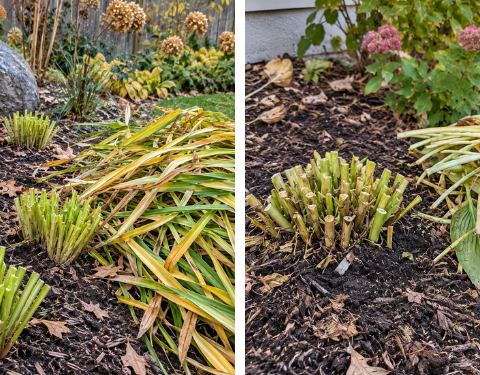
September can feel like the beginning of the end in the garden. Summer flowers are fading, leaves are starting to change, and many plants are slowing down as cooler nights arrive.
Most plants don’t need drastic pruning or heavy feeding in September. In fact, doing too much this late in the season can sometimes cause more harm than good.
The goal is to help plants finish the growing season healthy, protect next year’s flower buds, and prepare roots and crowns for the months ahead.
Here are nine plants worth checking in September if you want an even better garden next year.
1. Hydrangeas
Hydrangeas are one of the most important plants to approach carefully in September.
Why?
Because some hydrangeas form next year’s flower buds on old wood – stems produced during the current growing season.
Bigleaf hydrangeas (Hydrangea macrophylla) and many oakleaf hydrangeas are examples.
If you heavily prune these plants in fall, you may unknowingly remove the buds responsible for next year’s flowers.
What to do in September
Focus on maintenance rather than major pruning.
Remove obviously dead or broken branches, but otherwise leave healthy stems alone.
You can remove faded flowers if desired, although leaving some dried flower heads can provide attractive autumn and winter interest.
September is also a good time to make sure your hydrangeas aren’t entering winter severely drought-stressed.
If conditions have been dry, continue watering deeply as needed.
Helpful note:
Don’t assume every hydrangea follows the same pruning rules.
Panicle hydrangeas and smooth hydrangeas generally bloom on new wood, while many bigleaf and oakleaf types flower largely on old wood.
When you don’t know which hydrangea you have, September is not the time for aggressive pruning.
Waiting can save next year’s flowers.
2. Lavender
After months of flowering, lavender can look rather untidy by September.
Long spent flower stalks may stick above the plant, and some stems may be beginning to flop outward.
A little attention now can help maintain its compact shape.
But be careful.
Lavender doesn’t respond well to being chopped deeply into old bare wood.
What to do in September
If flowering has finished and you’re in a climate where frost isn’t imminent, remove faded flower stalks and lightly trim the leafy outer growth.
Keep the plant in a soft, rounded mound.
Avoid:
- Cutting the plant to the ground
- Pruning deeply into bare brown stems
- Applying lots of nitrogen fertilizer
- Leaving the crown buried under wet mulch
As autumn becomes wetter, drainage becomes increasingly important.
Pull dense organic mulch and fallen leaves away from the crown and make sure water isn’t collecting around the roots.
September lavender rule:
Lightly tidy the green growth, but leave the old woody framework alone.
In colder climates, keep late pruning particularly conservative.
3. Roses
September rose care is less about forcing another spectacular flush and more about helping the plants finish the season in good condition.
If you live somewhere with cold winters, heavy feeding late in the season can encourage tender new growth that may not have enough time to mature before freezing temperatures arrive.
What to do in September
Inspect the entire plant.
Remove:
- Diseased leaves
- Dead branches
- Broken stems
- Fallen rose leaves
- Weeds around the base
Black spot and other rose diseases can leave infected material underneath plants, so good garden sanitation is worthwhile.
Continue watering if September is dry, particularly for newly planted roses.
What about deadheading?
Early in the month, you can continue removing spent flowers if your growing season is long enough.
As autumn progresses in colder climates, you may choose to stop deadheading and allow some rose hips to develop.
Don’t heavily prune yet.
Major structural pruning is usually better done at the appropriate time for your rose type and local climate.
September is mainly about cleaning, monitoring, and preparing.
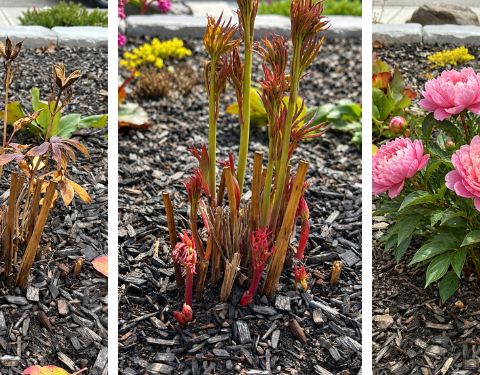
4. Peonies
Peonies may not look particularly exciting in September.
The flowers disappeared months ago, and the foliage may be starting to look tired.
But what happens after flowering is important.
Throughout summer, peony leaves have been producing energy that helps support the underground crown and next year’s growth.
That’s why cutting peonies down immediately after flowering is a mistake.
By September, however, the situation begins to change.
What to do
Allow healthy foliage to remain until it naturally begins declining.
Once foliage has yellowed, browned, or been damaged by frost, it can be cut down close to ground level.
Remove the old foliage rather than leaving a thick pile directly over the crown, particularly if your plants have experienced fungal disease.
September is also a good time to divide peonies.
If an established clump has become overcrowded or needs relocating, early fall is often an excellent time.
Dig carefully and divide the crown so each division has healthy roots and several visible buds, often called “eyes.”
Very important:
Don’t plant peony eyes too deeply.
Peonies planted excessively deep may grow healthy foliage but flower poorly.
September work can literally influence the flowers you see several seasons later.
5. Irises
If your bearded irises have become crowded and flowering has declined, late summer into early fall can be an excellent time to do something about it.
Bearded iris rhizomes gradually multiply.
After several years, the clump can become congested, and flowering may decline.
Signs your irises may need dividing:
- Fewer flowers than before
- Crowded rhizomes
- Dead centers in old clumps
- Plants growing into each other
- Reduced vigor
Carefully lift the rhizomes and separate healthy younger sections.
Discard soft, rotten, or badly damaged pieces.
Trim excessively long foliage if necessary to make handling easier, then replant.
Don’t bury the rhizomes deeply.
Bearded iris rhizomes generally prefer to sit near the soil surface rather than being buried like ordinary bulbs.
Good drainage is also essential.
September bonus:
Dividing one crowded clump can give you enough rhizomes to create several new patches elsewhere in the garden.
6. Daylilies
Daylilies are remarkably tough, which makes them easy to ignore.
But older clumps can eventually become overcrowded.
You may notice lots of foliage but fewer flowers or smaller blooms than in previous years.
That’s your signal that the plants may benefit from division.
What to do in September
In suitable climates, early fall can be a good time to lift and divide established daylilies, giving divisions enough time to settle before severe cold.
Dig around the clump and lift as much of the root system as possible.
Separate it into smaller sections, keeping healthy roots and several fans of foliage on each division.
Replant at approximately the same depth.
Water thoroughly after planting.
If they don’t need dividing:
Simply remove spent flower stalks and yellowing foliage as it declines.
Don’t feel obligated to cut healthy green leaves down immediately.
As long as they’re green, they’re still photosynthesizing.
Quick note:
Newly divided plants need more attention to watering than established daylilies.
Keep the soil reasonably moist while their roots become established.
7. Coneflowers
Coneflowers (Echinacea) are another plant where September gardening involves making a choice.
All summer you’ve probably been deadheading spent flowers to encourage additional blooms.
But by late summer and early fall, you may want to stop.
Why?
Because those dark, spiky seed heads have value.
Birds—particularly seed-eating species—may visit them during fall and winter.
They also give the garden structure long after colorful petals disappear.
What to do in September
Remove stems that are diseased or badly damaged, but consider leaving plenty of healthy seed heads standing.
You don’t need to make the perennial bed perfectly clean.
If your coneflowers are overcrowded:
Early fall can sometimes be suitable for division, provided plants have enough time to establish before hard freezes.
However, there’s no need to divide healthy clumps every year.
Don’t overfeed.
Coneflowers generally perform well without excessive fertilizer.
Too much rich feeding can encourage floppy growth.
Sometimes the best September care is simply doing less.
8. Black-Eyed Susans
Black-eyed Susans (Rudbeckia) are late-season stars.
Depending on the variety and climate, they may still be flowering beautifully in September.
If that’s the case, don’t rush to cut them down.
Allow the show to continue.
What to do
Earlier in September, continue deadheading if you want to encourage the plant to direct energy away from seed production and possibly extend flowering where conditions allow.
Later, consider leaving some seed heads intact.
They provide winter texture and may attract seed-eating birds.
Check the foliage too.
Rudbeckia can sometimes develop leaf spots, powdery mildew, or other foliage problems.
Remove badly diseased material rather than leaving it piled around the crown.
Improving spacing and airflow can also help reduce persistently damp foliage.
September reminder:
Not every faded perennial needs to disappear immediately.
A few standing Rudbeckia seed heads can make a winter garden far more interesting.
9. Hostas
Hostas are famous for their foliage rather than their flowers, and by September those leaves may begin looking a little tired.
Don’t panic.
Hostas naturally move toward dormancy as autumn progresses.
What to do
Leave healthy green foliage alone while it’s still functioning.
Once leaves turn yellow or brown and collapse—often after frost—you can remove them.
This is also a good time to clean up badly damaged foliage.
Why bother?
Dead hosta leaves can create damp hiding places for slugs and snails and may harbor unwanted garden debris around the crown.
September is also useful for division.
Large, overcrowded hostas can often be divided in early fall while the soil is still warm.
Water them well afterward so roots can settle before winter.
Helpful note:
If your hosta has become enormous and the center is thinning while the edges continue expanding, division may rejuvenate the planting.
You don’t have to divide hostas simply because they’re old, though.
A healthy plant can remain undisturbed for years.
Why September Garden Care Matters
By September, gardeners sometimes assume the season is basically finished.
The plants know otherwise.
Perennials and shrubs may be slowing above ground, but many are still storing carbohydrates, developing roots, maturing stems, and preparing buds for the following season.
That’s why September gardening should focus less on forcing growth and more on supporting the natural transition into dormancy.
You aren’t trying to make everything grow faster.
You’re trying to send plants into winter in good condition.
Don’t Automatically Fertilize Everything
Spring gardening often revolves around encouraging new growth.
Fall requires a different mindset.
Applying large amounts of high-nitrogen fertilizer in September can stimulate tender foliage and stems.
In cold climates, that new growth may not have enough time to harden before frost.
Many established perennials don’t need a big autumn feeding at all.
Instead, concentrate on soil health.
Where appropriate, a modest layer of finished compost can improve soil gradually without trying to force dramatic late-season growth.
Remember:
September is preparation season—not a race to create more leaves.
Keep Watering When Autumn Is Dry
Cooler weather can make gardeners forget about watering.
But September can still be surprisingly dry.
Plants going into winter severely drought-stressed may be more vulnerable, particularly:
- Newly planted perennials
- Recently divided plants
- Young shrubs
- Container plants
Check the soil rather than relying on the calendar.
Deep watering encourages moisture to reach the root zone.
At the same time, don’t keep plants constantly saturated.
Lavender, iris, and many other plants are particularly sensitive to poor drainage.
The goal is adequate moisture—not soggy soil.
September may look like the end of the gardening season, but in many ways it’s the beginning of next year’s garden.
The best gardens don’t just brighten your yard – they become something you can enjoy season after season.
If you’re ready to grow your own backyard pharmacy, the Medicinal Garden Kit is a wonderful place to begin.
Inside you’ll find 2,409 non-GMO seeds, a detailed Herbal Medicinal Guide, and 2 FREE bonuses to help you grow a wide variety of traditional medicinal herbs with confidence.
Take a look at the Medicinal Garden Kit and start growing something truly rewarding.