As summer reaches its peak in August, the garden shifts into a transitional phase. While many gardeners associate major pruning with late winter dormancy, late summer is actually a high-stakes window for plant care.
Pruning the right species in August keeps plants compact, removes diseased growth, and stimulates healthy autumn blooms.
However, making pruning cuts on the wrong plants late in the season can destroy next spring’s flower buds or leave tender tissue exposed to winter frost damage.
Here is an expert, science-backed breakdown of 10 plants to prune in August alongside 10 plants you should never touch until spring.
The Botanical Science of August Pruning
Understanding why some plants thrive with August cuts while others suffer comes down to plant physiology and bloom development cycles:
-
Old Wood vs. New Wood Bud Formation: Spring-flowering shrubs form their flower buds during the current summer on “old wood.” Cutting them in August slices off next year’s flowers. Conversely, summer- and autumn-blooming plants bloom on “new wood” (growth produced in the current season), making late-summer tidying far safer.
-
Vigor Control vs. Stimulating Flush: Winter pruning encourages vigorous spring growth, whereas summer pruning restrains vigor. In August, leaf canopies have manufactured plenty of carbohydrates. Removing selective growth limits unwanted stretching and lets light penetrate the inner crown.
-
Dormancy & Frost Vulnerability: Hard pruning stimulates a flush of tender green stems. If this occurs too late in August, the new growth won’t have time to harden off (develop protective bark tissue) before the first autumn freeze, leading to severe frost dieback.
10 Plants You SHOULD Prune in August
1. Wisteria (Wisteria sinensis / W. floribunda)
-
Why Prune in August: Summer wisteria growth produces long, whip-like green tendrils that sap energy from the main framework.
-
How to Cut: Cut all long, whippy side shoots back to 5 or 6 leaves from the main woody stem. This encourages the formation of short flower spurs that produce heavy cascades of spring blooms.
2. Summer-Fruiting Raspberries (Rubus idaeus)
-
Why Prune in August: Summer raspberries fruit on stems (canes) that grew the previous year. Once harvested, those brown canes die and will never produce fruit again.
-
How to Cut: Cut all spent, brown, fruited canes right down to ground level. Tie up 6 to 8 of the strongest green current-year canes per plant to carry next summer’s crop.
3. Sweet Cherries and Plums (Prunus spp.)
-
Why Prune in August: Stone fruits should never be pruned in winter because open wounds are vulnerable to silver leaf fungus (Chondrostereum purpureum) and bacterial canker. Warm August weather allows cuts to heal rapidly.
-
How to Cut: Thin out overcrowded or crossing branches in the canopy to increase sunlight exposure and airflow.
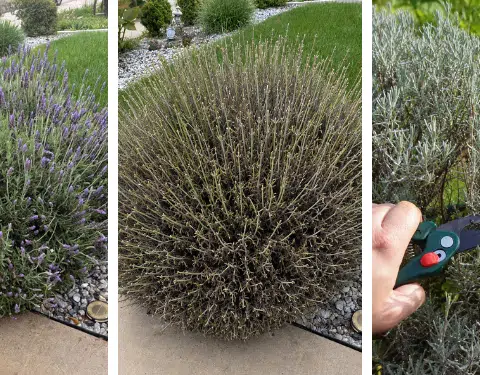
4. Perennial Salvia & Lavender (Salvia nemorosa / Lavandula)
- Why Prune in August: Trimming back spent floral spires in mid-to-late August stops energy loss to seed formation and keeps lavender from turning leggy and woody at the base.
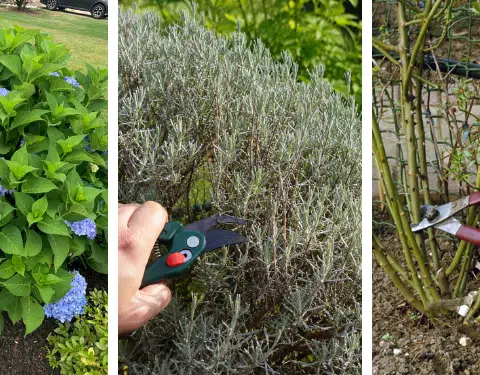
- How to Cut: Shear back salvia stems by one-third. For lavender, trim back spent flower stalks along with 1 inch of current season’s leafy green growth (never cut back into old brown wood).
5. Climbing Roses (Rosa spp.)
-
Why Prune in August: Once main summer flushes finish, climbing roses send out long shoots that can get whipped around by autumn winds, loosening root plates.
-
How to Cut: Prune side shoots that have flowered back to 2 or 3 buds from the main structural stem framework. Tie in new main structural canes securely to trellises.
6. Espaliered Apples and Pears (Malus domestica / Pyrus communis)
-
Why Prune in August: Summer pruning of trained fruit trees stops vegetative shoot growth, allowing sunlight to ripen developing fruit while encouraging future fruit spur development.
-
How to Cut: Cut new side shoots originating from main lateral branches back to 3 leaves above the basal cluster of leaves.
7. Hedges (Boxwood, Yew, Privet)
-
Why Prune in August: Late August is the ideal window for the final formal hedge trim of the year. Growth slows down as autumn approaches, keeping hedges neat through winter.
-
How to Cut: Use sharp hedge shears to trim outer growth flat, tapering the top slightly narrower than the bottom so sunlight reaches lower branches.
8. Straggly Petunias & Annual Bedding Plants
-
Why Prune in August: Midsummer heat causes hanging basket annuals to look leggy, bare, and exhausted.
-
How to Cut: Cut back leggy stems by half, just above an outward-facing leaf node. Water thoroughly and feed with liquid kelp or fish emulsion to trigger a late-autumn bloom recovery.
9. Honeysuckle (Lonicera periclymenum)
-
Why Prune in August: Early summer-flowering honeysuckle vines can become tangled masses of stems by late summer if left unchecked.
-
How to Cut: Cut back flowered shoots by half to keep the vine manageable and prevent the center of the plant from becoming a dense, leafless mat.
10. Gooseberries & Redcurrants (Ribes spp.)
-
Why Prune in August: Pruning bush fruits after harvest opens up the center of the bush to light and air, preventing American gooseberry mildew.
-
How to Cut: Cut side shoots back to 5 leaves from their base to develop permanent fruiting spurs for next summer.
10 Plants You Should NEVER Prune in August
1. Bigleaf Hydrangeas (Hydrangea macrophylla)
-
Why Avoid August Pruning: Mophead and lacecap hydrangeas set their spring flower buds inside the stems during August and September. Cutting them now removes next year’s flowers entirely.
-
When to Prune: Wait until spring, leaving old dried flower heads intact through winter to protect lower buds from frost.
2. Lilacs (Syringa vulgaris)
-
Why Avoid August Pruning: Lilacs set next year’s flower buds immediately after their spring bloom finishes in May or June. Pruning in August cuts away the developed buds.
-
When to Prune: Prune within 2 weeks after spring flowering finishes.
3. Azaleas and Rhododendrons (Rhododendron spp.)
-
Why Avoid August Pruning: Like lilacs, rhododendrons develop microscopic flower buds at stem tips during midsummer. August pruning results in a flowerless plant next spring.
-
When to Prune: Prune immediately after spring flowers fade in early summer.
4. Clematis Species (Group 1 / Spring Bloomers)
-
Why Avoid August Pruning: Early-season clematis (such as Clematis montana or C. alpina) bloom exclusively on stems grown during the previous year.
-
When to Prune: Prune right after spring flowering ends in June.
5. Forsythia (Forsythia x intermedia)
-
Why Avoid August Pruning: Forsythia branches are currently loaded with dormant flower buds along their stems. Cutting them now leaves you with bare green stems next spring.
-
When to Prune: Prune in spring right as the yellow flowers begin to drop.
August Pruning Comparison Matrix
| Plant Species | August Action | Bud Formation Type | Primary Objective |
| Wisteria | Prune | Summer Spurs | Shorten whippy shoots to 5-6 leaves |
| Summer Raspberry | Prune | Old Wood (Spent) | Cut old brown canes to ground level |
| Plums & Cherries | Prune | Spurs / Branches | Thin canopy; avoid silver leaf disease |
| Lavender | Prune | Current Season | Cut flower stems + 1 inch foliage |
| Hydrangea (Mophead) | NEVER TOUCH | Old Wood | Preserves overwintering flower buds |
| Lilac | NEVER TOUCH | Old Wood | Protects pre-formed spring flower buds |
| Forsythia | NEVER TOUCH | Old Wood | Keeps floral display intact for next spring |
| Azalea | NEVER TOUCH | Old Wood | Avoids stripping summer-set flower buds |
Best Practices for Safe August Pruning
To keep plants healthy when making cuts in late summer, follow these essential maintenance steps:
Late-Summer Pruning Rule: Avoid heavy nitrogen fertilizer applications right after August pruning. Adding high-nitrogen feed encourages a flush of soft green leaves that will freeze and rot during the first autumn cold spell.
Knowing which plants to trim and which to leave untouched in August ensures your garden remains healthy, neat, and prepared for a vibrant bloom next spring.