If there is one space in a home landscape that regularly gets treated as an afterthought, it is the fence line.
Often relegated to turfgrass, gravel paths, or standard green privacy hedges, these boundary zones represent missed opportunities.
A fence line can be a highly productive, vibrant micro-habitat, a dynamic windbreak, and a visual masterpiece.
If you want to transform a boring property border into a thriving ecosystem, look no further than the humble zinnia (Zinnia elegans).
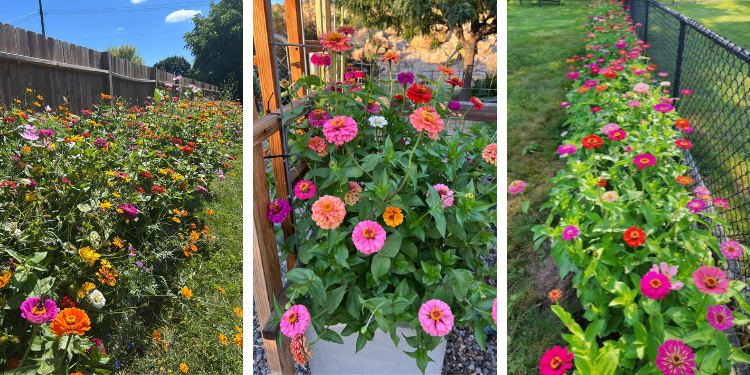
Planting a dense row of zinnias directly along a sunny fence line is one of the smartest design and ecological decisions a gardener can make.
From providing essential physical support to acting as a biological magnet for beneficial insects, here is why every garden needs zinnias along the fence.
1. Structural Support: The Built-In Trellis Effect
While dwarf zinnia varieties exist, the most breathtaking cultivars – such as the heritage Benary’s Giant or State Fair series – routinely reach heights between 3 and 4 feet.
Under the weight of heavy, multi-petaled, dahlia-like blooms, these tall, hollow stems can easily become top-heavy.
In the open garden, a single heavy summer downpour or a sudden gust of wind can snap these succulent stems or cause the entire plant to collapse into the mud. This is where your fence comes in:
-
Natural Wind Protection: Fences – whether wood, chain-link, or vinyl – act as highly effective windbreaks. They absorb the kinetic energy of heavy gusts, creating a calm microclimate directly in front of them where tall zinnias can grow straight and tall.
-
Minimalist Staking: Instead of inserting dozens of plastic or bamboo stakes throughout your garden beds, you can use the fence as a physical anchor. By running a simple, loose horizontal line of garden twine along the fence, you create a lightweight grid system that holds the flower heads upright with almost zero effort.
2. Pest Management: The Trap Crop and Masking Barrier
For vegetable gardeners, planting zinnias along the perimeter fence is a highly effective, natural pest-management strategy.
Fences often mark the boundary line where pests first enter your yard from neighboring lawns or wild areas. Placing zinnias here creates a living defensive shield.
The Decoy Effect
Zinnias are highly attractive to Japanese beetles, aphids, and spider mites. By growing a thick wall of zinnias along your perimeter fence, you create a highly appealing “trap crop.”
Destructive insects moving toward your yard will stop at the fence line to feed on the highly resilient zinnias, leaving your delicate tomatoes, peppers, and cucumbers further inside the garden completely untouched.
Masking Vegetable Scents
The dense foliage and intense floral scents of a zinnia wall help confuse pest insects that rely on smell to locate host plants.
The sheer volume of volatile organic compounds released by a row of blooming zinnias acts like a giant scent screen, masking the subtle smells of nearby food crops.
The Resilient Host: Zinnias are remarkably tough. While they may attract common pests, their rapid growth rate and continuous cell regeneration allow them to easily withstand moderate pest damage without losing their vigor or stopping their bloom production.
3. A Magnet for Pollinators: Fueling the Garden Ecosystem
Monoculture lawns and highly manicured suburban spaces offer very little forage for native bees, honeybees, and migrating butterflies. A long fence line planted with a rainbow of zinnias functions like an ecological oasis.
Zinnias are structured perfectly for pollinators. Each large “flower” is actually a composite head consisting of dozens of individual ray flowers surrounding a central disk of tiny, bright yellow, star-shaped disk flowers.
These star-shaped centers are packed with accessible, high-sugar nectar and nutrient-rich pollen.
-
Landing Platforms: Unlike deep, bell-shaped flowers that require specialized tongues to access, the wide, open face of a zinnia provides a sturdy landing platform. This makes them highly accessible to large butterflies (like Monarchs and Swallowtails) and heavy bumblebees.
-
Predatory Beneficals: The nectar also attracts beneficial predatory insects, including hoverflies, lacewings, and parasitic wasps. The larvae of these insects are voracious predators of garden pests, eating hundreds of aphids and thrips every single day.
4. Unrivaled Cut-and-Come-Again Production
Zinnias are the undisputed workhorses of the cutting garden. They operate on a simple physiological principle: apical dominance removal.
When you cut a central zinnia stem to bring a bloom indoors, you remove the plant’s main growth tip. This hormonal shift signals the dormant buds lower down the stem to rapidly branch out and produce new shoots.
By planting your cutting patch along a perimeter fence, you keep the harvesting process incredibly organized.
The fence provides a clear, linear path that makes deadheading (removing spent blooms) and harvesting a simple, daily routine.
Comparing Popular Fence-Line Annuals
If you are choosing what to plant along your property boundary, it helps to compare how zinnias stack up against other classic, tall-growing annual flowers:
| Attribute | Zinnias | Sunflowers | Cosmos | Marigolds (Tall) |
| Bloom Period | Early summer to hard frost | Short (usually 2 to 3 weeks) | Mid-summer to frost | Mid-summer to frost |
| Wind Resistance | High (succulent stems) | Low (highly prone to blowing over) | Medium (very wispy) | High (shrubby habit) |
| Pollinator Value | Excellent (accessible nectar) | Excellent (pollen-rich) | Good | Moderate |
| Water Needs | Low once established | Moderate to High | Very Low | Low |
| Color Spectrum | Every color except true blue | Primarily yellows/bronzes | Pinks, whites, purples | Yellows, oranges, reds |
While sunflowers are beautiful, they are a “one-and-done” crop that quickly leaves an empty, dry brown stalk against your fence. Zinnias, on the other hand, will pump out fresh, vibrant blooms continuously for up to four full months.
5. Microclimate Optimization: Heat Absorption and Airflow
Fences create unique microclimates. Solid wooden and vinyl fences absorb solar radiation throughout the day and slowly radiate that heat back out long after the sun goes down.
For heat-loving plants, this thermal mass is a dream come true. Zinnias are native to the dry, hot grasslands of Mexico. They thrive in intense heat and absolute, baking sunshine – conditions that would cause cool-season annuals like pansies or sweet peas to quickly wither and die.
However, planting against a solid structure can sometimes restrict airflow, which can lead to powdery mildew (a white fungal coating on the leaves) if the plants are crowded.
By utilizing the correct planting strategy, you can maximize the benefits of the fence’s heat while maintaining excellent plant health.
Step-by-Step: Planting the Perfect Fence-Line Zinnia Border
To get the absolute most out of your fence-line planting while keeping maintenance low and plant health high, follow this simple planting guide:
Every garden has boundaries, but those boundaries do not have to be boring.
By planting a dense, colorful hedge of zinnias along your fence line, you turn a functional divider into a living tapestry of color, a safe haven for local wildlife, and a highly productive flower factory.
The best gardens don’t just brighten your yard – they become something you can enjoy season after season.
If you’re ready to grow your own backyard pharmacy, the Medicinal Garden Kit is a wonderful place to begin.
Inside you’ll find 2,409 non-GMO seeds, a detailed Herbal Medicinal Guide, and 2 FREE bonuses to help you grow a wide variety of traditional medicinal herbs with confidence.
Take a look at the Medicinal Garden Kit and start growing something truly rewarding.