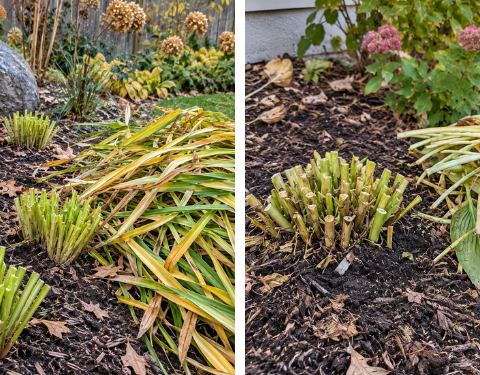
The relentless battle against garden weeds can feel like an endless cycle of pulling, hoeing, and chemical spraying.
Every time you clear a patch of bare ground, nature rushes in to fill the vacuum with opportunistic crabgrass, dandelions, or thistle.
The most permanent, ecological solution to this problem isn’t a stronger herbicide or a thicker layer of synthetic weed fabric – it is living mulch.
By planting vigorous, low-growing perennial groundcovers, you create a dense “living carpet” that covers every square inch of open soil.
These specialized plants outcompete weeds using a three-pronged natural defense strategy: they physically choke out space, wrap the soil in a dense root matrix that stops weed seeds from anchoring, and create a thick canopy that blocks sunlight from reaching the ground.
Here are 12 remarkable living carpets that will take over your garden beds so weeds never get a chance.
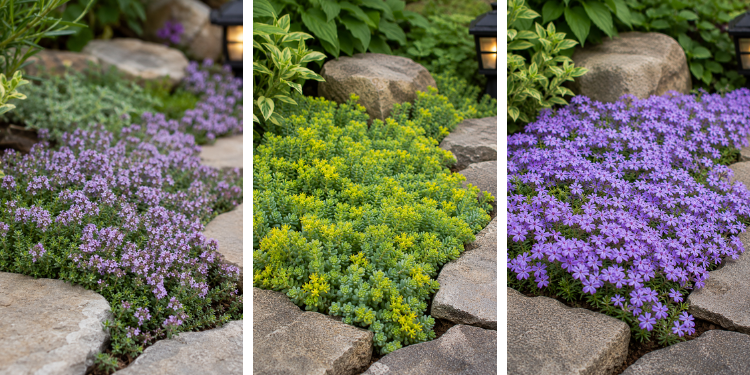
1. Creeping Thyme (Thymus serpyllum)
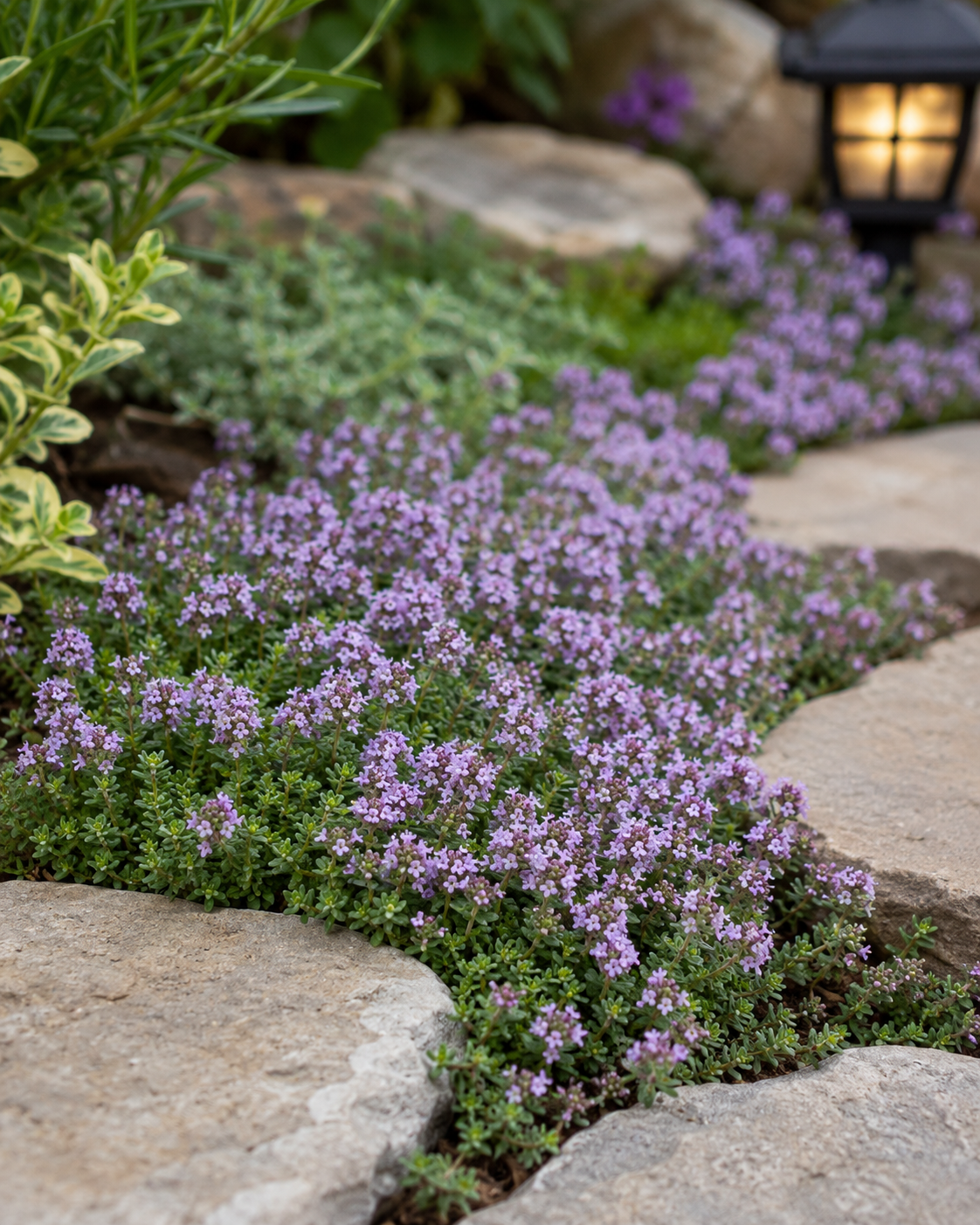
Creeping thyme is the absolute gold standard for sun-baked, high-traffic areas. This rugged Mediterranean native forms a dense, interwoven mat of tiny, aromatic green leaves that rise only 1 to 2 inches above the soil surface.
-
The Look: A lush green canvas that erupts into a solid sheet of vibrant pink, lavender, or white blossoms during mid-summer.
-
Weed-Blocking Strategy: Its woody, fibrous root system laces the top layer of soil together so tightly that airborne weed seeds cannot touch the earth to germinate.
-
Best For: Sunny walkways, rock gardens, patio stone gaps, and low-water alternative lawns.
2. Bugleweed (Ajuga reptans)
If you need a living carpet that establishes at lightning speed in damp, shaded zones, Ajuga is your answer. It spreads aggressively via above-ground runners (stolons), quickly sealing off open soil.
-
The Look: Shiny, spoon-shaped leaves that come in striking shades of deep bronze, midnight purple, or variegated cream, topped with upright spikes of cobalt-blue flowers in spring.
-
Weed-Blocking Strategy: The large, overlapping leaves form a literal canopy, casting deep shade that starves hidden weed seeds of the sunlight they need to sprout.
-
Best For: Slopes under large shade trees, damp woodland borders, and problematic clay soils.
3. Stonecrop Sedum (Sedum album / Sedum spurium)
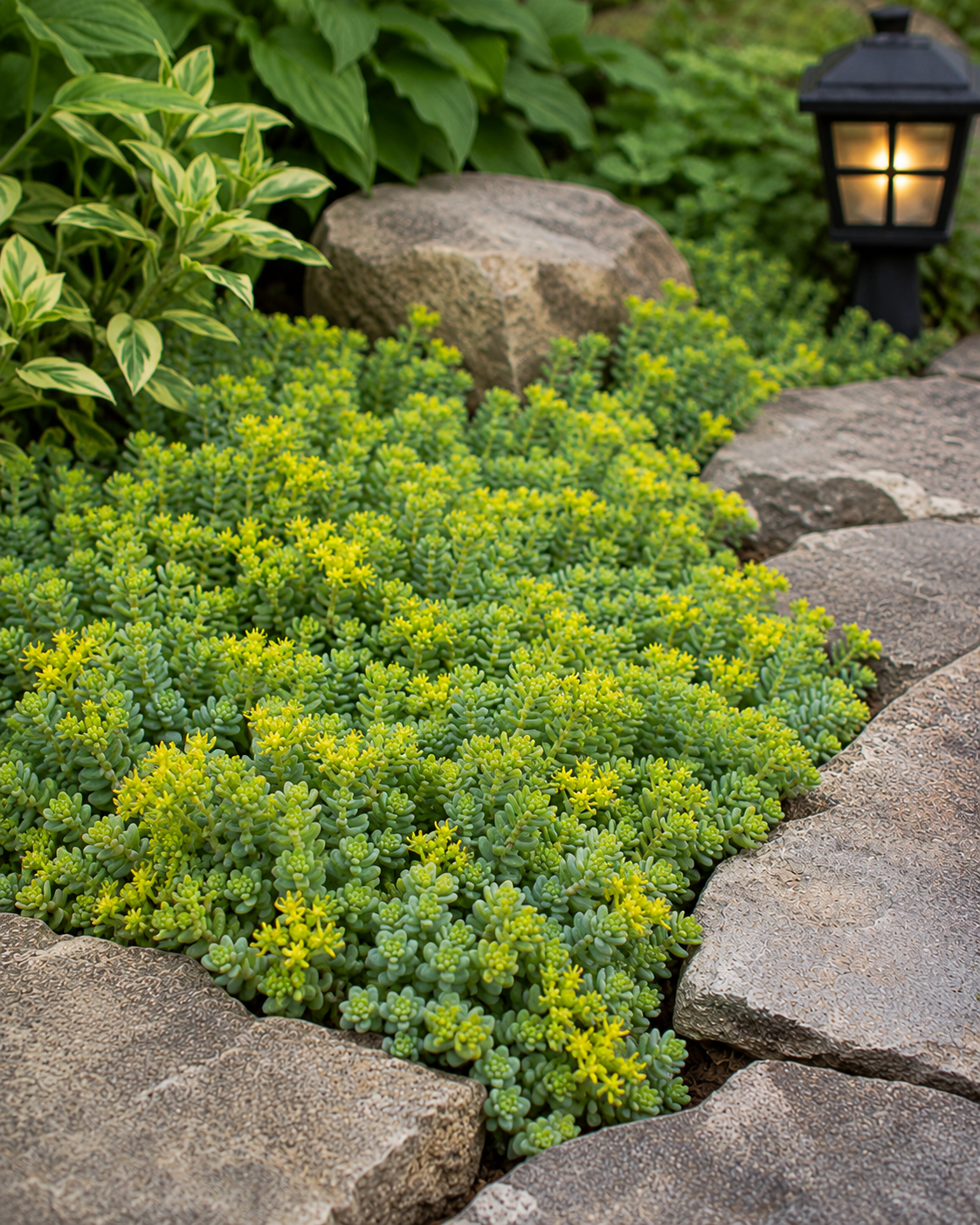
For areas with poor, gravelly soil and intense solar heat, creeping sedums act as an impenetrable, low-maintenance shield. As true succulents, they require virtually no water once their roots find a home.
-
The Look: Plump, rubbery, geometric leaves that shift from bright green to deep coppery red as the weather cools, covered in starry pink or yellow blossoms.
-
Weed-Blocking Strategy: They actively store water in their fleshy tissues, starving surrounding shallow-rooted weeds of ambient moisture during hot, dry spells.
-
Best For: Sunny retaining walls, gravel pathways, steep banks, and hot driveway borders.
4. Sweet Woodruff (Galium odoratum)
Sweet Woodruff is a delicate-looking but remarkably tough perennial groundcover designed to bring elegant, weed-free coverage to deep, moist shade.
-
The Look: Star-like whorls of bright emerald-green leaves that emit a pleasant scent of fresh-cut hay and vanilla when crushed, accented by clusters of tiny, snow-white flowers in spring.
-
Weed-Blocking Strategy: It creates a dense, multi-layered creeping carpet that quickly covers decomposing leaf litter, preventing weed establishment in woodland patches.
-
Best For: Shaded understories, beneath large shrubs, and lining damp garden paths.
5. Golden Star (Chrysogonum virginianum)
A spectacular, often underutilized native perennial, Golden Star brings steady, reliable coverage and bright color to partial shade borders.
-
The Look: Low mounds of soft, fuzzy, triangular green leaves topped with an abundance of star-shaped, butter-yellow blossoms.
-
Weed-Blocking Strategy: Its low, mounding growth habit naturally expands outward, packing tightly against neighboring plants to eliminate empty soil pockets.
-
Best For: Mixed perennial borders, woodland edges, and partial-shade rain gardens.
6. Mazus (Mazus reptans)
Mazus is a tiny, creeping powerhouse that hugs the ground tightly, rarely exceeding a single inch in height. It acts as an excellent, vivid alternative to traditional mulch in damp areas.
-
The Look: A flat, vibrant green mat of tiny, toothed leaves sprinkled with small, orchid-like purple or white flowers featuring yellow-and-white throats.
-
Weed-Blocking Strategy: It forms a creeping mesh so tight and low to the ground that it smothers low-lying weed seedlings before they can break through the canopy.
-
Best For: Stepping stone pathways, damp garden borders, and water feature edges.
7. Irish Moss (Sagina subulata)
Despite its name, Irish Moss is not a true botanical moss, but rather a herbaceous perennial that delivers an ultra-luxurious, velvet-like texture to the garden landscape.
-
The Look: A perfectly smooth, spongy, chartreuse or deep emerald-green cushion dotted with hundreds of microscopic white flowers in early summer.
-
Weed-Blocking Strategy: The dense growth habit creates an absolute physical barrier; the surface behaves like an elastic cushion that rejects incoming weed seeds.
-
Best For: Zen gardens, container accents, formal walkway paths, and surrounding stone sculptures.
8. Wild Ginger (Asarum canadense)
For gardeners prioritizing native woodland restoration, Wild Ginger offers a structural, sophisticated living carpet that effectively defends shaded soil.
-
The Look: Massive, velvety, heart-shaped or kidney-shaped leaves of a rich forest green that completely hide the ground beneath them.
-
Weed-Blocking Strategy: The wide surface area of individual ginger leaves acts like a series of miniature umbrellas, completely blocking light and rain from reaching bare soil beneath.
-
Best For: Deep shade beds, hosta companions, and rich, organic woodland soils.
9. Spotted Deadnettle (Lamium maculatum)
Lamium is a highly resilient, visually striking groundcover that brightens up dark, neglected corners of the yard while keeping weed growth completely suppressed.
-
The Look: Frosted, silvery-white leaves trimmed with deep green borders, complemented by clusters of pink, purple, or white hooded flowers that bloom off and on all summer.
-
Weed-Blocking Strategy: It is highly adaptable and vigorous, pushing into empty spaces and root-crowded zones under trees where weeds typically gain a foothold.
-
Best For: Shaded slopes, dry shade under trees, and color-blocked landscape borders.
10. Perennial Plumbago (Ceratostigma plumbaginoides)
If you want a living carpet that delivers dramatic, late-season color shifts while maintaining excellent structural coverage, Perennial Plumbago is unmatched.
-
The Look: Glossy green foliage that transitions into a brilliant, fiery bronze-red in autumn, contrasted against rich, true-blue gentian flowers.
-
Weed-Blocking Strategy: It features a vigorous underground rhizome system that aggressively claims ownership of the subsurface layer, blocking weed root expansion.
-
Best For: Autumn-interest borders, bulb covers, and sunny to partially shaded slopes.
11. Snow-in-Summer (Cerastium tomentosum)
This drought-hardy groundcover behaves exactly like its name implies, creating a crisp, frosted silver carpet that stands up beautifully to harsh summer conditions.
-
The Look: Woolly, silver-gray foliage that becomes completely blanketed in a heavy layer of star-shaped, pure white flowers in late spring.
-
Weed-Blocking Strategy: The dense, reflective felt-like hairs on the leaves trap moisture and repel heat, allowing the plant to thrive in dry conditions where weeds wither.
-
Best For: Sunny banks, alpine rock gardens, coastal settings, and dry borders.
12. Creeping Phlox (Phlox subulata)
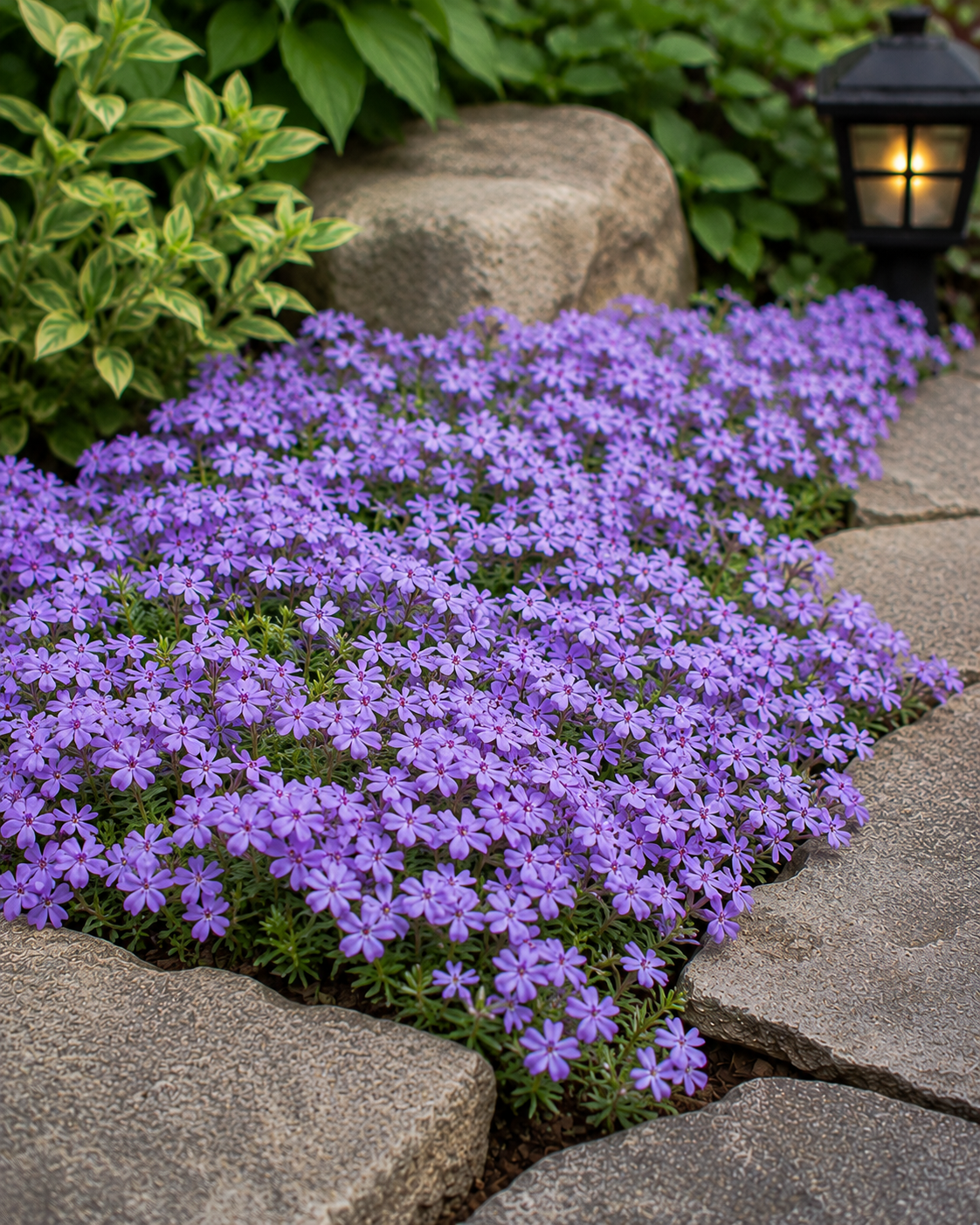
A classic springtime favorite, Creeping Phlox is far more than a passing seasonal display – it remains a highly effective, evergreen structural carpet for the remainder of the year.
-
The Look: Needle-like, carpeted green foliage that becomes a solid, blinding mass of pink, purple, blue, or white flowers in early spring.
-
Weed-Blocking Strategy: Once the spring blooms fade, the dense, prickly, needle-like foliage remains evergreen, maintaining a tough, physical barrier against summer weeds.
-
Best For: Slopes, retaining walls, sunny landscape borders, and framing garden beds.
3 Rules for Establishing a Weed-Free Living Carpet
While these twelve plants are exceptionally skilled at outcompeting unwanted vegetation, they cannot work miracles overnight. To ensure your living carpet wins the battle, follow this strategic establishment routine:
By shifting your gardening strategy away from bare soil management and toward a dynamic, living ecosystem, you eliminate the chore of weeding.
These hardy perennial carpets handle the work for you – rewarding your landscape with self-sustaining color, rich texture, and permanent protection.