We have all been there: staring at the ceiling, watching the minutes tick by, while your mind replays an awkward conversation from three years ago or runs through tomorrow’s endless to-do list.
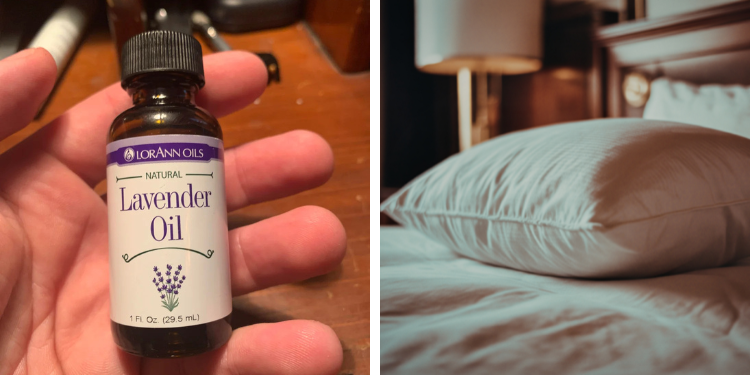
In our search for a good night’s rest, we often turn to a simple, centuries-old remedy: sprinkling a few drops of lavender essential oil onto our pillows.
But what actually happens when those tiny, aromatic molecules drift off your pillowcase and enter your nose? Far from being just a pleasant “placebo” scent, pure lavender oil triggers a profound cascade of physiological and neurochemical changes.
Within seconds of hitting your pillow, lavender begins actively rewiring your nervous system’s stress response, prepping your brain and body for deep, restorative sleep.
1. The Fast-Track Pathway: From Pillow to Brain in Seconds
Unlike swallowed supplements or medications that must pass through your digestive tract and liver, inhaled essential oils have a direct, almost instantaneous path to the brain. This occurs via the olfactory system – your sense of smell.
When you rest your head on your lavender-scented pillow, you inhale volatile organic compounds – primarily linalool and linalyl acetate.
As you breathe in:
-
These microscopic molecules land on the olfactory epithelium, a specialized tissue lining the roof of your nasal cavity.
-
They bind to olfactory sensory neurons, which instantly convert the chemical signal into an electrical impulse.
-
This impulse travels straight up the olfactory tract and enters the limbic system—the evolutionary “ancient” part of the brain that governs emotions, memory, and autonomic functions.
Because the olfactory system bypasses the thalamus (the brain’s sensory relay station), smell is the only sense with such direct, unfiltered access to your emotional and regulatory centers.
It’s why a single scent can trigger a vivid childhood memory or, in this case, immediately signal to your brain that it is safe to let go of the day’s tension.
2. The Brain Chemistry Shift: Taming the Overactive Mind
Once those lavender signals arrive in the limbic system, they interact directly with key areas of the brain: the amygdala (the fear and threat detector) and the hippocampus (the memory center).
At a molecular level, linalool acts on the brain in a remarkably similar way to some prescription anti-anxiety medications. It targets neurotransmitter pathways to quiet down hyperactive brain cells:
-
GABA Receptor Activation: GABA (gamma-aminobutyric acid) is the brain’s primary inhibitory neurotransmitter—think of it as your nervous system’s natural brake pedal. Linalool interacts with GABA-A receptors, boosting their activity. This slows down rapid neural firing, melting away racing thoughts.
-
Glutamate Inhibition: Conversely, glutamate is the brain’s primary “go” signal, keeping you alert and focused. Lavender helps block calcium channels in the brain, which limits the release of glutamate. By turning down the volume on glutamate, your brain transitions from high-alert beta waves to relaxed alpha and theta waves.
The Chemistry of Calm: Lavender oil contains over 100 active compounds, but linalool and linalyl acetate make up to 70% to 80% of its total volume. Together, they act as mild natural sedatives, directly smoothing out the neurochemical spikes of daytime stress.
3. The Body Follows: Calming the Autonomic Nervous System
Your brain doesn’t keep this newfound calm to itself. Via the hypothalamus, it sends rapid-fire signals down your spinal cord to adjust your autonomic nervous system.
When you are stressed or staring at your phone, your sympathetic nervous system (fight-or-flight) is active. Your heart rate is slightly elevated, your breathing is shallow, and your muscles carry tension.
Inhaling lavender oil acts as a physical toggle switch, shutting down the sympathetic response and lighting up the parasympathetic nervous system (rest-and-digest).
As the parasympathetic system takes over, several distinct physical shifts occur:
-
Heart Rate Decelerates: Your heart rate slows down, and heart rate variability (HRV) improves. A higher HRV during rest indicates a highly resilient, relaxed cardiovascular system.
-
Blood Pressure Drops: Blood vessels dilate slightly, lowering systemic blood pressure and taking the strain off your cardiovascular system.
-
Cortisol Levels Plummet: Studies have shown that inhaling lavender significantly reduces salivary cortisol (the primary stress hormone). Lower cortisol allows your body to stop searching for threats and focus on cellular repair.
4. Sleep Architecture: More Time in Deep, Restorative Sleep
Putting lavender on your pillow doesn’t just help you fall asleep faster; it actually improves the quality and structure of your sleep throughout the night.
Our sleep is divided into 90-minute cycles consisting of light sleep, deep sleep (slow-wave sleep), and REM (rapid eye movement) dreaming sleep. Slow-wave sleep (SWS) is the most critical phase for physical recovery, muscle repair, immune function, and clearing metabolic waste from the brain.
Clinical sleep studies using electroencephalogram (EEG) monitoring have shown that subjects exposed to lavender oil prior to sleep spend a significantly higher percentage of their night in deep slow-wave sleep.
They also report feeling more energetic and refreshed upon waking, as lavender prevents the frequent, micro-arousals (brief awakenings) that fragment your sleep without you even realizing it.
Comparing Natural Sleep Aids
How does the inhalation of lavender oil compare to other popular natural sleep interventions?
| Natural Aid | Method of Action | Time to Effect | Best Used For |
| Lavender Oil (Inhaled) | Enhances GABA, lowers cortisol via olfactory-limbic pathway | Immediate (Seconds to minutes) | Quieting a racing mind, improving deep sleep architecture |
| Melatonin (Oral) | Synthetically mimics the natural sleep-onset hormone | 30 to 60 minutes | Shifting circadian rhythms, overcoming jet lag |
| Chamomile Tea (Ingested) | Apigenin compound binds to GABA receptors in the brain | 30 to 45 minutes | Mild physical relaxation, soothing the stomach |
| Valerian Root (Ingested) | Prevents the breakdown of GABA in the brain | 1 to 2 hours (Often requires cumulative weeks of use) | Chronic insomnia, deep muscle relaxation |
5. The Psychological Anchor: Conditioning Your Sleep Association
Beyond the brilliant neuroscience and chemistry, there is a powerful psychological mechanism at play: Pavlovian conditioning.
Your brain is an expert pattern-finder. When you establish a nightly ritual of placing lavender on your pillow, your brain begins to pair the highly distinct, comforting scent of lavender with the act of closing your eyes and letting go.
Over time, this scent becomes a “sensory anchor.” Even on nights when you are exceptionally stressed, catching a whiff of that familiar lavender on your pillow serves as a powerful psychological shortcut.
It tells your brain, “We know this smell. This smell means it is safe, the day is done, and it is time to sleep.”
A Step-by-Step Guide: How to Safely Use Lavender on Your Pillow
To get the physiological benefits without causing skin irritation or overwhelming your senses, follow this simple setup:
A Note of Caution: If you share your bed with pets, keep in mind that cats and dogs have incredibly sensitive olfactory systems, and certain essential oils (including concentrated lavender) can be toxic to them if ingested or heavily inhaled. Keep the scent light and ensure your room is well-ventilated so your furry friends stay safe and comfortable too.
A simple drop of lavender on your pillow is much more than a cozy bedtime ritual. It is a scientifically validated, direct intervention that quietens your mind, lowers your heart rate, and coaxes your brain waves into the deep, slow rhythms of restorative rest.