In the pursuit of optimal gut health, our attention is often drawn to trendy wellness powders, expensive probiotic supplements, and highly marketed digestive enzymes.
We are told that restoring our digestive system requires complicated multi-step regimens and costly wellness products.
Yet, one of the most powerful tools for complete digestive transformation is a simple, unassuming seed that has been utilized for thousands of years: the chia seed.
Derived from the desert plant Salvia hispanica, a resilient member of the mint family (Lamiaceae), chia seeds were once prized by ancient Aztec and Mayan civilizations as a primary source of sustainable energy, endurance, and medicinal strength.
Today, modern nutritional science has caught up with ancient wisdom, revealing that these tiny black and white speckled seeds are a biological marvel for the human GI tract.
By introducing just one tablespoon (approximately 10 to 12 grams) of chia seeds into your daily diet, you set off a cascade of physiological benefits that can dramatically improve your digestion, stabilize your blood sugar, nourish your gut microbiome, and protect your cardiovascular health.
1. The Physics of Hydrophilic Expansion: How Chia Protects the Gut
To understand why chia seeds are uniquely beneficial for the digestive tract, we must look at how they behave when they interact with moisture. Chia seeds are highly hydrophilic (water-loving) structures.
The outer husk of each seed contains a unique type of soluble fiber called mucilage.
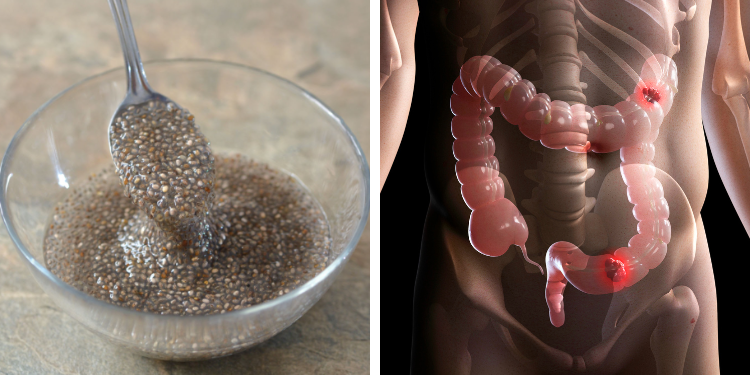
When a dry chia seed comes into contact with liquid – whether it is water, plant milk, or your stomach’s natural digestive juices – the mucilage immediately absorbs up to 10 to 12 times its weight in water. This rapid expansion transforms the tiny, hard seed into a soft, gelatinous globe.
As this gel moves through your digestive tract, it acts as a soothing, slippery physical barrier. It coats the sensitive mucosal lining of the stomach and intestines, easing irritation, reducing inflammation, and preventing dry, hard stools by locking essential moisture directly into the colon.
2. A Masterclass in Fiber: Soluble vs. Insoluble Synergy
Most Americans consume far less than the recommended daily target of 25 to 38 grams of fiber. Just one tablespoon of chia seeds delivers an impressive 4 to 5 grams of dietary fiber – representing roughly 15% to 20% of your daily needs in a single spoonful.
What makes chia seeds truly remarkable is that they contain a perfect, highly functional balance of both soluble and insoluble fiber.
-
Insoluble Fiber (The Broom): Roughly 80% to 90% of the fiber in chia seeds is insoluble. This type of fiber does not dissolve in water; instead, it remains intact as it moves through the digestive tract. It acts as a gentle, sweep-like structure that adds bulk to your stool, stimulates peristalsis (the natural muscular contractions of the intestines), and keeps waste moving smoothly and regularly to prevent constipation.
-
Soluble Fiber (The Sponge): The remaining 10% to 20% is soluble fiber, which dissolves in water to form the characteristic gel. This gel slows down the digestive process, ensuring that your body has ample time to break down food and absorb vital vitamins and minerals.
3. Five Transformative Health Benefits of a Daily Tablespoon of Chia
When you make a single tablespoon of chia seeds a consistent part of your daily routine, your body undergoes several profound physiological improvements:
1. Relief from Chronic Constipation and Bloating
By locking in moisture and adding consistent, non-irritating bulk to the stool, the natural gel of chia seeds provides highly effective relief from chronic constipation.
Unlike harsh chemical laxatives that can irritate the bowel wall and cause dependency, chia seeds work gently with your body’s natural rhythms to normalize transit times and eliminate uncomfortable bloating.
2. A Powerful Fuel Source for Your Microbiome (Prebiotics)
Your large intestine is home to trillions of beneficial bacteria that regulate everything from your immune system to your mood.
These bacteria need the right fuel to survive. The soluble fiber in chia seeds acts as a highly effective prebiotic, meaning it passes undigested through the upper stomach and enters the colon completely intact.
Once there, your beneficial gut bacteria ferment this fiber, producing short-chain fatty acids (SCFAs) like butyrate. These SCFAs serve as the primary energy source for the cells lining your colon, strengthening your gut barrier and reducing overall systemic inflammation.
3. Blood Sugar Stabilization and Extended Satiety
Because the gelatinous soluble fiber in chia seeds slows down the rate at which carbohydrates are broken down and absorbed into the bloodstream, it prevents the sharp spikes and sudden crashes in insulin that often follow a meal.
This steady, metered release of glucose provides consistent energy levels while keeping you feeling full, satisfied, and energized for hours.
Blood Sugar Control with Chia:
  ├── Slows enzyme breakdown of carbohydrates
  ├── Metered, steady release of glucose into the blood
  └── Prevents sudden insulin spikes and subsequent crashes
4. Natural Cholesterol Management
The soluble fiber gel in chia seeds has a remarkable ability to bind to bile acids (which are made of cholesterol) in your small intestine.
Once bound, these acids are naturally carried out of the body as waste. To replace them, your liver is forced to pull cholesterol directly out of your bloodstream, leading to a natural, steady reduction in overall LDL (“bad”) cholesterol levels over time.
5. High-Quality Plant-Based Omega-3 Fatty Acids
Inflammation is at the root of many chronic digestive issues, including irritable bowel syndrome (IBS) and leaky gut.
Chia seeds are one of the richest plant sources of alpha-linolenic acid (ALA), an essential anti-inflammatory Omega-3 fatty acid.
Consuming a tablespoon of chia daily delivers a steady supply of these healthy fats to help soothe inflamed intestinal tissues and support cell membrane repair throughout the body.
4. How to Prep and Eat Chia Seeds Safely
Because of their immense water-absorbing power, consuming dry chia seeds in large quantities can occasionally lead to digestive discomfort or swallowing difficulties.
To enjoy all the benefits safely, it is essential to prepare them correctly:
| Preparation Method | How It Works | Best Culinary Application |
| Pre-Soaking (Ideal) | Soak seeds in a 1:10 liquid ratio for 15-20 minutes | Makes chia pudding, gelatinous bases, and wellness drinks |
| Milling / Grinding | Grind seeds in a coffee grinder to break down the shell | Blends seamlessly into baking flours, oatmeal, and protein shakes |
| Raw Sprinkling | Sprinkle dry seeds directly over wet foods | Adds a light, pleasant crunch to yogurts, salads, and fresh fruit |
5. Three Simple Daily Recipes to Get Started
Introducing chia seeds into your daily routine is incredibly easy. Here are three delicious, beginner-friendly ways to enjoy your daily tablespoon:
The Gut-Glow Smoothie Booster
If you prefer a quick morning routine, simply toss a tablespoon of dry chia seeds directly into your blender along with your favorite green smoothie ingredients (such as spinach, half a banana, and coconut water).
Blend on high for 30 seconds. The blending process grinds the seeds, making their rich Omega-3 fatty acids instantly bioavailable, while still providing a smooth, creamy texture to your drink.
The Classic Chia Fresca (Hydration Helper)
-
Ingredients: 1 tablespoon of chia seeds, 12 ounces of cold water, the juice of half a fresh lime, and a drizzle of raw honey.
-
The Method: Combine all ingredients in a portable water bottle and shake vigorously. Let it sit for 10 minutes, shaking occasionally, until the seeds are suspended and gelatinous. Sip this refreshing beverage throughout the morning to stay hydrated and keep your digestive tract moving smoothly.
By simply introducing one tablespoon of chia seeds to your daily plate, you leverage a natural, fiber-rich powerhouse designed to soothe, sweep, and protect your entire digestive system.