For decades, the classic image of suburban perfection has been anchored by a single landscape feature: the pristine, emerald-green turfgrass lawn.
Homeowners spend a massive amount of time, energy, and money every spring and summer trying to maintain a flawless carpet of turf.
We push mowers through the midday heat, purchase expensive synthetic fertilizers, fight off invasive weeds, and run sprinklers for hours to keep the grass from turning brown during seasonal dry spells.
Yet, despite this constant maintenance, traditional turfgrass remains one of the most high-maintenance, resource-heavy, and ecologically fragile options you can introduce to your property.
As forward-thinking homeowners and landscape designers look for more sustainable, low-maintenance alternatives, one plant has emerged as an exceptional choice: Creeping Thyme (Thymus serpyllum).
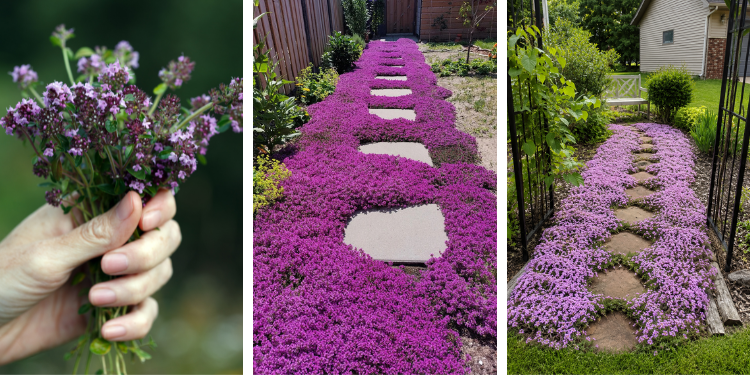
Also known as Mother-of-Thyme, this tough, low-growing Mediterranean perennial forms a dense, interlocking carpet of tiny green leaves that rarely rises more than two inches above the ground.
If you are tired of the endless chore of lawn maintenance or have trouble zones on your property where traditional grass refuses to grow, creeping thyme offers a beautiful, practical upgrade.
Here are 12 reasons why creeping thyme outshines traditional turfgrass in every way for some areas of your landscape.
1. You Can Permanently Banish the Lawn Mower
The single greatest advantage of replacing a traditional grass lawn with creeping thyme is the immediate elimination of your weekly mowing routine.
Traditional turfgrass is biologically programmed to grow straight up, requiring constant cutting to keep it at a manageable height.
Creeping thyme, however, grows horizontally, spreading out via low creeping stems to form a thick carpet. It naturally maxes out at a height of just one to two inches.
By planting thyme in place of turf, you save countless hours of labor every season, dramatically cut down on your summer gas or electricity expenses, and completely eliminate the noise and air pollution generated by standard garden equipment.
2. Unmatched Resilience Against Intense Heat and Drought
Traditional lawn grasses possess shallow root systems that dry out quickly, turning brown, dormant, and brittle during intense summer heatwaves.
Creeping thyme features a deeply anchored, fibrous Mediterranean root structure specifically built to endure prolonged dry spells.
The plant features tiny, leathery leaves with minimal surface area, which naturally prevents moisture from evaporating into the hot air.
Once creeping thyme establishes its root system on your property, it can comfortably survive on natural rainfall alone, remaining lush, green, and vibrant while surrounding grass lawns dry out and turn dormant.
3. A Breathtaking Seasonal Explosion of Color
While a traditional turfgrass lawn offers nothing but a flat, uniform block of green for twelve months of the year, creeping thyme treats your landscape to a spectacular visual transformation.
During the peak of summer, the entire green carpet explodes into a dense blanket of thousands of tiny, tubular blossoms.
Depending on the specific cultivar you choose to plant – such as ‘Red Creeping Thyme’, ‘Pink Chintz’, or the crisp white ‘Albus’ – your yard will transform into a stunning, sea of vibrant color that lasts for weeks.
| Creeping Thyme Cultivar | Mature Height | Blossom Color | Best Visual Impact |
| ‘Elfin’ | 1 inch | Pale Lavender | Tight spaces between stone paths |
| ‘Pink Chintz’ | 1 to 2 inches | Soft Salmon Pink | Mass groundcover replacements |
| ‘Coccineus’ | 2 inches | Deep Crimson / Magenta | High-contrast accent borders |
4. An Aromatic Sensory Experience with Every Step
Traditional grass emits a pleasant scent immediately after it is cut, but it offers very little sensory appeal when simply walked upon.
Creeping thyme is saturated with rich, natural essential oils, primarily thymol. The foliage features microscopic, oil-filled glands that burst open when gently compressed.
Every time you, your children, or your pets walk across a creeping thyme lawn, a crisp, herbal fragrance rises into the air.
This delightful aroma transforms a simple stroll through the yard into a soothing sensory experience that raw turf can never replicate.
5. It Loves Tough, Poor, and Nutrient-Depleted Soils
If your property features patches of sandy, rocky, or nutrient-starved soil where traditional grass turns yellow and dies, creeping thyme is the ideal solution.
Because it evolved on the rocky hillsides of the Mediterranean, it performs best in poor soil conditions. Traditional grass requires rich topsoil packed with organic matter to thrive, but creeping thyme easily handles low-nutrient earth.
In fact, planting thyme in overly rich, fertile soil can cause it to grow loose and floppy instead of forming a tight, attractive carpet.
6. Complete Elimination of Expensive Chemical Fertilizers
To keep a traditional turfgrass lawn looking deep green and healthy, homeowners often apply multiple applications of synthetic, nitrogen-heavy chemical fertilizers every season.
These chemical inputs are expensive and can run off into local waterways during heavy rainstorms, causing environmental issues.
Creeping thyme is a self-sustaining perennial that requires absolutely zero supplemental fertilization. It naturally extracts what it needs from the surrounding earth, saving you money and keeping synthetic chemicals completely out of your home ecosystem.
7. Natural Resistance to Aggressive Pests and Grubs
Homeowners with turfgrass frequently wage war against lawn pests, particularly Japanese beetle grubs and chinch bugs, which chew through grass roots and leave large, dead brown patches across the yard.
Creeping thyme comes equipped with a natural defense system. The high concentration of aromatic thymol in its leaves acts as a highly effective, natural insect deterrent.
Garden pests find the taste deeply unpalatable and will consistently bypass your thyme beds in search of less fragrant plants, ensuring your green carpet remains free of insect damage without the use of chemical pesticides.
8. Built-In Weed Suppression and Living Mulch
Creeping thyme spreads reliably through horizontal underground stems and surface runners that root as they travel.
Over time, these stems weave together to form a tight, multi-layered mat. Above ground, the tiny, dense leaves grow so close together that they physically block out sunlight from hitting the ground surface.
Weed Suppression Comparison:
  Traditional Turf: Has vertical spacing gap gaps easily invaded by dandelion and crabgrass seeds.
  Creeping Thyme Mat: Forms an interlocking horizontal shield that starves weed seeds of light.
By establishing a solid carpet of creeping thyme, you create a living mulch blanket that starves emerging weed seeds of the light and space they need to germinate, dramatically reducing your seasonal weeding chores.
9. Excellent Stability and Erosion Control on Steep Slopes
Mowing a traditional grass lawn on a steep hill or incline is a difficult and potentially dangerous chore. Furthermore, grass roots are often too shallow to hold the soil together during heavy downpours, leading to muddy runoff and erosion problems.
Creeping thyme is an outstanding choice for stabilizing hillsides. Its extensive, dense root network locks the soil firmly into place, while its low, weeping foliage softens the impact of heavy raindrops, allowing moisture to soak gently into the earth rather than causing muddy erosion.
10. A True Paradise for Native Pollinators
Traditional turfgrass is a biological desert, offering zero food or shelter for native wildlife. When creeping thyme launches into its spectacular summer bloom cycle, its hundreds of nectar-rich blossoms serve as a vital high-energy feeding station.
Your lawn will quickly become an inviting haven for native bumblebees, honeybees, and butterflies, helping to support local pollinator populations and ensuring the successful fertilization of nearby vegetable gardens and fruit trees.
11. Exceptional Durability Against Moderate Foot Traffic
A common misconception about herbal groundcovers is that they are too delicate to be walked upon.
While creeping thyme cannot handle the heavy daily activity of a football field, it is remarkably durable against moderate foot traffic.
Its flexible, woody stems bend easily without snapping, and the plant bounces back quickly from being stepped on by people or pets. It is a rugged, practical option for high-use garden paths, patio perimeters, and casual backyard seating areas.
12. Complete Immunity to “Dog Spot” Fluid Burn
Homeowners with dogs are familiar with the frustrating problem of “dog spots”—bright yellow or dead brown circular burn marks left on lush green turfgrass caused by the high nitrogen levels naturally present in canine urine.
Creeping thyme is immune to this issue. It processes nitrogen compounds efficiently and shrugs off the fluid exposure without yellowing or dying back, making it an excellent, worry-free choice for dedicated dog runs and pet-friendly backyards.
The Establishment Sequence: How to Transition to Thyme
If you are ready to replace a patch of struggling grass with a lush carpet of creeping thyme, you cannot simply toss seeds over existing lawn turf. Follow this precise installation sequence to ensure your new groundcover thrives:
By shifting your perspective away from resource-heavy turfgrass and embracing the rugged beauty of creeping thyme, you can transform difficult problem areas into low-maintenance, fragrant spaces.
It is a smart, sustainable landscape choice that saves water, supports local pollinators, and rewards your garden with a stunning sea of color for years to come.