Planting shrubs along a fence line sounds like a perfect idea. It promises privacy, structure, and a lush green border that frames your yard.
But what many homeowners discover – often too late – is that not all bushes are suited for this job.
Some grow too aggressively. Others become unmanageable, invasive, or even damaging to nearby structures.
What starts as a simple planting decision can quickly turn into constant maintenance, neighbor disputes, or costly removal.
If you want a clean, long-lasting, low-maintenance fence line, it’s important to avoid the plants that tend to cause problems over time.
Why Fence Lines Require Special Plant Choices
Fence lines are narrow, controlled spaces. Unlike open garden beds, they come with limitations:
- Restricted root space
- Close proximity to structures
- Limited airflow
- Visibility from neighbors
Plants in these areas must be:
- Predictable in growth
- Easy to shape and control
- Non-invasive
- Structurally stable
When a plant doesn’t meet these criteria, problems build quickly.
1. Bamboo – Fast Growth That Becomes Uncontrollable
Bamboo is often planted for privacy because of how quickly it grows. Within a short time, it can create a dense screen that blocks views completely.
The problem is how it grows.
Many types of bamboo spread through underground rhizomes. These roots travel far beyond the original planting area, sending up new shoots wherever they reach.
Along a fence line, this can lead to:
- Growth spreading into neighboring properties
- Damage to paving or structures
- Constant need for containment
Once established, bamboo is extremely difficult to remove.
Why It Becomes a Regret
What seems like a fast privacy solution becomes an ongoing battle. Without proper barriers, it rarely stays where you planted it.
Better Alternative
Clumping varieties of bamboo or structured shrubs like laurel or privet provide privacy without aggressive spreading.
2. Leyland Cypress – Too Fast, Too Big
Leyland cypress is commonly used for creating tall privacy screens. It grows rapidly and fills space quickly, which makes it appealing at first.
However, its speed becomes its biggest problem.
Over time, it can:
- Grow excessively tall and wide
- Outgrow the space along a fence
- Require frequent trimming to stay manageable
Its dense growth also reduces airflow, which can lead to disease issues, especially when planted too closely.
Why It Becomes a Regret
What starts as a neat row of trees can quickly become an overwhelming wall that blocks light and demands constant maintenance.
Better Alternative
Slower-growing evergreens such as arborvitae or holly provide structure without becoming unmanageable.
3. Russian Olive – Invasive and Difficult to Control
Russian olive is often chosen for its hardiness and ability to grow in poor soil.
While these traits sound beneficial, they come with downsides.
This plant spreads easily and can:
- Take over surrounding areas
- Outcompete other plants
- Develop thorny branches that make maintenance difficult
Along a fence line, this creates both physical and visual problems.
Why It Becomes a Regret
Instead of a controlled border, you end up with a plant that spreads unpredictably and becomes difficult to manage.
Better Alternative
Native shrubs suited to your region provide resilience without invasive behavior.
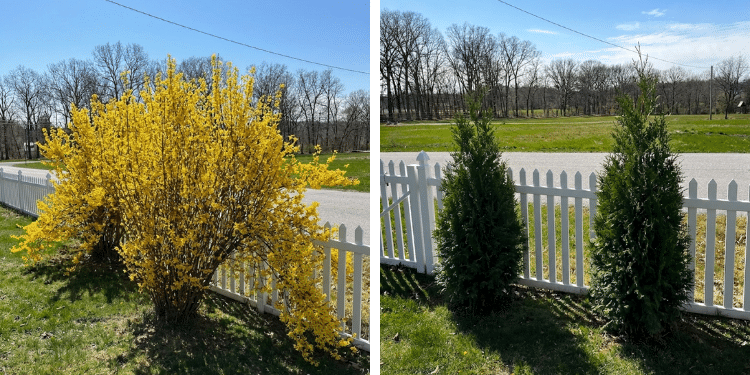
4. Forsythia – Beautiful but Messy
Forsythia is loved for its bright yellow blooms in early spring. It creates a striking display, which makes it a popular choice.
But after the flowering period, its growth becomes less attractive.
It tends to:
- Grow long, arching branches
- Spread unevenly
- Lose its shape quickly
Without regular pruning, it can look untidy and overgrown.
Why It Becomes a Regret
The short bloom period is followed by months of maintenance to keep the plant under control.
Better Alternative
Compact flowering shrubs such as spirea provide seasonal color while maintaining a cleaner shape.
5. Wisteria (as a Bush Form or Along Fences) – Aggressive Growth and Structural Pressure
Wisteria is often grown as a climbing plant, but when planted along fences, it can create serious issues.
It grows vigorously and produces thick, woody vines that:
- Wrap tightly around structures
- Add weight to fences
- Require strong support systems
Over time, it can damage or distort fencing.
Why It Becomes a Regret
Its beauty is undeniable, but its growth can become overwhelming and destructive if not carefully managed.
Better Alternative
Less aggressive climbers like clematis offer beauty without excessive force or weight.
What These Plants Have in Common
While these bushes are very different, they share similar traits that make them unsuitable for fence lines:
- Rapid or uncontrolled growth
- Invasive root systems
- High maintenance requirements
- Structural stress on nearby elements
Understanding these patterns helps you avoid future problems.
What to Look for Instead
When choosing plants for a fence line, focus on characteristics that support long-term success.
Look for shrubs that:
- Grow at a moderate pace
- Stay within defined boundaries
- Respond well to light pruning
- Maintain structure naturally
These traits create a border that stays neat and manageable.
Designing a Better Fence Line
A successful fence line planting is not just about privacy – it’s about balance.
Combining different plant heights, textures, and growth habits creates a more natural and visually appealing result.
Spacing is also important. Giving each plant enough room reduces competition and improves airflow.
This leads to healthier plants and less maintenance over time.
Long-Term Perspective Matters
One of the biggest mistakes in gardening is focusing on how a plant looks when it’s small.
Many of the problems with fence line planting appear years later, when plants reach their full size.
Thinking ahead – about growth, spread, and maintenance – prevents these issues before they begin.
Planting along a fence line is an opportunity to create structure, privacy, and beauty in your yard. But the wrong plant choices can turn that opportunity into a long-term challenge.
By avoiding aggressive, fast-growing, or invasive bushes, you set yourself up for a space that is easier to manage and more enjoyable to maintain.