May is a turning point in the garden. By now, plants are no longer dormant – they’re actively pushing new growth, forming buds, and establishing the structure they’ll carry for the rest of the season.
This is exactly why pruning in May is so powerful. You’re not cutting plants back – you’re shaping how they grow.
When done at the right time, pruning encourages fuller plants, stronger stems, more flowers, and better airflow. It also prevents many common problems before they start, from disease to weak, leggy growth.
Why May Pruning Works So Well
In early spring, plants are still waking up. Later in summer, they are already committed to a certain shape. May sits perfectly in between.
At this stage:
- Plants are actively growing
- Energy is moving through stems and leaves
- Growth direction is still flexible
When you prune now, you redirect that energy. Instead of pushing upward into a single stem, the plant begins branching outward. This creates a fuller, more balanced structure that supports better flowering and fruiting later.
Think of May pruning as guiding the plant’s architecture while it’s still being built.
1. Roses – Building Strong, Flowering Structure
By May, roses have begun producing fresh shoots. This makes it easier to see which stems are strong and which are weak.
Removing thin, damaged, or inward-growing stems helps the plant focus on healthier growth. Opening up the center improves airflow, which is essential for preventing fungal issues.
Light shaping at this stage encourages:
- Thicker stems that can hold larger blooms
- Better spacing between branches
- More consistent flowering cycles
A well-pruned rose in May often becomes noticeably more productive as the season progresses.
2. Lavender – Preventing Woody, Sparse Growth
Lavender can quickly become woody if left untrimmed. May is the time to gently shape it before it puts all its energy into flowering.
By trimming back the soft, green growth, you encourage the plant to branch out rather than grow tall and thin.
This leads to:
- A compact, rounded shape
- More flower spikes
- Stronger fragrance production
The key is to avoid cutting into the woody base. Keeping your cuts in the soft growth zone allows the plant to recover quickly.
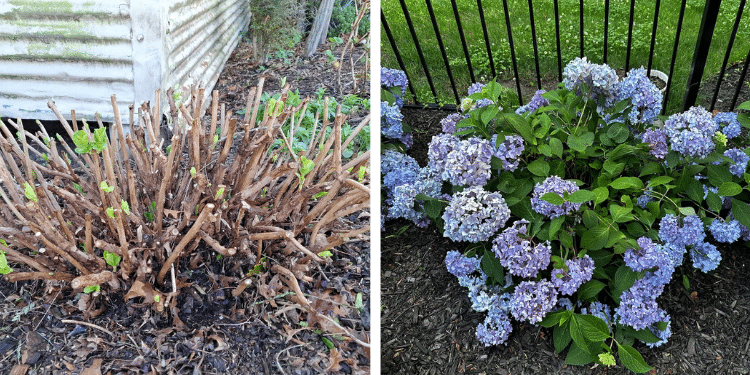
3. Hydrangeas – Supporting Larger Blooms
Some hydrangeas benefit from careful pruning in May, especially those that bloom on new growth.
By removing weak stems and thinning overcrowded areas, you allow the plant to direct its energy into fewer, stronger shoots.
This often results in:
- Larger flower heads
- Better stem support
- A more balanced plant shape
Understanding your hydrangea type is important, but for those that tolerate it, May pruning can significantly improve bloom quality.
4. Basil – Turning One Stem Into Many
Basil responds almost instantly to pruning.
When you pinch off the top growth, the plant redirects energy into side shoots. Instead of growing upward, it becomes bushy and full.
Each time you prune:
- Two new stems replace one
- Leaf production increases
- Flowering is delayed
This is one of the simplest ways to multiply your harvest without planting more.
5. Tomatoes – Directing Energy Into Fruit
Tomatoes grow vigorously in May, especially indeterminate varieties.
At this stage, small side shoots – known as suckers – begin forming between the main stem and branches. If left, they create dense growth that spreads energy thin.
Removing selected suckers helps:
- Focus growth on main stems
- Improve airflow
- Support better fruit development
The result is a plant that is easier to manage and more productive over time.
6. Mint – Keeping Growth Fresh and Controlled
Mint grows rapidly and can become overwhelming if not managed.
Cutting it back in May encourages new, tender growth and prevents the plant from becoming coarse or woody.
Regular trimming:
- Keeps leaves soft and flavorful
- Maintains a dense, attractive patch
- Prevents excessive spreading
Without pruning, mint quickly loses its structure.
7. Salvia – Encouraging Repeat Flowering
Salvia begins establishing strong growth in May.
By trimming back early shoots, you stimulate the plant to produce multiple flowering stems rather than just one.
This leads to:
- More blooms
- A longer flowering period
- A more compact shape
It also helps prevent the plant from becoming top-heavy later in the season.
8. Geraniums – Refreshing Leggy Growth
Hardy geraniums can become stretched and uneven if left alone.
Cutting back leggy stems in May encourages new growth from the base, creating a fuller plant.
This improves:
- Overall appearance
- Flower production
- Longevity of blooms
It’s a simple reset that keeps the plant looking fresh.
9. Thyme – Maintaining Density and Flavor
Thyme naturally grows low and spreads, but without pruning, the center can become woody and sparse.
Light trimming in May encourages:
- Dense, even growth
- Better leaf production
- A more attractive ground cover
This keeps the plant productive and prevents it from thinning out over time.
10. Catmint – Shaping for Continuous Bloom
Catmint has a soft, spreading habit that can become loose without guidance.
Pruning in May helps shape the plant and encourages a second flush of flowers later.
This keeps it:
- Compact
- Flower-rich
- Easy to manage
A quick trim can dramatically improve its performance.
11. Fuchsias – Creating a Fuller Plant
Fuchsias respond strongly to pinching.
Removing the tips of growing stems encourages branching, which leads to more flowering points.
Instead of a sparse plant, you get:
- A fuller structure
- More blooms
- Better balance
This early shaping makes a big difference later.
12. Chrysanthemums – Delaying for Better Results
Pinching chrysanthemums in May may seem counterintuitive, but it’s one of the best ways to improve them.
It delays flowering slightly, but in return, the plant becomes:
- Bushier
- More balanced
- Richer in blooms
Without this step, chrysanthemums often grow tall and sparse.
13. Petunias – Preventing Leggy Growth
Petunias grow quickly, but they can become stretched and uneven.
Pinching them back in May encourages side growth, allowing them to fill out and create a fuller display.
This results in:
- More flowers
- Better coverage
- Longer-lasting visual impact
It also reduces the need for heavy pruning later.
How Pruning Changes Plant Behavior
When you remove part of a plant, you change how it distributes energy.
Instead of growing in one direction, it spreads that energy across multiple points. This creates:
- More stems
- More leaves
- More flowers
It also strengthens the plant by encouraging thicker, more stable growth.
What You’ll Notice After Pruning in May
Plants respond quickly at this stage.
Within days or weeks, you may see:
- New shoots forming
- Faster, more even growth
- A fuller overall appearance
As the season continues, these early changes translate into stronger plants and better results.
Pruning in May is not about cutting plants back – it’s about setting them up.
By shaping growth early, you create a structure that supports everything that follows. Stronger stems, fuller plants, and more abundant blooms all begin with these small, timely actions.