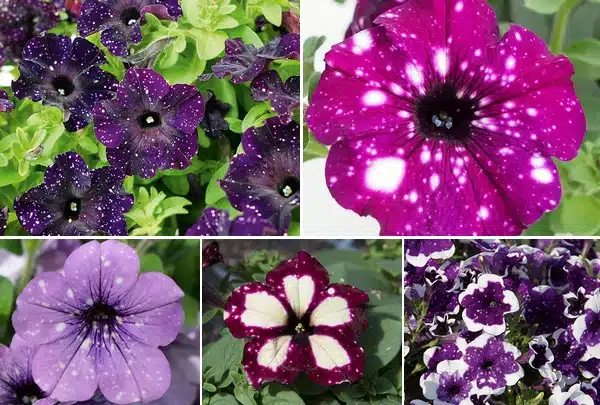
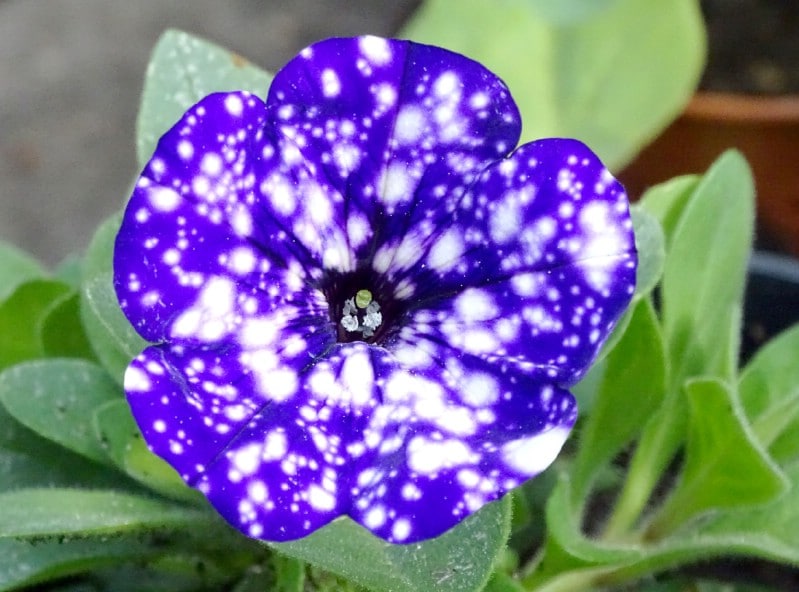
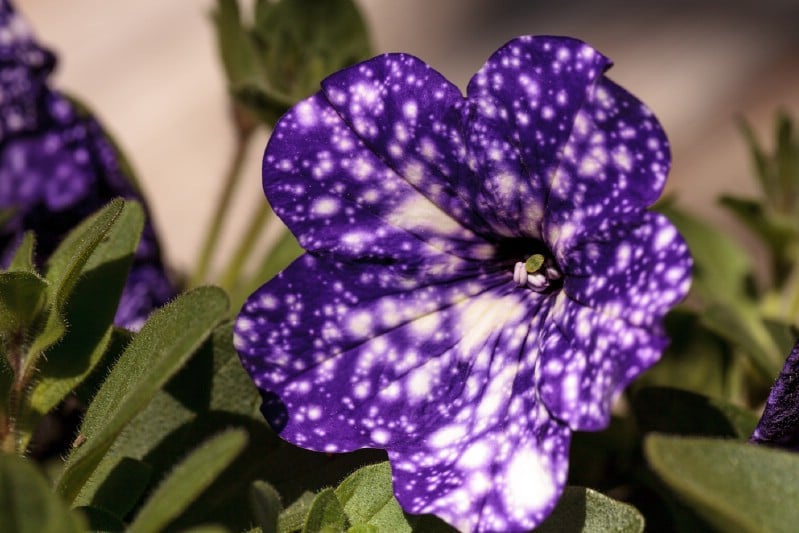
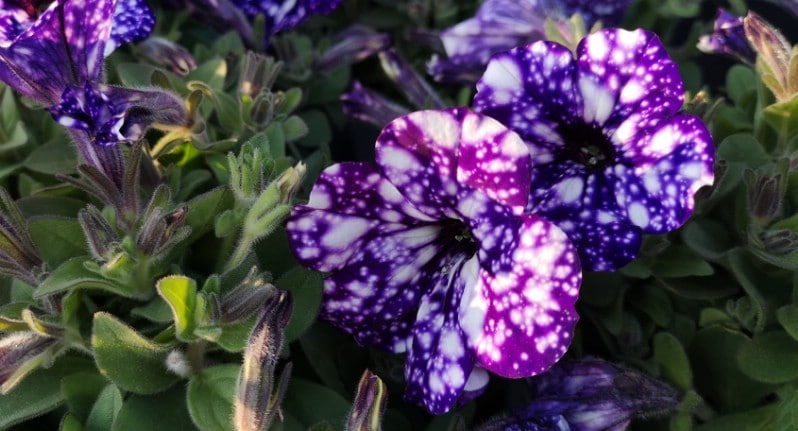
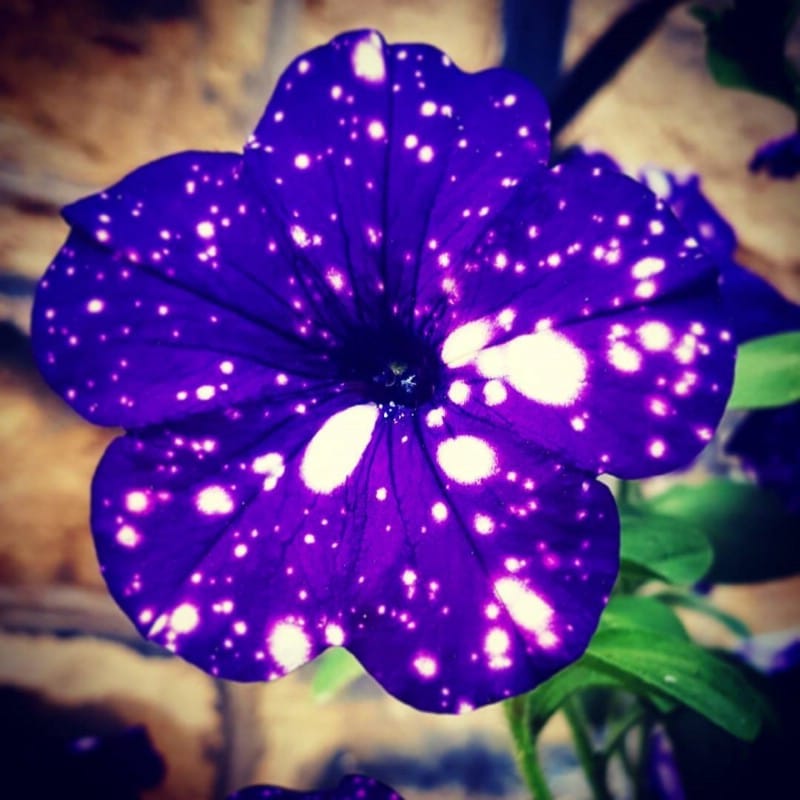
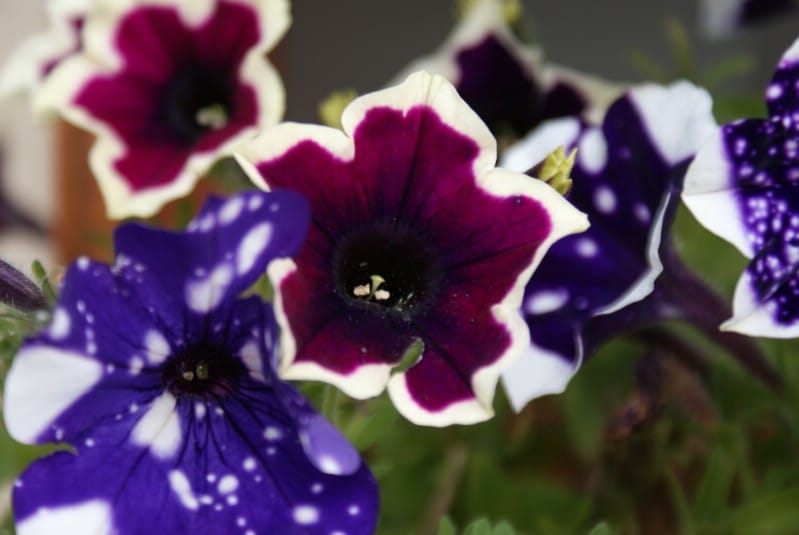
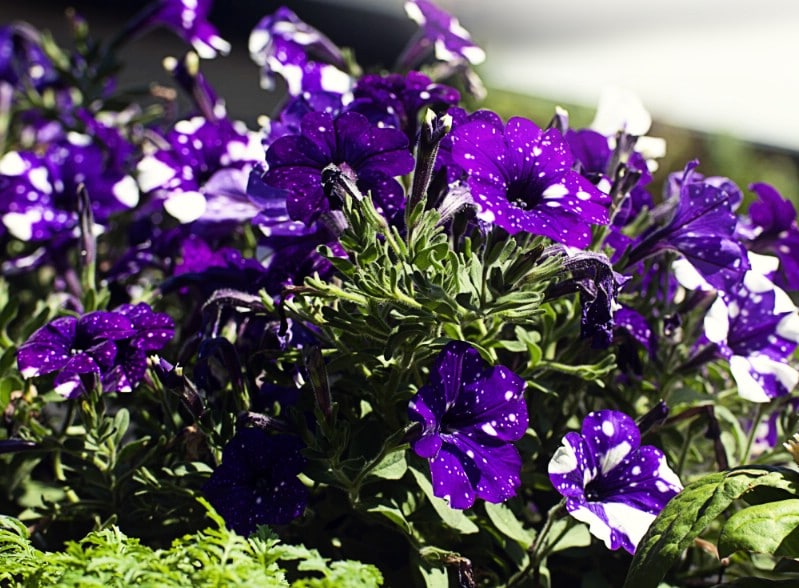
Night Sky Petunias are among the most captivating flowers you can grow in a home garden. With deep purple petals flecked with white spots resembling stars scattered across a galactic canvas, these blooms look like the Milky Way captured in plant form.
Their breathtaking pattern isn’t just beautiful – it’s also unique to each bloom, making every flower a work of art.
If you’re looking to grow Night Sky Petunias and create a garden that truly makes people stop and stare, this comprehensive guide will show you how.
From selecting the right soil and ensuring optimal temperatures to promoting their distinctive “starry night” appearance, here’s everything you need to know about cultivating these celestial wonders.
What Are Night Sky Petunias?
Night Sky Petunias (Petunia cultivars in the ‘Night Sky’ series) are a variety of Petunia hybrida, bred for their dramatic coloring.
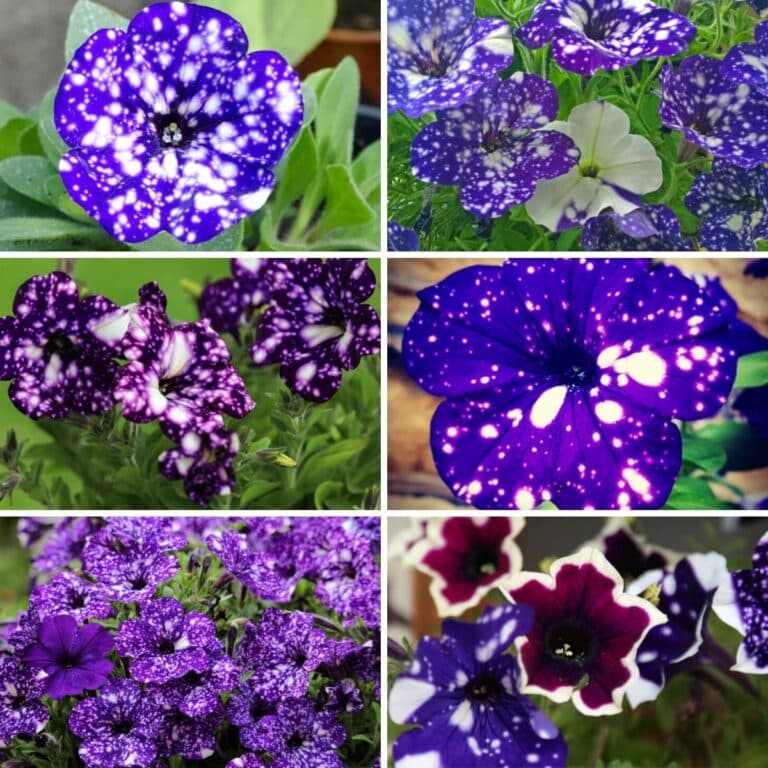
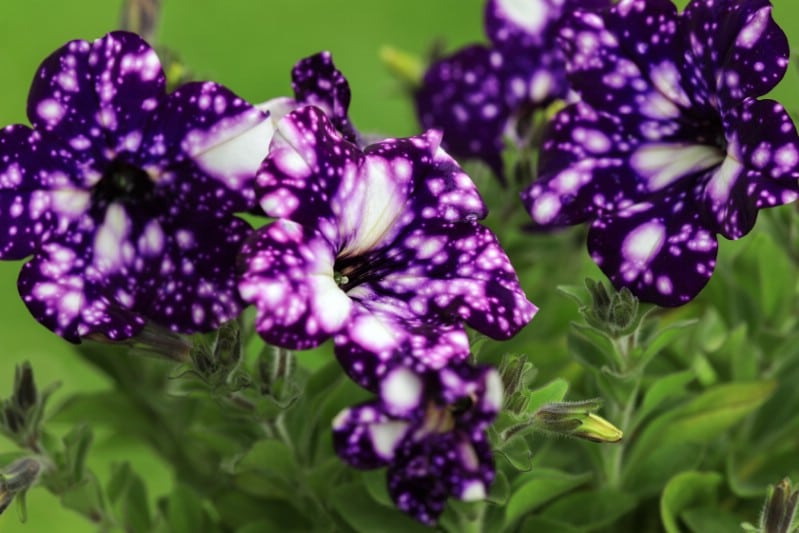
Their rich violet-purple petals are splashed with irregular white spots that mimic a star-filled night sky. The pattern is affected by temperature – cooler nights produce more white speckles, while warmer conditions bring out deeper purples.
These petunias are perfect for containers, hanging baskets, and garden beds. They combine well with other petunias or trailing plants like lobelia, creating stunning color contrast and depth.
Benefits of Growing Night Sky Petunias
- Stunning visual impact
- Long blooming period from spring to fall
- Attracts pollinators like bees and butterflies
- Perfect for containers and small-space gardening
- Tolerates heat and moderate drought
- Unique pattern makes every plant one-of-a-kind
Step-by-Step Guide to Growing Night Sky Petunias
1. Choose the Right Location
Night Sky Petunias thrive in full sun. Choose a location where they’ll receive at least 6 hours of direct sunlight per day. Sunlight encourages blooming and helps the plant develop vibrant color contrasts between the purple and white.
If you’re growing them in containers, place them in a sunny spot like a south-facing patio, deck, or balcony.
2. Start with High-Quality Plants or Seeds
Night Sky Petunias are usually grown from nursery starts or transplants, not seeds, since the unique coloring doesn’t always grow true from seed.
Buying tips:
- Choose healthy, compact plants with dark green leaves and no signs of wilting or yellowing.
- Avoid leggy or overly tall specimens.
If growing from seed:
- Sow seeds indoors 8–10 weeks before your last expected frost.
- Use a seed-starting mix and keep under grow lights or near a sunny window.
- Maintain consistent moisture and warmth (70–75°F) during germination.
3. Use Well-Draining, Nutrient-Rich Soil
Petunias need light, fertile soil that drains well. For in-ground planting, amend clay or compact soil with compost and perlite.
Ideal soil mix for containers:
- 1 part high-quality potting soil
- 1 part compost
- Optional: Add perlite or vermiculite for extra drainage
Target pH: 5.5 to 6.5
4. Planting Your Night Sky Petunias
Spacing:
- Space plants 12–18 inches apart in garden beds
- For containers, one plant per 10–12 inch pot
Planting tips:
- Plant after the last frost when soil temperatures reach 60°F
- Gently loosen the root ball before placing into the hole or container
- Water well after planting
5. Water Regularly but Avoid Overwatering
Night Sky Petunias prefer evenly moist soil but are susceptible to root rot if left soggy.
Watering tips:
- Water deeply when the top 1 inch of soil is dry
- Use mulch in beds to retain moisture and regulate soil temperature
- In containers, ensure drainage holes are unobstructed
- Reduce watering during rainy weeks
6. Fertilize for Vivid Blooms
To maintain vigorous growth and prolonged flowering, feed your Night Sky Petunias regularly.
Fertilization schedule:
- Apply a balanced, water-soluble fertilizer (e.g., 10-10-10) every 2–3 weeks
- Alternatively, use a slow-release granular fertilizer at planting and mid-season
- Switch to a bloom booster (higher in phosphorus) mid-summer for more flowering
7. Encourage the “Starry” Pattern
The galaxy-like speckling on Night Sky Petunias is temperature-sensitive. You can influence their appearance with a little environmental tweaking.
For more white speckles:
- Grow in cooler temperatures, especially at night (50–60°F)
- Provide shade in hot afternoon sun to lower flower temperature
For more deep purple tones:
Allow warmer night temperatures (above 65°F)
Keep in mind that patterning may vary through the season, adding to their charm.
8. Prune and Deadhead Regularly
Pruning and deadheading are key to keeping Night Sky Petunias bushy and blooming.
Maintenance tips:
- Remove spent flowers by pinching or cutting below the bloom
- Trim leggy stems by one-third every few weeks to encourage new growth
- Don’t be afraid to cut back the entire plant if it becomes straggly – it will rebound quickly
9. Monitor for Pests and Diseases
Night Sky Petunias are relatively pest-resistant but can be affected by common garden issues.
Watch for:
- Aphids
- Spider mites
- Whiteflies
- Powdery mildew (especially in humid conditions)
Prevention and treatment:
- Use insecticidal soap or neem oil as needed
- Water at the base to avoid wetting foliage
- Ensure good air circulation
10. Overwintering and Saving Plants
Night Sky Petunias are tender annuals in most regions (USDA Zones 9–11). In colder climates, you can:
- Take cuttings in late summer and root them indoors
- Bring containers inside and grow under lights as houseplants
- Start fresh from nursery plants each spring

Display Ideas for Night Sky Petunias
These dazzling blooms shine best when paired thoughtfully in your garden or containers.
Ideas:
- Hanging baskets mixed with white alyssum or trailing lobelia
- Patio containers with silvery foliage plants like dusty miller
- Border plantings alongside yellow marigolds for cosmic contrast
- Mass plantings for a jaw-dropping celestial effect
Common Problems and Solutions
1. Pale Flowers or Less Speckling
Cause: High night temperatures or excessive shade
Solution: Move to cooler location or provide afternoon shade
2. Fewer Blooms
Cause: Overfertilizing with nitrogen or not enough sunlight
Solution: Switch to bloom-boosting fertilizer and ensure 6+ hours of sun
3. Wilting in Containers
Cause: Underwatering or compacted soil
Solution: Water more deeply and consider repotting with fresh mix
Night Sky Petunias aren’t just another flower – they’re a conversation starter, a living work of art, and a striking reminder of the wonders of the universe.
With their ever-changing galactic patterns and generous flowering habit, they bring beauty and whimsy to every space they inhabit.
Whether you’re a seasoned green thumb or a beginner gardener, growing Night Sky Petunias is a rewarding way to transform your garden into a cosmic display.
With proper sun, water, soil, and care, you’ll soon find yourself gazing into the “stars” from your very own backyard.