Indoor plants come in all shades of green—but some take it a step further, showcasing deep, moody hues that range from burgundy to near-black.
These dramatic plants are rare, captivating, and perfect for those who want to break away from the ordinary.
Whether you’re looking to complement a modern aesthetic, create a gothic indoor garden, or simply love darker foliage, black indoor plants are sure to steal the spotlight.
Plants with dark leaves create contrast, elegance, and a mysterious vibe that instantly elevates your interior design.
From nearly black succulents to velvety-leaved tropicals, here are 13 of the most beautiful and exotic black houseplants you can grow indoors.
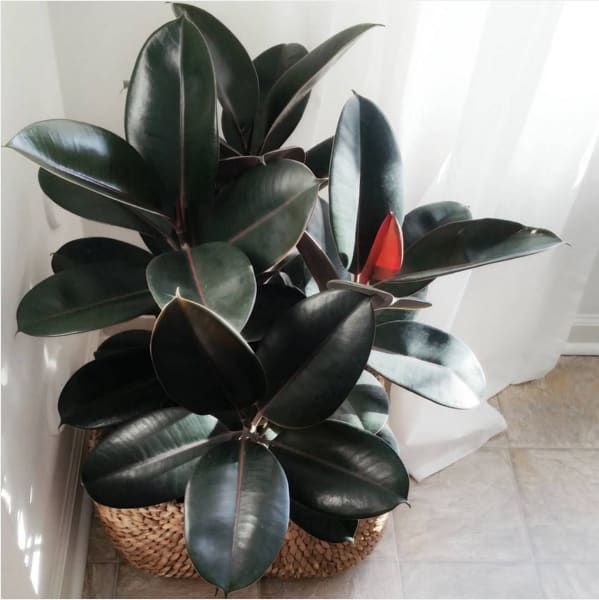
1. Dark Leaf Rubber Plant (Ficus elastica ‘Burgundy’)
With its deep burgundy-black leaves and glossy texture, the Burgundy Rubber Plant is a statement-maker. The plant features broad, oval-shaped leaves that look almost black in the right light.
It thrives in bright, indirect light and needs minimal watering, making it perfect for busy plant parents. As it matures, it can grow several feet tall, creating a bold vertical accent in any room.
2. Black Haworthia (Haworthia nigra)
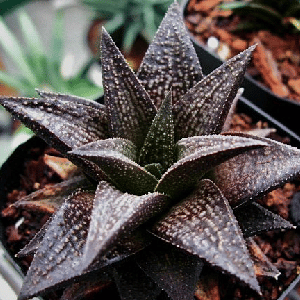
This small, spiky succulent features almost jet-black, triangular leaves stacked in a rosette pattern.
Black Haworthia is extremely low-maintenance and ideal for minimalistic or modern homes. It prefers bright, filtered light and infrequent watering, making it suitable for desktops, shelves, or small plant displays.
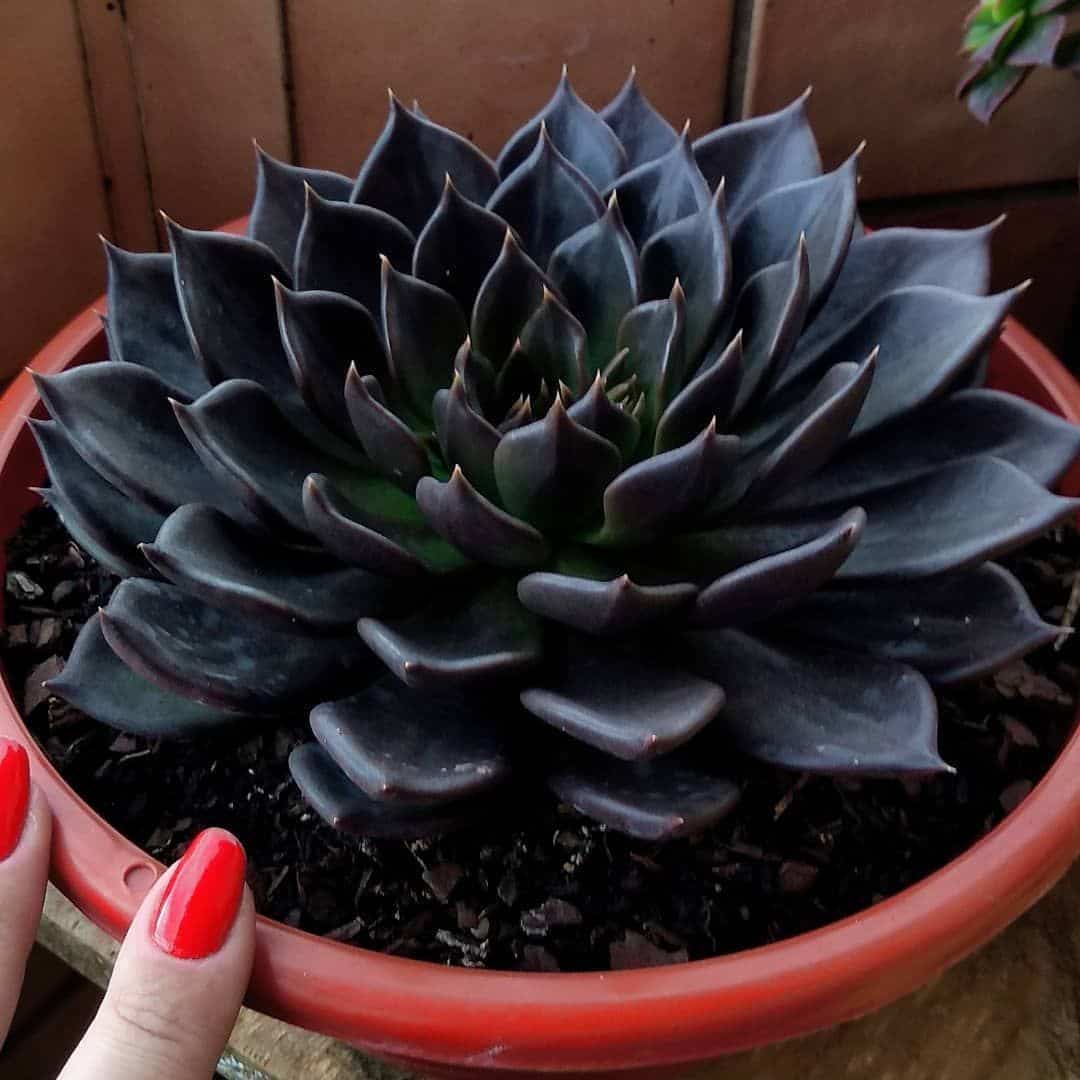
3. Black Prince Echeveria (Echeveria ‘Black Prince’)
A showstopper among succulents, Black Prince features dramatic, dark purple to black rosettes with pointed, symmetrical leaves.
Its compact size makes it ideal for windowsills or succulent arrangements. It needs bright light and well-draining soil to maintain its dark coloration.
Occasionally, it produces striking red flowers, adding to its allure.
4. Colocasia ‘Black Magic’ (Taro Plant)
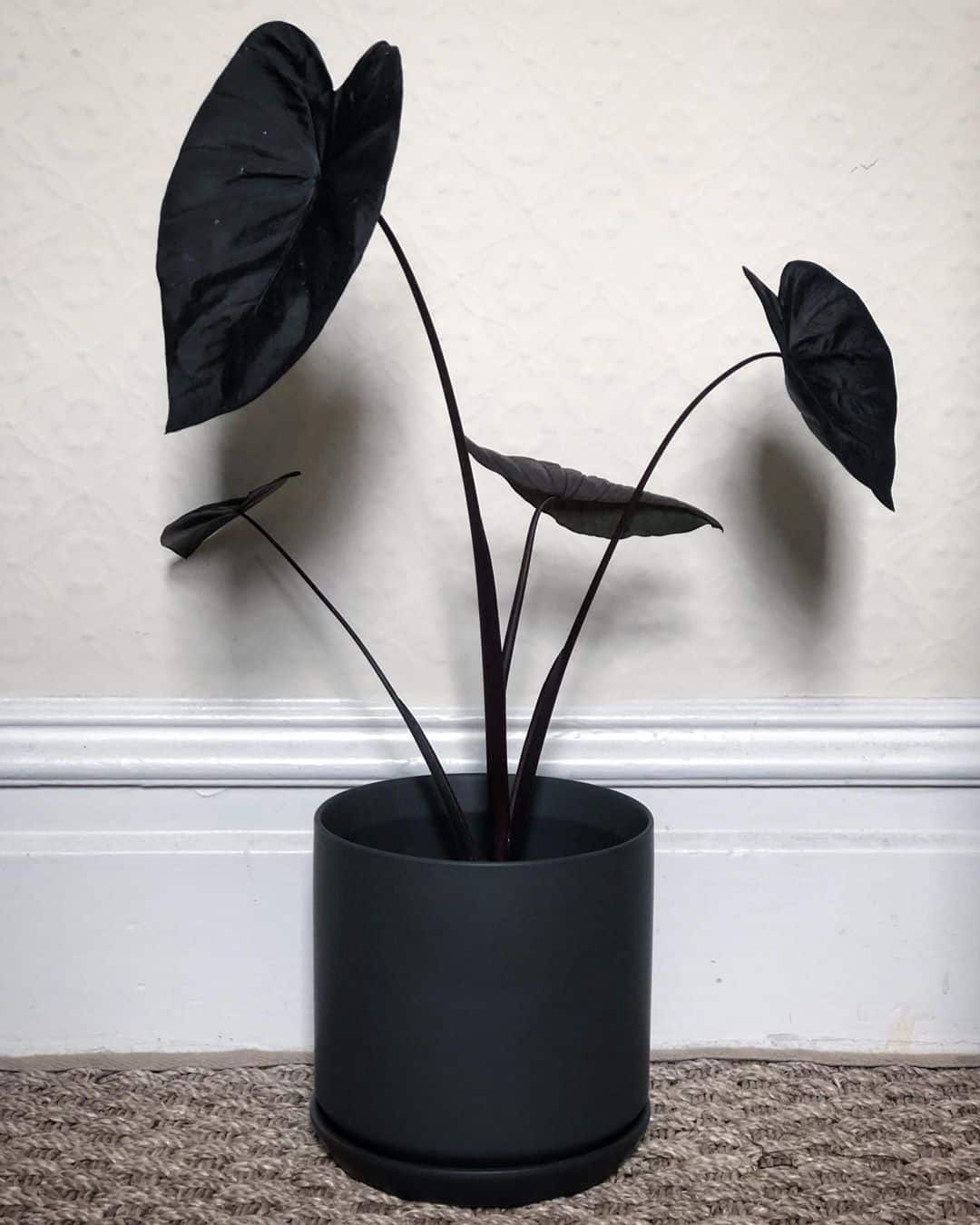
Known for its large, heart-shaped leaves in a velvety, deep purple-black shade, Colocasia ‘Black Magic’ brings an exotic, tropical flair to indoor spaces.
While it’s often grown outdoors, it can thrive indoors with sufficient humidity and bright, indirect light. The dramatic foliage pairs well with light-colored pots or minimalist decor for high contrast.
5. Alocasia ‘Black Velvet’
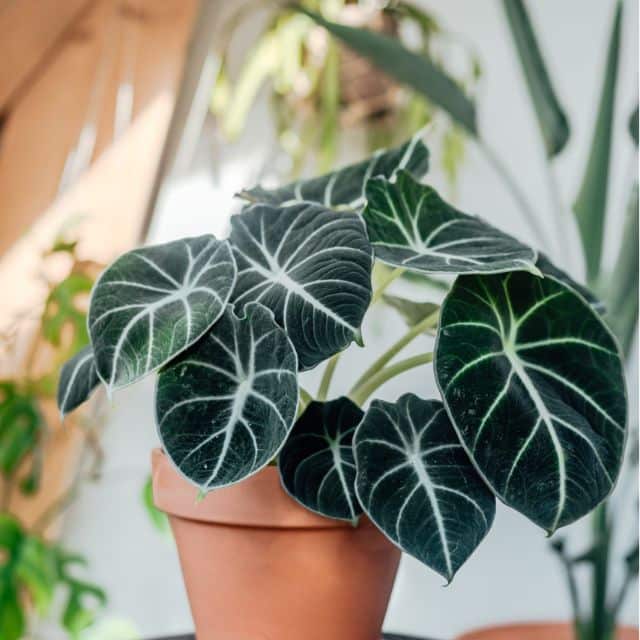
This compact, jewel-toned Alocasia variety features thick, dark green to nearly black leaves with striking silver-white veins.
Its velvety texture and bold look make it a favorite among collectors. Alocasia ‘Black Velvet’ prefers well-draining soil, high humidity, and soft indirect light. Keep the soil slightly moist but not soggy.
6. Emerald Ripple Peperomia (Peperomia caperata ‘Burgundy’ or ‘Schumi Red’)
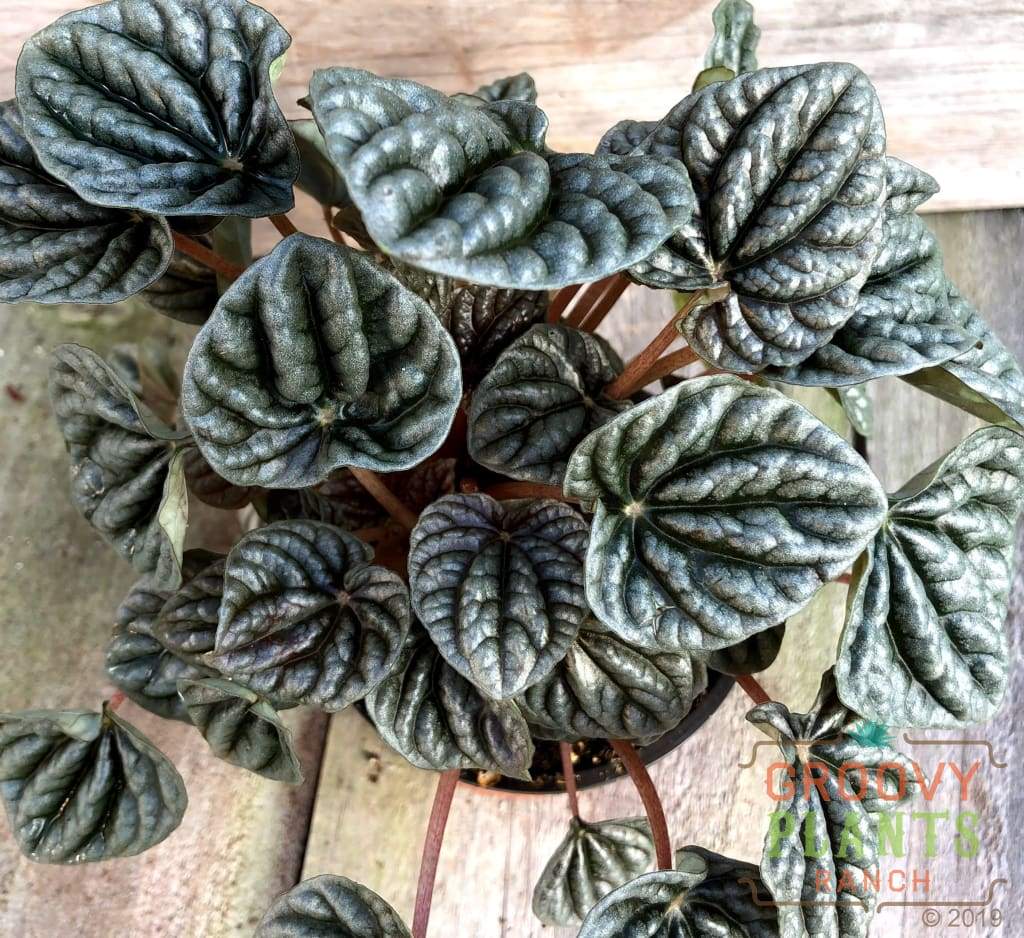
This Peperomia variety features deeply textured, wrinkled leaves that shimmer in shades of deep burgundy, almost appearing black in lower light.
It’s a compact plant that does well on tabletops or small shelves. It thrives in medium light and only needs watering once the topsoil is dry.
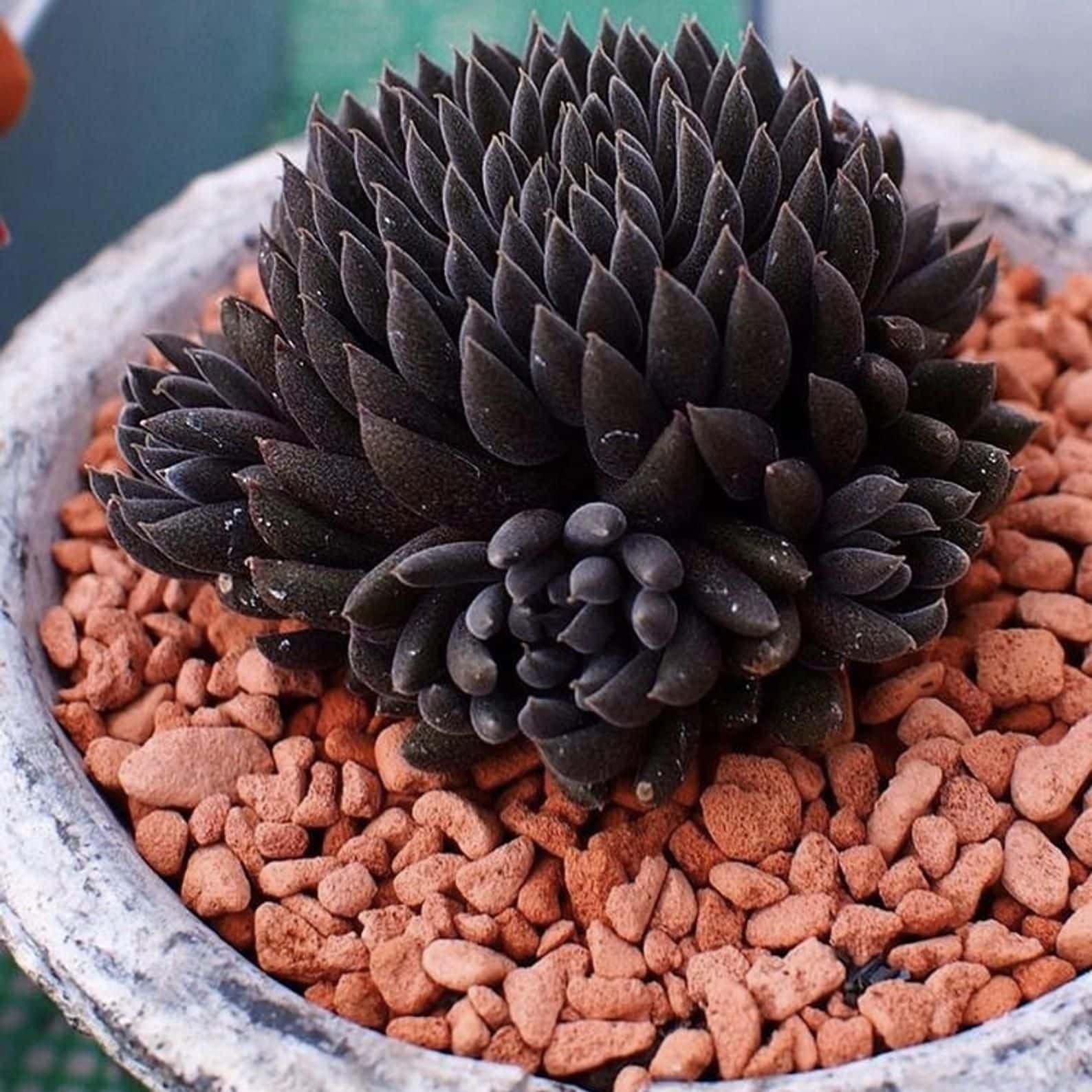
7. Chinese Jade (Sinocrassula yunnanensis)
This lesser-known succulent forms dense, rosette clusters of narrow, pointed leaves that can range from dark green to black depending on the light exposure.
Chinese Jade is easy to grow and perfect for succulent enthusiasts who want something truly unique. It prefers bright, indirect light and needs very little water.
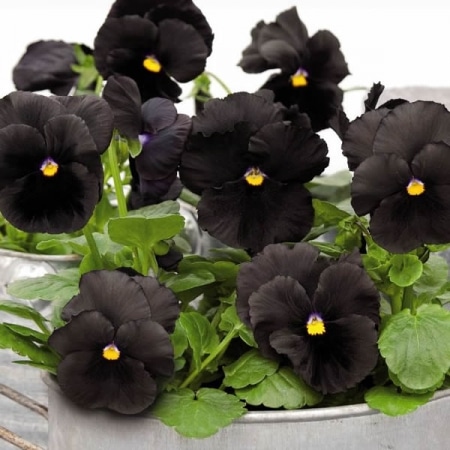
8. Black Pansies (Viola x wittrockiana)
While traditionally outdoor plants, Black Pansies can be grown indoors in containers near a sunny window.
Their velvety petals come in the deepest shades of black with hints of purple or maroon, creating an incredibly dramatic bloom. They’ll need bright light and a cooler indoor environment to thrive.
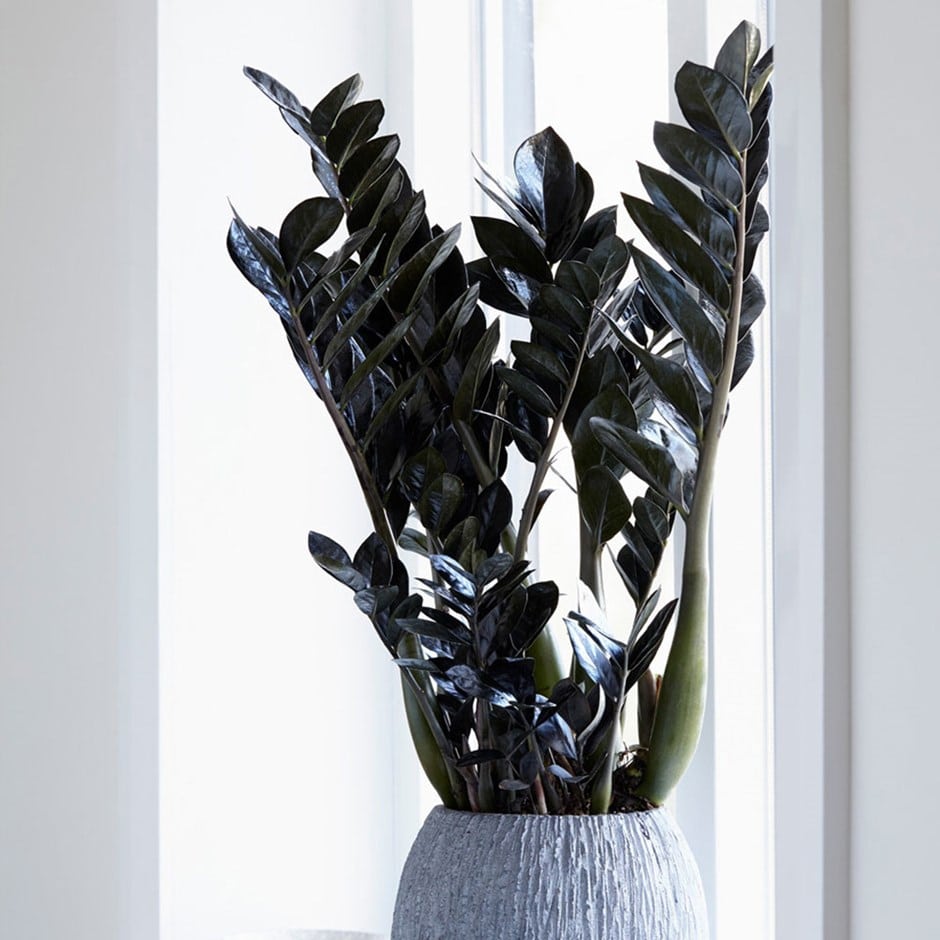
9. Black ZZ Plant (Zamioculcas zamiifolia ‘Raven’)
Also known as Raven ZZ, this sleek and glossy plant features deep purple-black foliage that darkens as it matures. It’s virtually indestructible, tolerating low light, infrequent watering, and neglect.
Ideal for modern homes or offices, the Black ZZ Plant is both pet-safe and visually stunning.
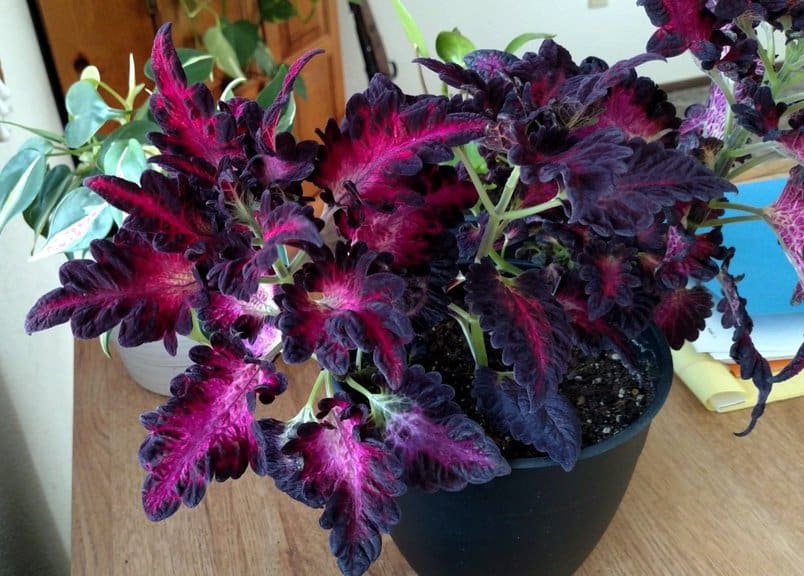
10. Coleus (Coleus scutellarioides ‘Black Dragon’)
Coleus varieties are known for their colorful foliage, and ‘Black Dragon’ doesn’t disappoint. It features ruffled, velvety leaves in shades of burgundy-black with intense color saturation.
While often grown outdoors as annuals, coleus can thrive indoors with plenty of bright, indirect light and regular watering.
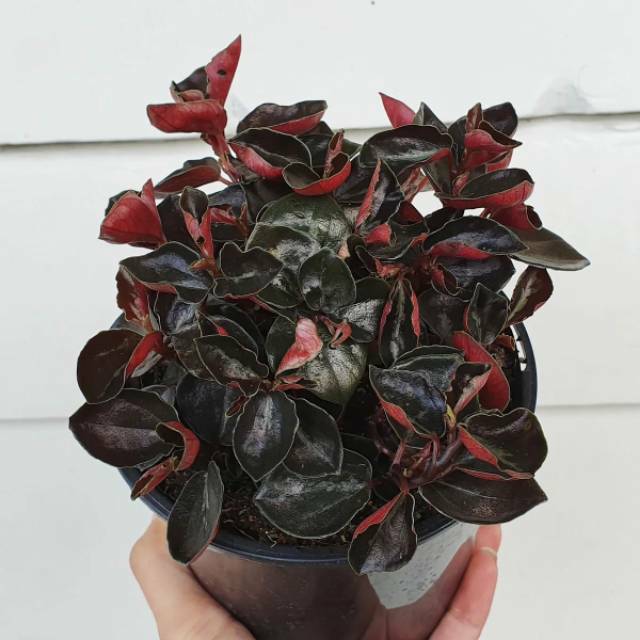
11. Peperomia Metallica
This small but striking peperomia species has dark, metallic purple-black foliage with a shimmering finish. Its compact growth makes it perfect for indoor arrangements, windowsills, or terrariums.
Peperomia Metallica prefers moderate humidity, indirect light, and infrequent watering.
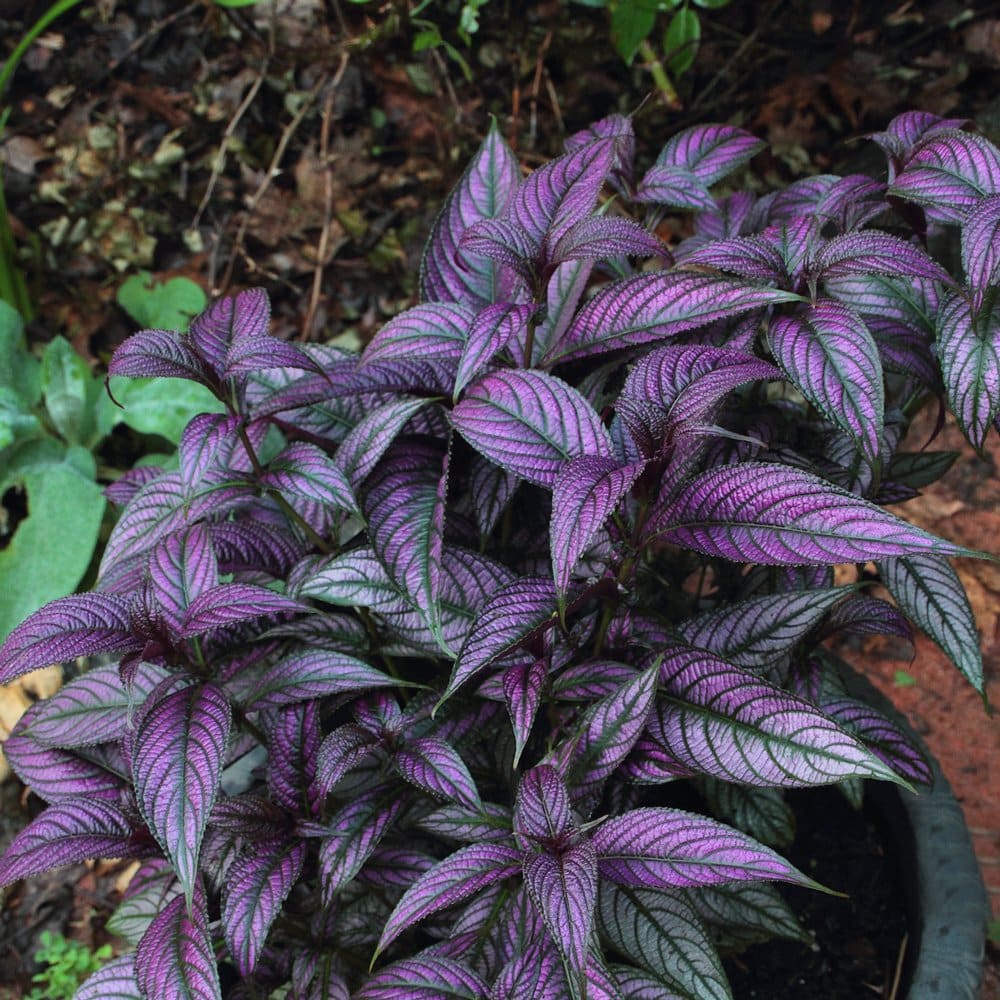
12. Persian Shield (Strobilanthes dyerianus)
While Persian Shield is typically known for its metallic purple sheen, in the right lighting and maturity, the foliage takes on near-black undertones.
This fast-growing tropical plant loves humidity and bright indirect light. It brings a colorful, mysterious vibe to any plant collection.
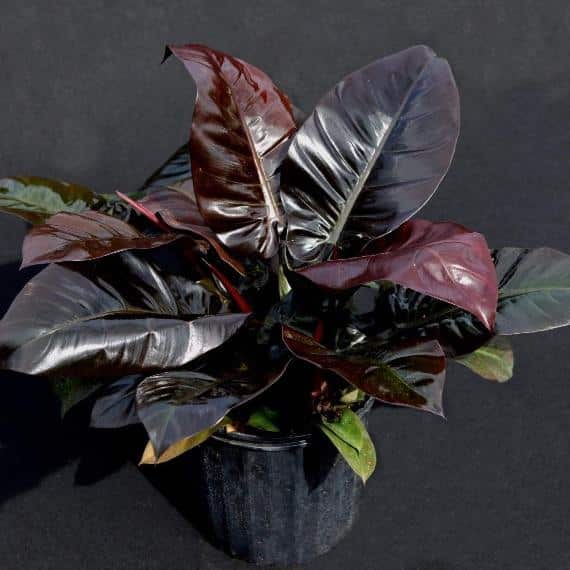
13. Philodendron ‘Black Cardinal’
This striking variety of philodendron features large, waxy leaves that emerge burgundy and deepen to a dramatic, blackish hue as they mature.
It’s a slow grower that does well in low to medium light and requires little upkeep beyond occasional watering. Its bold look makes it a favorite for modern or moody-themed interiors.
Tips for Growing Black Houseplants Successfully
Growing black indoor plants isn’t much different from growing traditional green foliage plants, but to keep their dark tones vibrant and healthy, consider the following:
- Light Matters: Most black plants develop richer tones in bright, indirect light. Too little light can cause fading.
- Humidity Needs: Many of the darker tropicals, like Alocasia and Colocasia, thrive in high humidity. Use a humidifier or pebble tray.
- Well-Draining Soil: Succulents and velvet-leaved plants dislike soggy soil. Always use pots with drainage holes.
- Contrast Pots: Use light-colored or minimalist pots to make your dark-leaved plants pop.
- Wipe Leaves: Keep dust off dark leaves to enhance their natural shine and prevent pest issues.
Why Choose Black Houseplants?
- Unique Aesthetic: These plants offer a rare, bold look that stands out in any space.
- Mood Enhancement: Deep colors can evoke sophistication, mystery, or coziness.
- Decor Versatility: They pair beautifully with modern, industrial, gothic, or minimalist decor.
- Conversation Starters: Few things grab attention like an indoor plant that looks almost black.
If you’re drawn to the mysterious beauty of dark-toned foliage, black houseplants are a stunning way to bring that vibe into your living space.
From glossy succulents to velvety tropicals, these exotic varieties are as easy to care for as they are beautiful. They’ll transform your home into a dramatic oasis—no green thumb required.