One of the most satisfying and cost-effective ways to expand your garden is by propagating plants from cuttings.
Growing plants from cuttings allows you to clone your favorite varieties, save money, and accelerate plant growth compared to growing from seed. It’s also surprisingly simple—no advanced skills or expensive equipment required.
Many popular houseplants, herbs, perennials, and even shrubs can be easily propagated this way.
Whether you’re a beginner gardener or looking to expand your green space, this guide covers the best plants to grow from cuttings, along with practical tips for success.
Why Grow Plants From Cuttings?
Growing plants from cuttings means taking a portion of an existing plant—usually a stem, leaf, or root—and encouraging it to develop roots and grow into a brand-new plant.
This method of propagation offers several benefits:
- Faster than growing from seed;
- Preserves the traits of the parent plant;
- Saves money on new plants;
- Reduces waste from pruning or trimming;
- Ideal for gifting or trading with fellow gardeners.
Whether you’re multiplying herbs on a windowsill or filling garden beds with perennials, propagation by cuttings is both rewarding and practical.
1. Pothos (Epipremnum aureum)
Pothos, also known as Devil’s Ivy, is one of the easiest houseplants to grow from cuttings. It thrives in water or soil, making it ideal for beginners.
How to propagate: Cut a 4- to 6-inch section of stem with at least 2–3 nodes (the little bumps where leaves or roots can form). Remove the lower leaves and place the cutting in a glass of water or moist potting soil. Roots typically appear in 1–2 weeks.
2. Spider Plant (Chlorophytum comosum)
Spider plants produce “babies” or offshoots on long stems, which are ready-made cuttings.
How to propagate: Snip off the baby plant (also called a pup) and place it in water or soil. If it already has tiny roots, plant it directly in soil. These plants root fast and thrive with minimal care.
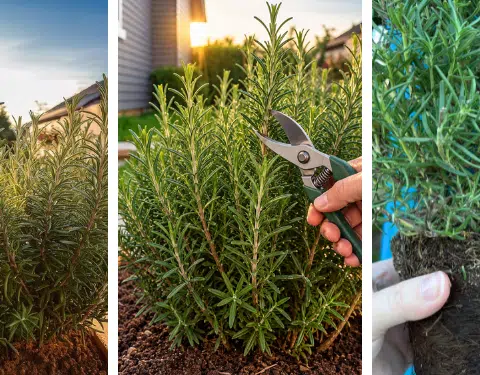
3. Rosemary (Rosmarinus officinalis)
Rosemary is a hardy herb that grows well from stem cuttings. It’s a great way to expand your kitchen herb garden.
How to propagate: Take a 4- to 5-inch softwood cutting from new growth. Strip the leaves from the lower half and place the stem in moist potting mix or a container of water. Keep it warm and out of direct sunlight. Roots should appear within 2–3 weeks.
4. Mint (Mentha spp.)
Mint is notorious for spreading quickly, and it’s incredibly easy to propagate from cuttings.
How to propagate: Take a 4-inch cutting from a healthy stem, remove the lower leaves, and place it in a glass of water. Roots often emerge in just a few days. Once well-rooted, transfer it to soil for continuous harvests.
5. Basil (Ocimum basilicum)
Fresh basil can be grown year-round from cuttings, even indoors on a sunny windowsill.
How to propagate: Snip a 4- to 6-inch cutting below a leaf node. Remove lower leaves and place the stem in water, avoiding direct sunlight. After a week or two, roots will form. Transplant into a pot and continue harvesting.
6. Coleus (Solenostemon scutellarioides)
Coleus is loved for its colorful foliage and fast-growing nature, making it a perfect candidate for propagation.
How to propagate: Cut a 3- to 5-inch section of stem just below a leaf node. Remove the bottom leaves and place it in water or directly in potting soil. Roots usually form quickly—often within 7–10 days.
7. Lavender (Lavandula spp.)
While a bit more finicky, lavender can be successfully propagated from semi-hardwood cuttings.
How to propagate: In late spring or early summer, take 3- to 4-inch cuttings from new growth. Strip the lower leaves and dip the stem in rooting hormone before planting in a well-draining potting mix. Keep in a warm, bright area, and water sparingly.
8. Succulents (Various types)
Succulents like echeveria, jade plant, and sedum can grow from leaf or stem cuttings with little effort.
How to propagate: Gently twist off a healthy leaf or stem and let it dry (callous) for 1–2 days. Then place the cut end on top of dry succulent soil. Mist lightly every few days. New roots and baby plants will emerge in 2–3 weeks.
9. Geraniums (Pelargonium spp.)
Geraniums are vibrant flowering plants that are incredibly easy to propagate.
How to propagate: Take 4- to 6-inch cuttings from non-flowering stems. Remove lower leaves and let the cut end dry for a few hours. Plant directly in potting soil, and keep moist. Roots will form within two weeks.
10. Hydrangeas (Hydrangea macrophylla)
Hydrangeas can be propagated from softwood cuttings during the growing season.
How to propagate: Cut a 5-inch section of new green stem, remove the lower leaves, and dip the cut end in rooting hormone. Plant in moist soil and cover with a plastic dome or bag to retain humidity. Place in indirect sunlight until roots develop (about 2–3 weeks).
11. Fiddle Leaf Fig (Ficus lyrata)
Fiddle leaf figs are trendy but pricey houseplants that can be propagated at home.
How to propagate: Cut a healthy stem with a few leaves and nodes. Let the cut end callous for a few hours, then place it in water or soil. Water rooting usually takes 3–4 weeks and works best with warm temperatures and bright, indirect light.
Tips for Successful Plant Propagation
- Use sharp, clean scissors or pruners to avoid crushing stems or introducing disease.
- Choose healthy parent plants free of pests or disease.
- Remove excess leaves to reduce moisture loss and encourage root development.
- Use rooting hormone for woody or slow-rooting plants to increase success rates.
- Keep cuttings warm and humid. Covering pots with a plastic dome or bag helps maintain moisture.
- Avoid direct sunlight during the rooting phase to prevent stress or wilting.
- Be patient. Some plants root quickly, while others may take several weeks.
Propagating plants from cuttings is one of the most rewarding ways to grow your garden without spending a dime.
Whether you’re filling your home with lush green foliage or expanding your herb collection, these easy-to-grow plants from cuttings are perfect for gardeners of all levels.
With a few simple tools, the right environment, and a bit of care, you can turn one plant into many, all while learning and enjoying the fascinating process of plant propagation.