Black flowers are the rebels of the garden—the unexpected twist in a sea of vibrant reds, sunny yellows, and romantic pastels.
Their brooding hues create a dramatic contrast, evoking mystery, elegance, and a touch of gothic glamor.
And while no natural flower is truly jet-black, many varieties come so close—with inky shades of maroon, deep purple, midnight blue, and chocolate brown—that they appear black to the eye, especially when planted with contrasting companions.
What makes these shadow-toned blooms even more special is their ability to add depth, drama, and contrast to traditional flower beds.
A subtle hint of wine or plum along the edge of a petal brings out layers of richness, making black flowers surprisingly versatile in garden designs.
Pair them with hot colors like fiery orange and scarlet, or cool them down with soft whites and silver-leaved foliage. Either way, the effect is unforgettable.
When it comes to placement, keep in mind that most black flowers need at least partial sunlight to shine. In full shade, they can blend into the background and disappear.
But give them a touch of light—especially against vibrant green foliage—and they’ll stand out as stunning focal points in any border or bed.
Here are 7 mesmerizing black flowers that will bring mysterious beauty and intrigue to your garden or home:
1. ‘Midnight’ Oriental Poppy (Papaver orientale ‘Midnight’)
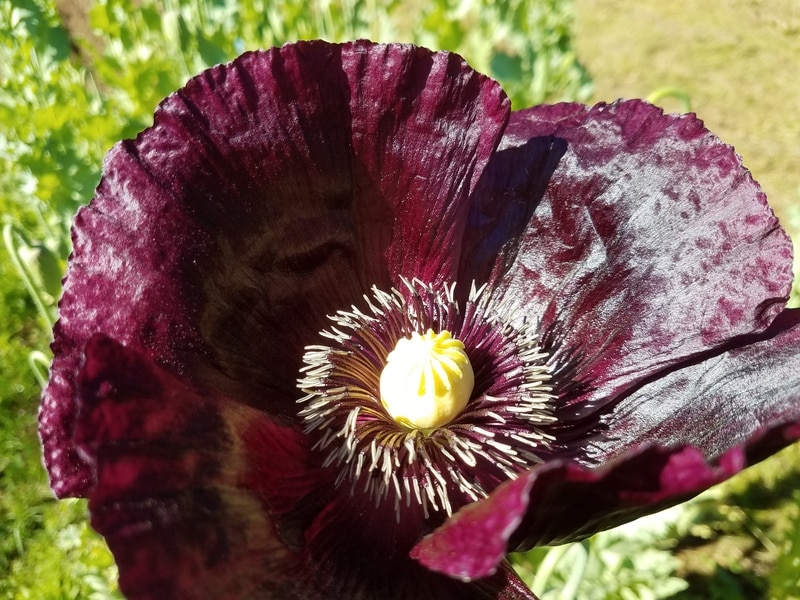
A showstopper in spring gardens, the ‘Midnight’ poppy features bold, crinkled petals in a rich raisin-purple hue so deep it appears almost black.
The bloom is centered by a frilly halo of white-tipped stamens and a bright green seed capsule, giving it a hypnotic look that draws the eye from across the garden.
- Bloom Time: Late spring
- Height: Up to 30 inches
- Sun Needs: Full sun
- Soil: Well-drained, sandy or loamy
Notes: These perennials don’t like being moved once established due to their long taproots, so choose your planting site wisely.
After flowering, the plant goes dormant—leaving behind striking seed pods that add architectural interest.
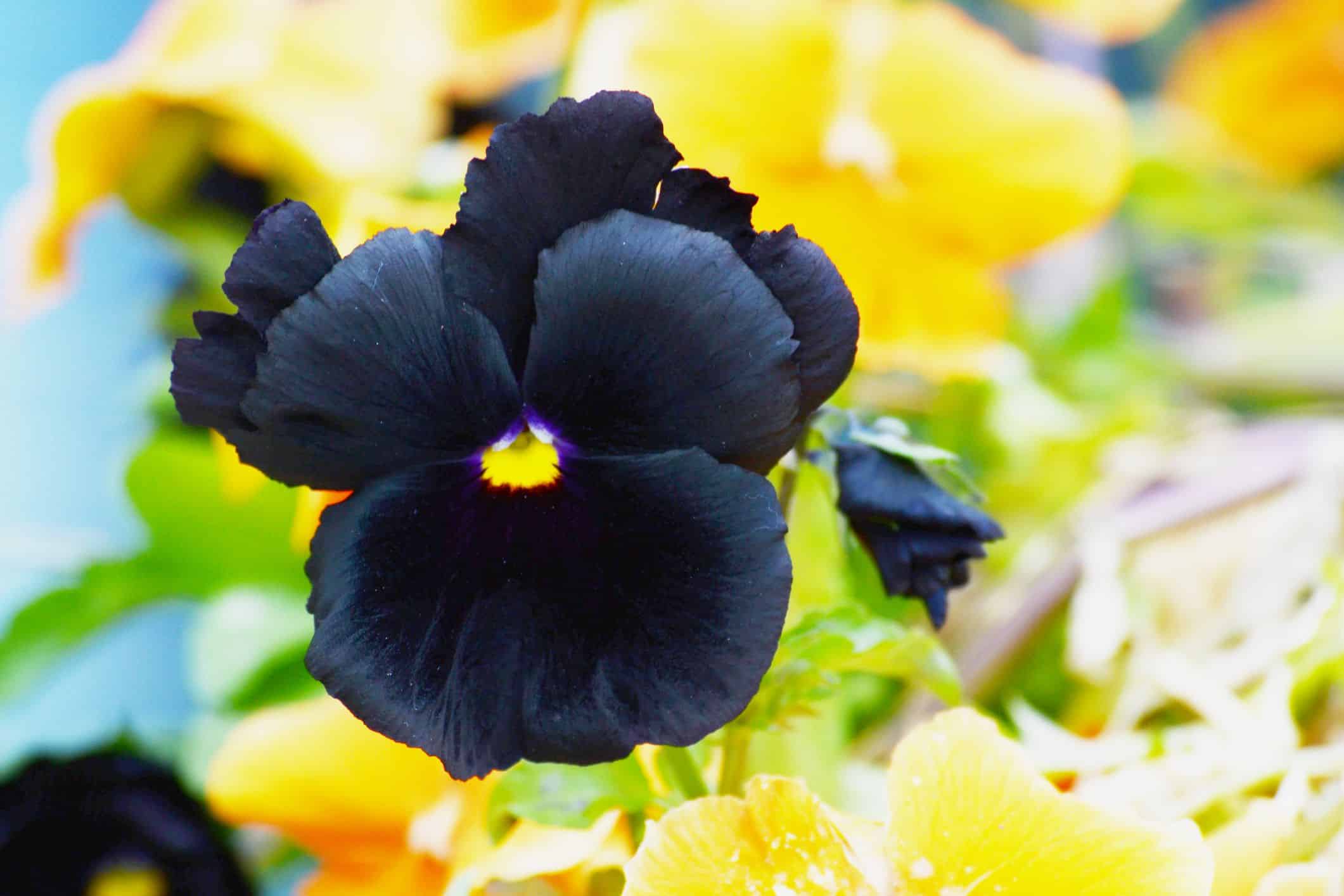
2. ‘Black Beauty’ Pansy (Viola × wittrockiana)
With velvety petals so dark they seem to absorb light, ‘Black Beauty’ pansies are perfect for fall or early spring gardens.
Their cold-hardiness allows them to survive even under snow, making them an intriguing contrast against winter’s pale palette.
A tiny burst of yellow at the center of each flower adds just the right touch of warmth and whimsy.
- Bloom Time: Fall through early spring
- Height: 6 to 8 inches
- Sun Needs: Full to partial sun
- Soil: Moist, rich, well-drained
Design Tip: Plant them en masse with creamy white or sunny yellow pansies to highlight their moody color. They also perform beautifully in containers or window boxes.
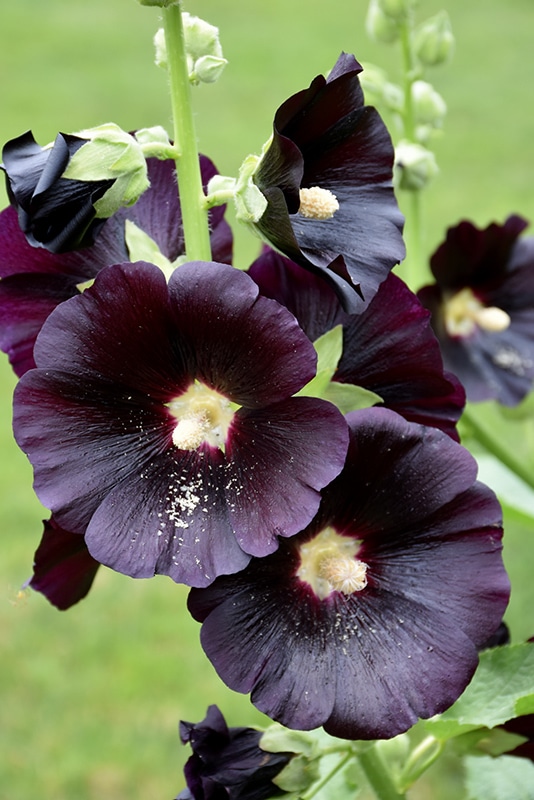
3. ‘Nigra’ Hollyhock (Alcea rosea ‘Nigra’)
Towering over most garden plants with their five-foot stems, ‘Nigra’ hollyhocks deliver drama in vertical form.
Their glossy black-purple petals have an almost metallic sheen, giving them a luxurious, antique look. These heirloom favorites have been cultivated since the 1600s—and for good reason.
They attract bees and butterflies while adding height and contrast to cottage-style or pollinator gardens.
- Bloom Time: Midsummer to early fall
- Height: 5 to 6 feet
- Sun Needs: Full sun
- Soil: Well-drained, moderately fertile
Notes: ‘Nigra’ is a biennial but often self-seeds, so you may find new plants emerging each year.
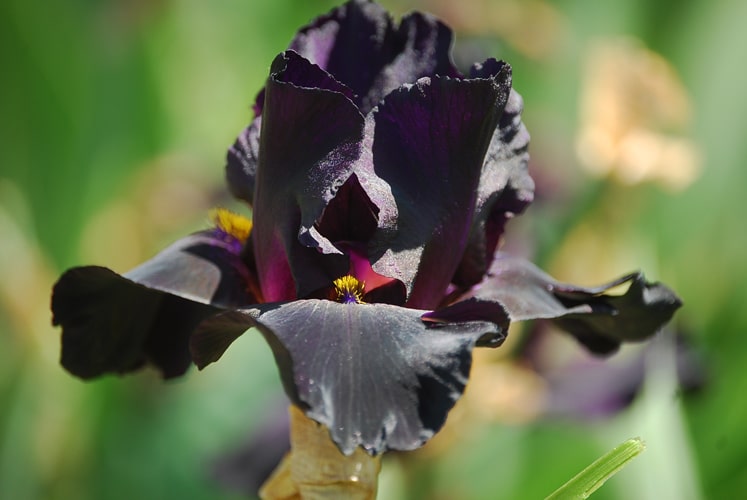
4. ‘Old Black Magic’ Bearded Iris (Iris germanica ‘Old Black Magic’)
This spring-blooming bearded iris lives up to its name with rich, raven-colored standards and falls (the two sets of iris petals).
Its smooth, velvety petals shimmer in the light, creating an almost liquid depth to its color. A pop of golden orange in the beard adds just the right touch of contrast and warmth.
- Bloom Time: Mid to late spring
- Height: 30 to 36 inches
- Sun Needs: Full sun
- Soil: Well-drained
Care Tips: Plant the rhizomes shallowly and divide every 3–4 years to maintain vigor. Deer- and drought-resistant, this iris is a reliable performer in most zones.
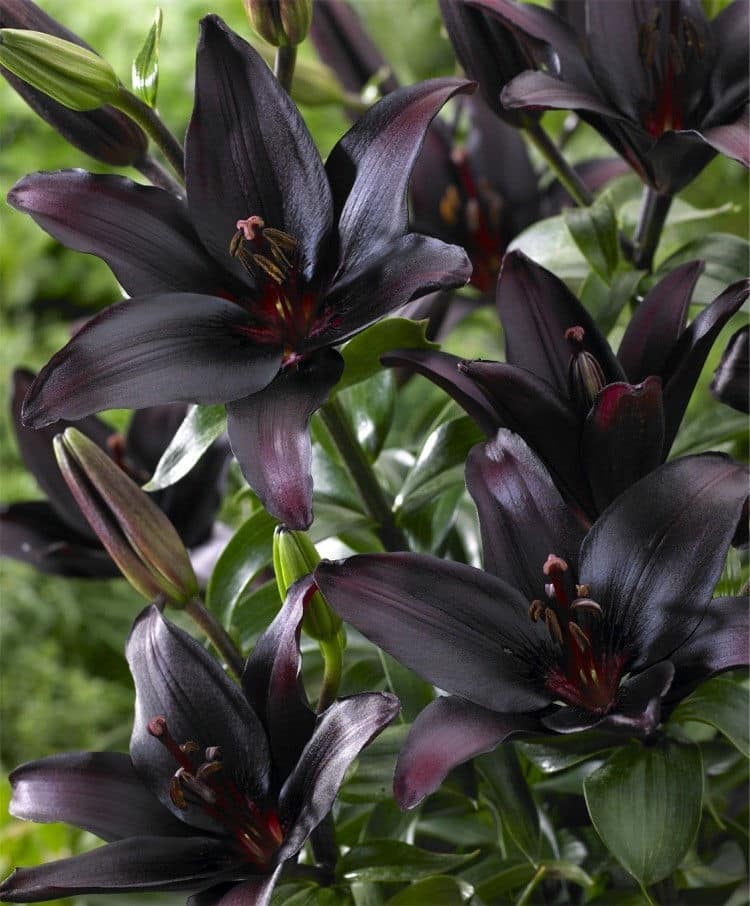
5. ‘Black Charm’ Asiatic Lily (Lilium asiatic ‘Black Charm’)
This breathtaking lily bears clusters of trumpet-shaped flowers in a deep maroon so dark it borders on black.
Even the pollen anthers match the petals in color—giving the whole bloom a uniform, intense tone. With strong stems reaching 3 feet tall, these lilies hold their heads high above other perennials.
- Bloom Time: Early summer
- Height: 30 to 36 inches
- Sun Needs: Full sun to light shade
- Soil: Rich, well-drained, slightly acidic
- Planting Tip: Plant bulbs at least 6 inches deep to encourage strong stems and reliable returns year after year.
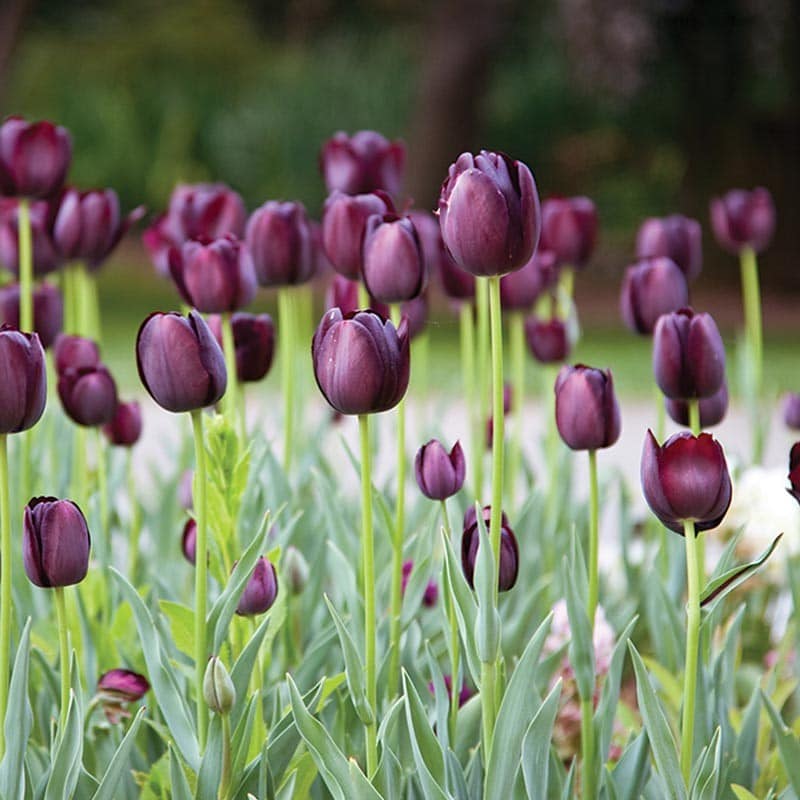
6. ‘Queen of Night’ Tulip (Tulipa ‘Queen of Night’)
Often described as the darkest tulip available, ‘Queen of Night’ boasts gleaming maroon-black petals on 22-inch stems.
Introduced in 1944, this heirloom favorite is one of the last tulips to bloom in spring, extending the season with a flourish of elegance.
- Bloom Time: Mid to late spring (May)
- Height: 20 to 24 inches
- Sun Needs: Full sun
- Soil: Well-drained, sandy or loamy
Design Tip: Plant them en masse for visual impact. Pair with late-blooming white or lavender tulips to emphasize the deep black tones.
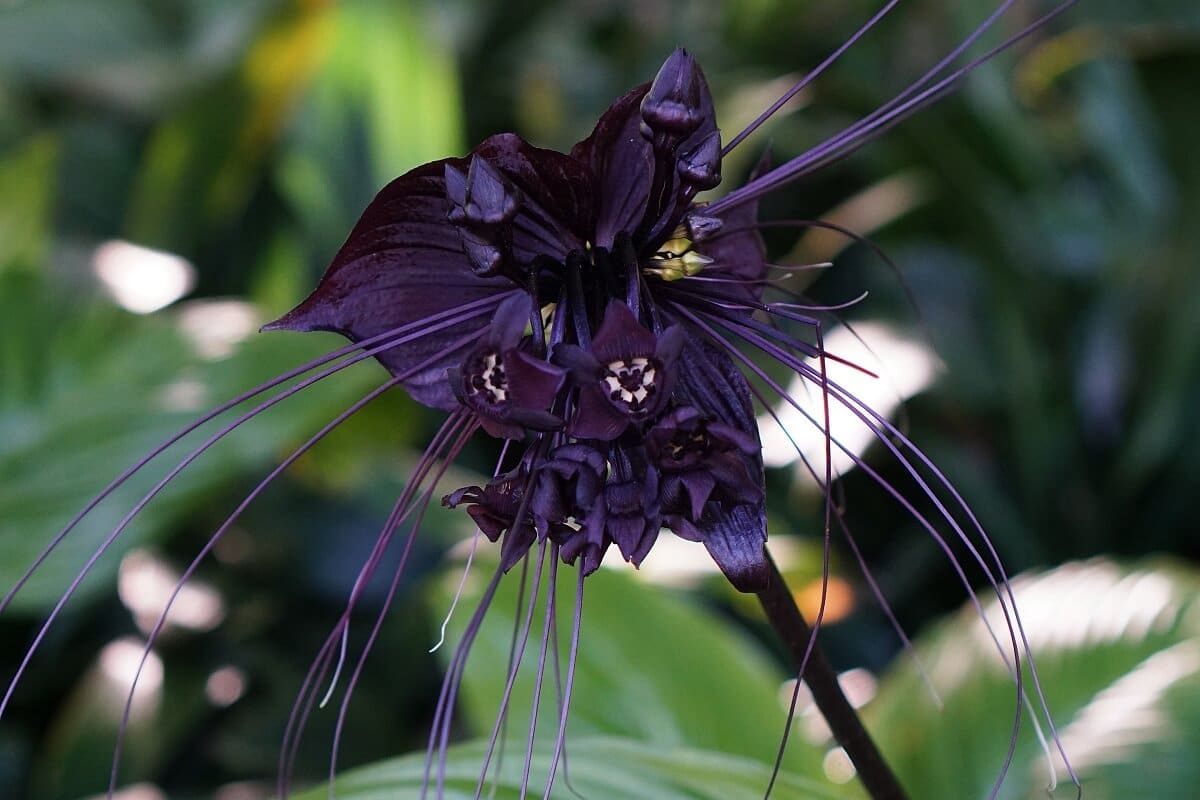
7. Bat Flower (Tacca chantrieri)
For indoor plant lovers or tropical garden enthusiasts, the bat flower is the ultimate conversation piece.
This unusual houseplant features exotic black flowers shaped like bats in flight, complete with long, whisker-like bracts that can trail over a foot long.
Its surreal appearance makes it a favorite among collectors and lovers of the weird and wonderful.
- Bloom Time: Late summer to fall (can bloom year-round indoors)
- Height: 24 to 36 inches
- Light Needs: Bright, indirect light or partial shade
- Humidity: High—thrives in warm, humid environments
- Care Tip: Water regularly but don’t let the soil sit wet. Ideal for bathrooms or humid sunrooms.
Designing with Black Flowers: Tips for Maximum Drama
-
Contrast is key: Pair black flowers with silver foliage (like dusty miller or artemisia), bold oranges, hot pinks, or pure white blooms for dramatic contrast.
-
Mass plant for effect: A single black flower might disappear—but a mass of them creates an intense visual statement.
-
Don’t forget the texture: Mix petal types—velvety tulips, ruffled irises, shiny hollyhocks—for added dimension.
-
Lighting matters: In shady spots, black flowers can get lost. Give them partial sun to make their dark hues pop.
Whether you’re going for a mysterious moon garden, an edgy contrast bed, or just want to experiment with something a little outside the norm, black flowers bring a unique sense of depth, sophistication, and mood to the garden. They may not scream for attention—but they definitely know how to turn heads.