Hanging baskets aren’t just for flowers – they’re also a smart and space-saving way to grow your own fresh herbs.
Whether you’re working with a small balcony, porch, patio, or even a sunny window, herbs in hanging baskets allow you to enjoy homegrown flavor, color, and fragrance without needing much ground space.
These baskets add beauty and practicality to any home, and they’re ideal for vertical gardening, especially if you want to maximize productivity in a limited area.
Plus, most herbs grow well in well-drained containers and love the sun – making them a perfect match for hanging setups.
Ready to bring fresh flavor closer to your kitchen? Discover 8 of the best herbs to grow in hanging baskets and how to care for each.
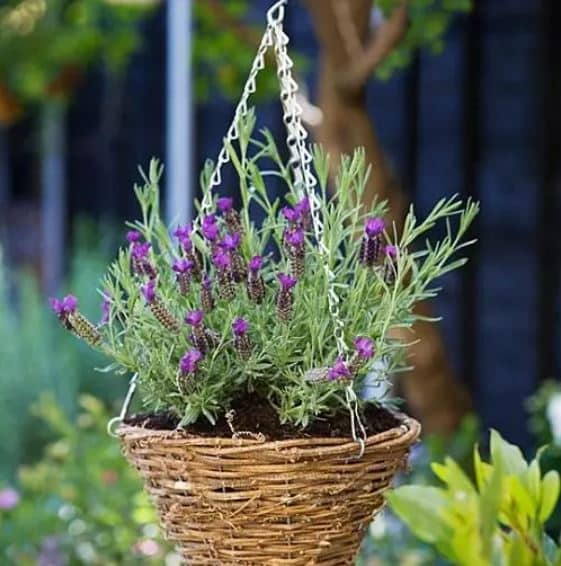
1. Lavender (Lavandula spp.)
Lavender is not only visually stunning with its fragrant purple blooms, but it’s also a pollinator magnet and a calming presence in any space.
Its drought-tolerant nature and compact growth make it ideal for hanging containers.
Why Grow It:
- Aromatic and therapeutic
- Repels pests like mosquitoes
- Attracts bees and butterflies
How to Grow:
- Use a basket at least 12 inches wide with good drainage
- Choose sandy, well-draining potting soil
- Place in full sun (6+ hours daily)
- Allow the soil to dry between waterings
- Prune faded flowers to promote new blooms
Lavender thrives in heat and sun, making it a great choice for bright, sunny patios or balconies.
2. Nasturtiums (Tropaeolum majus)
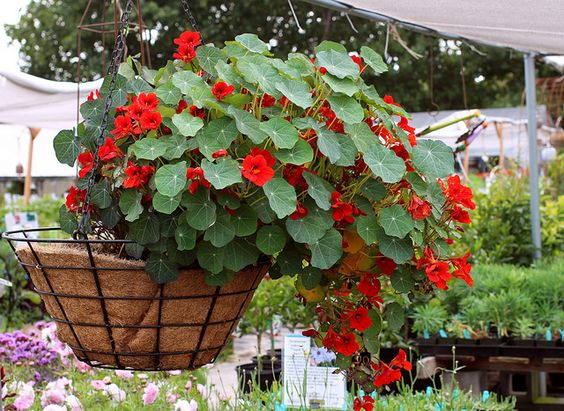
Nasturtiums are often grown for their cascading beauty, but they’re also edible flowers and foliage that add a peppery zing to salads and dishes.
Their sprawling growth habit makes them especially suited for hanging baskets.
Why Grow It:
- Edible leaves, flowers, and seeds
- Fast-growing and low maintenance
- Natural pest repellent
How to Grow:
- Plant seeds directly in baskets after the last frost
- Choose a location with full to partial sun
- Use well-draining potting mix and avoid over-fertilizing (which reduces blooms)
- Water regularly, keeping soil slightly moist
Harvest both the leaves and flowers to garnish salads or blend into pestos, and collect the seeds to pickle as a caper substitute.
3. Creeping Thyme (Thymus serpyllum)
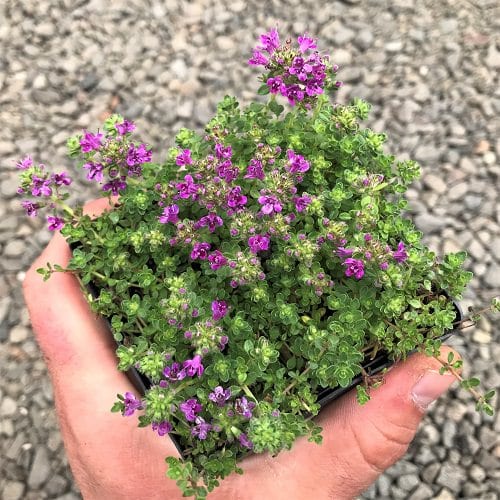
Creeping thyme is a low-growing, trailing herb that adds a gentle spill of foliage over the edges of hanging baskets.
Its tiny, aromatic leaves are great for cooking, and it adds a lovely texture to herb arrangements.
Why Grow It:
- Compact, cascading growth
- Highly fragrant
- Drought-tolerant and pollinator-friendly
How to Grow:
- Use a shallow basket with good drainage
- Place in full sun
- Avoid overwatering – thyme prefers drier soil
- Harvest sprigs as needed throughout the growing season
You can also mix thyme with other Mediterranean herbs like rosemary, oregano, and marjoram in a single hanging basket.
4. Parsley (Petroselinum crispum)
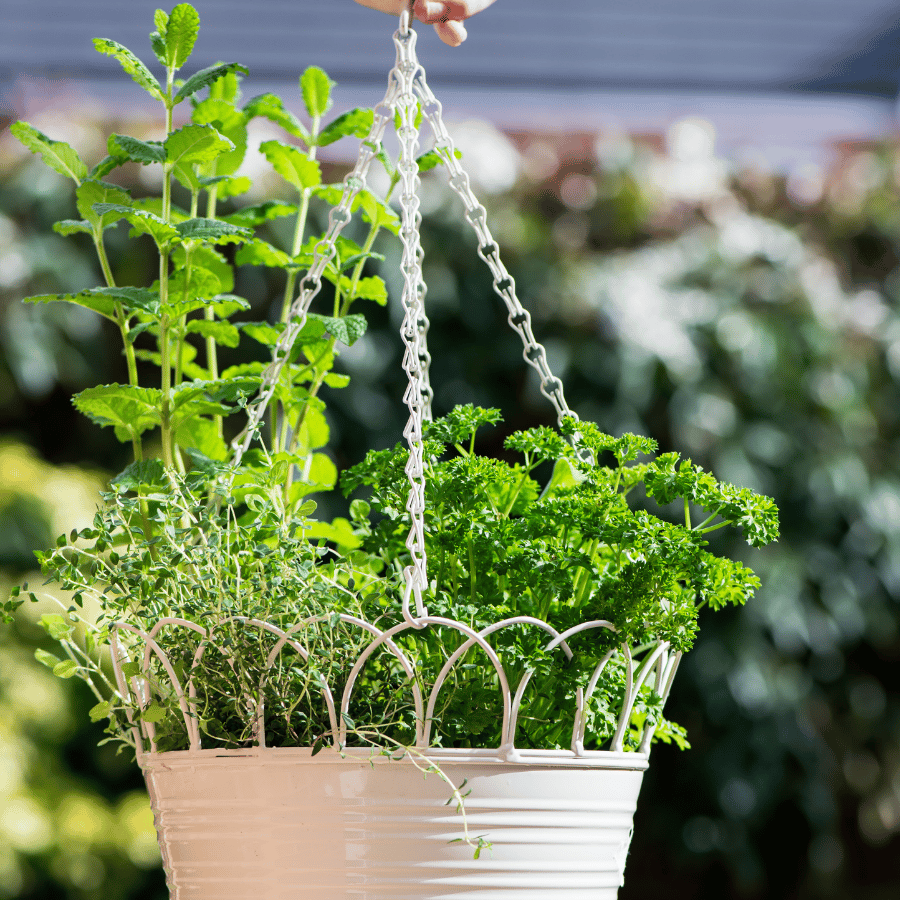
Parsley offers lush green foliage and a mild, fresh flavor that enhances soups, stews, and sauces. It grows well in containers and adds volume and vibrancy to a hanging basket display.
Why Grow It:
- Nutritious and versatile in the kitchen
- Easy to grow from seed
- Attracts beneficial insects
How to Grow:
- Sow seeds in early spring and be patient – they can take 2–3 weeks to germinate
- Use rich potting soil with a touch of organic fertilizer
- Keep the basket in a sunny to partially shaded spot
- Maintain moist (not soggy) soil
- Harvest leaves regularly to encourage bushier growth
Curly or flat-leaf parsley both work well in hanging baskets and can be paired with other upright herbs.
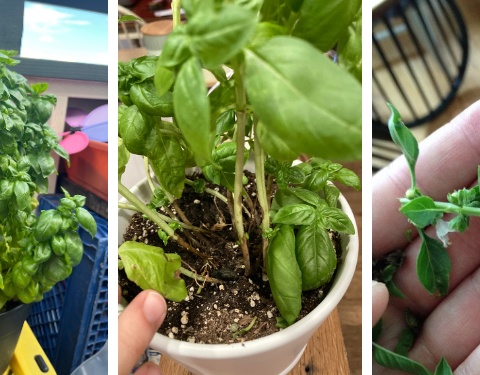
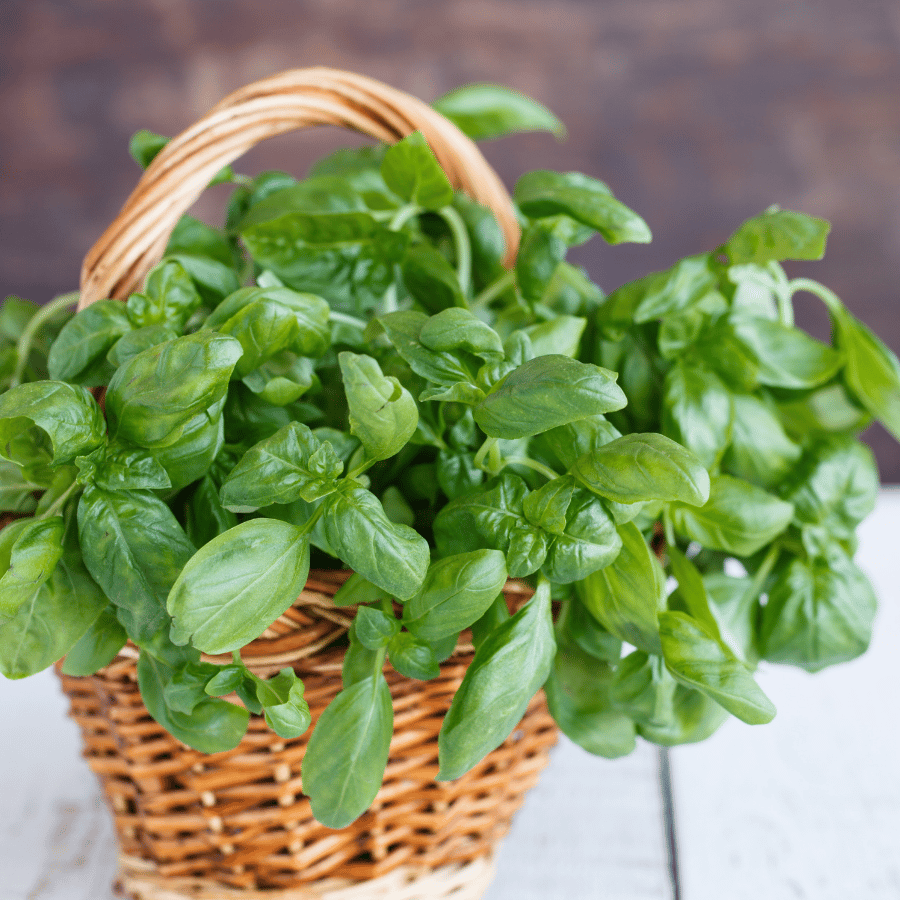
5. Basil (Ocimum basilicum)
Basil is a sun-loving, fast-growing herb that thrives in containers and adds a fragrant, leafy presence to any hanging basket.
With its bold green leaves and culinary value, it’s a favorite for both novice and experienced gardeners.
Why Grow It:
- Essential for Italian dishes, pestos, and teas
- Quick to germinate and grow
- Beautiful paired with tomatoes in containers
How to Grow:
- Plant from seed or transplants after frost danger has passed
- Use nutrient-rich soil and a basket with at least 10-12 inches of depth
- Position in full sun (6–8 hours/day)
- Water when the top inch of soil is dry
- Pinch off flower buds to prolong leaf production
Harvest regularly to promote a bushier plant, and enjoy basil fresh or preserved.
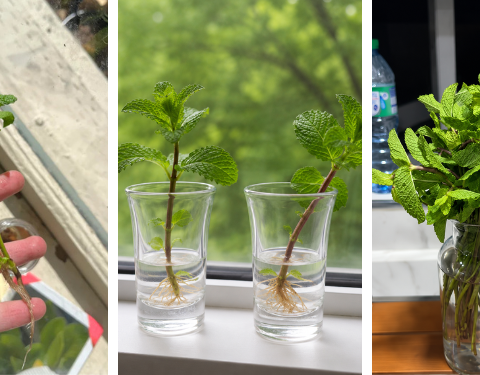
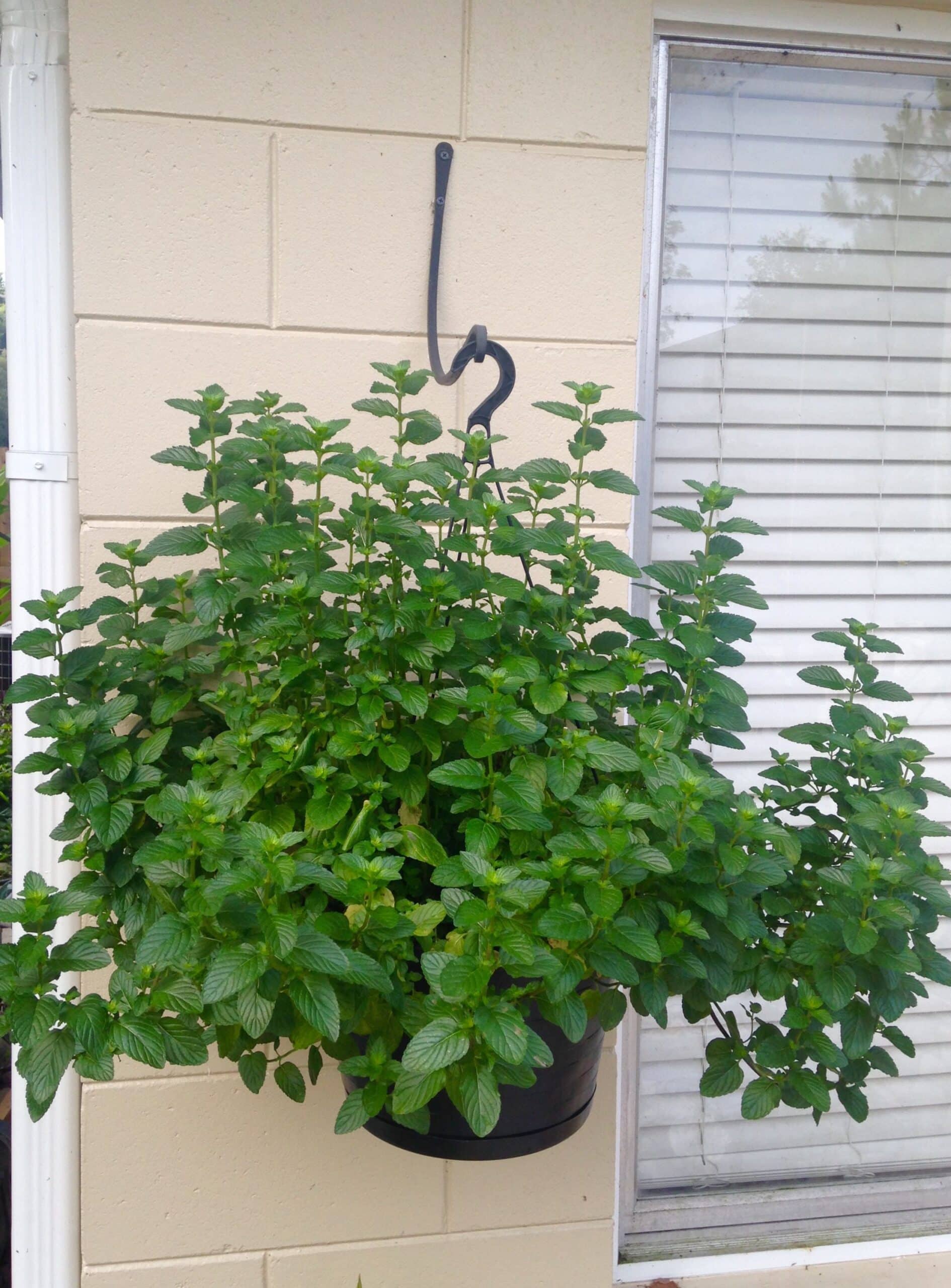
6. Mint (Mentha spp.)
Mint is wonderfully aromatic and useful in teas, desserts, and savory dishes.
Because it can be aggressive and invasive, growing it in a hanging basket helps contain its roots while providing an attractive cascade of green.
Why Grow It:
- Fragrant and refreshing
- Useful in many culinary and medicinal preparations
- Pest-resistant
How to Grow:
- Use a basket with a moisture-retentive liner like coconut coir
- Plant in partial sun – mint can tolerate less light than most herbs
- Keep the soil consistently moist
- Harvest stems when plants reach 4–6 inches tall
Popular varieties include spearmint, peppermint, and chocolate mint. Snip leaves often to keep the plant lush and full.
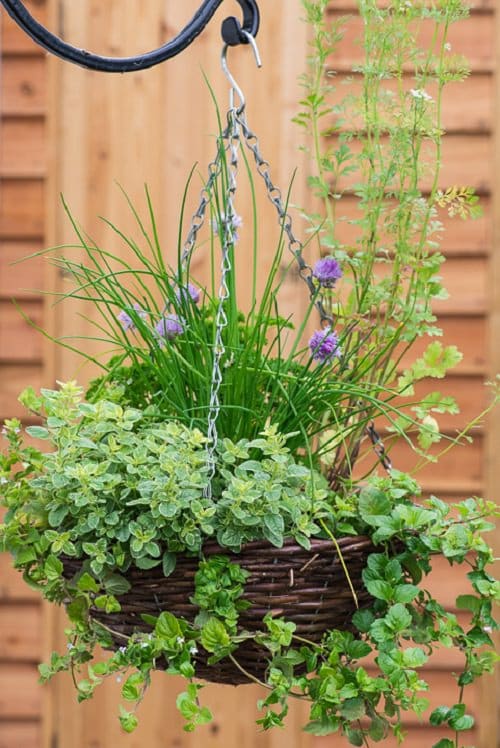
7. Oregano (Origanum vulgare)
Oregano is a hardy Mediterranean herb that thrives in containers and enjoys hot, sunny conditions.
With its small oval leaves and pungent flavor, it’s a kitchen staple and an excellent addition to any vertical herb garden.
Why Grow It:
- Essential for Italian, Greek, and Mexican dishes
- Beautiful trailing foliage in baskets
- Attracts pollinators and deters pests
How to Grow:
- Choose a hanging basket with excellent drainage
- Place in full sun
- Water sparingly – oregano doesn’t like soggy roots
- Trim regularly to encourage bushy growth
Combine oregano with thyme or marjoram for a Mediterranean-style hanging herb basket.
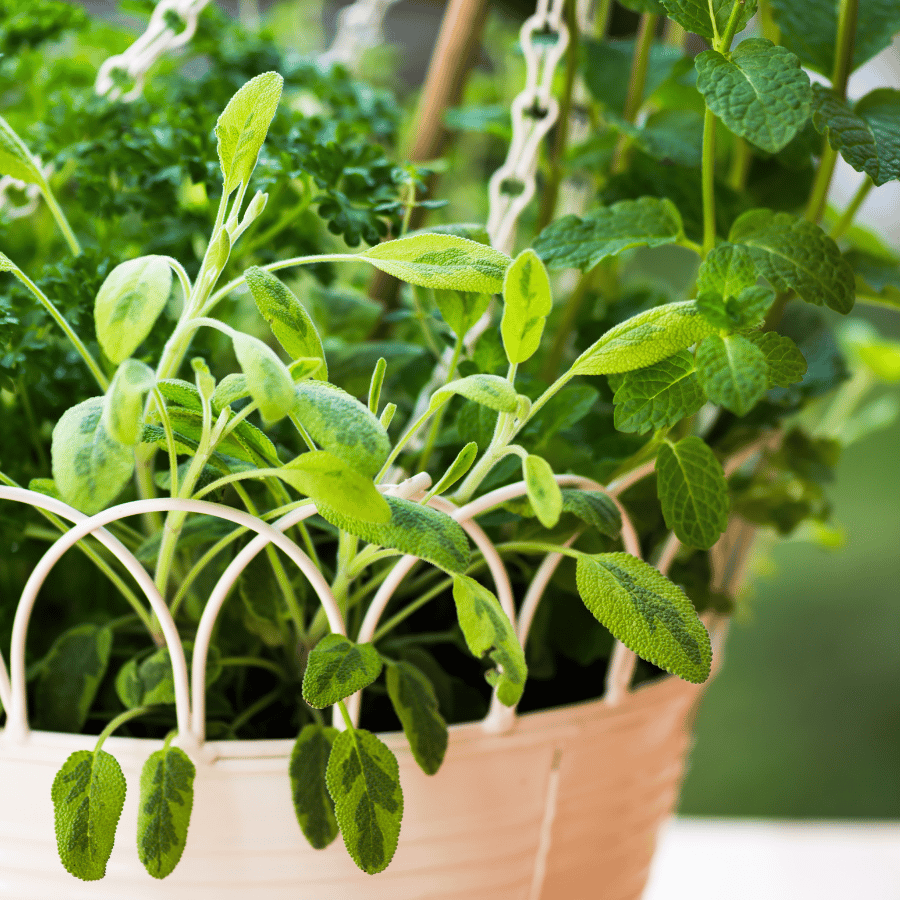
8. Marjoram (Origanum majorana)
Marjoram, a close relative of oregano, has a milder, sweeter aroma and is prized in French and Mediterranean cuisine.
It performs well in baskets, both as a standalone plant or companion to other herbs.
Why Grow It:
- Delicate, aromatic leaves with culinary value
- Attractive trailing habit
- Easy to grow and maintain
How to Grow:
- Prefers well-drained soil and full sun
- Water moderately, allowing soil to dry slightly between waterings
- Harvest often to maintain compact growth
The fuzzy green leaves and aromatic scent make marjoram a standout herb in mixed containers.
Tips for Success with Hanging Herb Baskets
- Use a good-quality potting mix designed for containers to ensure proper drainage and nutrient retention.
- Choose the right location: Most herbs need 6–8 hours of sunlight daily.
- Water consistently, especially during hot weather. Hanging baskets dry out faster than ground containers.
- Fertilize lightly: A balanced, slow-release organic fertilizer added at planting time can support steady growth.
- Trim and harvest often to encourage bushy, healthy plants.
Herbs are not only useful in the kitchen, but they also bring scent, beauty, and pollinator power to any small garden space.
Whether you want to cook with fresh basil, sip mint tea, or enjoy the soothing fragrance of lavender, hanging baskets filled with herbs offer a perfect blend of function and charm.