Maintaining the right level of humidity in your home is essential for comfort and health.
Dry indoor air can cause dry skin, irritated sinuses, and respiratory issues, while also affecting the health of houseplants and wooden furniture.
Instead of relying on artificial humidifiers, why not let nature do the work? Some houseplants naturally increase humidity levels by releasing moisture through a process called transpiration.
Here are five powerful plants that can help humidify your home and create the perfect indoor climate.
1. Areca Palm (Dypsis lutescens)
Why It’s Great for Humidifying Your Home
The Areca Palm is known as one of the best natural humidifiers. This lush, tropical plant releases significant moisture into the air, making it ideal for dry environments.
Additional Benefits:
✅ Air Purifier: Removes toxins like benzene, formaldehyde, and carbon monoxide.
✅ Pet-Friendly: Non-toxic to cats and dogs.
✅ Aesthetic Appeal: Adds a tropical feel to your home.
How to Care for Areca Palm:
- Prefers bright, indirect light but can tolerate some shade.
- Keep soil slightly moist but avoid overwatering.
- Mist the leaves regularly to boost humidity even more.
2. Boston Fern (Nephrolepis exaltata)
Why It’s Great for Humidifying Your Home
Boston Ferns have a high transpiration rate, making them an excellent choice for naturally increasing humidity. Their feathery, green foliage also adds a touch of elegance to any space.
Additional Benefits:
✅ Great for Bathrooms: Thrives in humid environments.
✅ Air-Purifying: Removes pollutants like formaldehyde and xylene.
✅ Low Maintenance: Requires minimal effort to thrive.
How to Care for Boston Fern:
- Prefers indirect light and high humidity.
- Keep soil consistently damp but not soggy.
- Mist the leaves frequently to prevent dryness.
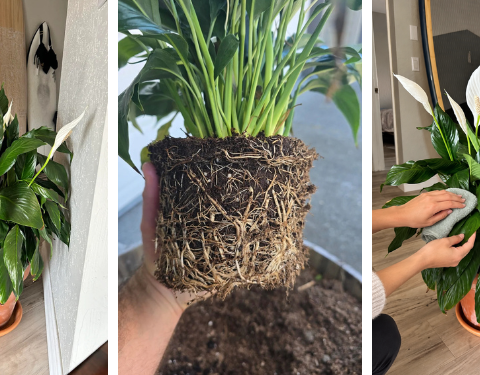
3. Peace Lily (Spathiphyllum)
Why It’s Great for Humidifying Your Home
The Peace Lily is not only beautiful and low-maintenance but also a powerful natural humidifier. It efficiently releases moisture into the air, helping to prevent dryness in indoor spaces.
Additional Benefits:
✅ Air-Purifying: Removes ammonia, benzene, and formaldehyde.
✅ Low-Light Tolerant: Thrives in shady spots.
✅ Blooms Indoors: Produces elegant white flowers throughout the year.
How to Care for Peace Lily:
- Prefers low to medium light.
- Water when soil feels dry to the touch.
- Avoid overwatering to prevent root rot.
4. Spider Plant (Chlorophytum comosum)
Why It’s Great for Humidifying Your Home
Spider Plants are easy to grow and incredibly effective at adding moisture to the air. They’re an excellent option for beginners looking for low-maintenance houseplants.
Additional Benefits:
✅ Removes Toxins: Eliminates formaldehyde and carbon monoxide.
✅ Produces Baby Plants: Can propagate easily for more greenery.
✅ Pet-Friendly: Non-toxic to pets.
How to Care for Spider Plant:
- Thrives in bright, indirect light, but can tolerate low light.
- Water moderately, allowing soil to dry slightly between waterings.
- Keep in a hanging basket for a decorative touch.
5. Aloe Vera (Aloe barbadensis miller)
Why It’s Great for Humidifying Your Home
Aloe Vera is widely known for its healing properties, but it also acts as a natural humidifier. Its thick, succulent leaves release moisture, helping to maintain healthy humidity levels indoors.
Additional Benefits:
✅ Medicinal Uses: Soothes burns, cuts, and skin irritations.
✅ Air Purifier: Removes formaldehyde and benzene.
✅ Drought-Tolerant: Requires minimal watering.
How to Care for Aloe Vera:
- Prefers bright, indirect sunlight.
- Water sparingly—only when the soil is completely dry.
- Use well-draining soil to prevent root rot.
Tips to Maximize the Humidifying Effect of Your Plants
To get the most out of these humidity-boosting plants, follow these simple tips:
✅ Group Plants Together: This helps create a microclimate with increased moisture.
✅ Mist Leaves Regularly: In dry seasons, misting can help plants maintain moisture levels.
✅ Use Pebble Trays: Place a tray of water and pebbles beneath the plant to increase humidity.
✅ Position Plants Wisely: Keep them in rooms that tend to dry out, like bedrooms and offices.
Bringing houseplants into your home is one of the easiest and most natural ways to increase indoor humidity and create a comfortable living environment.
Not only do they enhance air quality, but they also beautify your space and improve overall well-being.
By adding Areca Palm, Boston Fern, Peace Lily, Spider Plant, and Aloe Vera to your indoor garden, you can maintain the perfect humidity levels while enjoying the many health benefits they provide.