Self-watering systems can be expensive, but keeping your plants hydrated doesn’t have to be!
Whether you’re a busy gardener or simply want an effortless way to care for your plants, these five DIY watering solutions will help keep your garden lush and healthy—without draining your wallet.
1. Simple Saucers – The Easiest Watering Trick
Using saucers is one of the simplest and most effective ways to prevent your potted plants from drying out. This classic method has been around for generations and requires no fancy equipment.
How to Do It:
- Choose a saucer that’s slightly larger than the base of your plant pot.
- Fill the saucer with water, ensuring there’s enough to keep the soil moist but not so much that it causes root rot.
- Make sure your plant pot has drainage holes so the roots can absorb water from the bottom.
- Check regularly and refill the saucer when it’s empty.
💡 Pro Tip: If you’re using this method indoors, consider placing a layer of pebbles in the saucer to prevent standing water from causing mold or attracting pests.
2. DIY Drip Irrigation – Slow and Steady Hydration
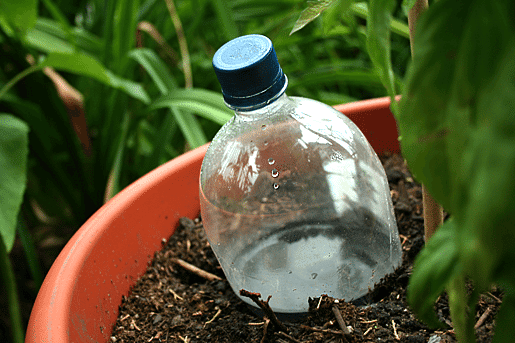
If you’re looking for a low-maintenance watering system, a DIY drip irrigation setup using a plastic bottle is a game-changer. It provides a slow release of water directly to the roots, reducing waste and keeping your plants hydrated for days.
How to Make It:
- Find a plastic bottle (a 1- or 2-liter bottle works best).
- Poke small holes around the lower half of the bottle using a drill, knife, or heated needle.
- Bury the bottle in the soil next to your plant, leaving the top exposed.
- Fill it with water and screw the cap on loosely.
- Water will gradually seep out, keeping the soil moist without overwatering.
💡 Pro Tip: For extra control over water flow, use a fine drill bit to create tiny holes, and adjust how deep you bury the bottle based on your plant’s watering needs.
3. Wick Watering – The Best Solution for Small Plants
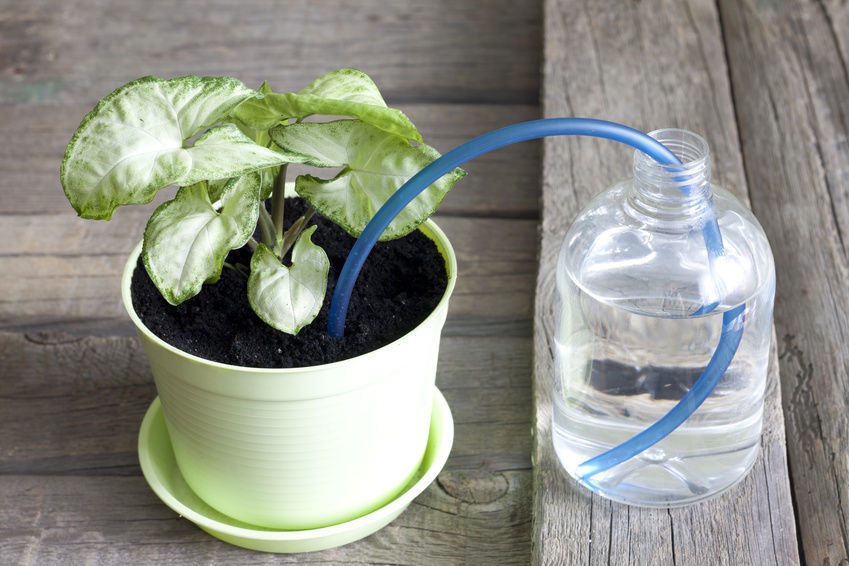
If you have smaller plants or houseplants that need regular hydration, a wick watering system is an easy and effective way to keep the soil consistently moist. This is especially useful if you’ll be away for a few days.
How to Set It Up:
- Choose an absorbent material like cotton string, yarn, or a shoelace.
- Cut the string to a length that reaches from the water source to the plant’s roots.
- Bury one end of the string deep in the plant’s soil, near the roots.
- Place the other end in a bowl or jar filled with water, ensuring it stays submerged.
- The wick will slowly draw water into the soil, keeping your plant hydrated.
💡 Pro Tip: To prevent mold, change the wick every few months or use synthetic materials that don’t break down easily.
4. Composting for Better Moisture Retention
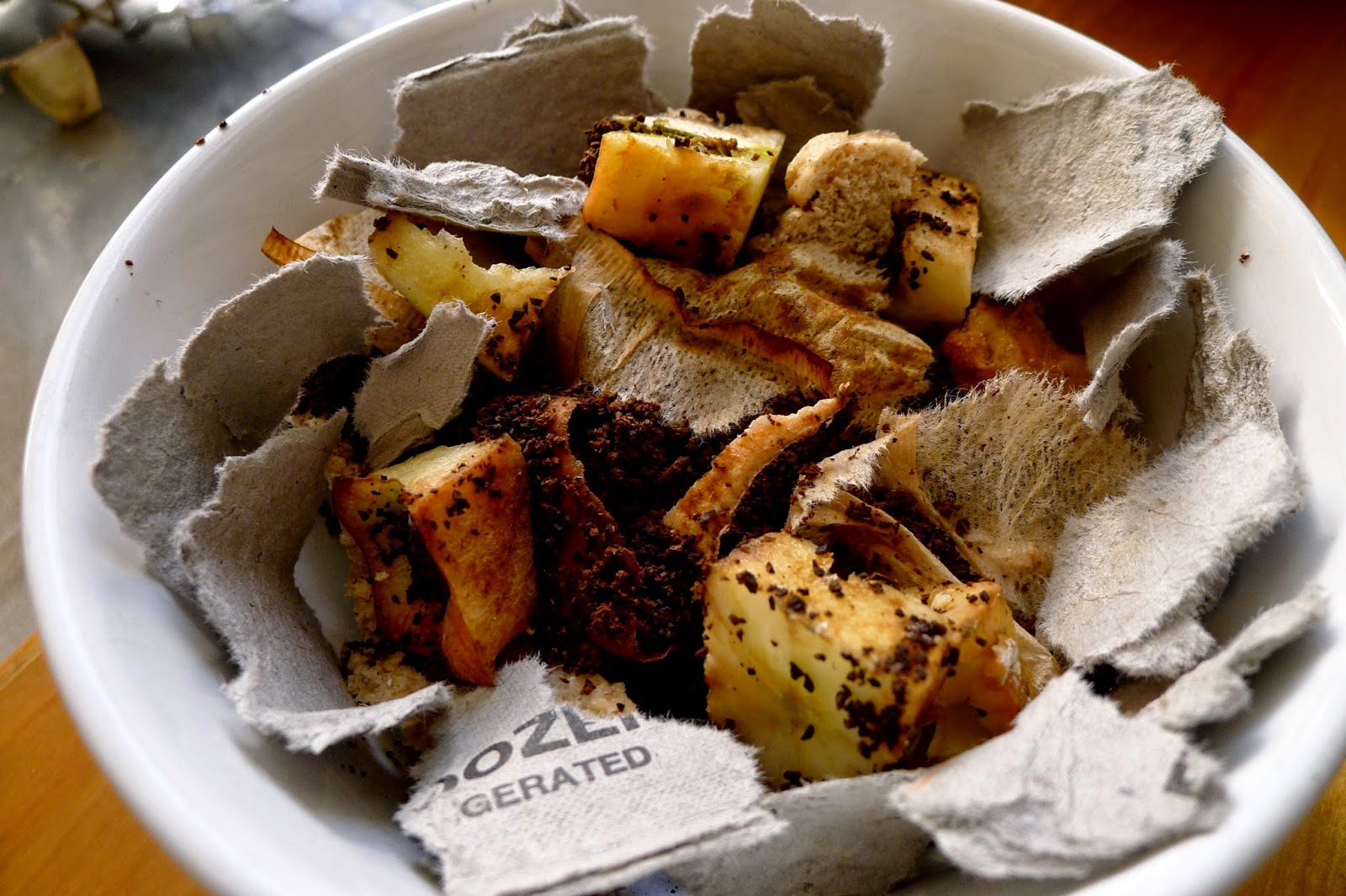
Composting does more than just enrich your soil—it also helps retain moisture, reducing how often you need to water. Organic matter acts like a sponge, holding water for longer periods.
How to Use Compost to Save Water:
- Mix compost into your garden soil to improve moisture retention and reduce evaporation.
- Layer torn-up egg cartons, shredded newspaper, or cardboard at the bottom of your garden bed before planting. These materials absorb water and gradually release it.
- Use mulch (like leaves, grass clippings, or straw) to cover the soil, preventing it from drying out too quickly.
- Water deeply and less frequently, allowing the compost to hold moisture for extended periods.
💡 Pro Tip: For best results, use well-decomposed compost, as fresh compost can compete with plants for nutrients during its breakdown process.
5. Wine Bottle Watering – A Stylish and Functional Hack
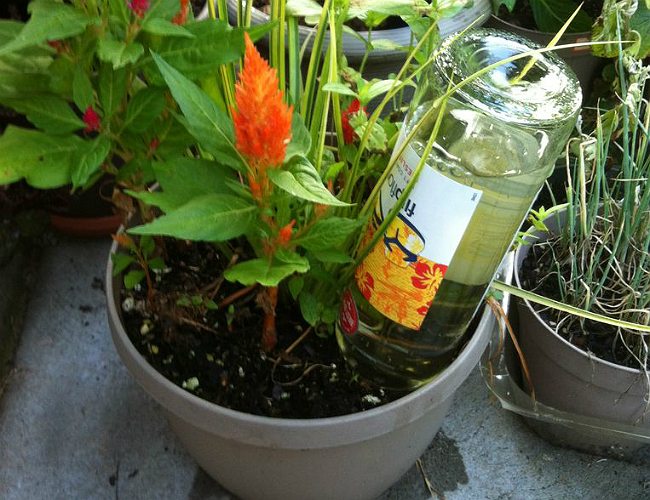
If you’re looking for an elegant and effortless watering solution, an upcycled wine bottle can work wonders. This gravity-fed method slowly releases water into the soil as needed, making it perfect for plants that require consistent moisture.
How to Set It Up:
- Clean an empty wine bottle and remove any labels.
- Fill it with water and screw the cap on loosely (if using a screw-top bottle).
- Dig a small hole next to your plant’s roots.
- Bury the bottle upside down, with the neck slightly covered in soil.
- Water will slowly seep out, ensuring your plants stay hydrated.
💡 Pro Tip: If water drains too quickly, use a cork or lid with a small hole to regulate the flow.
Keeping your plants healthy and hydrated doesn’t have to be expensive or time-consuming!
These DIY self-watering methods are not only budget-friendly but also eco-friendly, helping you conserve water while keeping your garden lush and thriving.