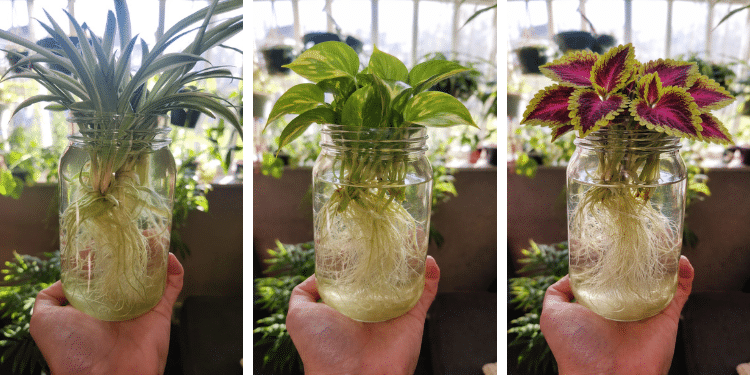
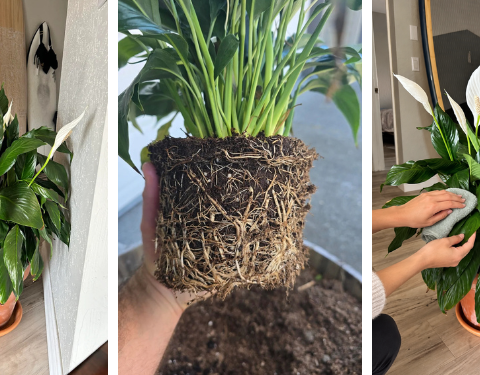
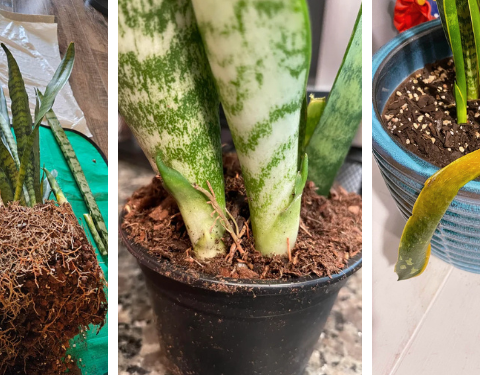
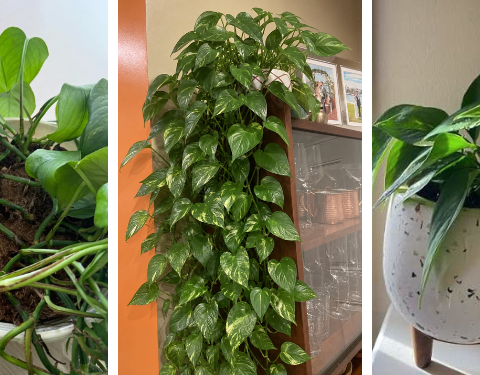
One of the most rewarding things about growing houseplants is realizing that many of them naturally want to reproduce.
Some plants root so easily that even beginners can turn a single stem or leaf into multiple healthy plants within a few weeks.
Most fast-growing houseplants evolved in tropical environments where broken stems, trailing vines, or fallen leaves naturally root when they touch moist soil.
Because of this, many indoor plants are genetically designed to spread quickly and survive propagation easily.
The best part is that you usually do not need:
- Expensive tools
- Rooting hormones
- Special equipment
- Grow lights
- Advanced gardening experience
In many cases, a glass of water, a healthy cutting, warmth, and patience are enough.
Here are 17 houseplants you can propagate easily – plus detailed explanations on exactly how to propagate each one successfully.
1. Pothos
Pothos is one of the easiest and fastest houseplants to propagate.
Its vines contain visible nodes – the small bumps where leaves and roots grow from the stem. These nodes are the key to successful propagation.
How to Propagate Pothos
Choose a healthy vine with several leaves.
Using clean scissors, cut just below a node. Each cutting should ideally contain:
- 1–3 leaves
- At least one node
Remove the bottom leaf if it would sit underwater.
Place the cutting into a jar of clean water so the node stays submerged while the leaves remain above water.
Position the jar in:
- Bright indirect light
- Warm indoor temperatures
Roots often begin appearing within:
- 7–14 days
Once roots become a few inches long, the cutting can be transferred into soil.
Pothos adapts extremely well after rooting and quickly begins producing new vines.
Why Water Propagation Works So Well
Many tropical vines naturally produce aerial roots in humid environments.
When the stem detects moisture around a node, the plant activates root-producing tissue to survive and spread.
Warmth and light accelerate this process.
2. Spider Plant
Spider plants practically propagate themselves.
Mature plants produce baby plantlets called spiderettes attached to long stems.
These baby plants already contain tiny root structures before they are even removed from the parent plant.
How to Propagate Spider Plants
Wait until the baby plant develops several leaves and small root bumps underneath.
You can:
- Place the baby directly into moist soil
- Or place it into water first
Some gardeners leave the baby attached to the mother plant while it roots in nearby soil for faster establishment.
Spider plant babies often root within:
- 1–2 weeks
because they are already partially developed.
3. Tradescantia (Wandering Dude)
Tradescantia is one of the fastest-rooting plants indoors.
The stems root so aggressively that even broken pieces touching soil may start growing.
How to Propagate Tradescantia
Cut several healthy stems just below a node.
Remove lower leaves and place the stems:
- In water
- Or directly into moist soil
Tradescantia roots extremely fast in warm conditions.
Roots often appear within:
- A few days to one week
The plant grows fuller when multiple cuttings are planted together.
4. Heartleaf Philodendron
Heartleaf philodendrons propagate almost identically to pothos.
Their vines naturally produce nodes capable of growing roots quickly.
How to Propagate Heartleaf Philodendron
Take a cutting below a node with several healthy leaves attached.
Place the node into water while keeping leaves above the surface.
Keep the cutting near:
- Bright indirect sunlight
- Warm temperatures
Roots often begin developing within:
- 1–3 weeks
Once established, philodendrons transition easily into soil.
5. Mint
Mint grows aggressively and roots extremely fast.
Even grocery-store mint cuttings often root successfully.
How to Propagate Mint
Cut healthy stems several inches long and remove lower leaves.
Place the stems into water with submerged nodes.
Roots usually begin appearing rapidly along the stem.
Mint often develops enough roots for planting within:
- 1–2 weeks
Once transplanted into soil, mint spreads quickly.
Why Nodes Are So Important
Nodes contain special plant cells capable of developing:
- Roots
- Leaves
- New shoots
Without a node, most stem cuttings cannot produce new growth.
Learning to identify nodes is one of the most important propagation skills.
6. Coleus
Coleus roots so quickly that it is often considered one of the easiest propagation plants in gardening.
How to Propagate Coleus
Take stem cuttings just below a node and remove lower leaves.
Place the cuttings into water or moist potting soil.
Roots often appear within:
- 5–10 days
Coleus grows rapidly after rooting and branches heavily when pinched regularly.
7. Swedish Ivy
Swedish ivy naturally trails and spreads through soft stems that root easily.
How to Propagate Swedish Ivy
Take vine cuttings with several nodes and place them into water or moist soil.
The stems quickly form roots in warm bright conditions.
Multiple cuttings planted together create fuller baskets faster.
8. English Ivy
English ivy naturally climbs and spreads by rooting along stems.
How to Propagate English Ivy
Take healthy vine cuttings and remove lower leaves.
Place nodes into water or lightly moist soil.
Warm temperatures and humidity help accelerate rooting.
Roots usually begin appearing within:
- 2–4 weeks
9. Lucky Bamboo
Lucky bamboo grows hydroponically very easily.
How to Propagate Lucky Bamboo
Cut a healthy stem section below a node.
Place the lower section into clean water while keeping leaves above water.
Change the water regularly to prevent bacterial buildup.
Roots often form directly from the nodes within several weeks.
10. Snake Plant
Snake plants propagate more slowly than pothos but remain very beginner-friendly.
How to Propagate Snake Plant
Cut a healthy leaf into sections several inches long.
Allow the cut ends to dry for a day before placing:
- Into water
- Or directly into slightly moist soil
New roots gradually form near the cut ends.
Eventually, baby shoots called pups emerge from the soil.
Warm temperatures speed the process significantly.
Why Warmth Speeds Root Growth
Root production depends heavily on temperature.
Most houseplants root fastest in:
- Warm rooms
- Moderate humidity
- Bright indirect light
Cold temperatures slow cellular activity and root formation.
11. Begonias
Begonias are fascinating because many varieties root from leaves alone.
How to Propagate Begonias
For stem propagation:
- Take healthy stem cuttings and place into moist soil or water
For leaf propagation:
- Lay healthy leaves flat on moist soil
- Slightly wound leaf veins underneath
Tiny baby plants may eventually emerge from the wounded areas.
12. African Violet
African violets are famous for leaf propagation.
How to Propagate African Violets
Cut a healthy leaf with its stem attached.
Place the stem into water or lightly moist soil.
Over time, baby plants emerge from the base of the leaf stem.
Warm humidity helps speed development.
13. Christmas Cactus
Christmas cactus naturally propagates through segmented stems.
How to Propagate Christmas Cactus
Twist off healthy stem segments and allow them to dry for about a day.
Insert the dried ends into lightly moist cactus soil.
Roots gradually form from the segment joints.
The segments root best in:
- Warm conditions
- Bright indirect light
14. Peperomia
Peperomias are compact plants that propagate surprisingly easily.
How to Propagate Peperomia
Take leaf or stem cuttings and place them into moist soil or water.
Some peperomia varieties can even produce roots from partial leaves.
Their thick leaves store water, helping them survive while rooting develops.
15. Inch Plant
The inch plant roots almost instantly from stem fragments.
How to Propagate Inch Plant
Take short vine cuttings and place them directly into moist soil or water.
Roots form rapidly from the nodes.
Because the plant grows aggressively, containers fill out quickly after propagation.
16. Aloe Vera
Aloe vera propagates mainly through offsets called pups.
How to Propagate Aloe Vera
Wait until baby plants form around the base of the mother plant.
Carefully separate the pups once they develop roots of their own.
Allow cut surfaces to dry briefly before planting into cactus soil.
Avoid overwatering while the roots establish.
17. Chinese Evergreen
Chinese evergreens propagate well through division or stem sections.
How to Propagate Chinese Evergreen
Remove the plant from its pot and gently divide rooted sections apart.
You can also cut healthy stems and place them into moist soil.
Warmth and humidity help speed rooting.
Common Propagation Mistakes
The biggest mistakes beginners make include:
- Overwatering soil cuttings
- Using cold water
- Keeping cuttings in direct harsh sunlight
- Forgetting to change water regularly
Most cuttings root best in:
- Warm temperatures
- Bright indirect light
- Moderate moisture
- Clean containers
Many popular houseplants naturally want to spread and reproduce, which is why propagation can feel surprisingly easy once you understand how the plants grow.