When the days grow shorter and summer’s brightness begins to fade, many gardeners assume the season for flowers is over. But autumn tells a different story.
Even as daylight dwindles and temperatures cool, there’s a special group of plants that thrive precisely under these conditions – flowers that bloom in the short days of autumn.
The Science Behind Autumn Bloomers: Why Some Flowers Love Short Days
Plants are incredibly sensitive to light. Many of them rely on day length (also known as photoperiod) to determine when to grow, bloom, or go dormant.
Here’s how it works:
- Long-day plants (like sunflowers and petunias) flower when days are long and nights are short – typically in spring and summer.
- Short-day plants (like chrysanthemums and Christmas cacti) bloom when nights are longer than days – in late summer through fall.
- Day-neutral plants (like roses or zinnias) bloom regardless of day length, responding mostly to temperature and care.
As autumn arrives, short-day flowers sense the extended darkness each night and begin to form buds.
This adaptation helps them avoid the crowded pollinator activity of summer and take advantage of cooler, moister air – ideal for vibrant, long-lasting blooms.
Why You Should Grow Autumn-Blooming Flowers
Adding fall bloomers to your garden doesn’t just extend color – it creates ecological balance and resilience.
Here’s why they’re worth planting:
- They extend your garden’s beauty through October or even November.
- They provide vital nectar for late-season pollinators like bees, butterflies, and hummingbirds.
- They thrive in cooler temperatures, often with richer color and longer-lasting blooms.
- They complement fall foliage, creating stunning contrasts of texture and tone.
- They require less maintenance, as cooler weather means fewer pests and diseases.
If you’ve ever wished your garden could stay colorful long after summer’s end, these autumn bloomers are your solution.
15 Flowers That Bloom in the Short Days of Autumn
Below is a detailed list of autumn-flowering plants that respond beautifully to shorter days. These can bring vibrant life to borders, containers, or wild cottage gardens just when you need it most.
1. Chrysanthemums (Mums)
Bloom time: Late summer to late fall
Light: Full sun
Zones: 5–9
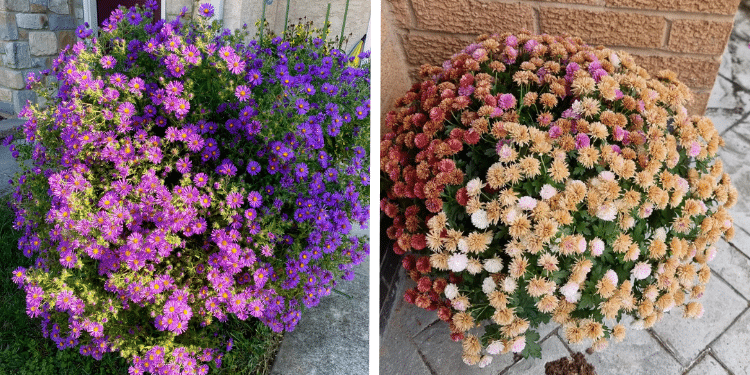
No flower represents autumn quite like the chrysanthemum. These classic fall favorites respond directly to shorter days by producing clusters of richly colored blooms in shades of gold, burgundy, rust, purple, and white.
Tips for success:
- Plant in early spring so they can establish roots before autumn.
- Pinch back stems in early summer to encourage dense, bushy growth.
- Deadhead regularly to prolong blooming.
They look especially striking when paired with ornamental grasses or pumpkins along pathways and porches.
2. Asters
Bloom time: August to October
Light: Full sun to partial shade
Zones: 3–8
Asters are among the most reliable late-season bloomers, offering star-shaped flowers in shades of violet, pink, and blue. Their cheerful blooms draw pollinators like magnets when other nectar sources have dwindled.
Tips for success:
- Cut back by one-third in June to prevent leggy growth.
- Provide good air circulation to avoid mildew.
- Plant alongside sedum or goldenrod for a natural autumn palette.
3. Japanese Anemone (Anemone hupehensis)
Bloom time: Late summer through fall
Light: Partial shade
Zones: 4–8
Graceful and elegant, Japanese anemones sway atop tall stems, adding movement and romance to the fall garden. Their soft pink or white petals and golden centers bring brightness to shadier spots.
Tips for success:
- Keep soil consistently moist but well-draining.
- Divide clumps every few years to control spread.
- Ideal for woodland edges or under deciduous trees.
4. Sedum (Stonecrop)
Bloom time: Late summer to frost
Light: Full sun
Zones: 3–10
Sedums are tough, drought-tolerant succulents that save their best performance for autumn. Varieties like Autumn Joy or Brilliant produce clusters of pink buds that deepen into copper-red as the season progresses.
Tips for success:
- Avoid rich soil – too much fertility causes floppiness.
- Leave dried flower heads over winter for visual interest and pollinator shelter.
- Combine with ornamental grasses or coneflowers for a stunning textural display.
5. Autumn Crocus (Colchicum autumnale)
Bloom time: September to November
Light: Full sun to partial shade
Zones: 4–9
Despite its name, the autumn crocus isn’t a true crocus – but it delivers a burst of lilac-purple blooms just when most gardens are fading.
Tips for success:
- Plant bulbs in midsummer for fall blooms.
- Let foliage die back naturally in spring; it fuels next year’s growth.
- Perfect for borders or under trees where color is needed late in the year.
6. Goldenrod (Solidago)
Bloom time: Late summer to early fall
Light: Full sun
Zones: 3–9
Often mistaken for ragweed (which causes allergies), goldenrod is actually a pollinator’s dream. Its golden-yellow flower spikes illuminate the autumn landscape and provide critical late nectar.
Tips for success:
- Choose compact hybrids like ‘Fireworks’ for smaller spaces.
- Cut back after flowering to prevent self-seeding.
- Pair with asters or purple coneflowers for bold contrast.
7. Sneezeweed (Helenium autumnale)
Bloom time: August to October
Light: Full sun
Zones: 3–8
Despite its name, sneezeweed doesn’t cause allergies. Its daisy-like blooms in copper, red, and gold hues brighten late borders and attract bees and butterflies.
Tips for success:
- Deadhead to extend flowering.
- Divide clumps every 3 years to keep them vigorous.
- Excellent in moist soils near ponds or rain gardens.
8. Dahlias
Bloom time: July to frost
Light: Full sun
Zones: 8–11 (or annuals elsewhere)
Dahlias are long-day bloomers that can continue deep into autumn if frost holds off. As daylight shortens, they produce some of their largest, richest blooms, especially in cooler nights.
Tips for success:
- Fertilize lightly after mid-summer to encourage blooming over leaf growth.
- Stake taller varieties early.
- Dig up and store tubers in colder zones after frost.
9. Toad Lily (Tricyrtis)
Bloom time: September to November
Light: Partial shade
Zones: 4–9
If you want something exotic for your autumn garden, toad lilies are perfect. Their orchid-like flowers – speckled with purple or blue dots – bloom in shady areas just when everything else fades.
Tips for success:
- Keep soil moist but not soggy.
- Mulch in winter to protect roots.
- Stunning in woodland or shade gardens.
10. Camellia sasanqua
Bloom time: October to December
Light: Partial shade
Zones: 7–10
While spring camellias are well-known, the sasanqua varieties bloom in autumn, producing fragrant, delicate flowers in white, pink, and crimson.
Tips for success:
- Plant in slightly acidic, well-drained soil.
- Protect from harsh winds.
- Prune lightly after flowering to maintain shape.
Their glossy evergreen foliage adds beauty year-round.
11. Cyclamen hederifolium
Bloom time: September to November
Light: Partial shade
Zones: 5–9
This low-growing beauty features silver-patterned leaves and delicate blooms in pink, white, or magenta. It thrives under trees or at the edges of shaded beds.
Tips for success:
- Allow it to go dormant in summer.
- Do not overwater – prefers dry conditions when dormant.
- Pairs beautifully with ferns or hostas.
12. Monkshood (Aconitum)
Bloom time: Late summer to early autumn
Light: Partial shade
Zones: 3–7
With tall spires of deep violet-blue flowers, monkshood adds a touch of drama to fall gardens. It loves cool temperatures and often blooms well into October.
Caution: All parts of the plant are toxic – wear gloves when handling.
Tips for success:
- Prefers moist, rich soil.
- Provide partial shade to protect from midday sun.
- Excellent for woodland gardens and shaded borders.
13. Hummingbird Mint (Agastache)
Bloom time: Summer through fall
Light: Full sun
Zones: 5–10
Agastache continues to bloom beautifully into fall, sending up spikes of purple, pink, or coral flowers that attract hummingbirds and butterflies until frost.
Tips for success:
- Plant in well-drained soil to avoid root rot.
- Deadhead spent blooms for continuous color.
- Perfect for pollinator gardens and sunny borders.
14. Witch Hazel (Hamamelis virginiana)
Bloom time: October to December
Light: Full sun to partial shade
Zones: 3–9
One of the last shrubs to flower before winter, witch hazel produces ribbon-like yellow blooms on bare branches that release a spicy fragrance on crisp autumn air.
Tips for success:
- Plant in well-drained, slightly acidic soil.
- Prune lightly after flowering.
- Ideal for natural woodland gardens or mixed borders.
15. Mexican Bush Sage (Salvia leucantha)
Bloom time: September to November
Light: Full sun
Zones: 8–11 (annual elsewhere)
Mexican bush sage bursts into velvet-like purple and white flower spikes just as other salvias fade. It thrives in late heat but withstands cool nights, making it perfect for fall color.
Tips for success:
- Cut back after frost to encourage new spring growth.
- Plant in well-drained soil.
- Excellent for attracting hummingbirds and butterflies.
How to Keep Your Fall Flowers Blooming Longer
Even short-day flowers need proper care to perform their best through the season. Follow these simple tips to extend their blooming window and protect them from early frost.
1. Deadhead Regularly
Removing spent blooms directs energy back into new flower production instead of seed formation.
2. Mulch Generously
Mulch helps retain soil warmth and moisture, protecting roots as temperatures drop.
3. Water Deeply
Autumn rains often decrease, so deep watering once or twice weekly keeps roots hydrated during dry spells.
4. Fertilize Lightly
Use a low-nitrogen, slow-release fertilizer in early fall to support flowering without promoting excessive leaf growth.
5. Protect from Frost
When temperatures threaten to dip below freezing, cover delicate blooms overnight with garden fabric or a light cloth.
6. Combine Colors and Textures
Plant in layers – mix late perennials with ornamental grasses, seedheads, and evergreen structure for a balanced, year-round look.
Designing a Garden for Short-Day Bloomers
To create a garden that stays alive with color deep into autumn, design intentionally with succession planting.
Tips:
- Pair short-day flowers like mums and asters with late-blooming perennials like sedum and ornamental grasses.
- Include evergreens and berries for texture once blooms fade.
- Choose staggered bloom times (August–November) for continuous color.
- Don’t forget fragrance and form – flowers like camellias and witch hazel add scent and structure when most gardens lie dormant.
This thoughtful planning ensures your landscape remains vibrant and inviting – even when daylight wanes.
Autumn doesn’t mean the end of flower season – it simply means a new palette begins to emerge.