As mid-summer settles over the garden, the vibrant rush of spring growth begins to settle into a deep, heavy green canopy.
July is a month of abundance – the harvest is coming in, flowers are in full bloom, and long, sun-drenched days provide plenty of time to enjoy the fruits of your labor.
However, beneath this picture-perfect summer surface, a critical clock is ticking.
For a specific group of trees, shrubs, and perennial plants, July represents a vital horticultural crossroads. This is the narrow seasonal window where pruning changes from a helpful chore into a time-sensitive necessity.
Wait too long, and you risk cutting away next spring’s flower buds, exposing delicate inner wood to late-season frost damage, or encouraging an explosion of weak, leggy growth that won’t survive the winter.
Tackling these twelve essential plants right now ensures a tidier yard today, a bountiful harvest tomorrow, and a spectacular display next spring.
The Biology of the July Cut: Why the Clock is Ticking
Understanding the seasonal clock helps explain why July is such a pivotal time for pruning. Plants respond to structural cuts based on light levels, temperature, and sap flow.
Pruning in mid-summer serves two distinct botanical purposes depending on what you are trimming:
-
For Spring-Blooming Woody Plants: These plants set their flower buds for next year on “old wood” – the growth produced during the current summer. If you wait until autumn or winter to shape them, you will accidentally slice off every single one of next spring’s flowers. Pruning them immediately after their blooms fade gives them just enough time to grow fresh stems and set healthy new buds before winter dormancy.
-
For Fast-Growing Shrubs and Fruit Trees: A heavy prune in late autumn triggers a surge of vigorous vegetative growth in the spring. Conversely, trimming branches during the high heat of July slows down growth. It acts as a natural brake system, helping control the size of aggressive plants, redirecting sugars into ripening fruit, and allowing new wood to harden off properly before the freezing temperatures arrive.
12 Essential Plants to Prune This Month
Here are the twelve plants that need your immediate attention before the July window slams shut.
1. Wisteria (Wisteria sinensis / floribunda)
Left to its own devices, a vigorous wisteria vine will easily transform into an unmanageable tangle of long, green shoots by mid-summer.
July is the perfect time to perform the first of its essential two-part annual trims. Locate the long, whip-like green runners shooting out from the main structural framework and cut them back to roughly five or six leaves from the main stem.
This controls the vine’s aggressive spread and forces it to focus its energy on developing the fat flower buds needed for next spring’s cascading display.
2. Summer-Fruiting Raspberries (Rubus idaeus)
Once your summer-fruiting raspberries finish production, their old fruiting canes will never bear fruit again; they will simply languish, blocking sunlight and reducing airflow to the rest of the patch.
Snip these spent brown canes down to ground level using sharp loppers, leaving the fresh, bright green young canes intact. These young vegetative canes will overwinter to provide your entire crop next summer.
3. Forsythia (Forsythia × intermedia)
Few plants signal the arrival of spring quite like the bright yellow blossoms of the forsythia bush. Because this classic shrub sets its flower buds during the late summer, waiting until winter to shape it will entirely ruin next year’s color.
Take time in July to remove up to one-third of the oldest, thickest woody stems down to the ground. This opens up the interior of the bush to fresh sunlight and encourages vibrant young growth.
4. Whips and Water Sprouts on Apple and Pear Trees (Malus domestica / Pyrus communis)
While heavy structural pruning on fruit trees should be reserved for the winter dormancy phase, summer pruning is essential for managing “water sprouts” – those completely vertical, whip-like branches that shoot straight up from the main limbs. Snip these unproductive whips away entirely in July.
This allows sunlight to easily penetrate the interior canopy, which sweetens and ripens the hanging fruit while helping the tree develop sturdy fruit buds for the following year.
5. Climbing and Rambling Roses (Rosa)
Once your once-blooming climbing or rambling roses wrap up their main summer display, they need a thorough cleanup.
Cut the faded flower clusters back to a healthy side bud, and remove any dead, diseased, or crossing wood.
If the vine has grown too tall for its trellis framework, secure the long, flexible new canes horizontally to encourage a spectacular burst of lateral flower buds next season.
6. Mock Orange (Philadelphus)
Cherished for its intoxicating, citrus-scented white blossoms in late spring, mock orange quickly turns into a leggy, untamed thicket if left unpruned.
As soon as the last petals drop in July, cut the spent flowering stems back to a strong new side shoot down below. Removing the old wood immediately keeps the shrub compact and prevents it from outgrowing its garden space.
Hygiene Warning: High summer temperatures create an ideal environment for spreading plant diseases. Always sanitize your clipper blades with rubbing alcohol between different plants to avoid tracking fungal spores or bacterial blight across your garden.
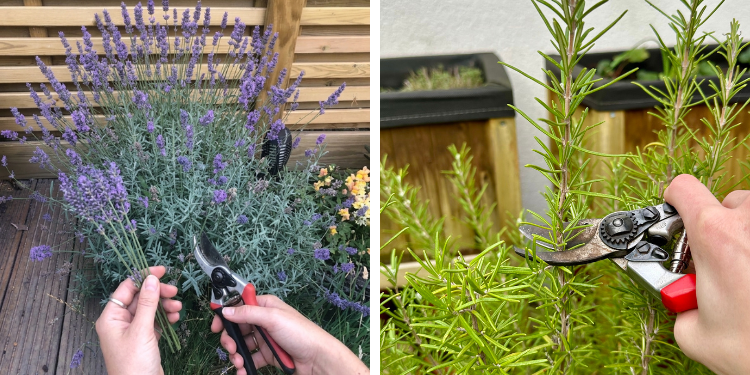
7. Rosemary (Salvia rosmarinus)
Like many Mediterranean woody herbs, rosemary can become sprawling and bare at the base if neglected.
July offers an excellent window for a shaping prune because the warm, dry weather helps the cuts heal quickly without risking fungal infections.
Trim the soft green outer growth back by up to one-third to create a neat, compact shape. Be sure to stay within the active green growth zone; cutting back into the bare, hard wood can permanently stunt or kill the branch.
8. Mock Orange / Choisya (Choisya ternata)
Often called Mexican Orange Blossom, this glossy evergreen shrub benefits from a quick cleanup right after its initial summer bloom ends.
Lightly trim the spent flower stalks and shorten any stray, unruly branches. This quick task keeps the foliage tight and attractive while often encouraging a secondary flush of fragrant blossoms later in the autumn.
9. Philadelphus / Weigela (Weigela florida)
This hardy, bell-flowered favorite is another classic spring bloomer that sets its buds on old wood. Once its pink or red trumpets fade, use your pruners to shorten the flowering stems by about one-third, cutting back to a healthy pair of leaves.
This stimulates a flush of fresh vegetative growth that will carry next year’s color.
10. Lavender (Lavandula)
As your English lavender flower spikes turn from vibrant purple to a muted grey-brown, it’s time to act. Harvesting the spent flowers along with an inch or two of the soft green foliage keeps the plant looking neat and tidy.
For your primary annual shaping prune, aim for the end of July or early August to ensure the resulting cuts have plenty of time to heal before the first autumn frost.
July Pruning Quick-Reference Matrix:
┌─────────────────────┬──────────────────────────┬───────────────────────────┐
│ Plant Name          │ Target to Cut            │ Core Benefit              │
├─────────────────────┼──────────────────────────┼───────────────────────────┤
│ Wisteria            │ Long green runners       │ Controls size, boosts buds│
│ Raspberries         │ Spent fruiting canes     │ Preps next year's harvest │
│ Forsythia           │ 1/3 of oldest stems      │ Renews old, leggy wood    │
│ Fruit Trees (Apple) │ Vertical water sprouts   │ Rypens current fruit crop │
│ Lavender            │ Faded flower stems       │ Prevents woody splitting  │
└─────────────────────┴──────────────────────────┴───────────────────────────┘
11. Hydrangea Macrophylla (Bigleaf/Mophead Hydrangeas)
The classic blue and pink mophead hydrangeas are famous for setting their flower buds in the late summer and autumn.
If your plants have grown too large for their space, July is your absolute last chance to safely trim them down. Cut the faded flower stems back to a strong pair of fat, healthy buds lower down on the branch.
Avoid touching any stems that failed to bloom this year, as they are already working hard to prepare next spring’s flowers.
12. Plum and Cherry Trees (Prunus)
Stone fruits like plums, cherries, and peaches should never be pruned during the winter dormancy phase.
Open winter cuts leave them highly susceptible to silver leaf disease – a destructive fungal infection – and bacterial cankers.
Instead, prune them during the dry heat of mid-summer when the tree’s natural sap flow is active enough to quickly seal the wounds and ward off invading spores.
Focus on removing dead wood, clearing out crossing branches, and keeping the center of the canopy open to light and air.
Your July Pruning Routine Step-by-Step
To get through your mid-summer pruning list efficiently without overwhelming your plants, follow this simple workflow:
Mid-summer gardening is about much more than just weeding and watering. Taking the time to prune these twelve essential plants during July works with their natural biological rhythms.