While standard gardening wisdom says that spring and autumn are the only acceptable windows to plant perennials, July presents a unique, hidden opportunity for the strategic gardener.
By mid-summer, garden centers are often overflowing with mature, container-grown perennials that are heavily discounted to clear bench space.
Furthermore, planting a perennial in July gives the root system a substantial head start. The soil is at its absolute warmest, which acts as a powerful catalyst for rapid root expansion.
By the time the autumn rains and winter dormancy arrive, these plants have established a deep, resilient anchor network.
When next spring rolls around, while your neighbors are busy planting tender young seedlings, your July-planted perennials will explode out of the ground as massive, mature specimens ready to deliver peak performance.
The key to mid-summer planting success is selecting exceptionally rugged, heat-tolerant varieties that can handle the transition without skipping a beat.
Here are 11 dependable perennials you’ll be incredibly glad you planted this July.
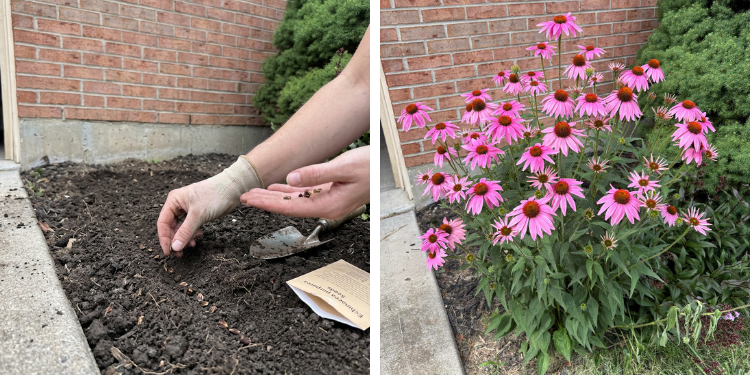
1. Purple Coneflower (Echinacea purpurea)
An absolute icon of the summer landscape, Echinacea loves the intense heat of July. When planted mid-summer, it quickly sinks its thick, muscular taproot deep into the warm earth, establishing a permanent structural anchor.
-
Why You’ll Be Glad: Planting it now means it will spend the rest of the summer building a massive root engine. Next spring, it will emerge twice as large, launching an abundance of copper-coned, pinkish-purple blossoms that attract goldfinches and butterflies to your yard all summer long.
-
July Success Secret: When planting, gently score or tease the sides of the root ball if it is rootbound in its nursery pot, and bury it deep to protect the crown from drying out in the afternoon sun.
2. Autumn Joy Sedum (Hylotelephium spectabile)
Sedum is the ultimate worry-free choice for a July planting project. As a robust succulent, its thick, rubbery leaves are built-in water storage tanks, meaning it won’t suffer from transplant shock or drop its leaves during a sudden mid-summer heatwave.
-
Why You’ll Be Glad: In July, Sedum is just beginning to form its broccoli-like green flower heads. Planting it now allows you to enjoy its spectacular, slow-motion color transition throughout August and September, as the blooms mature into dusty pink and finally a rich, coppery rust that lasts all winter.
-
July Success Secret: Plant it in your absolute poorest, fastest-draining soil. Do not add compost or fertilizer to the hole; rich soil makes the stems grow too quickly, causing the heavy flower heads to split apart and flop over later in the season.
3. Black-Eyed Susan (Rudbeckia fulgida)
This cheerful, gold-petaled classic possesses a remarkable natural defense system against intense heat: its coarse, rough, hairy leaves work to trap moisture right against the plant tissue, drastically reducing water loss from warm summer winds.
-
Why You’ll Be Glad: Rudbeckia spreads reliably over time via underground rhizomes. Getting a mature plant in the ground in July allows those roots to claim their territory before winter. Next year, you’ll be rewarded with a thick, self-sustaining mound blanketed in hundreds of bright golden daisy-like blossoms with striking midnight-black centers.
-
July Success Secret: Give your newly planted Rudbeckia a single, slow, deep soak right at the base once a week rather than frequent shallow mistings. This trains the roots to grow straight down into the cool subsoil.
4. Russian Sage (Salvia yangii)
For dry, sunny borders or hot driveway edges, Russian Sage is unmatched. Its fine, silver-green stems are coated in fragrant, oil-rich leaves that reflect intense sunlight, making it highly efficient at managing moisture during long, rainless spells.
-
Why You’ll Be Glad: Once established, Russian Sage is virtually indestructible and entirely ignored by deer and rabbits. A July planting ensures it develops the woody, stable root crown it needs to shoot up airy, cloud-like wands of lavender-blue flowers early next summer.
-
July Success Secret: Cut the plant back aggressively by about one-third at planting time to reduce the workload on the roots, and ensure it has perfect drainage; it completely despises sitting in heavy, stagnant clay.
5. Blankets Flower (Gaillardia)
Native to the sweeping, sun-baked prairies of the American West, Blanket Flower treats intense July heat like a day at the beach. It handles poor sandy soils and severe drought conditions without dropping a single bloom.
-
Why You’ll Be Glad: This plant is an absolute blooming machine, flashing concentric rings of rich crimson, fiery orange, and bright golden-yellow tips. By getting it in the ground now, it will continue providing immediate, head-turning color for the remainder of this season while cementing its place for next year.
-
July Success Secret: Clip off the first round of open flowers a week after planting. This small sacrifice forces the plant to redirect its immediate energy away from seed production and toward anchoring its roots.
6. Yarrow (Achillea millefolium)
Yarrow is a historic, deeply respected botanical powerhouse built for low-water environments. Its feathery, fern-like green foliage offers minimal surface area for the sun to dry out, making it highly efficient at lock in existing moisture.
-
Why You’ll Be Glad: Yarrow forms a dense, weed-suppressing living mat over time. Planting it in July allows it to knit into the surrounding soil before the autumn weed seeds blow in. Next year, you’ll enjoy large, flattened, umbrella-like flower clusters in shades of yellow, terracotta, or deep red that stand up to any storm.
-
July Success Secret: After planting, apply a generous 2-inch layer of wood mulch around the base of the plant, keeping the material a couple of inches away from the direct green stems to prevent crown rot.
7. Perennial Salvia (Salvia nemorosa)
Perennial salvias are incredibly resilient garden champions. Equipped with a tough, fibrous root system, they stand up effortlessly to high summer heat and poor soils without losing their rich color.
-
Why You’ll Be Glad: Popular varieties like ‘May Night’ or ‘Caradonna’ send up stiff, deep indigo-purple flower spikes that rise dramatically above dense mounds of aromatic foliage. A July planting guarantees an explosive, early-spring bloom cycle next year that completely outpaces spring-planted varieties.
-
July Success Secret: Look for plants at the nursery that have already finished their first flush of blooms and are heavily discounted. Cut the old flower stalks off completely when you plant them to trigger a second wave of fresh growth by late August.
8. Daylily (Hemerocallis)
Daylilies are often called the “perfect perennial” because they are nearly impossible to kill. They possess thick, tuberous roots that store vast amounts of water and nutrients, making them completely immune to transplant shock, even when planted in the dead of summer.
-
Why You’ll Be Glad: Daylilies excel at stabilizing sliding soil on steep banks and choking out aggressive weeds with their dense, arching, strap-like foliage. Planting them in July allows those heavy root tubers to charge up on summer sun, ensuring a massive display of trumpet-shaped blooms next season.
-
July Success Secret: Plant daylilies at the exact same depth they were in their plastic nursery pot. Burying the crown too deep can severely restrict flower production next year.
9. Coral Bells (Heuchera)
If you need to fill a partially shaded or woodland border in July, Heuchera is a magnificent option. While famous for its delicate flower wands, it is grown primarily for its stunning, multi-colored ruffles of large, structural leaves.
-
Why You’ll Be Glad: Heuchera foliage comes in incredible shades of midnight obsidian, lime chartreuse, rich caramel, and frosted silver. Planting it in July gives it the warm-soil foundation it needs to establish a robust crown, providing dependable, semi-evergreen color that brightens up dark corners of the yard all winter long.
-
July Success Secret: Provide consistent moisture for the first three weeks after planting, and ensure the soil is rich in organic matter like compost or leaf mold to mimic its natural forest floor habitat.
10. Blanket Flower / Coreopsis (Coreopsis verticillata)
While many coreopsis varieties handle heat well, the Threadleaf type is exceptionally drought-hardy. Its ultra-fine, needle-like foliage offers minimal surface area for the sun to dry out, making it highly efficient at surviving summer transitions.
-
Why You’ll Be Glad: It forms a dense, fluffy, mounding bush completely blanketed in hundreds of small, starry, bright yellow blossoms. By planting it in July, you secure a continuous, low-maintenance layer of sunny color that carries your garden beds beautifully into October.
-
July Success Secret: Give the entire plant a quick 1-inch haircut with hedge shears right at planting time to stimulate a heavy flush of brand-new flower buds within two weeks.
11. Hosta (Hosta)
Like daylilies, hostas are incredibly tough structural perennials that handle mid-summer planting with ease, provided they are placed in their preferred environment: deep, refreshing shade.
-
Why You’ll Be Glad: Hostas feature massive, tropical-looking leaves that cast deep shade, completely smothering weed growth beneath them. Planting them in July allows their extensive, fleshy root systems to settle into the warm soil, ensuring an expansive, head-turning foliage display early next spring.
-
July Success Secret: Because of their massive leaf surface area, hostas lose water quickly via transpiration. When planting in July, water them deeply at the root zone every other day for the first two weeks, and avoid getting water on the leaves during the heat of the afternoon.
The 3 Rules of July Planting Success
To ensure your July-planted perennials thrive rather than wither, you must alter your planting technique to account for the summer heat. Follow these three non-negotiable rules for mid-summer planting success:
By taking advantage of discounted summer nursery stock and leveraging the power of warm-soil root development, you easily outsmart the traditional gardening calendar.
These 11 rugged perennials will reward your strategic July efforts with immediate resilience, less weed maintenance, and a massive, unforgettable explosion of color next spring.