Succulents are beloved for their low-maintenance care, diverse forms, and drought tolerance—but did you know that many varieties also produce vibrant, eye-catching flowers?
From tropical cacti that bloom in winter to desert plants that burst with color in summer, flowering succulents bring an extra dimension of beauty to your space.
Whether you’re planting indoors or outdoors, these 10 flowering succulents will transform your collection with color, character, and charm.
This guide will explore their growing conditions, blooming habits, and care tips so you can create a show-stopping succulent garden of your own.
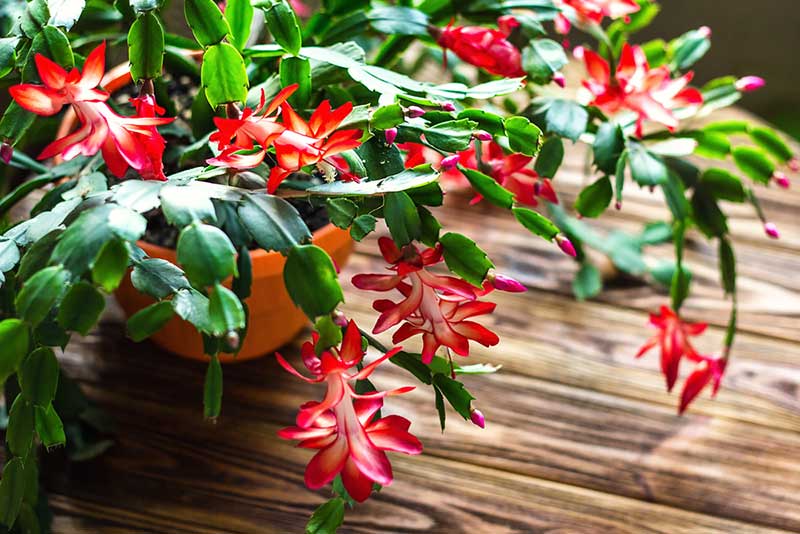
1. Christmas Cactus (Schlumbergera bridgesii)
The Christmas Cactus is a tropical succulent that produces stunning blooms just in time for the holidays, typically in shades of pink, red, white, or purple. Unlike most cacti, it thrives in more humid conditions and prefers cooler temperatures.
-
USDA Zones: 9–11
-
Light: Bright, indirect sunlight
-
Watering: Water when the top inch of soil is dry
-
Soil: Well-draining, sandy or cactus mix
-
Flowering Tip: To trigger blooming, provide cooler temps (around 60°F) and 12–14 hours of darkness for several weeks in late fall.
Great for hanging baskets or indoor containers, this cactus adds winter color and thrives with minimal care.
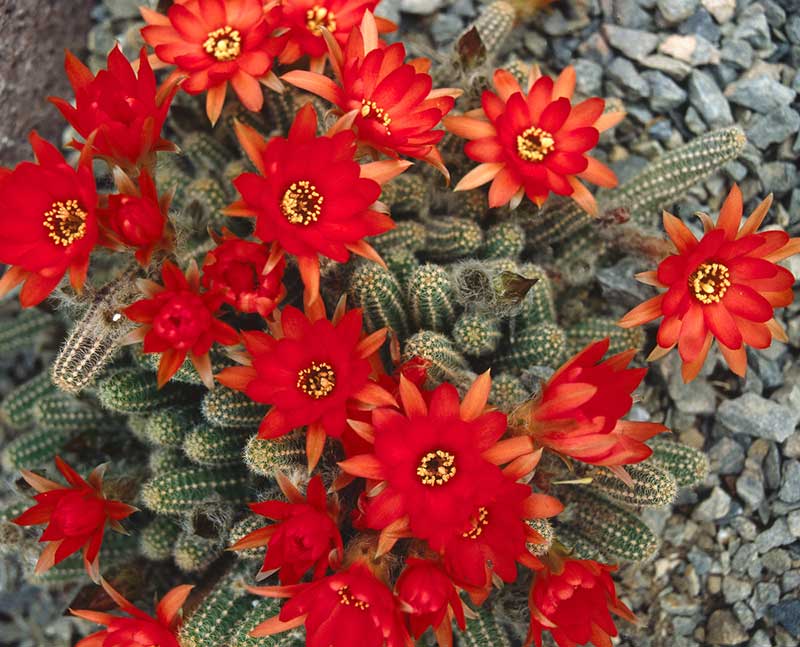
2. Peanut Cactus (Echinopsis chamaecereus)
The Peanut Cactus is a low-growing succulent known for its bright orange-red flowers that bloom in spring and early summer. Its name comes from its finger-like stems, which resemble unshelled peanuts.
-
USDA Zones: 10–12
-
Light: Full sun to partial shade (especially in hot climates)
-
Watering: Infrequent; allow soil to dry completely
-
Soil: Gritty, well-draining cactus mix
-
Size: Up to 6 inches tall and 12 inches wide
Peanut Cactus grows horizontally, making it a perfect choice for shallow containers or rock gardens.
3. Aloe (Aloe vera and hybrids)
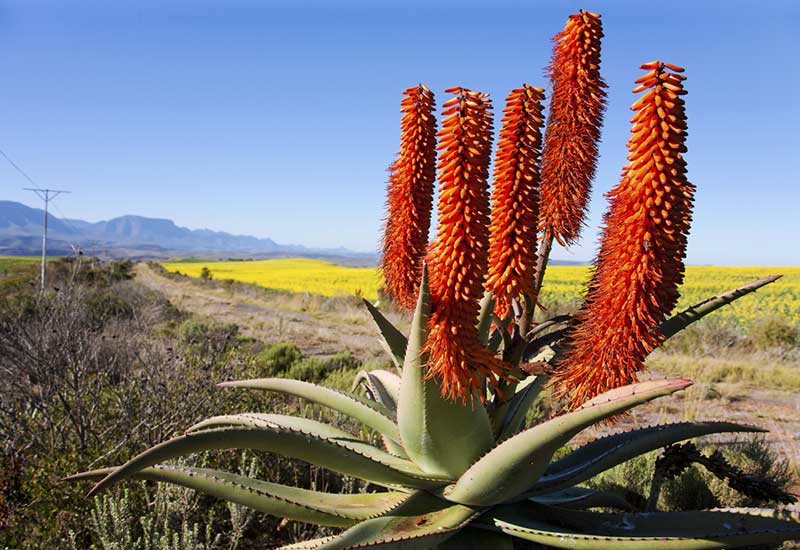
While Aloe vera is best known for its healing properties, many aloe varieties produce tall flower spikes topped with tubular blossoms in shades of orange, red, or yellow.
-
USDA Zones: 9–11
-
Light: Bright indirect light indoors; full sun outdoors
-
Watering: Every 2–3 weeks; drought-tolerant
-
Soil: Sandy, well-draining soil
-
Bonus: Aloe juice can be used to soothe burns and skin irritations
To encourage flowering, provide plenty of sunlight and avoid overwatering.
4. Orchid Cactus (Epiphyllum spp.)
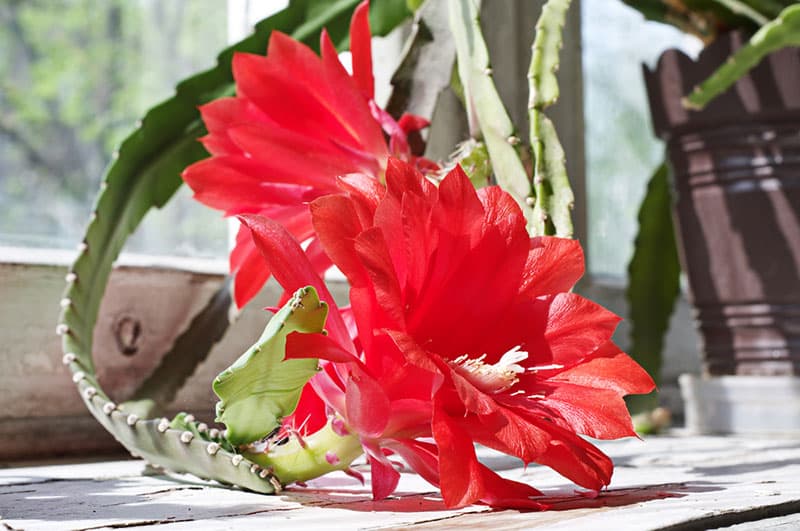
The Orchid Cactus produces some of the most spectacular blooms in the succulent world—large, fragrant flowers in shades of pink, red, or white that often bloom at night.
-
USDA Zones: 10–11
-
Light: Bright, indirect light
-
Watering: Keep soil lightly moist in growing season; reduce in winter
-
Soil: Rich, organic, well-draining mix (orchid bark + cactus mix)
-
Blooming Tip: May take 2+ years to bloom; prefers to stay in the same container
These epiphytic cacti grow well in hanging pots and are perfect for indoor succulent enthusiasts.
5. Moon Cactus (Gymnocalycium mihanovichii)
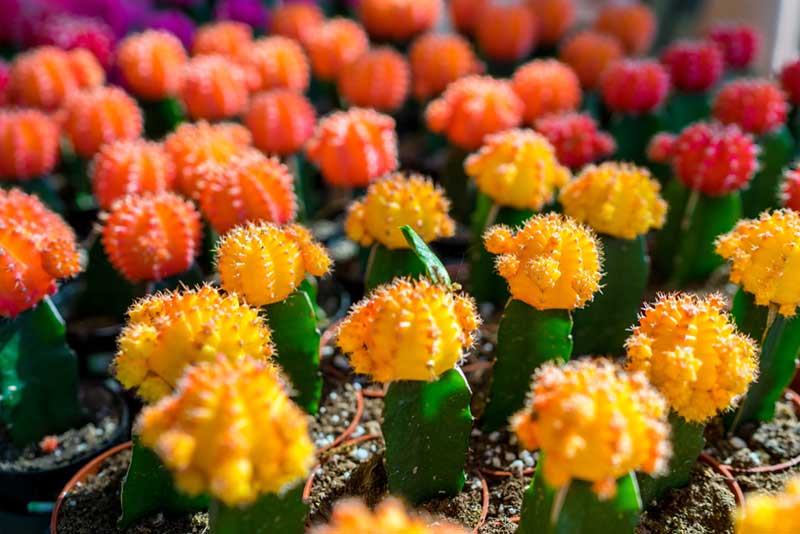
The Moon Cactus is an eye-catching hybrid plant with a colorful top “ball” (often red, pink, or yellow) grafted onto a green cactus base. The top part cannot survive without the base cactus.
-
USDA Zones: 10–11
-
Light: Bright indirect light
-
Watering: Allow soil to dry completely before watering
-
Soil: Well-drained cactus mix
-
Size: Typically 3–5 inches tall
While its vivid coloration is its most famous feature, Moon Cactus may also produce small flowers in spring with proper care.
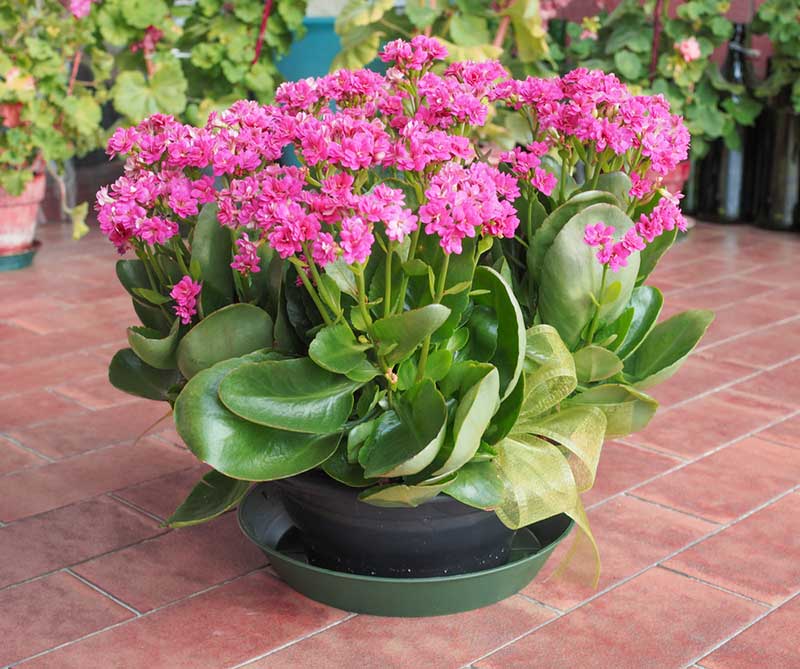
6. Kalanchoe (Kalanchoe blossfeldiana)
Kalanchoe is a popular flowering succulent that blooms in rich clusters of red, pink, orange, yellow, or white. Its thick, scalloped leaves make it attractive even when not in bloom.
-
USDA Zones: 10–11
-
Light: Bright indoor light or morning sun outdoors
-
Watering: Allow topsoil to dry before watering
-
Soil: Light, fast-draining soil
-
Pet Warning: Toxic to pets if ingested
Kalanchoe can flower several times a year with proper light and care.
7. Crassula (Jade Plant)
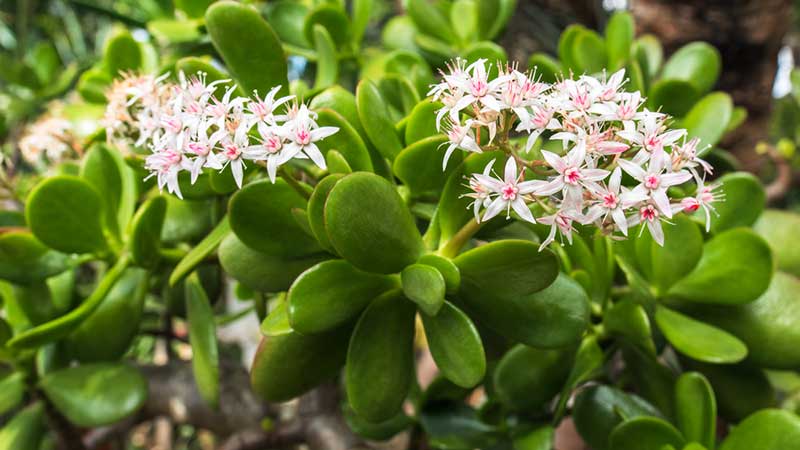
The Jade Plant is a symbol of good luck and wealth. While it’s often grown for its blue-green foliage with burgundy edges, mature plants also produce delicate pink or white star-shaped flowers in late winter or spring.
-
USDA Zones: 9–11
-
Light: Full sun to bright indirect light
-
Watering: Minimal; water only when dry
-
Soil: Gritty and fast-draining
Jade plants are incredibly long-lived and can grow up to 6 feet tall with proper care.
8. Crown of Thorns (Euphorbia milii)
The Crown of Thorns is a rugged succulent shrub with small, showy flowers in shades of red, pink, yellow, or white. Its stems are lined with sharp thorns, giving the plant its name.
-
USDA Zones: 9–11
-
Light: Full sun to bright light
-
Watering: Let soil dry out between waterings
-
Soil: Cactus mix or sandy soil
-
Bloom Time: Spring through late summer
This plant thrives in dry conditions and can flower nearly year-round in the right climate.

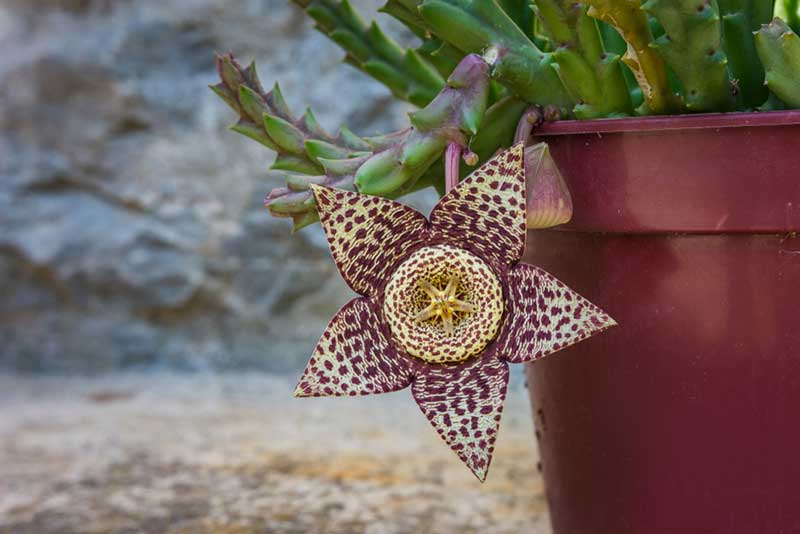
9. Carrion Cactus (Stapelia gigantea)
Also called the Starfish Flower, this fascinating succulent produces massive five-pointed blooms that resemble starfish. The flowers are often red, burgundy, or yellow—and they have a strong odor to attract pollinators like flies.
-
USDA Zones: 9–11
-
Light: Full sun to partial shade
-
Watering: Keep soil slightly moist but never soggy
-
Soil: Well-drained cactus mix
Despite the scent, these unique flowers are a dramatic addition to any succulent collection.
10. Prickly Pear Cactus (Opuntia spp.)
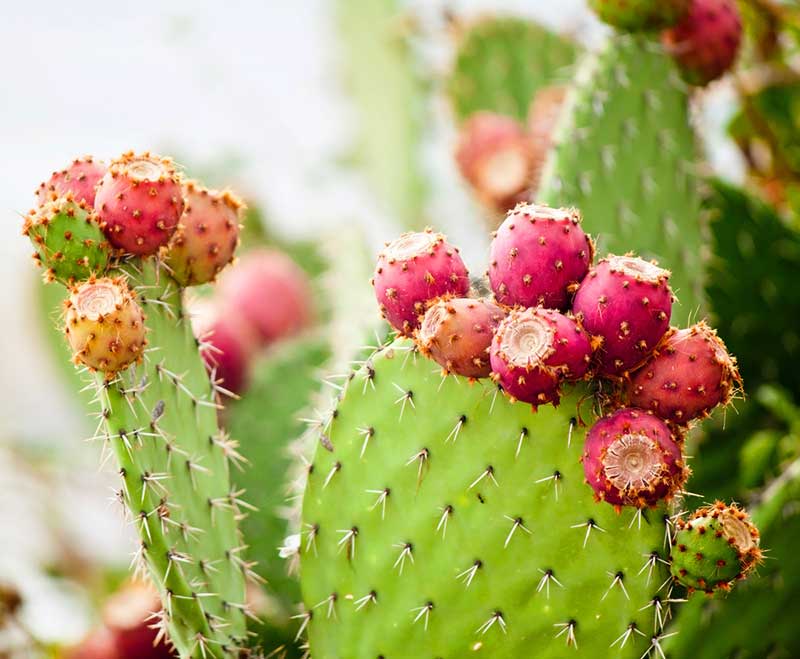
The Prickly Pear is a sprawling cactus known for its paddle-like pads and vibrant summer flowers in hues of red, yellow, orange, or purple. Many varieties also produce edible fruit.
-
USDA Zones: 8–11 (some cold-hardy types go to Zone 5)
-
Light: Full sun
-
Watering: Very drought-tolerant
-
Soil: Well-draining soil, preferably sandy
This cactus is perfect for xeriscaping and wildlife gardens and can spread over time.
If you’re looking to combine the hardiness of succulents with the visual impact of blooming flowers, these 10 flowering succulents are the perfect plants to grow indoors or outdoors.
From winter-blooming Christmas Cactus to exotic Orchid Cactus and vibrant Kalanchoe, there’s a variety for every gardener—no matter your skill level or space.
Not only do these plants require minimal maintenance, but they also provide seasonal bursts of color, structure, and texture that will keep your garden interesting all year long.