Nettle is naturally rich in plant compounds and nutrients, including polyphenols, carotenoids, chlorophyll, and minerals.
Laboratory research has also identified antioxidant and anti-inflammatory compounds in nettle, although evidence for specific hair-growth claims remains limited.
Here’s why people use nettle for their hair, how to harvest it safely, and how to make a simple nettle shampoo at home.
Why Has Nettle Traditionally Been Used for Hair?
Stinging nettle (Urtica dioica) has been used in European herbal traditions for generations. The leaves have been prepared as teas and foods and incorporated into various topical preparations.
When it comes to hair, nettle preparations have traditionally been used primarily for the scalp and hair rather than as a proven treatment for hair loss.
Nettle leaves contain a complicated mixture of naturally occurring compounds, including phenolic compounds and flavonoids. These substances are one reason nettle continues to attract scientific interest.
For homemade hair care, the easiest way to use nettle is to make a strong water-based infusion. The liquid can then be used as a rinse or incorporated into a simple shampoo.
1. Nettle Can Make a Refreshing Scalp Rinse
One of the simplest benefits of nettle shampoo is that it gives you an herbal scalp rinse while you wash your hair.
Warm water extracts water-soluble compounds from the leaves, producing a dark green-brown infusion. Once cooled, this liquid can be massaged over the scalp.
The washing and massaging process itself helps loosen oil, sweat, dead skin, and styling-product residue.
For people who enjoy botanical hair care, nettle provides an easy way to turn an ordinary wash into an herbal scalp treatment.
A healthy scalp provides a better environment for normal hair growth, although this should not be confused with nettle directly causing new hair to grow.
2. Nettle Contains Antioxidant Plant Compounds
Nettle contains several naturally occurring antioxidant compounds.
Antioxidants help neutralize reactive molecules known as free radicals. This is one reason nettle extracts have been widely investigated in laboratory research.
The scalp, like the rest of the skin, is constantly exposed to environmental stressors. A plant-based rinse containing antioxidant compounds can therefore be an interesting addition to a normal scalp-care routine.
However, homemade nettle shampoo is much less concentrated and standardized than extracts used in scientific studies.
That distinction matters.
A homemade herbal infusion can be useful as a cosmetic preparation without claiming that it will produce the same effects as a concentrated laboratory extract.
3. It May Help an Oily Scalp Feel Cleaner
People with oily hair often look for shampoos that clean effectively without leaving a heavy residue.
A nettle infusion is light and water-based, so it can be incorporated into shampoo without adding heavy oils or butters.
This makes it particularly appealing for:
- Oily scalps
- Fine hair
- Hair that becomes greasy quickly
- People who dislike heavy conditioning treatments
The actual cleansing still comes primarily from the shampoo or soap base—not the nettle itself.
Think of nettle as the herbal addition rather than the main cleansing ingredient.
4. Nettle Is Traditionally Used for Scalp Comfort
Nettle has a long history of topical herbal use, and modern research has found that the plant contains compounds associated with inflammatory pathways.
That does not mean homemade nettle shampoo treats eczema, psoriasis, dermatitis, or another medical scalp condition.
However, some people enjoy nettle rinses as part of a gentle scalp-care routine.
If your scalp is persistently red, painful, intensely itchy, flaky, or developing sores, it is better to determine the cause rather than repeatedly experimenting with homemade products.
5. What About Dandruff?
You’ll often see nettle described online as a natural dandruff treatment.
This claim needs some caution.
Dandruff can involve oil production, skin-cell turnover, individual sensitivity, and the yeast Malassezia. Moderate or severe dandruff often responds better to proven anti-dandruff ingredients than herbal rinses alone.
Nettle shampoo may help wash away loose flakes and leave the scalp feeling fresh, but it should not be treated as a guaranteed antifungal dandruff remedy.
For mild buildup, however, regular cleansing combined with gentle scalp massage can make a noticeable cosmetic difference.
6. Can Nettle Make Hair Grow Faster?
This is probably the biggest claim associated with nettle hair products.
You may see nettle described as a plant that “stops hair loss,” “reactivates follicles,” or makes hair grow dramatically faster.
Evidence for these strong claims is not established.
Hair growth is influenced by many factors, including:
- Genetics
- Hormones
- Age
- Nutrition
- Stress
- Illness
- Medications
- Scalp conditions
- Hair-care practices
Using nettle shampoo may be part of a healthy hair-care routine, but it shouldn’t replace proper evaluation of unexplained or significant hair loss.
If you suddenly begin losing large amounts of hair, develop bald patches, or notice progressive thinning, speak with a healthcare professional or dermatologist.
7. Nettle Can Be an Inexpensive DIY Hair Ingredient
Perhaps the most practical advantage is how accessible nettle can be.
If it already grows around your property, you have a free source of fresh leaves during much of the growing season.
Instead of purchasing an expensive herbal shampoo marketed around nettle extract, you can experiment with a simple infusion at home.
And you don’t need much.
A handful of leaves can produce enough infusion for several rinses or a small batch of homemade shampoo.
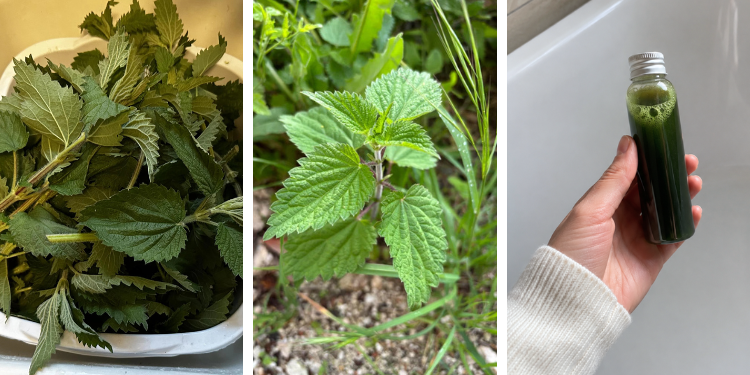
First: Make Sure You Have the Right Plant
Before harvesting anything from your yard, make absolutely certain that the plant is correctly identified as stinging nettle.
Stinging nettle typically has:
- Opposite leaves
- Serrated leaf edges
- Pointed leaves
- Upright stems
- Fine stinging hairs
The sting itself is distinctive, but intentionally touching an unknown plant isn’t a good identification method.
If you’re uncertain about identification, don’t harvest it.
Also avoid plants growing beside heavily trafficked roads, areas treated with herbicides or pesticides, contaminated soil, or places regularly visited by pets.
How to Harvest Nettles Safely
Fresh nettles can sting bare skin, so wear gloves when harvesting and handling them.
Long sleeves are also helpful when collecting a larger quantity.
Young, healthy leaves are generally the best choice. Avoid leaves that are badly damaged, diseased, covered with insects, or beginning to decay.
Cut the upper leafy portions with scissors rather than pulling entire plants from the ground.
This allows established nettles to regrow and gives you the possibility of another harvest later.
What you’ll need:
- Thick gardening gloves
- Clean scissors
- A basket or container
- Fresh nettle leaves
Once indoors, keep wearing gloves while preparing the leaves.
How to Make a Strong Nettle Hair Infusion
Before making shampoo, you first need to extract the nettle into water.
You’ll need:
- 1–2 cups loosely packed fresh nettle leaves
- 2 cups water
Rinse the nettles thoroughly while wearing gloves.
Bring the water to a boil and remove it from the heat. Add the nettle leaves, cover the container, and allow them to steep for approximately 20–30 minutes.
For a stronger infusion, you can allow the mixture to steep longer as it cools.
Strain the liquid carefully and discard or compost the plant material.
Allow the infusion to cool completely before applying it anywhere near your scalp.
You should now have a greenish-brown herbal liquid.
How to Make Homemade Nettle Shampoo
The easiest homemade version uses an existing mild shampoo base rather than trying to manufacture soap from scratch.
Ingredients:
- ½ cup cooled nettle infusion
- ½ cup mild, fragrance-free liquid shampoo or gentle unscented castile-style cleanser
- Optional: 1 teaspoon aloe vera gel
Directions:
Pour the cooled nettle infusion into a clean bottle.
Add the shampoo base and gently turn or shake the bottle to combine.
If desired, add a small amount of aloe vera gel for additional slip.
Avoid adding large amounts of oils, particularly if you have fine or naturally oily hair. Too much oil can make the finished shampoo heavy and difficult to rinse.
Because this homemade preparation contains fresh herbal water and does not contain a tested cosmetic preservative system, make only a small amount.
Keep it refrigerated and discard it promptly if its smell, appearance, or texture changes. For the safest approach, make enough for only a few uses rather than attempting to store a large bottle for weeks.
How to Use Nettle Shampoo
Wet your hair thoroughly.
Apply a small amount of the nettle shampoo mainly to the scalp rather than coating the entire length of your hair.
Massage gently with your fingertips for about one minute.
Don’t scratch aggressively with your fingernails.
Allow the foam and water to run through the lengths as you rinse.
Then rinse thoroughly with lukewarm water.
Follow with conditioner if your hair normally requires it.
You can begin using it once or twice a week and see how your scalp responds rather than immediately replacing every shampoo with the homemade version.
Even Easier: Make a Nettle Hair Rinse
If you don’t want to make shampoo, there is an even easier option.
Prepare the nettle infusion exactly as described above and allow it to cool completely.
After shampooing normally, slowly pour the nettle infusion over your scalp and hair.
Massage gently and allow it to sit briefly before rinsing with cool or lukewarm water.
This method allows you to continue using your regular shampoo while still experimenting with nettle.
It also avoids diluting your shampoo formula with homemade herbal water.
Can You Use Dried Nettles?
Yes.
Dried nettle leaves are actually convenient because you can store them for months and prepare an infusion whenever needed.
Use approximately:
2–4 tablespoons dried nettle leaves per 2 cups hot water.
Cover and steep for 20–30 minutes, strain thoroughly, and allow the liquid to cool.
If you’re harvesting your own nettles for drying, wear gloves while handling the fresh plants.
Nettle + Rosemary Hair Rinse
Rosemary is another herb commonly used in traditional hair preparations, so the two can easily be combined.
Try:
- 2 tablespoons dried nettle
- 1 tablespoon dried rosemary
- 2 cups hot water
Steep for approximately 20–30 minutes, strain thoroughly, cool, and use as a post-shampoo rinse.
Again, a homemade rinse shouldn’t be presented as a cure for hair loss, but it can be an enjoyable botanical addition to a normal scalp-care routine.
Important Safety Tips
Natural ingredients can still irritate skin.
Before using homemade nettle shampoo over your entire scalp, test a small amount on a limited area and stop if you experience burning, redness, swelling, or significant itching.
Be particularly cautious if you have very sensitive skin or an existing scalp condition.
Remember:
- Correctly identify wild nettles.
- Wear gloves when handling fresh plants.
- Don’t apply raw fresh nettles directly to your scalp.
- Use only cooled, properly strained infusion.
- Keep homemade water-based preparations refrigerated.
- Make small batches.
- Stop using the product if irritation develops.
If you have persistent dandruff, scalp inflammation, sores, significant itching, or unexplained hair loss, seek professional advice rather than relying solely on herbal remedies.
How Often Should You Use Nettle Shampoo?
More isn’t necessarily better.
For most people experimenting with a homemade preparation, one or two uses per week is a sensible starting point.
Pay attention to your hair afterward.
If it feels clean and comfortable, you can continue. If your scalp becomes dry, itchy, or irritated, reduce the frequency or stop using it.
People with dry, curly, bleached, or chemically treated hair may need more conditioning afterward because herbal rinses don’t replace the moisturizing ingredients found in many commercial hair products.
Don’t Throw the Used Nettles Away
After making your infusion, the softened nettle leaves can usually go straight into your compost pile.
That means the same handful of nettles can serve two purposes: first as part of your homemade hair routine and then as organic material for the garden.
Just avoid composting plant material that was collected from areas treated with persistent herbicides.
Stinging nettle may look like an annoying weed, but it has been valued as an herbal plant for generations.
The best gardens don’t just brighten your yard – they become something you can enjoy season after season.
If you’re ready to grow your own backyard pharmacy, the Medicinal Garden Kit is a wonderful place to begin.
Inside you’ll find 2,409 non-GMO seeds, a detailed Herbal Medicinal Guide, and 2 FREE bonuses to help you grow a wide variety of traditional medicinal herbs with confidence.
Take a look at the Medicinal Garden Kit and start growing something truly rewarding.