Patterns are everywhere in home décor—from kitchen backsplashes and accent walls to curtains and wallpaper.
They add personality, depth, and visual interest to any space. But why limit your creativity to the indoors? If you’ve enjoyed using patterns inside your home, it’s time to bring that same charm to your outdoor areas.
And when it comes to outdoor design, there’s one surface that’s often overlooked as a decorative opportunity: the floor.
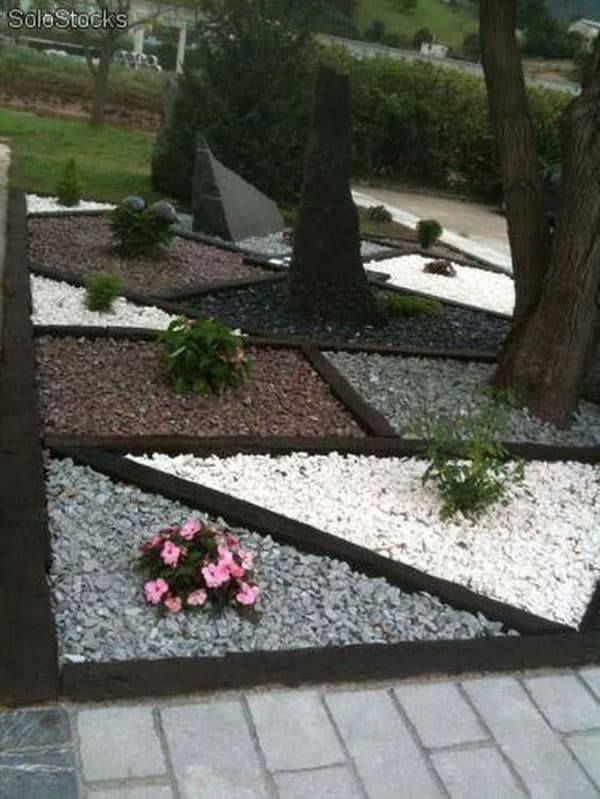
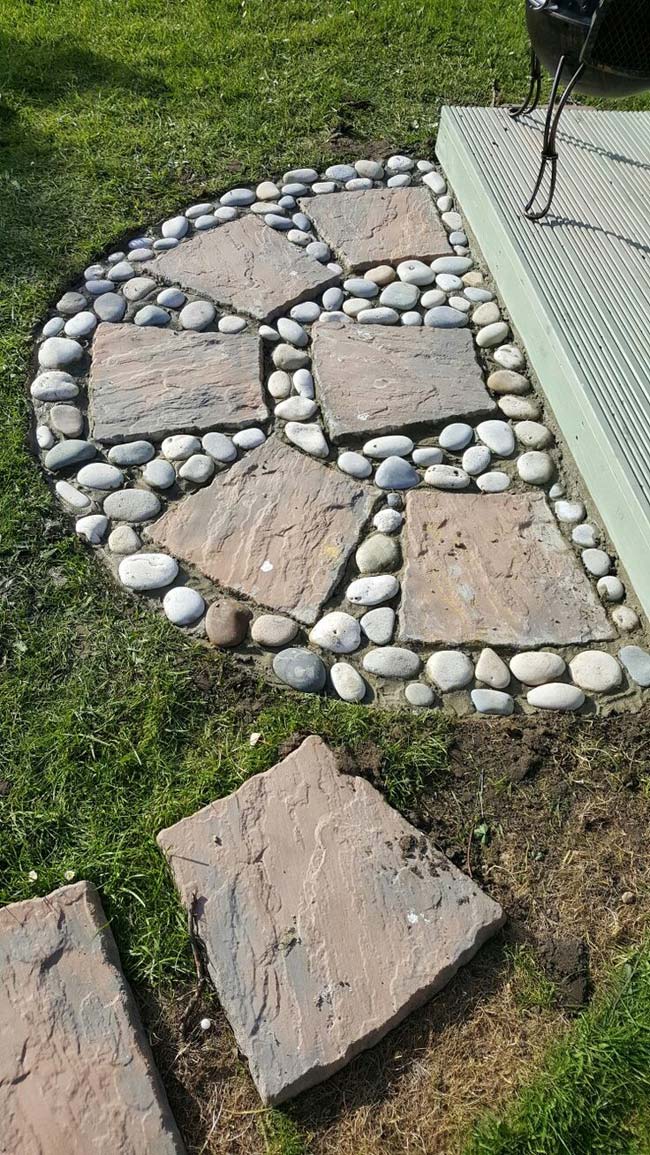
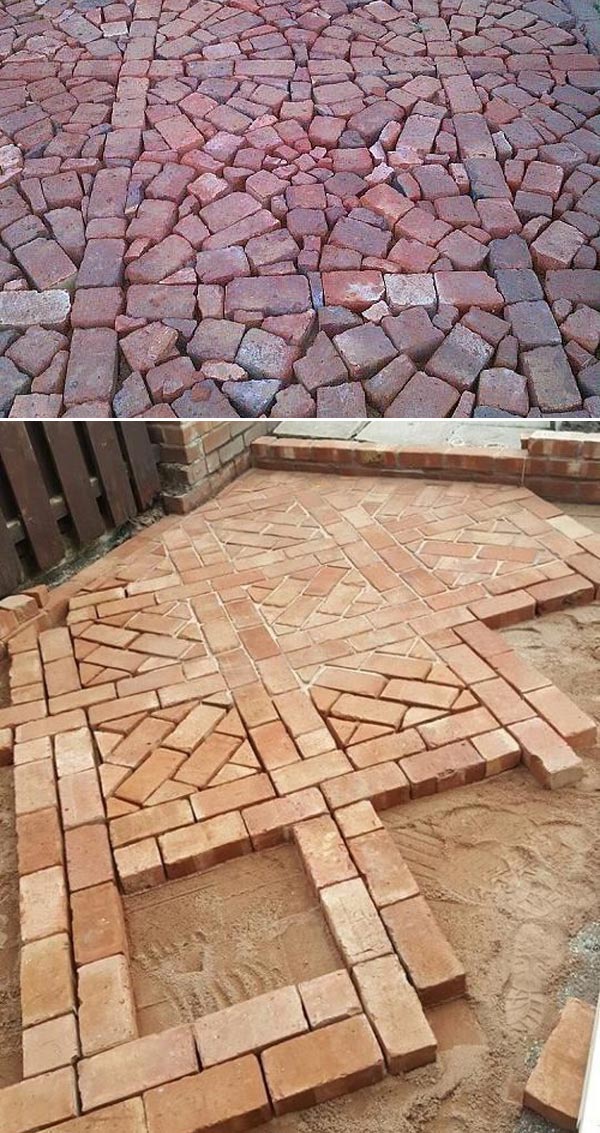
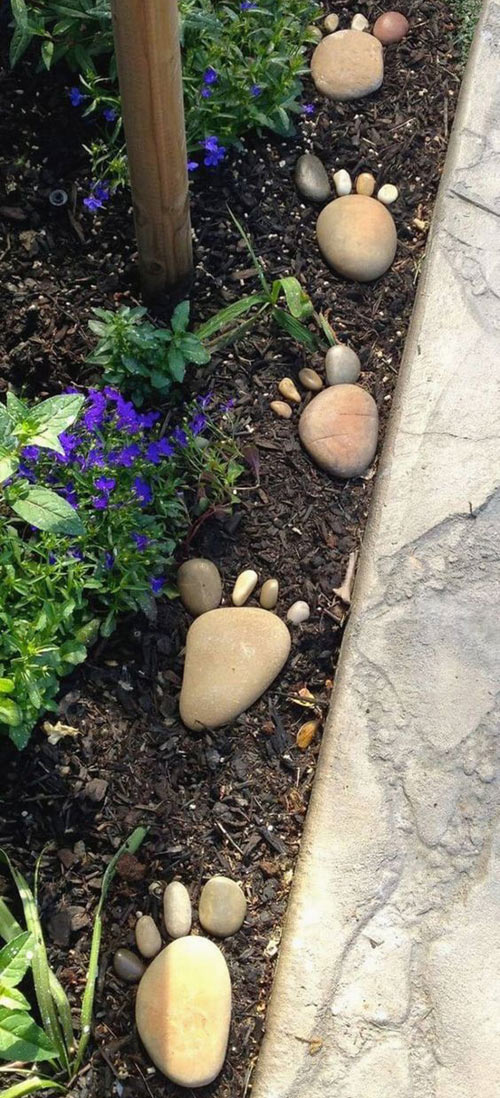
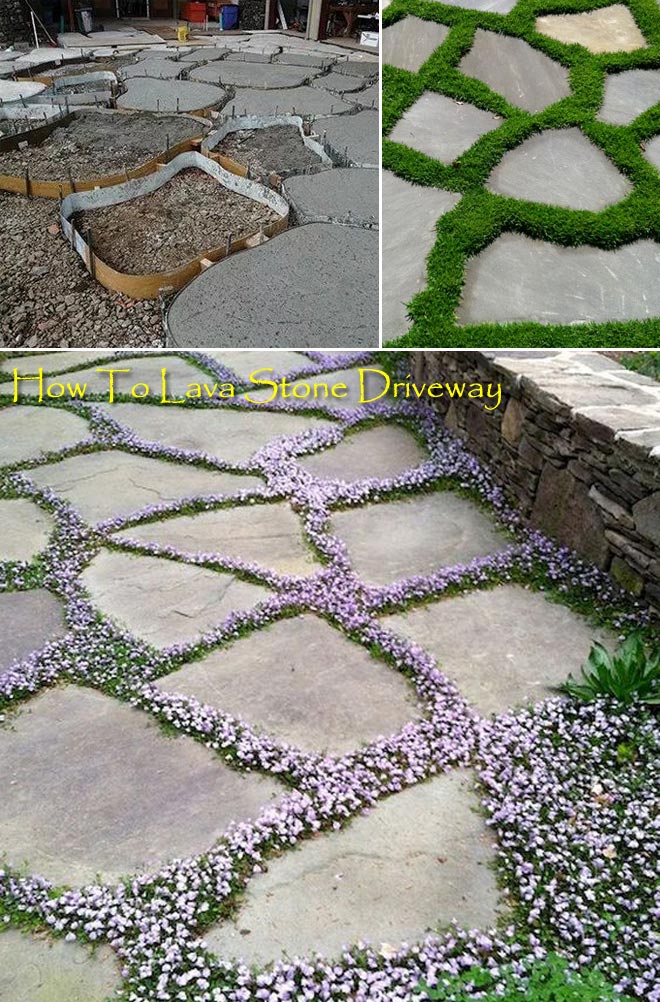
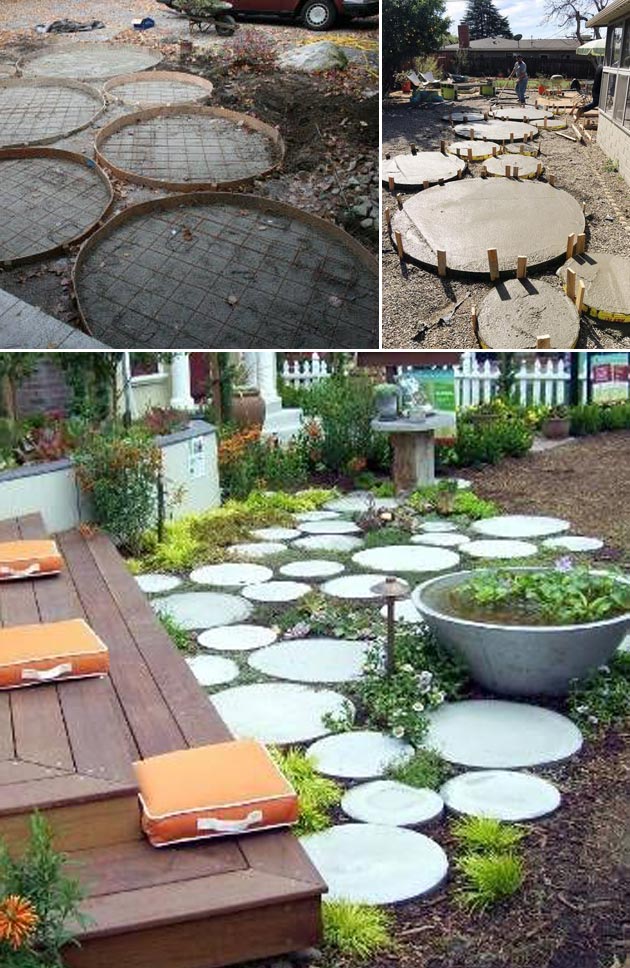
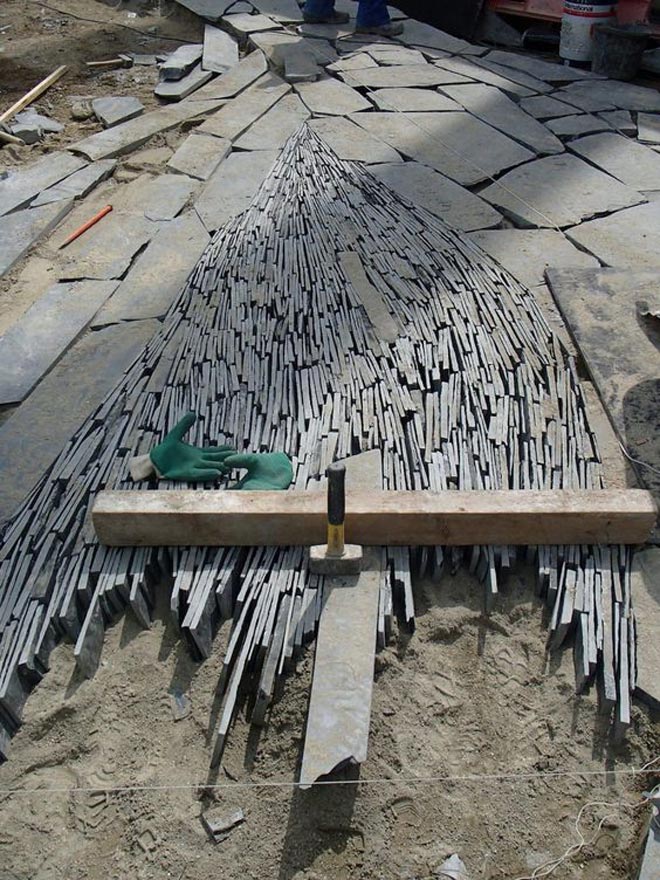
Whether it’s a patio, garden path, or landscape edging, the floor offers a blank canvas to express creativity using natural materials like pebbles, stones, bricks, and even repurposed items.
A well-designed patterned floor doesn’t just enhance visual appeal—it can turn your garden or patio into an inviting and artistic retreat.
Here are 20 creative and beautiful patterned floor ideas to inspire your next backyard or patio project.
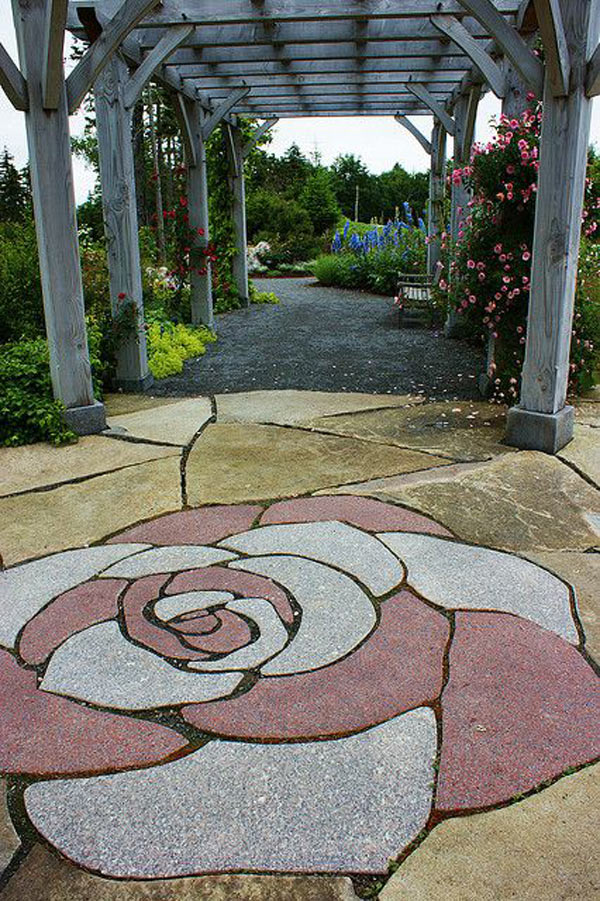
1. Spice Up Your Patio Floor with a Giant Rose Pattern
A large-scale rose pattern embedded into your patio floor can instantly become the focal point of your backyard.
Use tinted concrete, stone tiles, or painted pavers to create a blooming floral motif. A rose design is both romantic and bold—perfect for cozy seating areas or garden lounges.
Tip: Use stencils or custom-cut tiles to achieve clean, curved lines for petal shapes.
Best for: Concrete patios, paved seating areas, garden courtyards
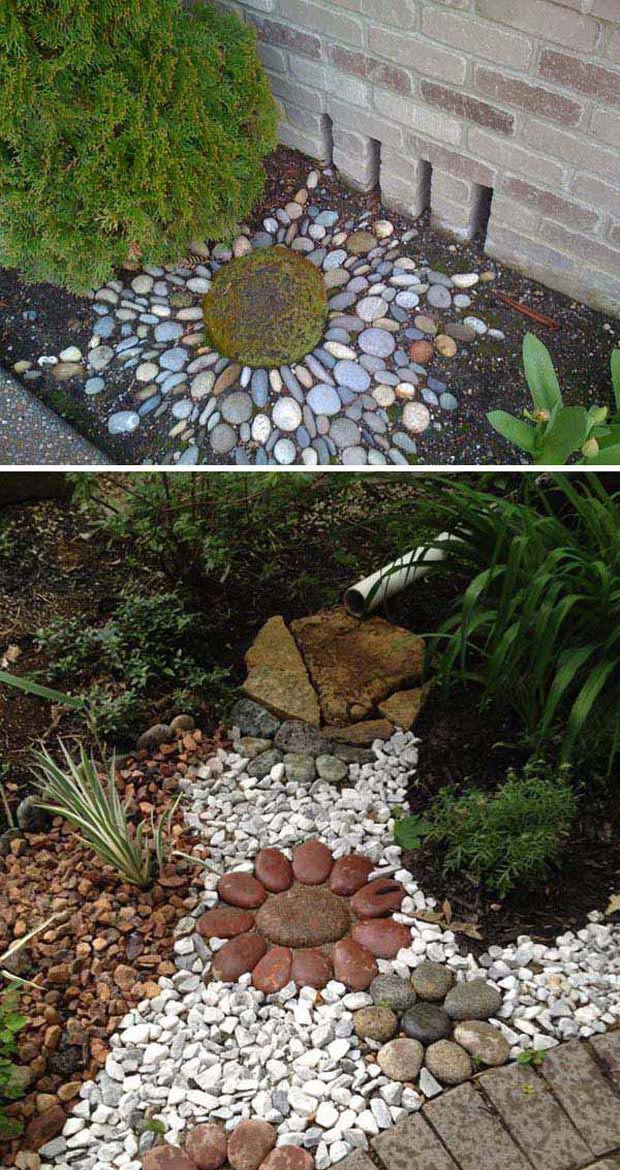
2. Decorate the Downspout Landscape with Pebble Flowers
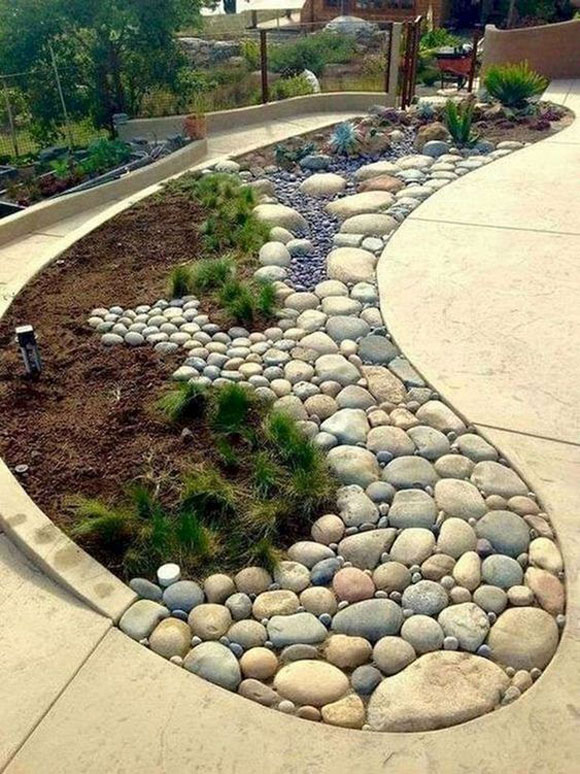
The area beneath your roof’s downspout is often damp and hard to landscape—but it’s the perfect spot for a low-maintenance pebble flower design. Use colored river rocks or polished stones to create flower shapes that channel water while adding artistic flair.
How to do it:
-
Outline petal shapes with bricks or dark stones
-
Fill with smaller, colored pebbles
-
Add a center “pollen” circle with golden or contrasting stones
Bonus: Helps prevent erosion and improves drainage!
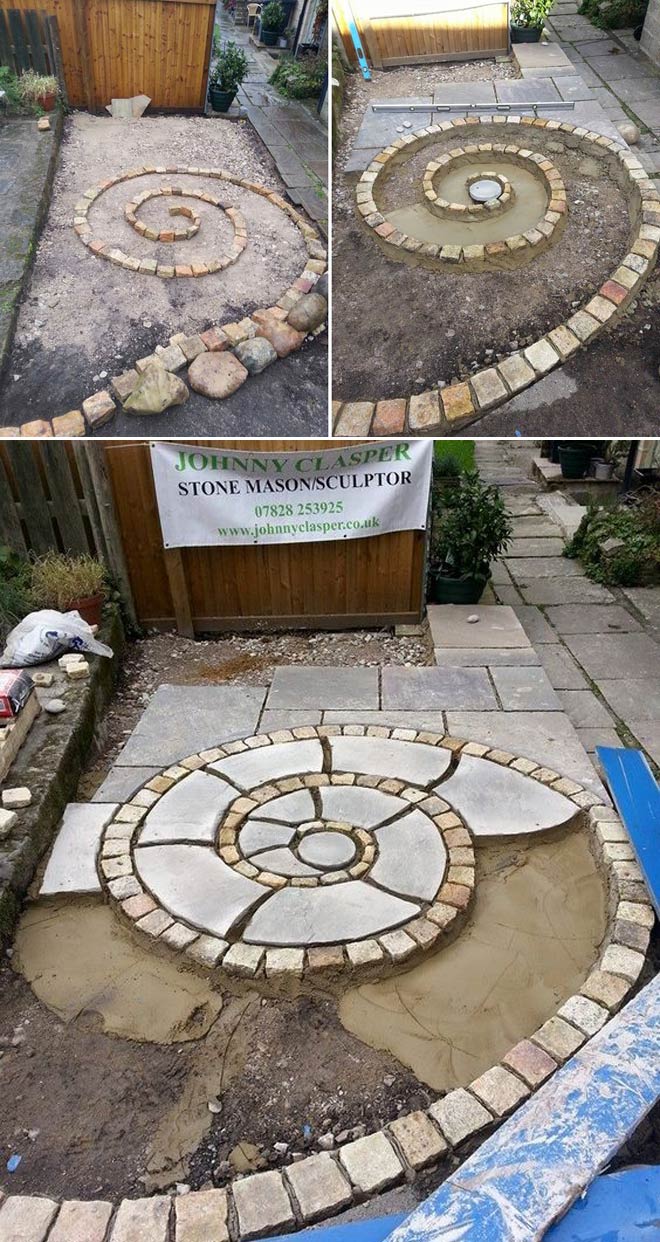
3. Create a Spiral Border with Stones or Bricks Before Laying Pavers
Before you fill in a garden or walkway with stone pavers, consider lining the perimeter with a whimsical spiral or swirl pattern. Use bricks, cobblestones, or flat rocks in contrasting colors to frame the design.
Why it works: This extra layer of pattern makes the layout feel custom, sophisticated, and harmonious.
Perfect for: Circular patios, stepping stone paths, meditation zones
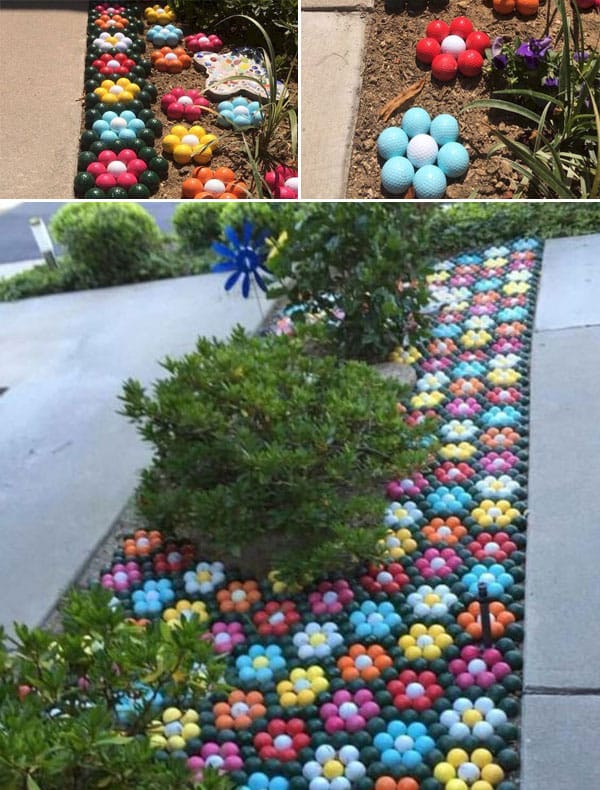
4. Add Color and Fun with Painted Golf Balls in Flower Beds or Paths
For a fun, upcycled garden project, use painted golf balls to add vibrant pops of color and texture throughout your flower beds or garden paths. Arrange them in geometric shapes or organic lines, or scatter randomly for a playful effect.
DIY tip: Use acrylic paint and a clear weatherproof sealant to keep colors bright.
Best use: Edging garden beds, filling plant gaps, or decorating gravel paths
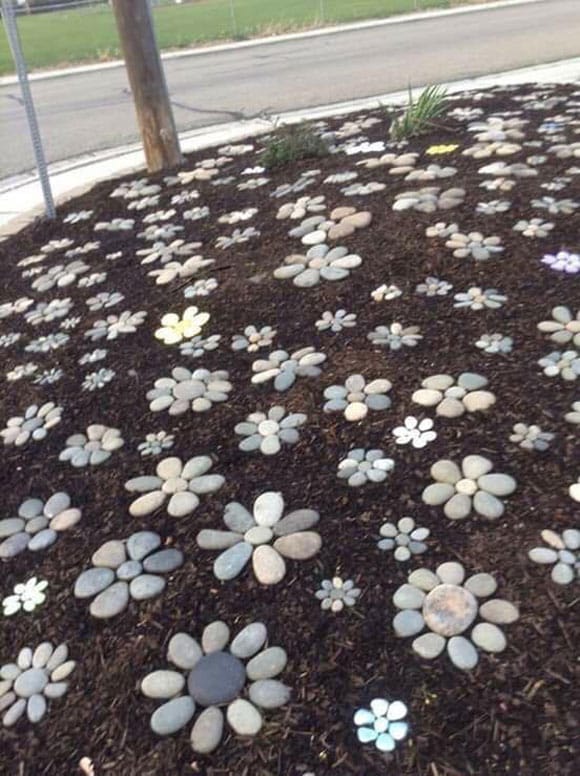
5. Sprinkle Stone Daisies, Sunflowers, and Dragonflies Across Garden Beds
Turn your mulch or gravel garden beds into art by creating mosaic-style floral and insect patterns using colored stones, marbles, or pebbles.
Design ideas:
-
Daisies with white rock petals and a yellow center
-
Sunflowers with bronze and gold tones
-
Dragonflies made from small oblong stones for wings and a pebble body
Why it works: Adds a storybook charm and keeps kids engaged in gardening.
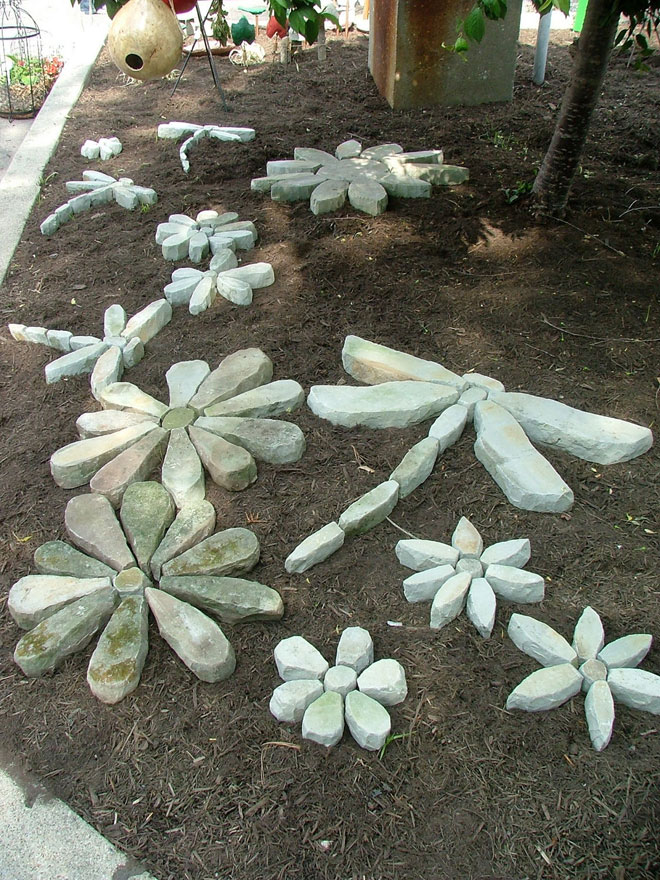
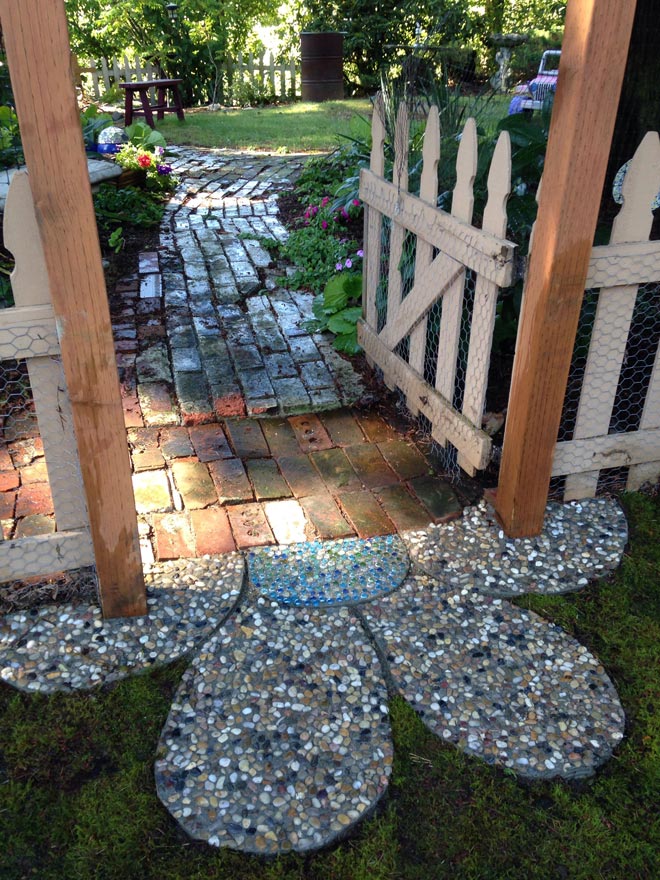
6. Welcome Guests with a Mosaic Flower Path to the Backyard
Instead of a standard stone walkway, use mosaic flower patterns made from tiles, marbles, or colorful pebbles to lead guests into your backyard. This technique blends art with function and makes your garden feel like a curated space.
What to use:
-
Broken ceramic tiles
-
Smooth colored glass
-
Natural or painted stones
Pro tip: Sketch your design before starting to ensure symmetry and spacing.
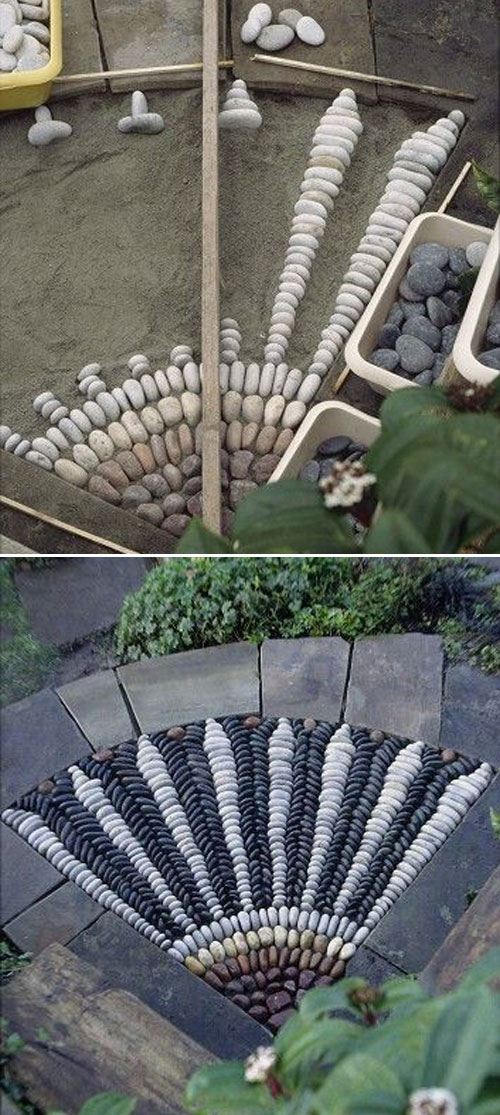
7. Use Colored River Rocks to Form a Fan-Shaped Ground Pattern
Fan patterns are dynamic and elegant, resembling traditional Japanese or Moroccan design motifs. Create this stunning look by arranging river rocks in different shades—black, white, tan, and gray—into fan shapes that stretch across the garden floor or patio.
Where to use: Near water features, Zen gardens, or fire pit seating areas
Benefit: No weeding or mowing required, and it lasts for years!
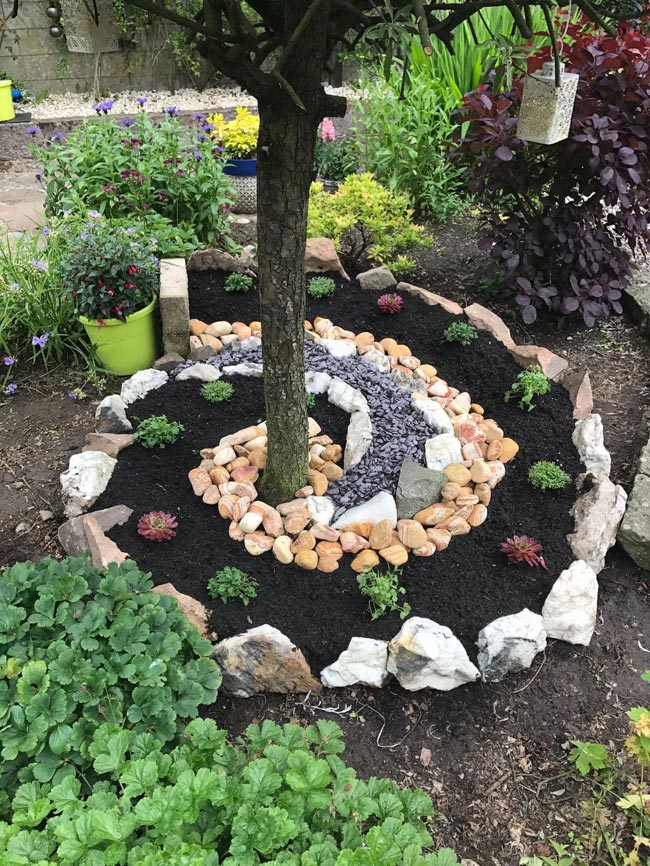
8. Construct a Spiral Rock Garden Bed Around a Tree
Surrounding a tree with a spiral stone garden bed not only protects the base of the tree but also adds a dramatic design feature.
Use bricks, stones, or logs to build the spiral upward and fill with soil and plants like herbs, succulents, or ornamental grasses.
Why it’s great:
-
Adds height and movement
-
Makes use of vertical space
-
Perfect for permaculture or herb spirals
Plant ideas: Lavender, thyme, sedum, creeping Jenny
9. Combine Bricks and Pebbles for Striking Garden Edging Patterns
Create elegant borders for walkways or flower beds by combining traditional bricks with colorful or neutral pebbles. You can alternate materials in repeating patterns or use pebbles to fill in between brick pavers.
Inspiration ideas:
-
Chevron or herringbone patterns
-
Pebble inlay with brick framing
-
Circular edging with alternating textures
Benefit: Enhances curb appeal and defines garden areas with minimal cost.
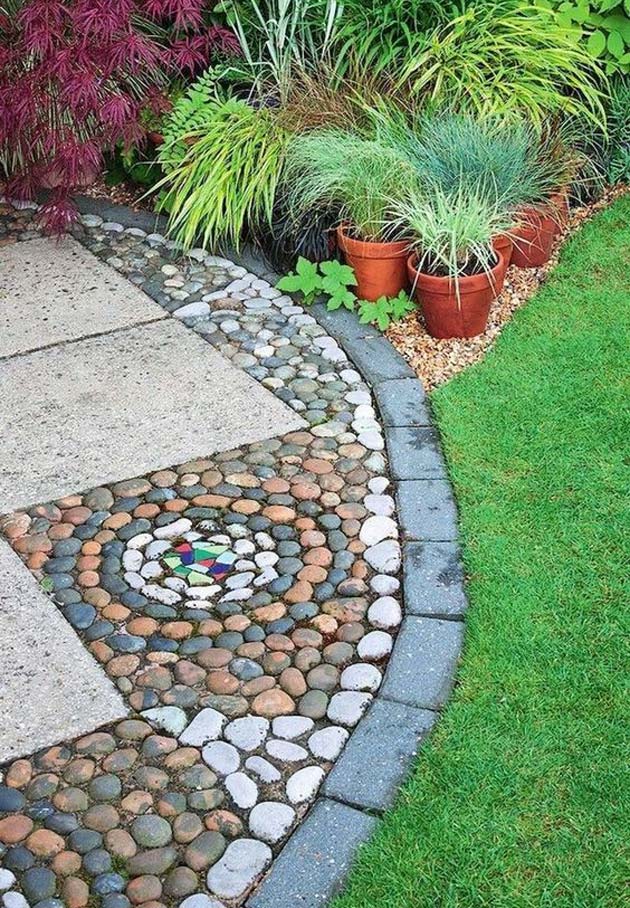
10. Design a River Rock Flower to Accent Your Garden Beds
Use river rocks in a variety of sizes and colors to create flower shapes directly in your garden beds. These rock flowers can serve as permanent “blooms” that last through every season, even when the rest of the garden is dormant.
How to do it:
-
Lay out petal shapes with lighter stones
-
Use darker rocks for the center or border
-
Surround with mulch or gravel for contrast
Best use: Around trees, at pathway intersections, or in Zen-style gardens
Patterned garden floors are a simple yet powerful way to elevate your outdoor space.
Whether you’re working with gravel, bricks, river rocks, or upcycled items, you can create a personalized outdoor floor design that reflects your style, boosts curb appeal, and brings year-round beauty to your yard or patio.
From floral mosaics to spiral stone beds, the possibilities are endless when you let your garden floor become your creative canvas.