A beautiful garden does not always come from planting more flowers or building complicated landscapes. Often, the biggest transformation happens when you cover the ground properly.
Bare soil creates constant work. It dries quickly in summer, weeds invade every open space, and heavy rain can wash away nutrients and topsoil.
Over time, empty areas in the garden begin to look patchy and unfinished no matter how many plants you add around them.
This is exactly why ground covers are so valuable.
Low-growing ground cover plants spread naturally across the soil, creating a living layer that protects, cools, and stabilizes the garden.
They reduce maintenance, improve moisture retention, suppress weeds, and make landscapes feel fuller and more established.
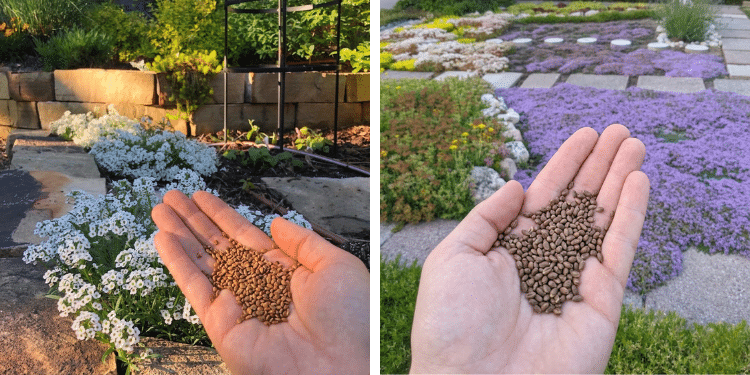
Even better, many of the best ground covers can be grown directly from seed, allowing you to cover large areas affordably and naturally.
Why Ground Covers Make Gardens Easier to Maintain
One of the biggest misconceptions in gardening is that a low-maintenance garden means fewer plants. In reality, the opposite is often true.
Gardens become difficult when there is too much exposed soil. Open spaces allow weeds to germinate easily, sunlight dries the soil rapidly, and temperature fluctuations stress nearby plants.
Ground covers solve these problems by acting as a natural protective blanket over the soil.
Once established, they:
- Shade the ground and reduce evaporation
- Block sunlight from reaching weed seeds
- Help soil retain moisture longer
- Reduce erosion from rain and wind
- Create a cooler root environment for nearby plants
Over time, this creates a more balanced ecosystem that requires far less intervention.
Why Growing Ground Covers From Seed Is Worth It
Many gardeners buy trays of mature plants for ground cover projects, but starting from seed offers several major advantages.
First, it’s dramatically more affordable, especially for large areas. Covering a slope, pathway edge, or open garden bed with mature plants can become expensive quickly, while seeds allow you to establish the same effect for a fraction of the cost.
Second, seed-grown plants often adapt better to your specific soil and climate conditions because they develop there from the beginning.
Finally, growing from seed allows plants to establish more natural root systems, which often leads to stronger long-term performance.
The first season may require patience, but the long-term payoff is usually greater.
1. Creeping Thyme – The Fragrant Carpet That Thrives on Neglect
Creeping thyme is one of the most beloved ground covers because it combines beauty, durability, and fragrance in a single plant.
It forms a dense mat of tiny leaves that spread slowly across the soil, creating a soft carpet effect. During summer, it produces masses of tiny flowers that attract bees and pollinators, transforming the ground into a colorful blanket.
What makes creeping thyme especially valuable is its tolerance for difficult conditions.
Once established, it:
- Handles drought extremely well
- Thrives in rocky or sandy soil
- Requires almost no fertilizing
- Stays naturally compact
Unlike many spreading plants, it rarely becomes invasive or difficult to control.
It is especially effective:
- Between stepping stones
- Along pathways
- In rock gardens
- On sunny slopes
When walked on, the foliage releases a pleasant herbal scent, making it one of the few practical and sensory ground covers.
2. Sweet Alyssum – Fast, Soft, and Constantly Blooming
Sweet alyssum grows quickly from seed and creates one of the softest-looking ground layers in the garden.
Its tiny clusters of flowers may seem delicate, but together they form thick blankets of white, pink, or purple blooms that continue for months.
One reason gardeners love alyssum is how effectively it fills gaps. It naturally spreads outward, softening hard edges and making young gardens appear more mature.
Its sweet fragrance also attracts beneficial insects and pollinators, which supports the health of nearby plants.
In cooler climates, alyssum often performs best in spring and early summer, while in milder regions it may continue blooming much longer.
3. Clover – The Living Green Mulch
Clover has quietly become one of the most practical low-maintenance ground covers available.
For years, it was treated as a weed in lawns, but gardeners are now rediscovering how useful it actually is.
Clover grows quickly from seed and creates a dense green layer that stays attractive with minimal care. Unlike grass, it requires far less mowing and watering.
One of its greatest benefits is what happens underground.
Clover naturally improves soil by fixing nitrogen, enriching the surrounding earth instead of depleting it. This benefits nearby plants and gradually improves overall soil quality.
Its soft texture also makes it pleasant to walk on, which is why many gardeners now use it as a lawn alternative.
4. Creeping Phlox – A Waterfall of Spring Color
Few ground covers create as dramatic a display as creeping phlox.
In spring, the plant becomes almost completely covered in flowers, turning hillsides and borders into carpets of pink, purple, white, or blue.
Beneath the flowers is a dense layer of evergreen foliage that continues covering the soil long after the blooms fade.
Creeping phlox works especially well:
- Along retaining walls
- On slopes
- In rock gardens
- At the front of borders
Because it grows outward rather than upward, it creates softness without blocking views or competing aggressively with taller plants.
5. Roman Chamomile – Soft Texture and Gentle Fragrance
Roman chamomile creates a relaxed, cottage-garden feel wherever it spreads.
Its feathery foliage forms low mats that remain soft and attractive throughout the season. Small daisy-like flowers rise above the foliage, adding light texture and movement.
One of chamomile’s most unique qualities is its fragrance. When brushed or stepped on lightly, the plant releases a sweet herbal scent that makes pathways and seating areas feel more immersive.
It thrives best in sunny locations with well-drained soil and gradually forms a natural carpet over time.
6. Moss Rose – The Ultimate Heat-Loving Ground Cover
Moss rose thrives where many other plants fail.
This low-growing succulent spreads rapidly and produces bright, jewel-like flowers that open fully in sunlight. Because its leaves store water, it tolerates intense heat and drought exceptionally well.
It is perfect for:
- Dry borders
- Gravel gardens
- Hot slopes
- Containers with trailing edges
Even in poor soil, moss rose continues flowering throughout summer with very little attention.
7. Ajuga – Dense Coverage for Difficult Shade
Ajuga, also called bugleweed, is one of the best solutions for shaded spaces where grass struggles.
Its glossy foliage spreads quickly, forming thick carpets that block weeds naturally. Many varieties have deep purple or bronze leaves, adding color even when the plant is not flowering.
In spring, spikes of blue flowers rise above the foliage, creating additional visual interest.
Because it spreads steadily and densely, ajuga is highly effective beneath trees and around shaded borders.
8. Candytuft – Evergreen Structure With Minimal Effort
Candytuft stays attractive even when not blooming.
Its evergreen foliage forms tidy mounds that maintain structure year-round, while spring brings clusters of white flowers that brighten pathways and borders.
Unlike more aggressive ground covers, candytuft grows in a controlled, predictable way, making it easy to integrate into formal or natural garden designs.
9. Wild Violets – Natural Woodland Beauty
Wild violets bring a softer, more natural look to the garden.
Their heart-shaped leaves spread gradually in moist, shaded areas, creating a woodland effect that feels organic rather than heavily designed.
Their purple flowers appear in spring and attract pollinators while adding subtle color beneath taller plants.
Once established, violets require very little care and often reseed gently on their own.
10. Yarrow – Tough Enough for Harsh Conditions
Low-growing yarrow varieties create textured mats of fern-like foliage that tolerate poor soil and drought with ease.
The plant thrives in difficult areas where many other ground covers struggle, making it useful for dry landscapes and low-water gardens.
Its flowers attract pollinators while the foliage remains attractive even during heat waves.
11. Dianthus – Compact Growth With Long Flowering
Dianthus combines tidy evergreen foliage with bright flowers that bloom for extended periods.
Its compact habit makes it ideal for edging pathways or softening rock gardens.
Because it stays low and structured naturally, it requires little shaping or maintenance throughout the season.
12. Self-Heal – A Native Ground Cover That Supports Pollinators
Self-heal is often overlooked, but it is one of the most adaptable native ground covers available.
It spreads naturally without becoming overwhelming and produces purple flower spikes that attract bees and beneficial insects.
Because it tolerates both sun and partial shade, it adapts well to mixed landscapes and naturalized gardens.
How Ground Covers Change the Garden Over Time
The first season after sowing is usually focused on root development.
At first, the plants may appear small or slow-growing. But beneath the soil, roots are expanding and strengthening.
By the second season, the transformation becomes much more dramatic.
You’ll notice:
- Fewer weeds
- Cooler, moister soil
- Fuller planting beds
- Less exposed ground
- Reduced watering needs
Eventually, the garden begins to stabilize itself naturally.
Ground covers are one of the smartest long-term investments you can make in a garden.
They reduce maintenance, improve soil conditions, soften harsh edges, and create the lush, layered look that makes landscapes feel complete.
And when grown from seed, they become even more rewarding – allowing you to create wide, beautiful coverage naturally and affordably.