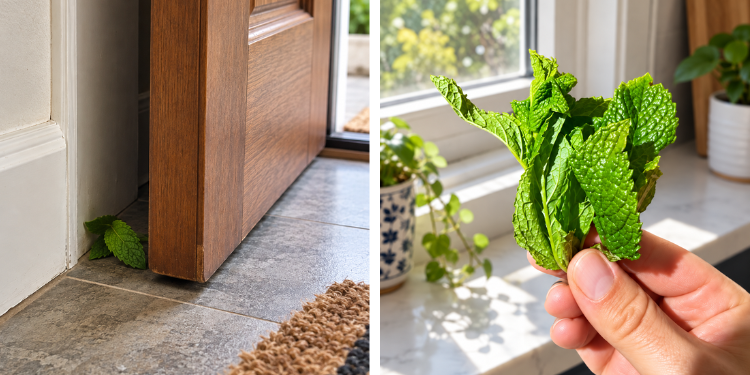
Whether you walk into a quiet home and catch the crisp, invigorating scent of crushed spearmint or notice a small sachet of dried leaves tucked neatly behind a front entrance, using mint near entry points is a timeless household tradition.
Across diverse cultures and modern eco-friendly living circles, placing mint (Mentha) behind doors – including main entryways, bedroom doors, and kitchen pantries – serves a dual purpose.
It combines powerful natural pest deterrence with home deodorization and mood-boosting aromatherapy.
The Science of Mint: Why It Works as a Natural Barrier
Mint species – particularly peppermint (Mentha × piperita) and spearmint (Mentha spicata) – are packed with volatile organic compounds that interact strongly with the surrounding environment.
1. Menthol as an Insect and Rodent Repellent
The dominant organic compound in peppermint is menthol, alongside menthone and eucalyptol.
While humans find the cool, sharp scent of menthol refreshing, small animals and insects experience it as an intense chemical overload.
-
Olfactory Disruption in Rodents: Mice, rats, and other small rodents rely heavily on their acute sense of smell to navigate, forage, and detect predators. The potent concentration of menthol vapor irritate their sensitive nasal passages, creating an invisible sensory wall that deters them from crossing the threshold.
-
Insect Receptor Overload: Common household crawling insects – such as ants, spiders, cockroaches, and silverfish – use chemical receptors on their antennae to track food scents. Mint masks these odor trails and acts as a natural contact irritant, driving crawling pests away from door gaps and floor seals.
4 Reasons People Place Mint Behind Their Doors
Entry doors and interior doorways act as natural transit corridors for air, scents, and unwanted visitors.
Placing mint specifically behind a door targets these high-traffic transition zones without cluttering visible floor space.
1. Non-Toxic Pest Defense for High-Risk Thresholds
Exterior doors – especially those leading to gardens, patios, or garages – frequently feature small gaps under the door sweep where crawling insects and rodents attempt to gain entrance, particularly as seasonal outdoor temperatures cool down.
Placing a sachet of dried mint, fresh sprigs, or a mint-infused diffuser disk directly behind the doorframe creates a continuous olfactory barrier.
Unlike chemical pesticide sprays, mint is completely non-toxic, making it safe for homes with curious pets and small children.
2. Natural Air Freshening for High-Traffic Entryways
Entryways frequently trap lingering smells from outdoor shoes, wet umbrellas, and pet coat moisture. Hanging a pouch of mint behind the front or coat closet door acts as a passive, all-natural air freshener.
Every time the door swings open or closed, the movement circulates a gentle burst of clean, minty fragrance through the hallway without relying on synthetic aerosol propellants or artificial phthalates.
3. Aromatherapy and Emotional Uplift
In aromatherapy, menthol and spearmint essential oils are classified as top-note stimulants.
Inhaling mint vapors activates olfactory pathways that connect directly to the brain’s limbic system, promoting mental clarity, reducing stress-induced fatigue, and boosting alertness.
Crossing the threshold into a home that smells subtly of fresh mint provides an immediate, subconscious feeling of cleanliness and calm after a demanding day.
Mint Formulations for Doorway Care Compared
| Preparation Method | Key Active Ingredient | Primary Household Purpose | Effective Duration |
| Dried Mint Sachets | Slow-release menthol essential oils | Pest deterrence & closet freshening | 4 – 6 Weeks (crush to reactivate) |
| Peppermint Spray Solution | Concentrated essential oil + water | Immediate pest barrier & rug deodorizer | Reapply every 3 – 5 days |
| Fresh Mint Sprigs | Live plant terpenes & moisture | Rapid scent release & visual greenery | 5 – 7 Days (requires replacement) |
| Mint & Salt Bowl | Menthol + moisture-absorbing sodium | Dehumidification & odor neutralization | 30 Days |
4. Cultural Symbolism: Protection and Prosperity
In European and Mediterranean folk traditions, mint has long been associated with hospitality, protection, and prosperity.
Hanging fresh or dried mint leaves above or behind the main doorway was believed to ward off negative environmental energy, clean the air for incoming guests, and bring luck and abundance into the household.
How to Set Up a Mint Doorway Barrier Step-by-Step
Implementing this simple technique takes less than five minutes:
Safety Guidelines for Pet Owners
While mint is safe and pleasant for humans, keep these precautions in mind:
-
Cats and Dogs: Pure peppermint essential oil is highly concentrated and can be toxic to cats and dogs if ingested or applied directly to their fur. Always keep concentrated oil sprays or sachets placed high enough on the door hinge or frame where pets cannot lick or chew them.
-
Use Breathable Fabrics: Ensure dried mint leaves are securely enclosed in tightly woven fabric pouches so they don’t spill loose onto the floor where pets might eat them.
Placing mint behind your door is a budget-friendly, non-toxic habit that keeps your entryways fresh, protects your home from unwanted pests naturally, and greets you with an energizing aroma every time you step inside.