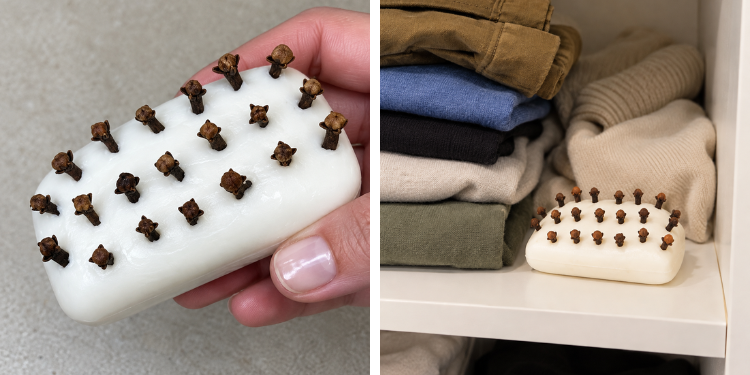
If you take a look inside the linen closets, laundry rooms, or nightstand drawers of seasoned home care enthusiasts, you might spot an unusual sight: a solid bar of bath soap studded with two dozen dark, fragrant whole cloves.
At first glance, it looks like a rustic craft project or an unfinished aromatherapy experiment. However, sticking whole cloves (Syzygium aromaticum) into a bar of soap is an ingenious, low-cost, and non-toxic household hack.
By combining the fat-bound fragrance carriers of traditional soap with the powerful chemical compounds found in whole cloves, this simple combination creates a long-lasting, dual-action natural pest repellent and air-freshening sachet that works silently for months.
The Science: Why Soap and Cloves Work Together
To understand why this trick is so effective, it helps to examine how soap and whole cloves interact on a molecular level.
1. Eugenol: The Natural Insect Repellent
Whole cloves are world-renowned for their high concentration of eugenol, a volatile essential oil compound responsible for their signature warm, pungent aroma.
Eugenol is a natural insecticide and repellant. To many common indoor pests – such as clothing moths, mosquitoes, ants, silverfish, and flies – the smell of eugenol is intensely overwhelming.
It interferes with their delicate olfactory receptors, driving them away from the area.
2. Soap as a Slow-Release Volatile Carrier
When you leave whole cloves out in the open, their volatile essential oils evaporate quickly, losing potency within a few weeks.
Soap bars, on the other hand, are composed of fatty acid salts (lipids). When you press whole cloves deep into the dense, solid matrix of a soap bar, the fats absorb and lock in the eugenol oils.
The soap acts as a slow-release carrier, allowing the clove fragrance to diffuse gradually into the surrounding air over several months rather than evaporating overnight.
4 Main Reasons People Use Cloves Studded in Soap
1. Repelling Fabric-Eating Clothes Moths and Silverfish
Wool coats, silk blouses, and cotton linens stored in dark wardrobes or storage chests are prime targets for web-spinning clothes moths (Tineola bisselliella) and silverfish.
These pests lay eggs in quiet, undisturbed spaces, and their larvae chew holes through natural textile fibers.
Tucking a clove-studded bar of soap into your closet shelves or dresser drawers creates an aroma barrier.
The combination of soap fragrance and intense eugenol fumes prevents adult moths from settling near your garments, keeping your wardrobe completely protected without the harsh, toxic smell of chemical mothballs (naphthalene).
2. Preventing Musty Drawer and Linen Closet Odors
Enclosed storage spaces like shoe cabinets, linen closets, and laundry hampers suffer from poor air circulation, often developing a stale, musty smell.
The clove-studded soap acts as a passive, continuous air freshener. As the soap slowly sheds micro-moisture and fragrance into the air, the spicy scent of cloves neutralizes stale organic odors, leaving sheets, towels, and clothing smelling freshly washed for months.
3. Deterring Ants and Flies Near Kitchen Entryways
Kitchen pantries and trash storage areas are frequent targets for ant trails and fruit flies. Placing a clove-studded soap bar near trash cans, under kitchen sinks, or behind food storage cabinets disrupts insect pheromone trails.
Ants will avoid crossing floor spaces where the strong scent of eugenol and soap is present.
4. Eco-Friendly, Chemical-Free Alternative
Commercial air fresheners, insect sprays, and mothballs frequently contain volatile organic compounds (VOCs), phthalates, and synthetic chemicals that can trigger allergies or respiratory discomfort.
A bar of soap studded with cloves uses 100% biodegradable, non-toxic ingredients, making it completely safe for homes with children and pets.
Household Application Comparison
| Storage Location | Primary Benefit | Target Issues Prevented | Replacement Frequency |
| Dresser Drawers & Wardrobes | Fabric protection & fresh scent | Clothes moths, silverfish, musty fabric smells | Every 3 – 6 months |
| Linen Closets & Bedding Chests | Long-term odor prevention | Stale humidity, mildew odors on sheets | Every 6 months |
| Pantry & Kitchen Cabinets | Non-toxic pest barrier | Ants, fruit flies, pantry moths | Every 3 – 4 months |
| Shoe Storage & Entryways | Odor neutralization | Footwear sweat smells, crawling pests | Every 2 – 3 months |
Step-by-Step: How to Make Clove-Studded Soap
Creating your own clove-studded soap bar takes less than five minutes using simple kitchen items:
Pro-Tips for Long-Lasting Freshness
-
Pair Scent Profiles Wisely: For maximum aromatherapeutic impact, pair cloves with complementary soap scents like lavender (which also naturally repels moths), citrus, eucalyptus, or sandalwood.
-
Repurpose Old Soap Scraps: Instead of throwing away small leftover slivers of bath soap, press them together while wet to form a single solid block, then stud it with cloves to give old soap a second life.
Studding a bar of soap with 20 whole cloves is a simple, budget-friendly, and clever household hack that protects your wardrobe from pests, absorbs stale odors, and keeps your living space smelling inviting completely naturally.