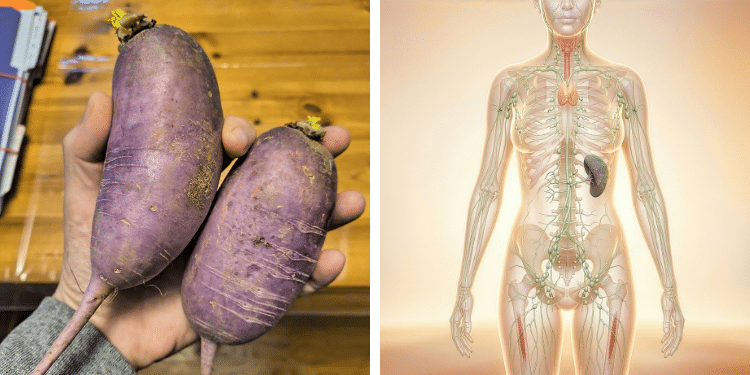
In the vibrant world of root vegetables, the common red radish often takes center stage as a crisp, peppery garnish.
However, its cousin, the Purple Radish (often found in varieties like ‘Purple Plum’ or the ‘Royal Purple’), is a nutritional heavyweight that remains largely overlooked in the Western diet.
While it shares the signature crunch of the traditional radish, the purple radish possesses a unique phytochemical profile.
Its deep violet hue is a biological signal of high anthocyanin content – the same powerful antioxidants found in blueberries and blackberries.
From liver detoxification to cardiovascular support, this overlooked vegetable offers a spectrum of benefits that go far beyond a simple salad topping.
1. Anthocyanin Power: The Source of the Purple Glow
The most significant difference between a standard radish and a purple radish is the presence of anthocyanins. These are water-soluble vacuolar pigments that belong to the flavonoid group.
Anthocyanins are potent antioxidants that neutralize free radicals – unstable molecules that cause oxidative stress and cellular damage.
Because the purple radish is pigmented through both its skin and often its flesh, it provides a much higher “antioxidant density” per gram than white or red varieties.
Regular consumption of anthocyanin-rich foods is linked to a reduced risk of chronic inflammatory conditions and improved cognitive function.
These pigments help protect the integrity of your DNA from environmental pollutants and UV radiation.
2. Isothiocyanates and Liver Detoxification
Like all members of the Brassicaceae (Cruciferous) family, purple radishes are rich in glucosinolates. When you bite into a radish, these compounds break down into isothiocyanates.
Isothiocyanates, specifically sulforaphane and raphanin, are known to stimulate the liver’s Phase II detoxification enzymes.
These enzymes are responsible for taking fat-soluble toxins and converting them into water-soluble substances that can be safely excreted from the body.
By supporting the liver’s natural filtration system, purple radishes help lower the body’s systemic toxic load.
This can result in clearer skin, improved hormonal balance, and higher sustained energy levels.
3. Cardiovascular Support and Blood Pressure Regulation
The purple radish acts as a natural vasodilator, meaning it helps “relax” the blood vessels to improve circulation.
Radishes are a natural source of nitrates. When consumed, these nitrates are converted into nitric oxide in the bloodstream.
Nitric oxide signals the smooth muscles of the arteries to relax, which naturally lowers blood pressure.
Furthermore, the high potassium content in purple radishes helps balance the effects of sodium in the body.
This dual action – nitric oxide production and potassium balance – makes the purple radish an excellent functional food for maintaining heart health and preventing hypertension.
4. Digestive Health and Prebiotic Fiber
A healthy gut microbiome is the foundation of a strong immune system. The purple radish provides the specific type of fiber your “good” bacteria crave.
Radishes are high in hemicellulose and lignin, types of insoluble fiber that add bulk to the stool and accelerate transit time through the colon.
They also act as a prebiotic, providing a fuel source for beneficial microbes like Bifidobacteria.
Regular intake helps prevent constipation, reduces bloating, and supports the “gut-brain axis.” Because radishes are also naturally antifungal, they can help inhibit the overgrowth of Candida in the digestive tract.
5. Metabolic Health and Glycemic Control
For those monitoring blood sugar, the purple radish is an ideal low-glycemic vegetable.
The fiber content and specific organic acids in the radish slow down the absorption of glucose in the intestines.
Additionally, certain compounds in radishes have been shown to increase the body’s production of adiponectin, a hormone that improves insulin sensitivity.
Incorporating purple radishes into a meal can help blunt the glucose spike of other carbohydrates.
This makes it a valuable tool for weight management and for those looking to maintain stable energy levels throughout the day without “sugar crashes.”
6. Skin Health and Collagen Synthesis
The combination of high Vitamin C and sulfur compounds in the purple radish makes it a “beauty food.”
Vitamin C is a mandatory co-factor for the synthesis of collagen, the protein responsible for skin elasticity and joint health.
Meanwhile, the sulfur compounds in the radish (which give it that signature “bite”) are essential for the production of keratin, the protein found in hair and nails.
Eating purple radishes provides the internal raw materials needed to maintain a youthful complexion and strong, resilient hair.
The antioxidants also protect the skin from “photo-aging” caused by sun exposure.
Culinary Tips: How to Maximize the Benefits
To get the most out of your purple radishes, consider these preparation strategies:
-
Keep the Skin On: The highest concentration of anthocyanins and minerals is found in and just beneath the skin. Simply scrub them clean rather than peeling.
-
The “Crush and Wait” Technique: Similar to garlic, “crushing” or slicing the radish and letting it sit for a few minutes before eating allows the enzymes to fully convert glucosinolates into beneficial isothiocyanates.
-
Quick Pickling: Submerging sliced purple radishes in apple cider vinegar and a pinch of sea salt (both of which we’ve discussed in previous articles!) creates a probiotic-rich snack that preserves the anthocyanins and adds a bright pop of color to any dish.
-
Roasting for Sweetness: If the peppery “bite” of raw radish is too intense for you, roasting them whole with a little olive oil transforms the flavor into something mild, earthy, and almost potato-like, while still retaining most of the mineral content.
The purple radish is far more than a visual upgrade to a salad. It is a concentrated source of anthocyanins, a liver-supporting powerhouse, and a tool for cardiovascular resilience.