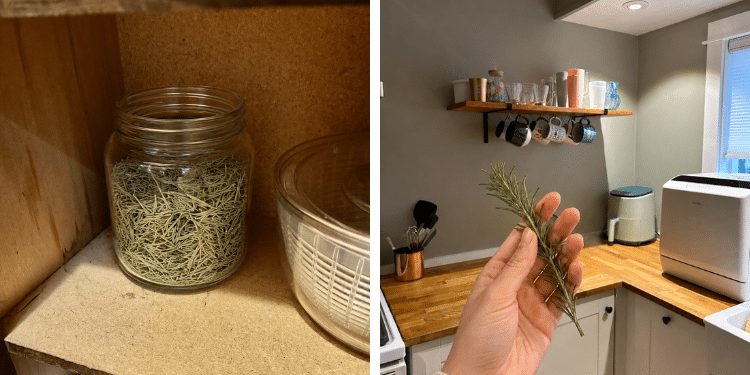
Maintaining an organized, clean kitchen pantry is an ongoing battle against an invisible, unwelcome enemy: pests.
From microscopic weevil eggs hiding inside flour bags to determined ants searching for a single grain of spilled sugar, a dark, enclosed food storage space is an absolute paradise for bugs.
While your first instinct might be to reach for a chemical insecticide spray or store-bought traps to protect your dry goods, applying harsh synthetic chemicals in close proximity to the food your family eats comes with obvious safety drawbacks.
Fortunately, one of the most effective solutions to this everyday headache is a simple culinary staple you likely already have sitting on your spice rack: dried rosemary.
Placing small bundles or shallow dishes of dried rosemary directly into the corners of your pantry shelves provides an immediate, non-toxic, and highly effective line of defense.
The Repellent Chemistry: How Rosemary Blinds Pest Senses
To understand why a simple herb is so effective, you have to look at how common kitchen pests – such as pantry moths, weevils, beetles, and ants – navigate the world.
Unlike humans, who rely primarily on sight, insects rely almost entirely on highly sensitive olfactory receptors located on their antennae to find food sources and lay their eggs.
They can detect the microscopic scent particles of an unsealed box of cereal or a bag of rice from rooms away.
Rosemary is packed with potent, volatile organic compounds – specifically cineole (eucalyptol), camphor, and alpha-pinene. To the human nose, these oils create a clean, refreshing, woodsy aroma.
To a scavenging insect, however, these strong aromatic compounds are completely overwhelming. The intense scent essentially blinds their olfactory senses, masking the smell of your dry goods.
Because insects will not lay eggs or settle in an environment where they cannot easily locate food, they will quickly turn around and leave the area.
3 Key Benefits of Using Rosemary in Food Storage
1. It Targets the Dreaded Indianmeal Moth
The most frustrating pantry pest is the Indianmeal moth (Plodia interpunctella). They sneak into the kitchen, find their way into grain boxes, and lay hundreds of microscopic eggs that hatch into small, silk-weaving larvae.
-
The Rosemary Defense: Female moths actively seek out dark, stagnant, completely scent-neutral corners to lay their eggs. Flooding these specific corner zones with the sharp scent of camphor and cineole from dried rosemary signals to the moth that the environment is hostile, preventing them from establishing a breeding ground in your shelves.
2. Completely Non-Toxic and Food-Safe
Many commercial bug sprays and chemical pest strips rely on synthetic pyrethroids or organophosphates. These chemicals release fumes that you do not want settling on your plates, Tupperware, or dry ingredients.
-
The Rosemary Defense: Rosemary is an edible culinary herb. You can place it directly next to your baking flour, pasta boxes, and cereal bags without any fear of chemical contamination, making it perfectly safe for homes with curious toddlers or pets.
3. Long-Lasting Structural Protection
Unlike fresh herbs, which contain high water content and will quickly mold in a dark closet, high-quality dried rosemary has had its moisture completely removed while locking its potent essential oils deep inside the structural cell walls of the needle-like leaves.
-
The Rosemary Defense: This low-moisture profile allows the herb to continuously emit its protective volatile oils into the surrounding air for months at a time without rotting, creating a reliable, long-term defensive shield for your shelving.
Comparing Natural Pantry Protectors
While rosemary is an exceptional deterrent, it is part of a small family of aromatic herbs that can be used to protect your kitchen. Here is how they compare:
| Natural Herb | Primary Active Compound | Best Used For Target | Aroma Profile |
| Dried Rosemary | Cineole & Camphor | Pantry Moths, Weevils, Ants | Woody, Clear, Pungent |
| Bay Leaves | Cineole (Eucalyptol) | Flour Weevils, Beetles | Herbal, Bitter |
| Dried Lavender | Linalool | Silverfish, Moths | Sweet, Floral |
| Whole Cloves | Eugenol | Sugar Ants, Fruit Flies | Spicy, Intense |
Step-by-Step: The Rosemary Corner Strategy
To maximize the pest-repelling power of your dried rosemary and keep your kitchen pristine, follow this straightforward deployment sequence:
Protecting your food investment doesn’t require toxic chemicals or expensive gadgets.
By utilizing the natural sensory-blocking chemistry of dried rosemary, you can transform the vulnerable corners of your pantry into a highly effective, aromatic barrier that driving bugs away.