As we cross the threshold of 40, our internal biology undergoes a subtle but profound shift.
Our baseline metabolic rate naturally slows down, our cellular sensitivity to systemic inflammation increases, and keeping blood pressure and cholesterol levels in check requires a more deliberate strategy.
In this chapter of life, dietary efficiency is everything. Every single snack needs to deliver maximum nutritional value without overloading the body with hidden metabolic strain.
Nuts are widely celebrated as a health food powerhouse, packed with heart-healthy monounsaturated fats, plant proteins, and vital micronutrients.
However, when you are over 40, not all nuts are created equal. Certain varieties can inadvertently accelerate age-related health hurdles, while others function as targeted, anti-aging superfoods.
Here is the nutritional truth about the four nuts you should minimize after age 40, and the four you should actively invite into your daily routine.
The 4 Nuts to Minimize (Or Avoid Entirely)
These varieties often carry hidden pitfalls—such as unfavorable fatty acid profiles, high caloric density with low fiber payout, or a high vulnerability to industrial processing—that can work against a post-40 metabolism.
1. Macadamia Nuts
While buttery and undeniably delicious, macadamia nuts possess an exceptionally high fat and caloric density. A single cup of macadamias packs nearly 1,000 calories.
Because our caloric requirements naturally decline after 40, it is incredibly easy to overeat these nuts and inadvertently drive up visceral fat storage.
Furthermore, they offer one of the lowest protein-to-fat ratios in the nut family, making them less efficient at supporting aging muscle mass.
2. Standard Commercial Peanuts
Botanically speaking, peanuts are legumes rather than true tree nuts. While they do offer a decent amount of protein, standard commercial peanuts carry a heavily skewed ratio of Omega-6 to Omega-3 fatty acids.
An excess of Omega-6s can promote systemic cellular inflammation—the root catalyst for age-related joint pain and arterial stiffness.
Additionally, because they grow underground, peanuts are highly susceptible to aflatoxin, a natural mold that can place an unnecessary detoxification burden on an aging liver.
3. Industrial “Roasted and Salted” Nut Mixes
The danger here lies not in the nut itself, but in the processing. Most mass-market roasted nuts are cooked in cheap, highly refined industrial seed oils (like canola, soybean, or cottonseed oil).
These oils are highly unstable when heated, turning into pro-inflammatory compounds. Paired with excessive industrial sodium that can rapidly elevate blood pressure and cause fluid retention, these mixes should be left on the grocery store shelf.
4. Pine Nuts
Pine nuts are highly delicate and contain a very high concentration of polyunsaturated fats that oxidize (go rancid) rapidly when exposed to light and air.
Consuming oxidized fats introduces free radicals into your bloodstream, accelerating cellular aging.
Additionally, some individuals over 40 report a strange, lingering metallic taste disturbance known clinically as “Pine Nut Syndrome” (metallogeusia), which can disrupt normal appetite and digestion for weeks.
The 4 Nuts to Eat More Often
These nutritional powerhouses are uniquely equipped with specific antioxidants, minerals, and fatty acid ratios designed to protect the cardiovascular system, support brain health, and balance hormones after 40.
1. Walnuts: The Brain and Heart Protector
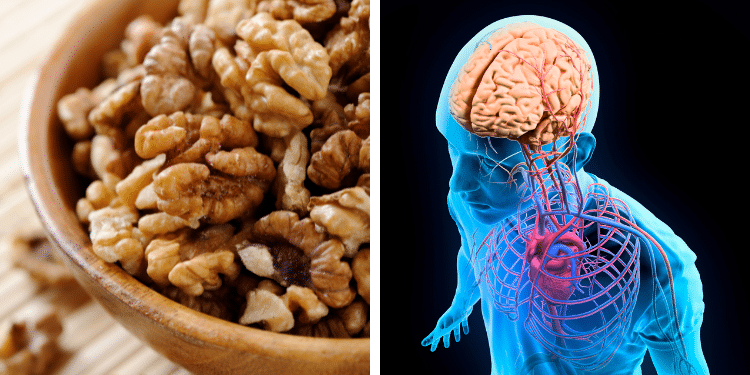
Walnuts are the undisputed king of plant-based Omega-3 fatty acids, specifically alpha-linolenic acid (ALA). As we age, maintaining cognitive sharpness and arterial elasticity becomes paramount.
The ALA in walnuts directly combats neuroinflammation, helping to preserve memory and mental clarity, while simultaneously lowering LDL (“bad”) cholesterol levels to safeguard your cardiovascular system.
2. Almonds: The Skin and Metabolic Shield
Almonds are an exceptional, bioavailable source of Vitamin E (specifically alpha-tocopherol), a potent fat-soluble antioxidant.
Vitamin E acts as an internal shield, neutralizing the oxidative stress that breaks down skin collagen and drives up arterial aging.
Packed with dietary fiber and plant protein, a daily handful of raw almonds stabilizes blood sugar spikes, keeping your insulin sensitivity sharp and your midday energy levels rock-solid.
3. Brazil Nuts: The Thyroid Optimizer
Your thyroid gland controls your baseline metabolism, body temperature, and systemic hormone balance—all of which can fluctuate noticeably after age 40.
Brazil nuts are nature’s most concentrated source of selenium, a trace mineral absolutely essential for converting inactive thyroid hormones into their active, fat-burning state.
The Precision Dose: Because selenium is so incredibly potent, you do not need to eat these by the handful. Consuming just two raw Brazil nuts a day provides 100% of your daily selenium requirement, helping to prevent age-related metabolic slowdown.
4. Pistachios: The Vascular Fitness Specialist
Pistachios are uniquely rich in L-arginine, an amino acid that your body converts directly into nitric oxide.
Nitric oxide is a powerful vasodilator; it signals the smooth muscle walls of your blood vessels to relax, open up, and improve systemic blood flow, naturally supporting healthy blood pressure.
Furthermore, pistachios boast a vibrant green and purple color that comes from high concentrations of lutein and anthocyanins—antioxidants that protect your vision from age-related macular degeneration.
The Golden Protocol: How to Consume Nuts Safely Over 40
To unlock the maximum nutritional payload of your healthy nuts while keeping your digestive tract completely happy, implement these two simple safeguards:
-
Always Buy Raw and Unsalted: Look for labels that read “Raw,” “Sprouted,” or “Dry Roasted without Added Oils.” This ensures you are ingesting pure, unadulterated plant nutrition free of industrial additives.
-
Practice Portion Awareness: Because nuts are incredibly nutrient-dense, a little goes a long way. The ideal daily portion size for a healthy over-40 metabolism is one ounce—roughly equivalent to what can comfortably fit into the palm of your hand. Enjoying this disciplined daily ritual provides your body with an unbeatable, non-toxic shield of life-extending health benefits.