For centuries, traditional wellness systems around the world have relied on simple, kitchen-table infusions to ease seasonal discomforts.
Among these time-tested remedies, the combination of cloves and raw honey remains one of the most effective, accessible, and versatile blends you can prepare at home.
When whole or freshly crushed cloves (Syzygium aromaticum) are steeped in pure, unpasteurized honey, two potent botanical powerhouses join forces.
The result is a soothing syrup that calms ticklish coughs, eases minor throat irritation, supports oral hygiene, and delivers a concentrated dose of natural antioxidants.
The Botanical Science: Why Cloves and Honey Work Together
The remarkable efficacy of this remedy lies in the synergy between two distinct biochemical profiles:
The Chemistry of Cloves
Dried clove buds are among the richest plant sources of bioactive phenolic compounds in the world.
-
Eugenol: The primary active constituent in clove essential oil (making up 70–90% of its volatile oil content) is eugenol. Eugenol is widely recognized in dentistry and herbal medicine for its natural local anesthetic (numbing), anti-inflammatory, and broad-spectrum antimicrobial properties.
-
Gallotannins & Flavonoids: These polyphenols scavenge free radicals, helping reduce oxidative stress and soothing inflamed mucus membranes in the mouth and throat.
The Chemistry of Raw Honey
Raw, unpasteurized honey is far more than a natural sweetener; it acts as a functional biological matrix.
-
Natural Demulcent Action: Honey’s thick, viscous texture coats raw, irritated tissues in the pharynx, forming a physical protective barrier that reduces the cough reflex.
-
Enzymatic Hydrogen Peroxide: Raw honey contains glucose oxidase, an enzyme added by bees that slowly releases low levels of hydrogen peroxide, providing natural antibacterial support.
-
Osmotic Pressure: High sugar density and low moisture content draw water out of microbial cells through osmosis, inhibiting undesirable bacterial growth.
When combined, honey acts as the perfect carrier medium – drawing out eugenol and essential oils from the cloves while masking their sharp, spicy bite with smooth natural sweetness.
4 Primary Health Benefits of Clove-Infused Honey
1. Calms Coughs and Soothes Sore Throats
Whether triggered by seasonal dry air, post-nasal drip, or a lingering cold, a raw throat can make sleeping and speaking uncomfortable.
Eugenol in cloves acts on local nerve endings to deliver a gentle, temporary numbing sensation, while the honey creates a thick coating over raw tissues.
The World Health Organization (WHO) and the American Academy of Pediatrics both recognize honey as an effective natural demulcent for easing nighttime cough frequency.
2. Promotes Oral Hygiene and Fresh Breath
Clove has been utilized in oral care for thousands of years. The antimicrobial compounds in cloves help reduce bacteria associated with dental plaque, gum discomfort, and bad breath (halitosis).
Swirling a teaspoon of clove-infused honey in the mouth allows eugenol to reach gum tissue and the back of the tongue before swallowing.
3. Supports Digestive Comfort
In traditional Ayurvedic and Western herbal traditions, cloves are classified as a carminative spice – meaning they help relax smooth muscle tissue in the digestive tract.
Taking a warm mug of water with a spoon of clove honey after a heavy meal can help ease mild bloating, gas, and sluggish digestion.
4. Rich in Cellular Antioxidants
Both raw honey and cloves are loaded with antioxidants that protect cellular membranes against free-radical damage.
Integrating small amounts of spice-infused honey into your routine offers a gentle daily boost of plant polyphenols.
Remedy Comparison: Home Infusion vs. Commercial Alternatives
| Feature / Metric | Homemade Clove & Honey Syrup | Commercial Cough Syrups | Synthetic Throat Lozenges |
| Primary Ingredients | Raw Honey, Whole Cloves | Dextromethorphan, Guafenesin, Alcohol | Benzocaine, Menthol, Artificial Dyes |
| Mechanism of Action | Natural demulcent coating + local eugenol numbing | Chemical cough reflex suppression | Synthetic topical anesthetic |
| Artificial Additives | 0% (Pure botanical) | High (dyes, flavorings, preservatives) | High (binders, artificial sweeteners) |
| Flavor Profile | Warm, sweet, aromatic spice | Medicinal berry or menthol | Intense artificial mint/cherry |
| Cost Per Serving | Very Low | Moderate to High | Moderate |
How to Prepare Homemade Clove-Infused Honey
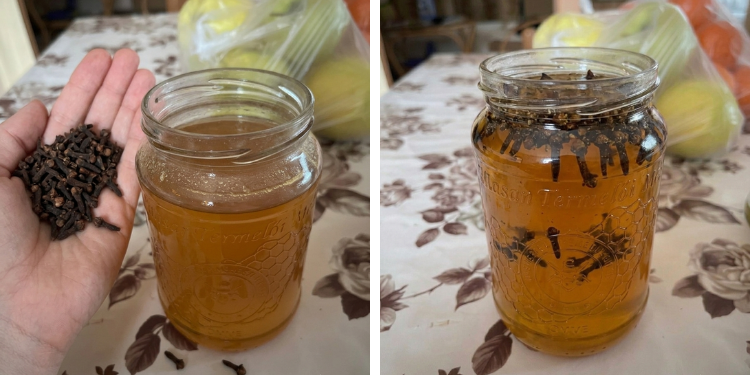
There are two primary ways to make this recipe at home: a slow-steeped infused honey (ideal for long-term pantry storage) and a quick-crush paste (for immediate relief when you feel a cold coming on).
Method A: Slow-Steeped Infused Honey (Best for Shelf Life)
Method B: Quick Clove & Honey Paste (For Immediate Use)
If you need fast throat comfort and don’t have a week to steep:
-
Take 2 or 3 whole cloves and crush them into a fine powder using a spice grinder or mortar and pestle.
-
Mix the ground clove powder directly into 1 tablespoon of raw honey in a small bowl.
-
Let the mixture sit for 10 minutes at room temperature so the honey absorbs the aromatic oils.
-
Take 1/2 to 1 teaspoon directly from the spoon, letting it dissolve slowly at the back of your throat.
Recommended Usage & Dosage
-
Adult Dosage: Take 1 teaspoon directly off the spoon up to 3 times daily as needed for throat comfort. Alternatively, stir 1 tablespoon into a warm (not boiling) cup of chamomile or lemon tea.
-
Temperature Note: Never mix raw honey into boiling hot liquids, as high temperatures denature delicate enzymes like glucose oxidase and degrade beneficial polyphenols.
Important Safety Precautions & Warnings
While clove-infused honey is safe for most healthy adults, key precautions must be kept in mind:
-
CRITICAL: Infant Botulism Warning: NEVER give honey to infants under 12 months of age. Raw honey can contain spores of Clostridium botulinum, which can cause severe, life-threatening infant botulism in undeveloped digestive tracts.
-
Blood Thinners & Surgery: Eugenol in cloves possesses mild anti-platelet (blood-thinning) properties. Individuals taking blood-thinning medications (such as warfarin or aspirin) or scheduling elective surgery should consult a physician before consuming large concentrated amounts of cloves.
-
Concentration Control: Cloves are extremely potent. Do not exceed 2 tablespoons of whole cloves per cup of honey, as excessive eugenol can irritate the stomach lining or oral mucosa in sensitive individuals.
Storage Pro-Tip: Stored in a sealed glass jar away from direct sunlight and moisture, pure clove-infused honey will keep at room temperature indefinitely. Honey is a natural preservative, meaning it does not require refrigeration.
Making your own clove and honey syrup is a practical, budget-friendly way to harness the natural synergy of two powerful kitchen botanicals.