Looking to improve your flower beds, front yard, pathways, slopes, or difficult bare areas with something more permanent than seasonal flowers? Ground cover plants may be exactly what your landscape needs.
These low-growing plants spread outward rather than growing tall, gradually forming carpets of foliage and flowers across the soil.
They can soften the edges of walkways, fill awkward gaps between larger plants, cover exposed soil beneath trees, and bring color to places where traditional lawn grass struggles to grow.
Below are 20 attractive ground cover plants that offer beauty, texture, fragrance, and practical value in a wide range of garden settings.
1. Flowering Thyme
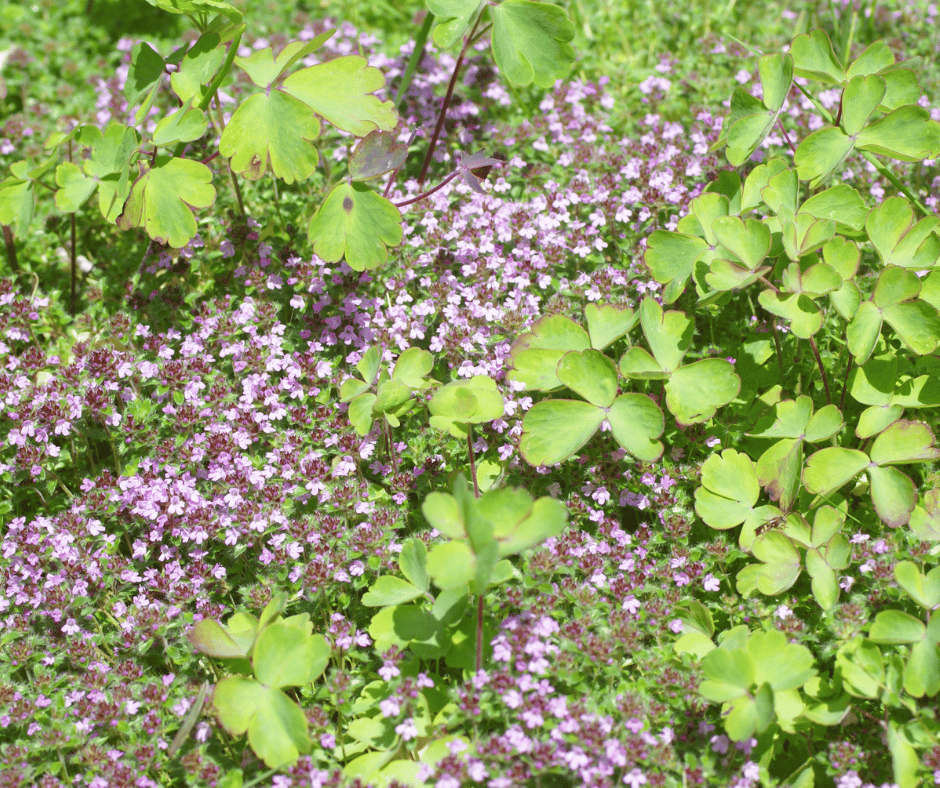
Flowering thyme is one of the most useful ground covers for warm, sunny areas. Its tiny aromatic leaves form a dense, low-growing mat that looks especially attractive around stepping stones, along pathways, over retaining walls, and between rocks.
During late spring and summer, the foliage becomes covered with clusters of small pink, lavender, or purple flowers.
These blooms may be tiny, but they appear in large enough numbers to transform the plant into a colorful carpet. Bees are strongly attracted to the flowers, making thyme especially valuable in pollinator-friendly gardens.
Creeping and flowering thyme varieties perform best in full sun and sharply drained soil. They are excellent choices for sandy, gravelly, or rocky areas where many other plants struggle.
Once established, thyme is highly tolerant of heat and periods of drought. Wet, heavy soil is much more dangerous to the plant than dry conditions because excess moisture may cause the roots and woody stems to rot.
The foliage releases a pleasant herbal scent when touched or walked across. Although some creeping varieties are edible, not every ornamental thyme has the same culinary quality as common kitchen thyme, so it is worth checking the exact variety before harvesting it for cooking.
Flowering thyme generally grows well in USDA zones 5–9, although hardiness varies among cultivars.
2. Alyssum
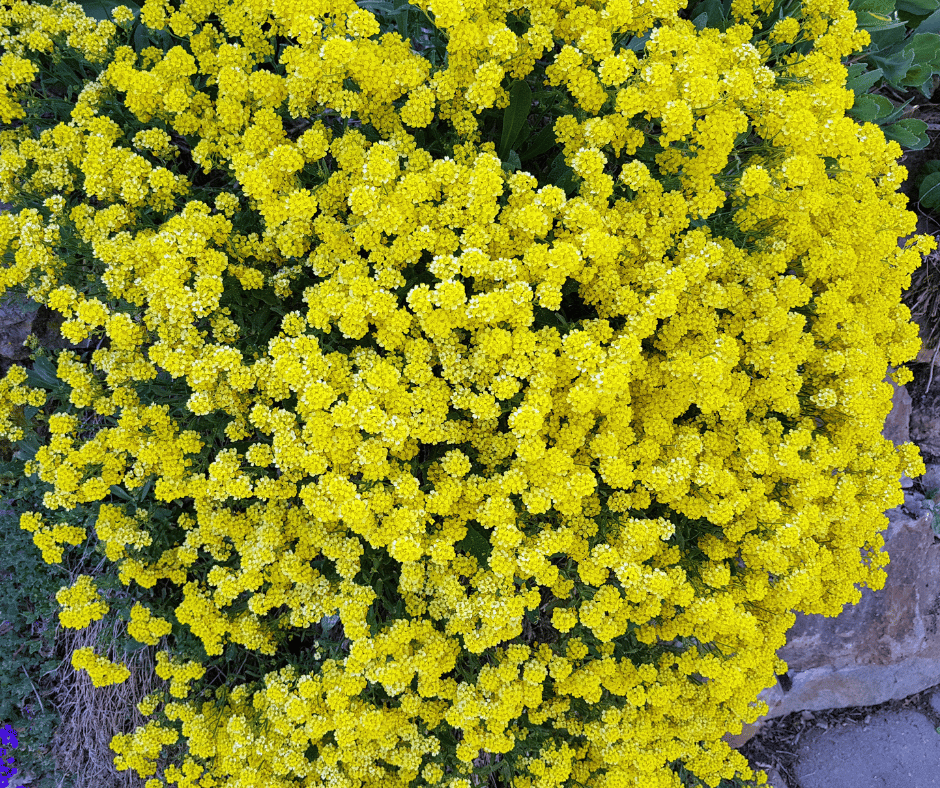
Sweet alyssum creates soft mounds of tiny white, pale pink, lavender, or purple flowers. Its fine foliage and delicate blooms give the plant a light, cloud-like appearance, making it ideal for softening hard edges in the landscape.
It is commonly planted along borders, beside garden paths, inside rock gardens, and around taller annuals or vegetables.
It also looks beautiful spilling over containers, hanging baskets, and low walls. The flowers produce a sweet fragrance often compared to honey, and they attract bees, hoverflies, and other beneficial insects.
Alyssum performs best in full sun, although it appreciates some afternoon shade in extremely hot climates. It prefers well-drained soil and moderate watering while young. Once established, it can tolerate short dry periods, but flowering may slow if the plant remains dry for too long.
In cooler areas, sweet alyssum is usually grown as an annual. In warmer frost-free climates, it may survive as a short-lived perennial and continue flowering through much of the year. Cutting it back lightly when it becomes leggy can encourage fresh growth and another flush of blooms.
It is commonly perennial in approximately USDA zones 9–11, though it may reseed freely in colder regions.
3. Sedum ‘Dragon’s Blood’
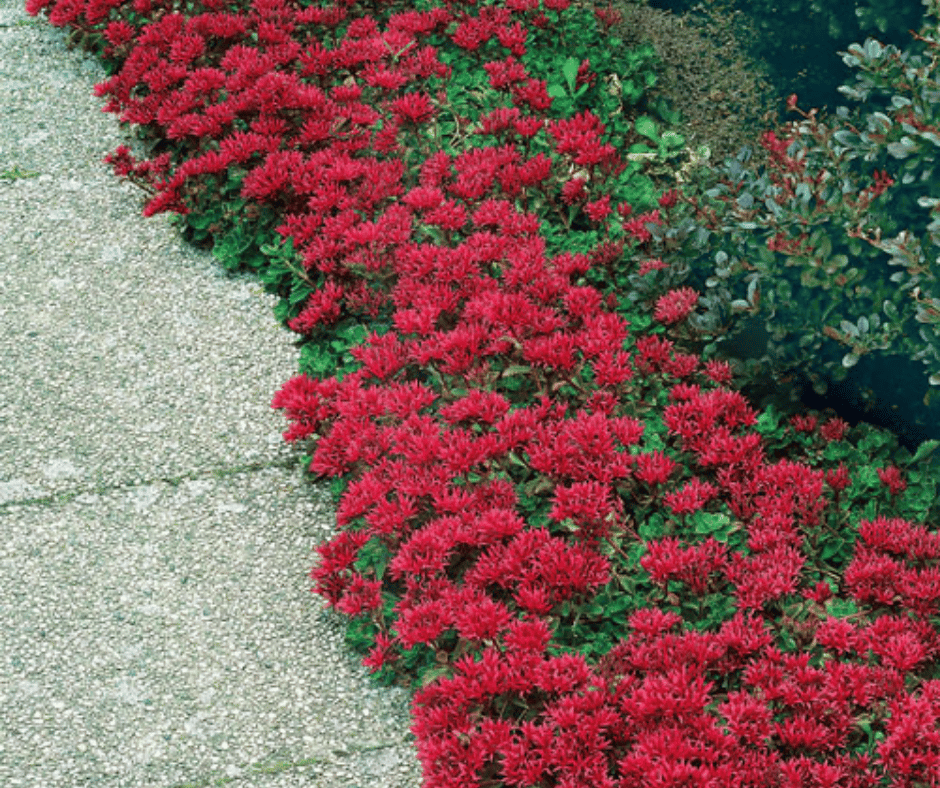
Sedum ‘Dragon’s Blood’ is a tough, mat-forming succulent known for its dramatic color changes. Its small rounded leaves begin green with reddish edges and often deepen to burgundy, bronze, or dark red as temperatures cool.
In summer, clusters of tiny star-shaped flowers rise just above the foliage. The blooms are usually pinkish red and attract bees and other small pollinators. Even when it is not flowering, the richly colored leaves give the plant year-round visual interest in many climates.
This sedum is especially effective in rock gardens, dry slopes, gravel beds, edging areas, and places where irrigation is limited. Its shallow root system allows it to grow in thin soil, but excellent drainage is essential. Like many succulents, it can rot in soil that remains wet for long periods.
‘Dragon’s Blood’ spreads steadily but is rarely difficult to control. Pieces of stem that touch the soil can form roots, making the plant easy to propagate. It is a good choice for gardeners who want strong color without frequent watering or fertilizing.
It is generally hardy in USDA zones 3–9.
4. Delosperma (“Ice Plant”)
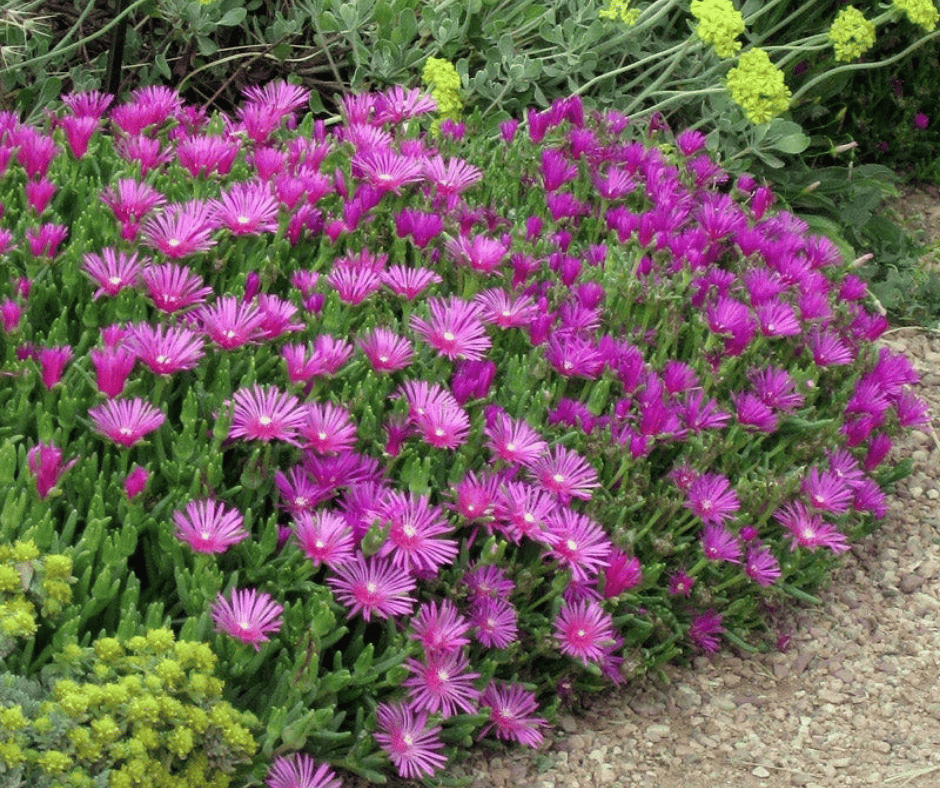
Delosperma is a sun-loving succulent ground cover with fleshy leaves and intensely colored daisy-like flowers. Depending on the variety, the blooms may be magenta, purple, pink, orange, yellow, red, or white.
The flowers typically open in bright sunlight and close during cloudy weather or toward evening. When planted in a large mass, ice plant can produce a dazzling display for weeks or even months.
Its low, spreading habit makes it well suited to hot slopes, rock gardens, raised beds, retaining walls, and dry borders. The succulent leaves store moisture, allowing the plant to survive heat and drought once its roots are established.
The most important requirement is fast-draining soil. Ice plant often struggles in heavy clay, especially in winter when cold and moisture occur together. Planting it on a slope, mound, or gravelly bed can improve its chances of surviving in wetter climates.
Despite its common name, hardiness varies widely by species and variety. Many garden types grow successfully in USDA zones 5–9.
5. Black Mondo Grass
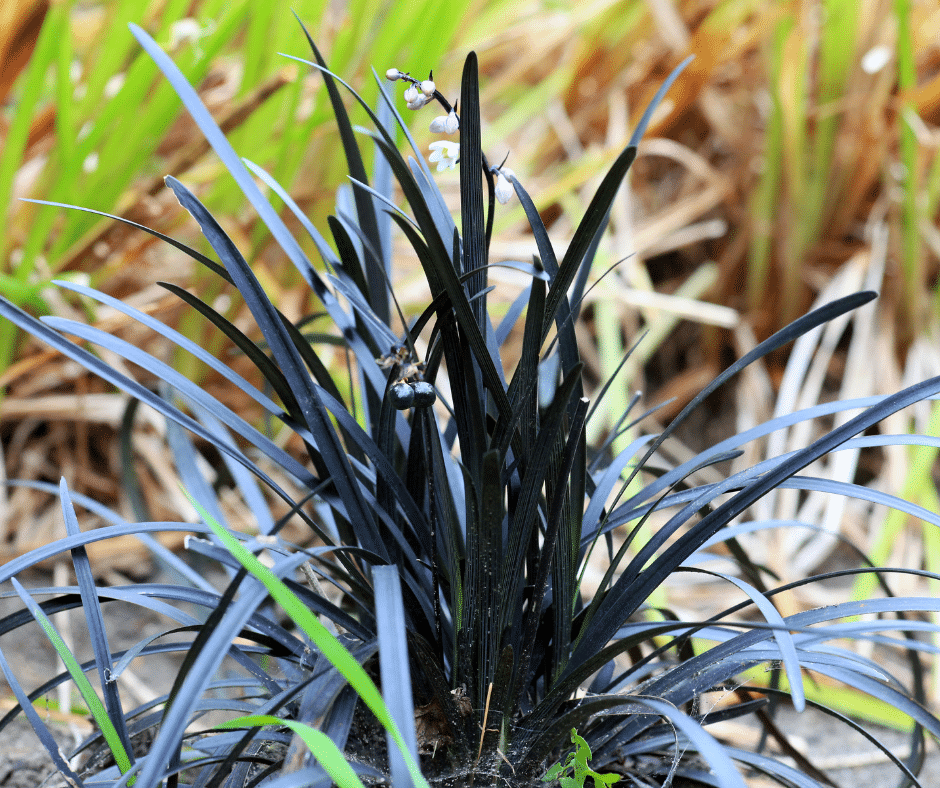
Black mondo grass is grown primarily for its striking foliage. Its narrow, arching leaves are such a deep purple that they often appear almost black, especially when planted in bright light.
This unusual color makes black mondo grass an excellent contrast plant. It looks especially dramatic beside silver foliage, pale gravel, chartreuse plants, white flowers, or light-colored paving stones. It works beautifully in modern gardens, formal borders, Asian-inspired landscapes, and containers.
Although it resembles ornamental grass, black mondo grass is not a true grass. It grows in slowly expanding clumps and may eventually form a low carpet. Small pale pink or lavender flowers can appear in summer, followed by dark berries.
It grows in full sun to partial shade, although some protection from intense afternoon sun may be helpful in very hot climates. The plant prefers moist but well-drained soil and usually grows more slowly than many other ground covers. This slower growth makes it easier to manage but means patience may be needed before it fills a large area.
Black mondo grass is generally hardy in USDA zones 6–10.
6. Hens and Chicks
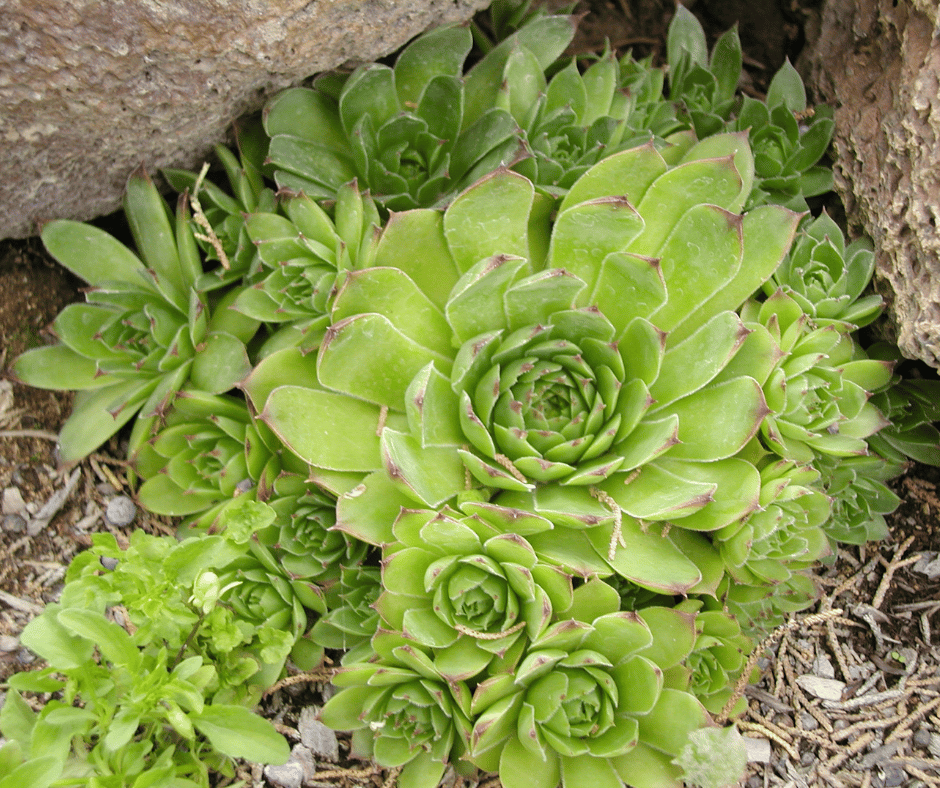
Hens and chicks are rosette-forming succulents that create clusters of sculptural foliage. The central mature rosette is known as the “hen,” while the smaller offsets growing around it are called the “chicks.”
These plants come in many shades of green, red, burgundy, bronze, silver, and purple. Some varieties change color with the season, becoming more intense in cold weather or bright sunlight.
Hens and chicks are excellent for rock crevices, shallow containers, stone walls, gravel gardens, roof gardens, and other dry locations. Their roots require very little soil, but drainage must be excellent. They are highly tolerant of drought once established and generally need little fertilizer.
Each mature rosette flowers only once. It produces a tall flower stalk, blooms, and then dies. However, by that time, it has usually produced many young offsets that remain in place and continue the colony.
Because moisture trapped around the crown can cause rot, avoid planting them in low areas where rainwater collects. Most varieties are hardy in USDA zones 3–9, though some are commonly listed through zone 10.
7. Liriope
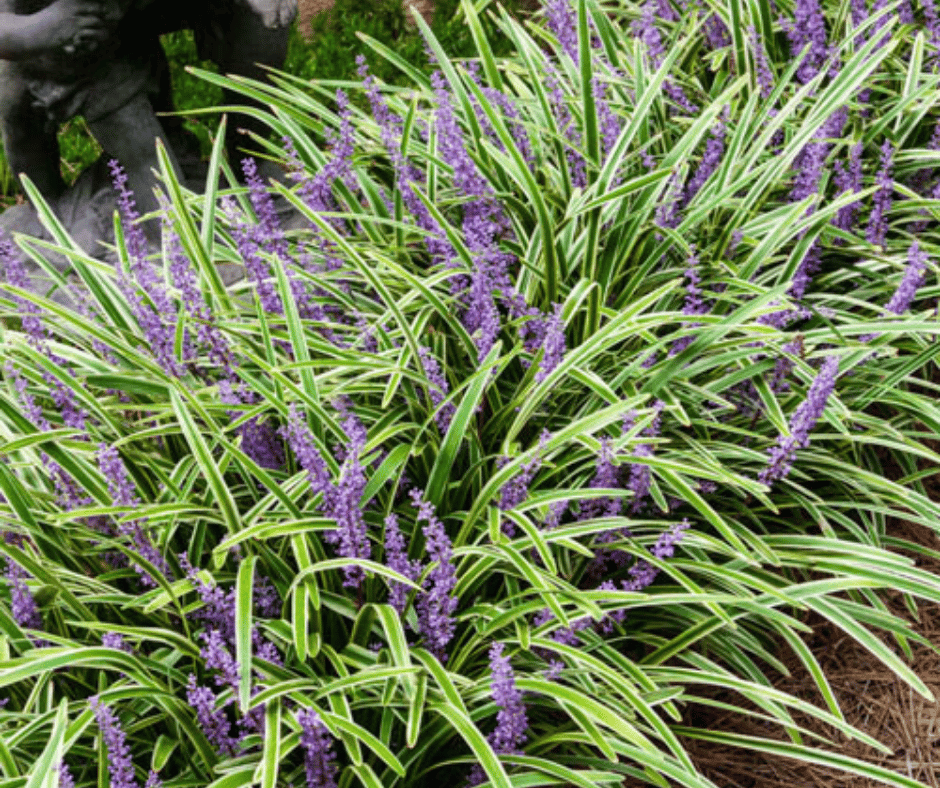
Liriope is a durable, grass-like perennial often used as edging beneath trees, along walkways, around foundations, and in areas where turf grass performs poorly.
Its narrow arching leaves form neat clumps that remain evergreen or semi-evergreen in mild climates. During late summer, upright spikes of purple, lavender, or white flowers rise above the foliage. These may later develop into dark berries.
Liriope tolerates a wide range of conditions, including partial shade, morning sun, tree-root competition, and less-than-perfect soil. Once established, it can also withstand moderate drought. However, plants grown in extremely dry shade may spread more slowly and produce fewer flowers.
There are two main growth habits to consider. Clumping liriope stays relatively contained, while creeping liriope spreads through underground stems and can become aggressive. Gardeners should check the variety before planting it near lawns or delicate flower beds.
Old foliage can be cut back in late winter before new growth begins. Liriope is generally hardy in USDA zones 5 or 6 through 10, depending on the species.
8. Lily of the Valley
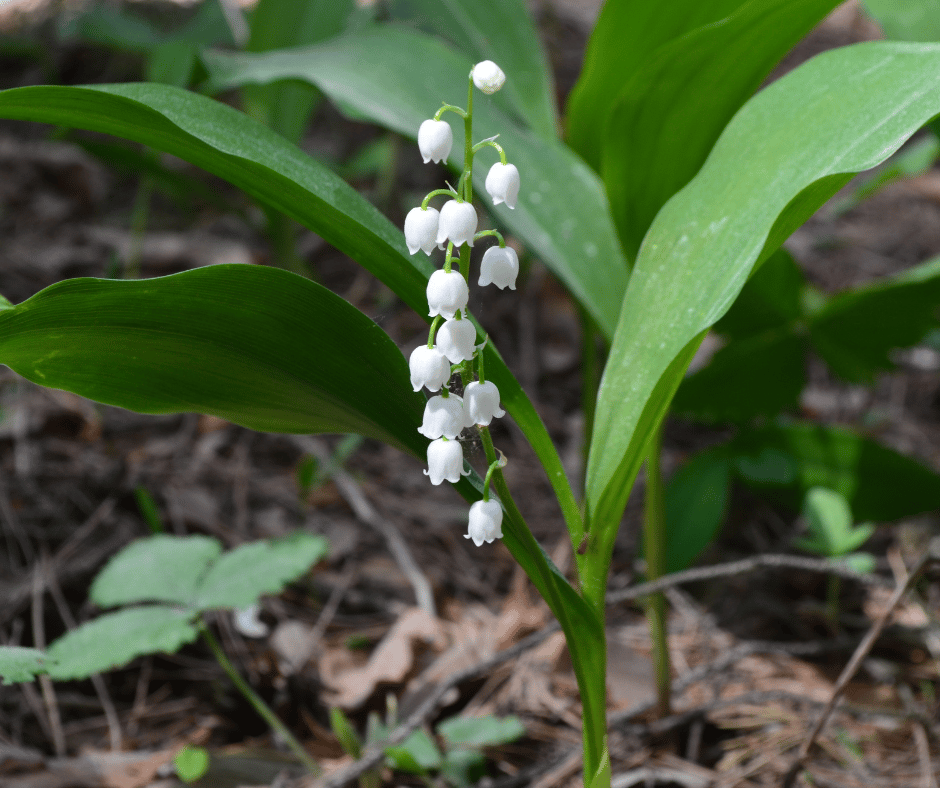
Lily of the valley is a classic shade-loving ground cover known for its arching stems of small, white, bell-shaped flowers. The flowers release a strong, sweet fragrance in spring and are followed by broad green leaves that form a dense woodland-style carpet.
This plant thrives beneath deciduous trees, along shaded foundations, and in cool garden corners where many flowering plants struggle. It prefers soil that is rich in organic matter and remains moderately moist.
Lily of the valley spreads through underground rhizomes. In favorable conditions, it can expand quickly and form a large colony. This makes it useful for covering difficult shaded ground, but it can also become invasive in garden beds. It is best planted where its spread can be contained by paving, deep edging, or other barriers.
All parts of lily of the valley are poisonous if eaten. It should be kept away from children and pets that may chew plants. Gloves are also sensible when handling it if you have sensitive skin.
It is extremely cold hardy and generally grows in USDA zones 2–9.
9. Spotted Dead-Nettle
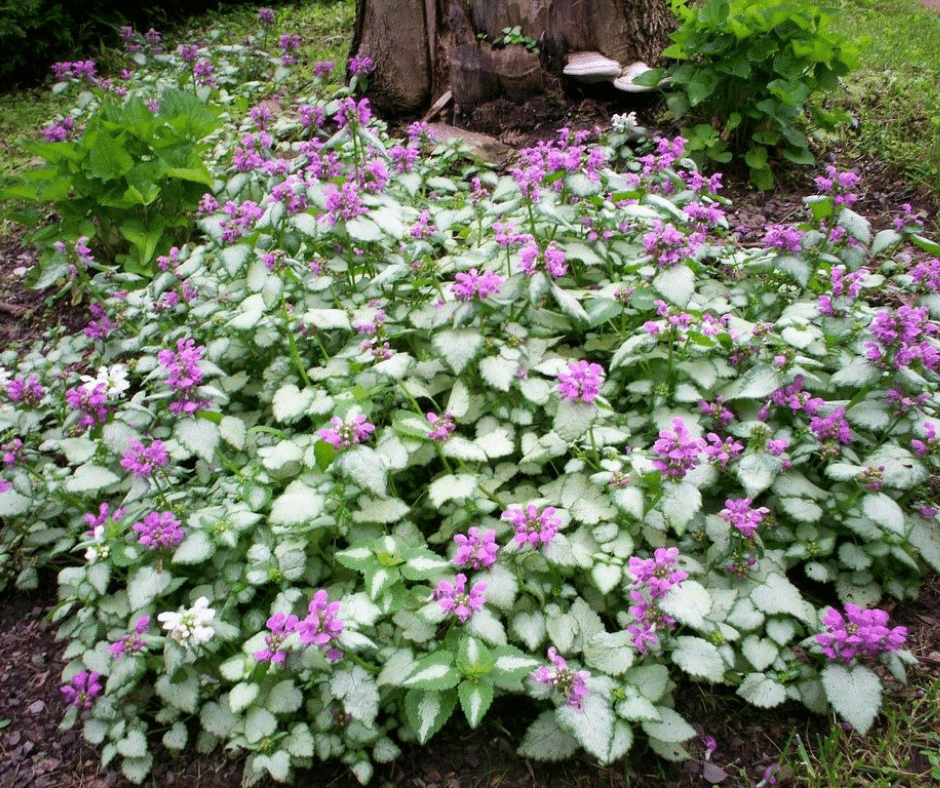
Spotted dead-nettle, also known as lamium, is one of the most attractive ground covers for partial to full shade. Its leaves are often marked with silver, white, or pale green patterns, helping brighten areas beneath trees and shrubs.
In spring and early summer, the plant produces small hooded flowers in shades of pink, purple, magenta, or white. Some varieties continue blooming sporadically into autumn, especially if they receive consistent moisture.
Lamium spreads by trailing stems that root where they touch the ground. It is useful for covering bare soil, edging shaded paths, filling spaces between shrubs, and spilling over low walls. It tolerates dry shade better than many flowering ground covers once established, although the best growth occurs in moderately moist, well-drained soil.
The plant is generally avoided by deer and rabbits because of its textured, aromatic foliage. However, its spreading habit can become vigorous in cool, moist gardens. Trimming the stems helps keep it tidy and encourages fuller growth.
Spotted dead-nettle is typically hardy in USDA zones 3–8 or 9, with some varieties listed into zone 10.
10. Creeping Phlox
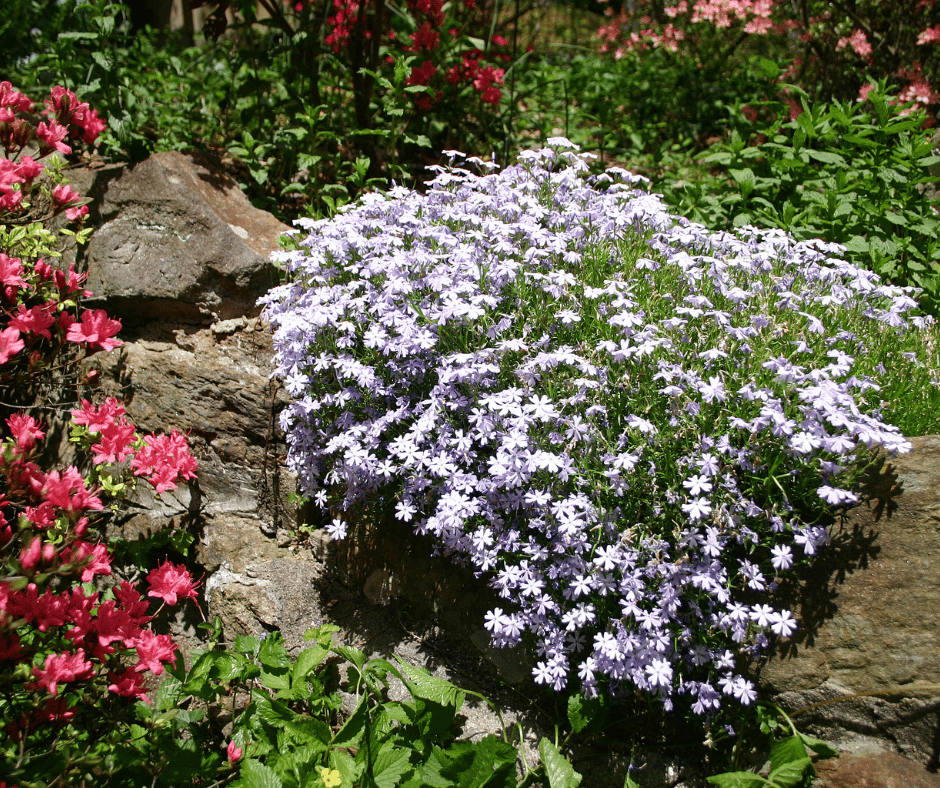
Creeping phlox is famous for producing a brilliant carpet of flowers in early spring. Its needle-like evergreen or semi-evergreen foliage becomes almost hidden beneath masses of pink, lavender, purple, blue, red, or white blooms.
It is particularly effective on sunny banks, along the fronts of borders, in rock gardens, above retaining walls, and beside steps. Its stems spread outward and gently cascade over edges, creating a soft, flowing appearance.
Creeping phlox prefers full sun and well-drained soil. It tolerates dry conditions once established, but occasional deep watering during prolonged drought can help maintain healthy foliage. Wet, compacted soil may cause root problems or thinning in the center of the plant.
After flowering, a light trim can encourage denser growth and prevent the stems from becoming untidy. Over time, older plants may become woody in the center, but dividing or replanting rooted outer sections can rejuvenate the display.
It generally grows well in USDA zones 3–9.
11. Lamb’s Ear
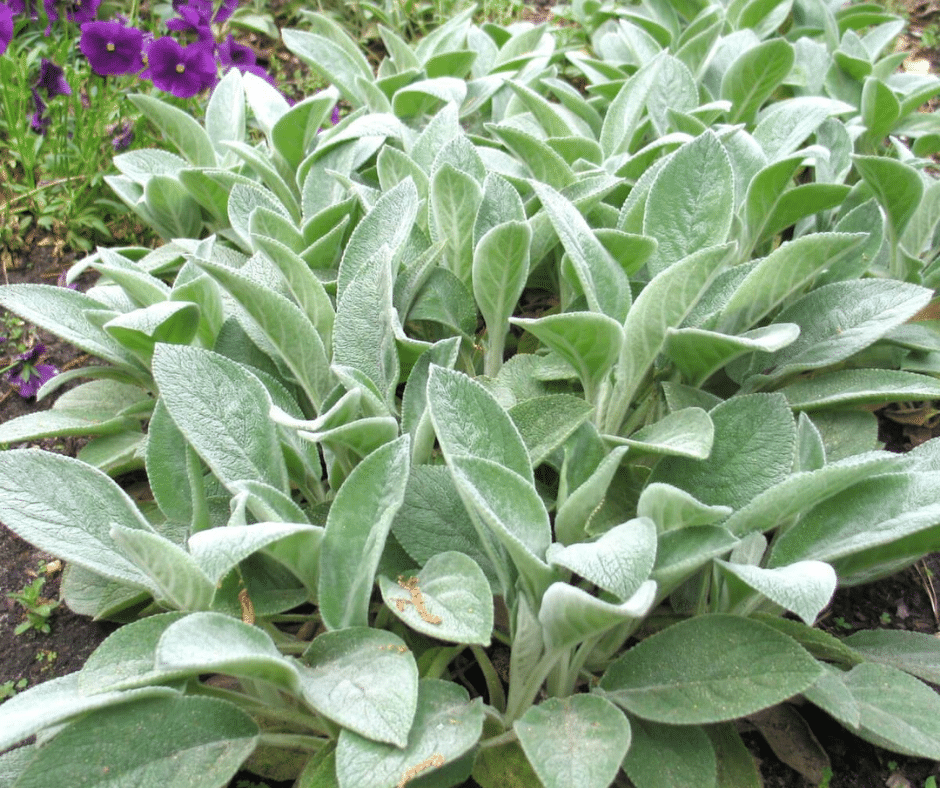
Lamb’s ear is loved for its thick, velvety leaves, which are covered with soft silver hairs. The foliage brings a cool color and distinctive texture to sunny borders, cottage gardens, sensory gardens, and dry landscapes.
The plant forms low rosettes that gradually spread into a broad patch. In early summer, mature plants may send up tall flower stalks carrying small pink or purple flowers. Some gardeners appreciate the blooms, while others remove the stalks to keep the plant focused on its attractive foliage.
Lamb’s ear is drought tolerant once established and prefers full sun with well-drained soil. In hot climates, some afternoon shade can prevent leaf scorch. The plant dislikes humid, poorly ventilated conditions and may rot if water remains trapped around its fuzzy leaves.
Removing damaged foliage and spacing plants for good air circulation helps keep them healthy. Certain non-flowering cultivars are especially useful as neat ground covers because they remain lower and produce fewer tall stems.
Lamb’s ear is usually hardy in USDA zones 4–9.
12. Violet ‘Freckles’
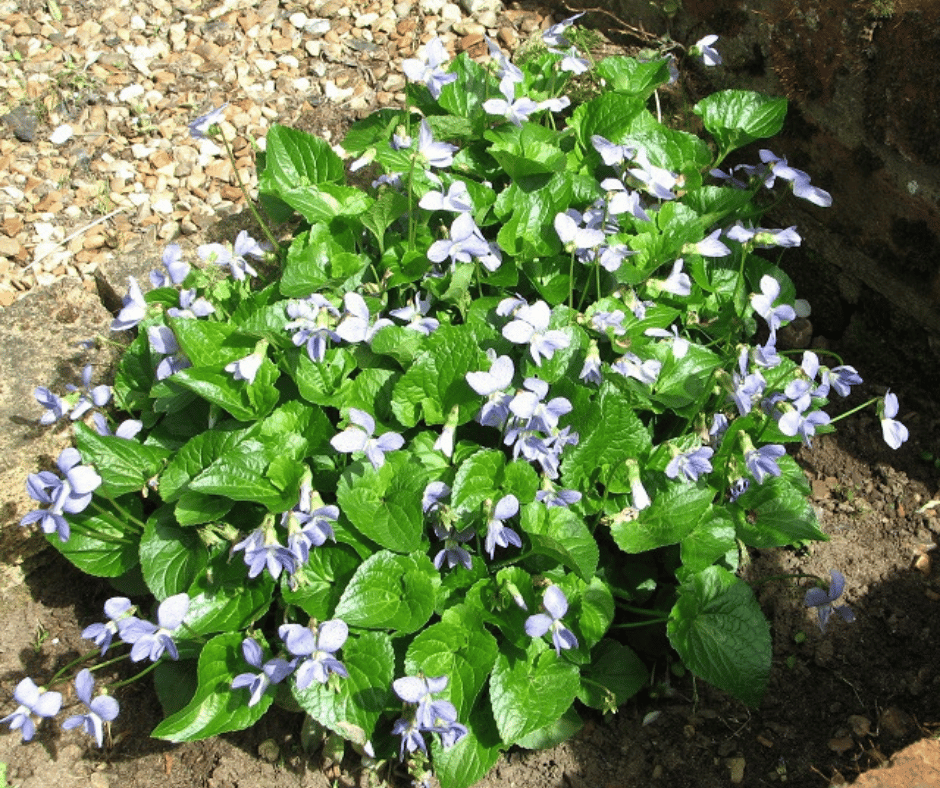
Violet ‘Freckles’ is a charming low-growing violet with pale flowers marked by tiny purple or blue speckles. The spotted petals give each flower a hand-painted appearance and make this variety especially attractive in woodland gardens.
It forms small clumps of heart-shaped green leaves and blooms primarily in spring. Under favorable conditions, additional flowers may appear later in the season.
‘Freckles’ performs best in partial shade and soil that remains moist but not waterlogged. It works well beneath deciduous shrubs, along shaded walkways, at the front of woodland borders, and in naturalistic gardens.
Like many violets, it may spread by short rhizomes or self-seeding. In the right setting, this creates a natural carpet rather than a rigid planting. However, unwanted seedlings can be removed if the colony expands beyond its intended area.
Its hardiness is often listed around USDA zones 4–8 or 9, although some sources give a broader range depending on local climate.
13. Corsican Mint
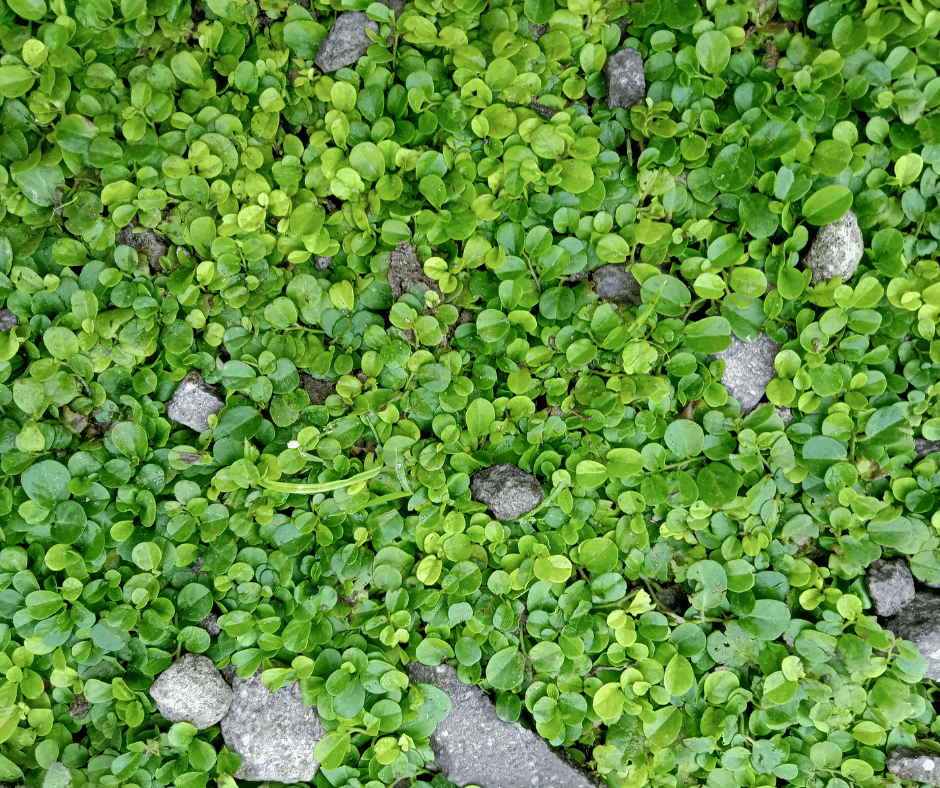
Corsican mint is one of the smallest members of the mint family. It forms a delicate mat of tiny bright green leaves, often growing only a few centimeters tall.
When the foliage is touched, crushed, or lightly stepped on, it releases a strong peppermint-like fragrance. This makes it a popular choice for planting between stepping stones, around shaded paths, and near seating areas where its scent can be appreciated.
Tiny purple flowers may appear in summer, although the aromatic foliage is the plant’s main attraction.
Unlike many mints, Corsican mint does not perform well in hot, dry soil. It prefers partial shade, cool conditions, and soil that remains evenly moist while still draining well. It may struggle in intense afternoon sun or during prolonged drought.
The plant tolerates occasional light foot traffic, but it should not be used where people walk constantly. It may also self-seed or spread into nearby moist areas, so some monitoring is helpful.
Corsican mint is generally hardy in USDA zones 6–9 or 10.
14. Miniature Brass Buttons
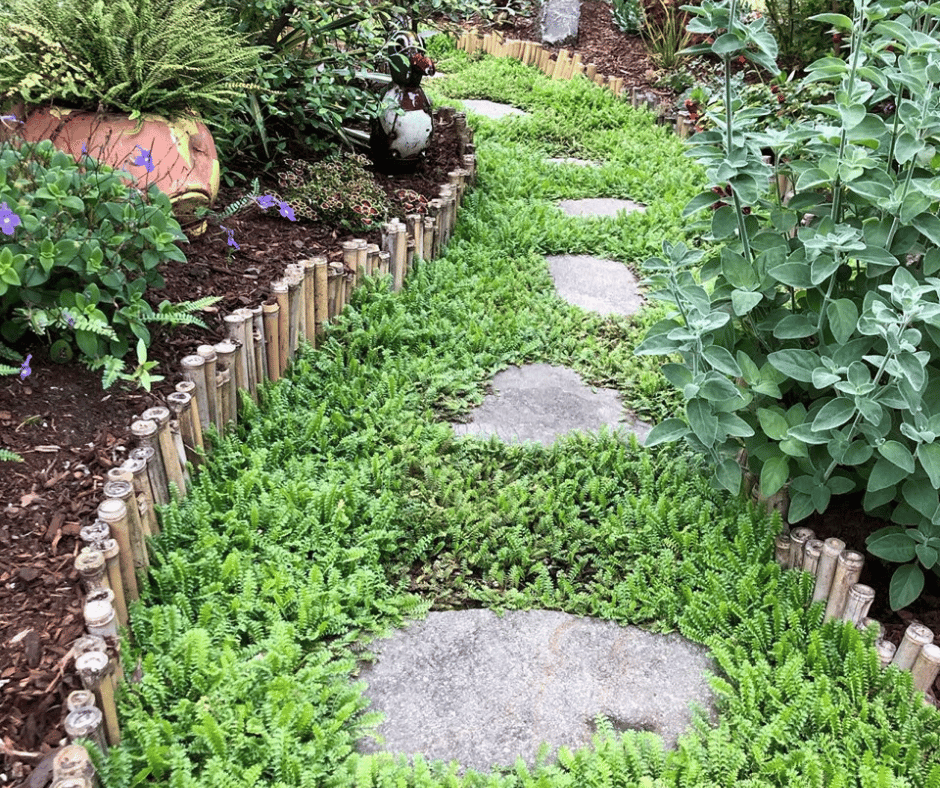
Miniature brass buttons is a tiny, fern-like ground cover with intricate foliage that creates a soft, mossy appearance. Its leaves may be green, bronze, or nearly black depending on the variety and growing conditions.
The plant spreads close to the soil and can fill narrow spaces between paving stones, along garden paths, and at the edges of beds. Small button-like flowers may appear, but they are subtle and less noticeable than the foliage.
It performs best in full sun to partial shade and soil that stays moderately moist. In very hot climates, afternoon shade is beneficial. It can tolerate light foot traffic, making it suitable for decorative pathways, but frequent heavy use may damage the delicate stems.
Miniature brass buttons is often chosen as a lawn alternative for very small spaces, particularly where a low-textured carpet is desired. Some varieties spread quickly, so it is wise to observe how they behave in the local climate.
Depending on the species and cultivar, it is generally hardy in USDA zones 5–9.
15. Dianthus ‘Sternkissen’
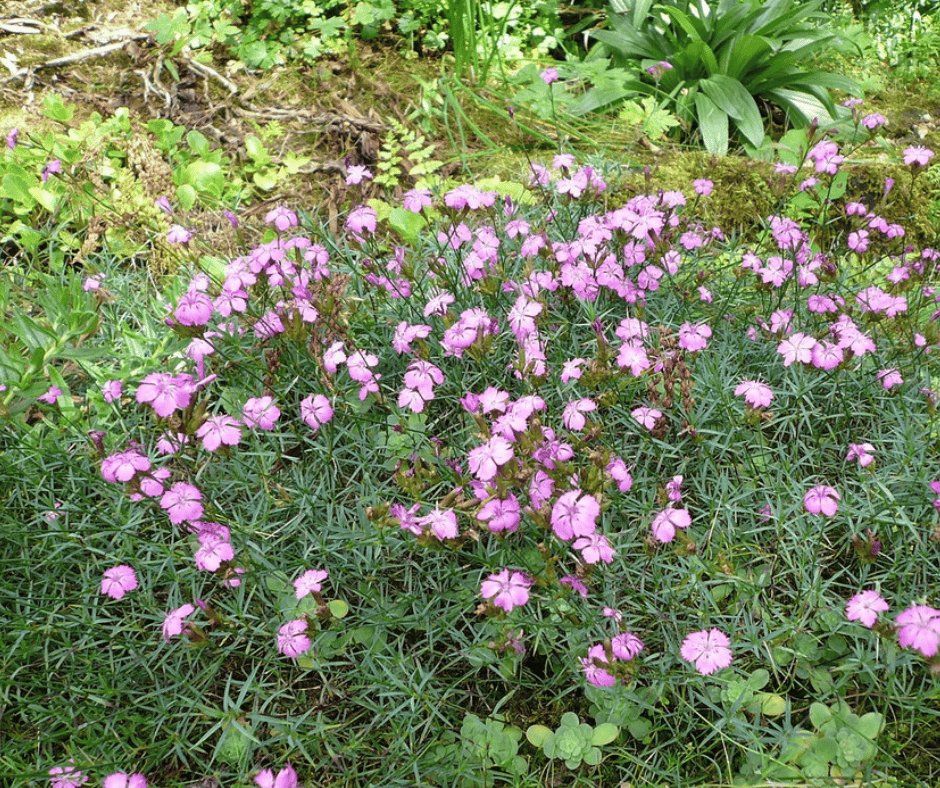
Dianthus ‘Sternkissen’ is a compact, mat-forming pink valued for its narrow blue-green leaves and bright flowers. The blooms are commonly pink, magenta, or rose-colored and often carry the spicy fragrance associated with dianthus.
The plant remains low and tidy, making it excellent for rock gardens, gravel beds, sunny borders, edging, raised beds, and dry slopes. Its evergreen or semi-evergreen foliage continues to provide structure even after flowering has ended.
Like most dianthus, ‘Sternkissen’ needs full sun and excellent drainage. It performs especially well in slightly alkaline, gritty, or stony soil. Heavy clay and winter moisture may shorten its life.
Removing faded flowers can improve the plant’s appearance and may encourage additional blooming. Light trimming after the main flower display helps maintain a compact mound.
It is generally hardy in USDA zones 3–9.
16. Creeping Mazus
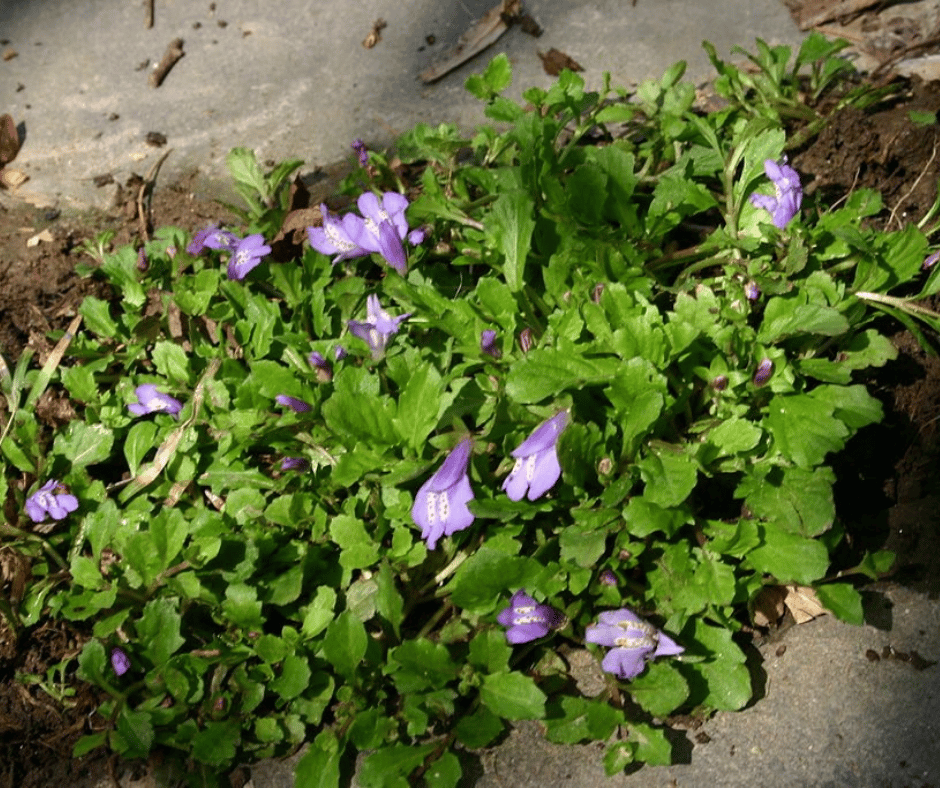
Creeping mazus is a fast-spreading ground cover that produces a low carpet of small green leaves. In spring and early summer, it becomes dotted with lavender, blue-purple, or white flowers that often have contrasting markings in the throat.
It is commonly planted between stepping stones, around ponds, along paths, and in low moist areas. Unlike many drought-loving ground covers, mazus appreciates consistent moisture and can tolerate soil that remains slightly damp.
It grows in full sun or partial shade, although flowering is usually strongest with more sunlight. In very hot regions, some afternoon shade helps protect the foliage from drying out.
Mazus tolerates light to moderate foot traffic once established, making it useful as a decorative lawn substitute in small spaces. It spreads by rooting stems and can fill an area fairly quickly. Because of this, it may need occasional trimming around nearby plants or paving edges.
It is generally hardy in USDA zones 4–9 or 10.
17. Blue Star Creeper
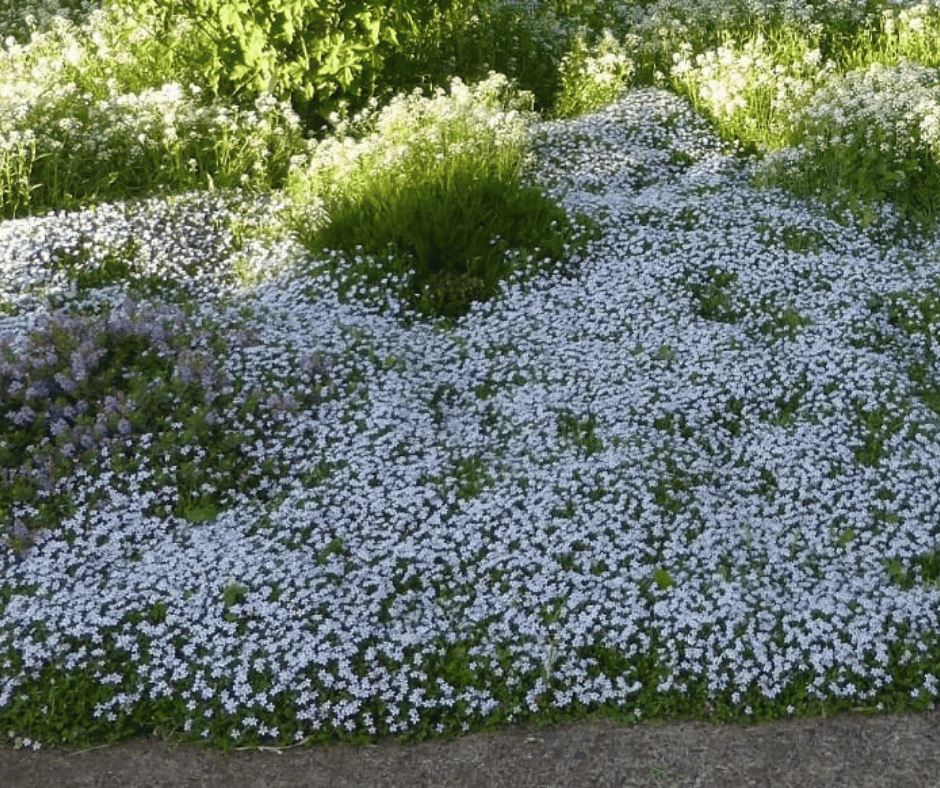
Blue star creeper produces a dense mat of tiny green leaves covered with small, pale blue, star-shaped flowers from late spring into summer.
Its fine texture makes it particularly useful between flagstones, around patios, beside paths, and beneath open shrubs. It can also be used as a small-scale lawn substitute where traffic is light.
The plant grows in full sun to partial shade. It prefers moist, well-drained soil but can tolerate brief dry periods after establishment. In hot climates, partial shade and regular moisture help prevent browning.
Blue star creeper spreads through underground runners and can become vigorous in rich, irrigated soil. While this makes it effective for covering ground, gardeners should avoid placing it too close to small, delicate plants that could be overwhelmed.
It can tolerate occasional foot traffic, although heavily used paths are better planted with something tougher or combined with stepping stones.
Blue star creeper is generally hardy in USDA zones 5–9 or 10.
18. Sedum ‘Baby Tears’
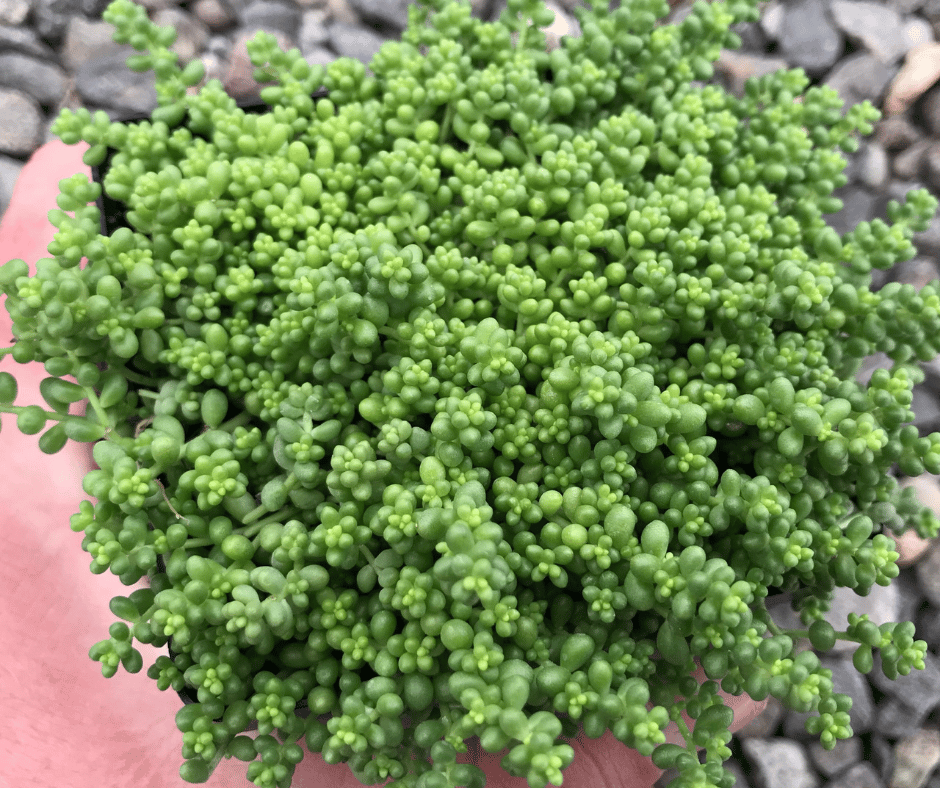
Sedum ‘Baby Tears’ is a low-growing succulent with tiny rounded or tear-shaped leaves packed closely along creeping stems. Its fine foliage creates a soft appearance despite the plant’s toughness.
The leaves are usually fresh green during the growing season and may develop bronze or reddish tones in autumn or during periods of stress. Small clusters of white, pale pink, or cream flowers appear in summer and attract tiny pollinating insects.
This sedum grows best in full sun and dry, well-drained soil. It is well suited to rock gardens, gravel beds, containers, stone walls, green roofs, and spaces between larger succulents.
Once established, it requires little water and may decline if overwatered. Avoid rich fertilizer, which can produce weak, stretched growth. If pieces break off, they often root easily when placed on suitable soil.
Hardiness varies according to the exact plant sold under the ‘Baby Tears’ name, but many sedum forms are suitable for USDA zones 4–9.
19. Roman Chamomile
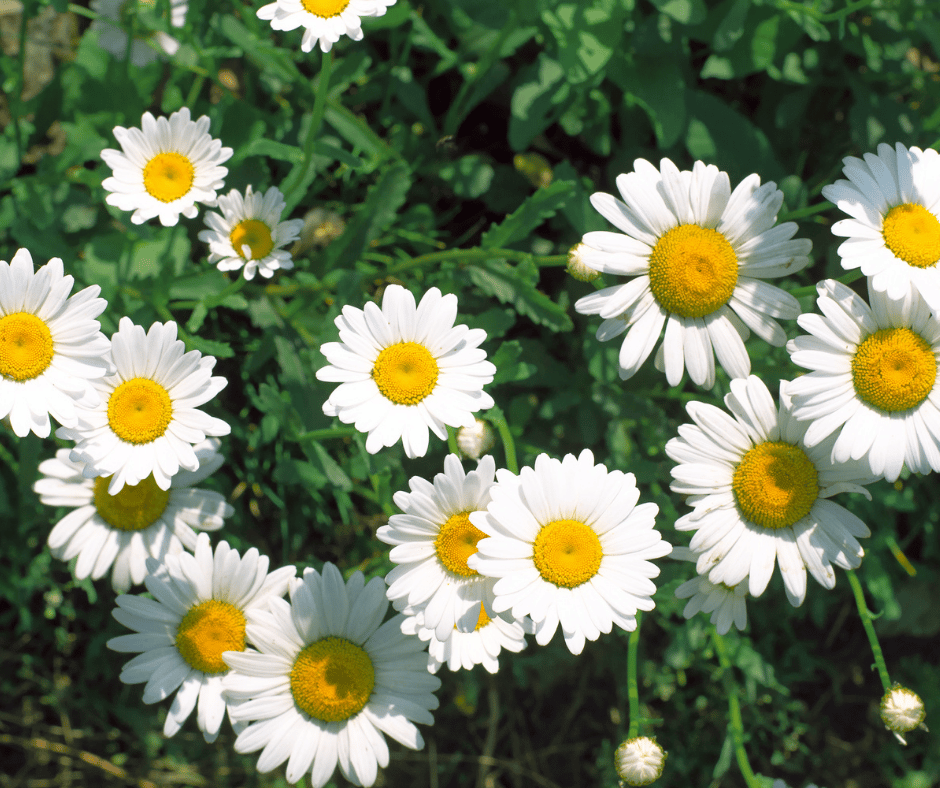
Roman chamomile is a fragrant herb that forms a low mat of finely divided, feathery foliage. In summer, it produces small white daisy-like flowers with yellow centers.
The leaves release a sweet, apple-like scent when brushed or walked on, which has made Roman chamomile a traditional choice for scented lawns and pathways. It can tolerate occasional light foot traffic, though stepping stones are recommended in frequently used areas.
Roman chamomile prefers full sun in mild climates and some afternoon shade where summers are extremely hot. It grows best in light, well-drained soil and dislikes wet winter conditions.
The plant can be left to flower for a soft meadow-like effect or clipped regularly to maintain a lower lawn appearance. Flowering stems may become taller than the surrounding foliage, so mowing or shearing is sometimes used in formal chamomile lawns.
Roman chamomile has a long history of herbal use, but anyone harvesting it should confirm the plant’s identity and consider possible allergies, especially if sensitive to plants in the daisy family.
It is commonly hardy in USDA zones 4–9.
20. Woolly Thyme
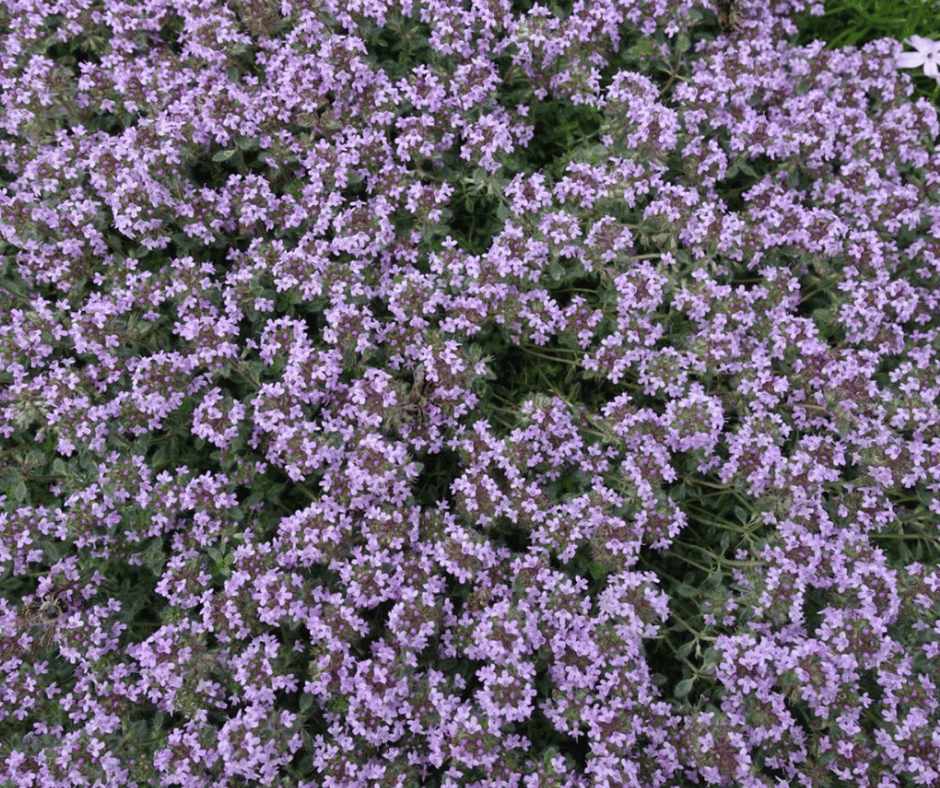
Woolly thyme is a low, spreading thyme grown mainly for its soft, fuzzy, gray-green foliage. It forms a dense mat that hugs the ground and looks particularly attractive between stones, along dry paths, around patios, and in rock gardens.
The plant’s fine hairs help reduce moisture loss, allowing it to tolerate heat, wind, and poor soil. Small pink or lavender flowers may appear in summer, although woolly thyme generally flowers less heavily than some other creeping thyme varieties.
It requires full sun and excellent drainage. Sandy or gravelly soil is ideal, while wet clay can quickly cause decline. Once established, it needs very little irrigation and should not be overfertilized.
Woolly thyme can tolerate occasional light foot traffic, but repeated heavy walking may damage the stems. Planting it between stepping stones allows people to enjoy its texture and fragrance without crushing the entire plant.
It is typically hardy in USDA zones 5 or 6 through 9 or 10, depending on the cultivar.
Choosing the Right Ground Cover
Before selecting a ground cover, pay close attention to the amount of sunlight, drainage, soil moisture, winter temperatures, and foot traffic in the planting area.
For hot, dry, sunny locations, flowering thyme, woolly thyme, sedum, ice plant, hens and chicks, lamb’s ear, and dianthus are strong choices.
For shady areas, spotted dead-nettle, lily of the valley, liriope, and violets may perform better.
For spaces between stepping stones, consider Corsican mint, creeping mazus, blue star creeper, miniature brass buttons, or thyme. However, even plants described as traffic tolerant usually perform best when most of the weight falls on stones rather than directly on the foliage.
It is also important to consider how quickly each plant spreads. Lily of the valley, lamium, creeping liriope, blue star creeper, and mazus may travel beyond their original planting area in favorable conditions. Installing edging or planting them in contained spaces can make long-term maintenance easier.
Ground cover plants can transform neglected soil into one of the most attractive parts of a landscape. They provide flowers, fragrance, texture, seasonal color, and valuable coverage while often requiring less maintenance than turf grass or repeated annual planting.