
Tomatoes are the crown jewels of the vegetable garden – easy to grow, productive, and bursting with flavor.
Whether you’re a seasoned gardener or just starting out, you’ve probably followed the standard method of planting tomatoes straight down into the soil. But what if there was a better way?
Here’s the secret experienced gardeners swear by: planting tomato seedlings sideways instead of upright.
It may seem counterintuitive at first, but this sideways method taps into the natural biology of tomato plants to create stronger roots, sturdier stems, and healthier, more productive plants overall.
In this in-depth guide, we’ll explore exactly why you should plant your tomatoes sideways, the science behind the technique, how to do it step by step, and what to expect in terms of growth and yield.
Why Plant Tomato Seedlings Sideways?
Tomatoes are unique among garden vegetables because they are adventitious rooters. This means that roots can form along any part of the stem that comes into contact with soil.
By planting the seedling on its side and burying more of the stem, you encourage the plant to grow a more extensive root system.
Benefits of Sideways Planting:
1. Stronger, More Robust Root System – More buried stem = more roots. These extra roots help absorb more nutrients and water, especially important during hot summer months.
2. Sturdier Plants with Less Support Needed – Plants with deeper, broader root systems are more stable and less likely to flop over in wind or under the weight of heavy fruit.
3. Better Nutrient Uptake – The increased root mass allows the plant to draw more nutrients from the soil, fueling faster and healthier growth.
4. Less Risk of Transplant Shock – Seedlings that are leggy or top-heavy tend to fall over or suffer from transplant shock when planted upright. Laying them sideways supports their stems and helps them adapt more quickly.
5. Cooler Root Zone – In hot climates, planting shallow but sideways keeps roots in the cooler upper soil layers while still maximizing root growth.
The Science Behind It: Tomato Plants and Adventitious Roots
Tomato stems are covered with tiny bumps called trichomes. Under the right conditions – like contact with moist soil – these trichomes can develop into full-fledged roots. This allows tomato plants to regenerate and root from stem cuttings or when branches touch the ground.
By burying more of the stem (either vertically or sideways), you’re essentially harnessing the plant’s natural ability to clone itself.
The result is a much larger root surface area, which translates to better nutrient uptake, greater drought resistance, and more vigorous growth.
When Is Sideways Planting Ideal?
1. When seedlings are leggy
Many store-bought or indoor-grown seedlings get tall and spindly due to insufficient light. Sideways planting gives these lanky stems a fresh start.
2. In compact garden beds or raised beds
Sideways planting allows you to bury a long stem without digging a deep hole, which may not be feasible in shallow beds.
3. In cooler climates
Placing roots in the warmer topsoil (instead of deep cold soil) encourages faster early growth in spring.
How to Plant Tomato Seedlings Sideways: Step-by-Step Guide
Ready to try this smart technique? Here’s exactly how to do it:
Materials Needed:
- Healthy tomato seedlings (6–12 inches tall)
- Compost or organic fertilizer
- Hand trowel or garden spade
- Tomato cage, stake, or trellis for later support
- Mulch (optional but recommended)
Step 1: Choose the Right Tomato Seedling
Select seedlings that are:
- At least 6–10 inches tall
- Green, not yellowing
- Free from pests or disease
- With sturdy stems and several true leaves
If the seedling is leggy or has a thin stem, even better—sideways planting will fix it.
Step 2: Remove Lower Leaves
Carefully snip or pinch off the leaves on the bottom two-thirds of the stem. Only leave the top 2–4 sets of leaves. This bare portion will be buried and will sprout roots.
Step 3: Dig a Shallow Trench
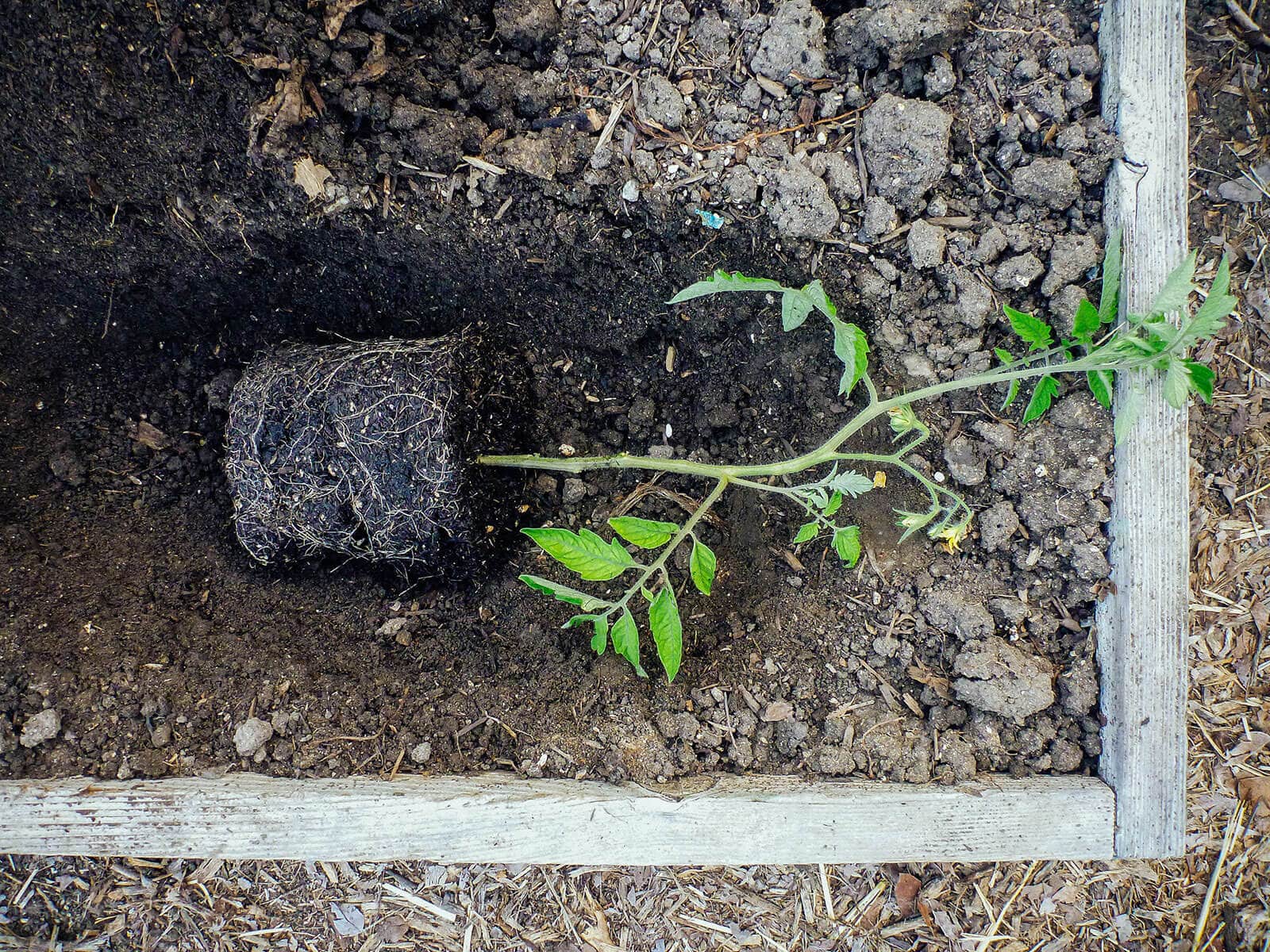
Instead of digging deep, dig a long, shallow trench that’s roughly 4–6 inches deep and the same length as your seedling’s stem (minus the leafy top).
This trench should be horizontal to the ground and wide enough to accommodate the entire stem and root ball.
Step 4: Lay the Seedling Sideways in the Trench
Gently bend the stem and lay the seedling in the trench with the root ball on one end and the leafy top gently curved upwards. Tomato stems are flexible and will adjust naturally to grow upright within a few days.
Make sure the curved tip is sticking out of the soil and facing upward toward the sun.
Step 5: Backfill the Trench
Cover the buried portion of the stem and root ball with soil, gently patting it down as you go. Do not compact it too tightly, as you want roots to spread easily. Water thoroughly to settle the soil.
Step 6: Add Support (Optional)
If your tomato variety is a tall indeterminate type, insert a stake, cage, or trellis right after planting to avoid disturbing the roots later. For determinate (bush) types, light staking may be sufficient.
Step 7: Mulch and Maintain
Apply 1–2 inches of mulch (straw, grass clippings, or compost) to retain moisture and suppress weeds. Water consistently and feed with compost or organic tomato fertilizer as the plant begins to flower and fruit.
Real-World Results: What to Expect After Sideways Planting
Week 1–2:
- The plant will start growing upright from the curved stem tip.
- Root formation begins along the buried portion of the stem.
- You may see faster growth than traditionally planted tomatoes.
Week 3–4:
- The plant becomes more vigorous, fuller, and better anchored.
- Leaves appear greener and larger due to better nutrient uptake.
Throughout the Season:
- Increased fruit production
- Less wilting during dry periods
- Stronger, wind-resistant structure
- Fewer issues with blossom end rot or fruit splitting
Sideways Planting in Different Garden Types
Whether you’re growing in a backyard garden or a container, sideways planting is highly adaptable.
In Raised Beds:
- Ideal since soil is usually warmer and looser.
- Easier to dig trenches instead of deep holes.
In Traditional Rows:
Maximize space by staggering plants in zig-zag trenches.
In Containers:
- Use long, rectangular planters or angle the stem in large pots.
- Be sure the pot is at least 18–24 inches deep and wide for indeterminate varieties.
Common Questions About Sideways Planting
Can I still plant tomatoes vertically?
Yes – but sideways planting provides extra advantages, especially for weak or leggy seedlings. Both methods work, but sideways planting gives your plants a boost early on.
Will the stem rot underground?
No. Tomato stems are naturally adapted to rooting. As long as the soil is well-drained and not overly soggy, the stem will sprout healthy roots instead of rotting.
What if my seedling is short?
If your seedling is less than 6 inches tall, traditional vertical planting may be fine. The sideways method shines when stems are longer.
Do I need to prune differently?
Not necessarily. Prune suckers and lower branches as needed, just like you would with any tomato plant. The rest of your plant care routine remains the same.
Tips for Maximizing Success with Tomato Sideways Planting
- Use high-quality compost or aged manure in the trench to promote vigorous root development.
- Avoid planting too early when soil is cold and wet – wait until temperatures are consistently above 60°F (15°C).
- Label your varieties if planting multiple types; sprawling stems can make it hard to identify plants later.
- Watch for sunscald early on – provide light shading for newly planted seedlings during the hottest part of the day until established.
- Check moisture regularly. The extended root system needs consistent access to water.
Summary: Why Sideways Planting Is a Game-Changer
| Benefit | Description |
|---|---|
| Enhanced Root System | More roots = better nutrient and water uptake |
| Stronger Plants | More stability and less need for staking |
| Fix for Leggy Seedlings | Instantly corrects weak, stretched-out plants |
| Efficient in Raised Beds | No need to dig deep holes – shallow trenches work just fine |
| Higher Yields | Healthy roots support better flowering and fruit development |
Planting tomato seedlings sideways may seem unconventional at first, but it’s a simple, science-backed trick that can take your tomato harvest from good to great.
By encouraging stronger roots, faster establishment, and healthier growth, this method gives your plants the solid foundation they need to thrive throughout the season.


