Terrarium gardening is a beautiful, space-saving way to grow plants indoors, providing them with the humidity and controlled environment they need to thrive.
Whether you use glass bottles, fish bowls, aquariums, or jars, a terrarium can beautify your space while producing fresh herbs, fruits, and vegetables for your kitchen.
If you want to grow edible plants in a terrarium, you need to choose plants that can adapt to higher humidity levels, low to moderate light, and a compact space.
Some plants thrive in closed terrariums with high humidity, while others need an open terrarium to allow airflow and prevent excess moisture buildup.
How to Set Up a Terrarium for Edible Plants
Before we dive into the best edible plants for terrariums, let’s go over a few key steps to setting up the perfect indoor growing space.
1. Choose the Right Container
- Closed Terrariums (with a lid) retain moisture and humidity—best for tropical plants like mint and creeping figs.
- Open Terrariums (without a lid) provide better airflow—ideal for plants like thyme, oregano, and dwarf blueberries.
2. Prepare the Layers for Healthy Growth
To create a well-draining environment, layer your terrarium as follows:
- First layer: Small pebbles or gravel for drainage.
- Second layer: Activated charcoal to prevent mold and odors.
- Third layer: A mix of potting soil and sand for aeration.
3. Plan the Layout Before Planting
Since terrariums are miniature gardens, planning where each plant goes can create a beautiful display. Consider:
- Taller plants like dwarf pineapple in the back.
- Low-growing plants like thyme and mint in the foreground.
- Creeping plants such as creeping figs along the edges.
1. Creeping Fig (Ficus pumila)
Why It’s Great for Terrariums:
- A fast-growing, vining plant that creates a lush green ground cover.
- It prefers indirect sunlight but can tolerate low-light conditions.
- Helps retain moisture and adds a decorative touch.
Care Tips:
- Keep the soil moist but not soggy.
- Trim back growth to prevent overcrowding.
- Works best in a closed terrarium with high humidity.
2. Thyme (Thymus vulgaris)
Why It’s Great for Terrariums:
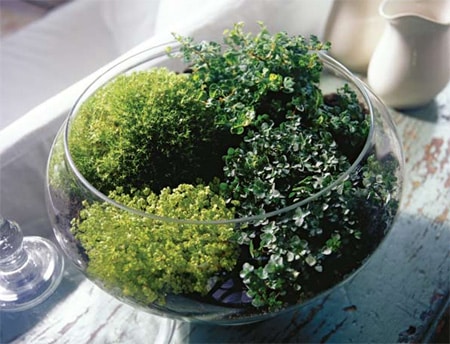
- A fragrant herb that’s easy to grow indoors.
- Does well in dry conditions, making it perfect for open terrariums.
- Adds flavor to dishes and serves as a natural air freshener.
Care Tips:
- Needs at least 6 hours of indirect sunlight.
- Prefers well-draining soil—avoid overwatering.
- Grows well on a slightly elevated mound inside the terrarium.
3. Tiny Tim Cherry Tomatoes (Solanum lycopersicum)
Why It’s Great for Terrariums:
- A dwarf tomato variety that stays compact (around 12 inches tall).
- Doesn’t need as much sunlight as regular tomato plants.
- Produces small, sweet cherry tomatoes perfect for salads.
Care Tips:
- Needs moderate sunlight (place near a bright window).
- Regularly prune and remove yellowing leaves.
- Best suited for a large, open terrarium.
4. Dwarf Pineapple (Ananas nanus)
Why It’s Great for Terrariums:
- A miniature version of the regular pineapple plant.
- Adds a tropical aesthetic to your terrarium.
- Produces tiny edible pineapples (though they take longer to mature).
Care Tips:
- Requires full sunlight—place near a south-facing window.
- Prefers sandy, well-draining soil.
- Keep in a larger open terrarium to accommodate growth.
5. Mint (Mentha spp.)
Why It’s Great for Terrariums:
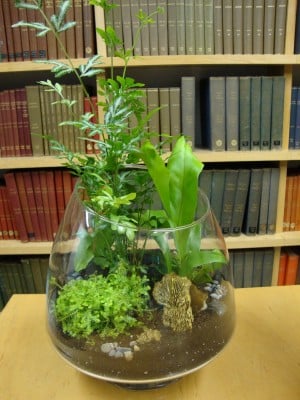
- One of the easiest herbs to grow indoors.
- Prefers humid environments, making it ideal for a closed terrarium.
- Provides a refreshing scent and can be used in teas and dishes.
Care Tips:
- Needs indirect sunlight and moist but well-drained soil.
- Trim leaves frequently to control growth.
- Keep in a closed terrarium to maintain humidity.
6. Dwarf Tophat Blueberries (Vaccinium angustifolium ‘Tophat’)
Why It’s Great for Terrariums:
- A compact blueberry bush that produces small, edible berries.
- Thrives in containers and limited space.
- Adds a pop of color with its blue fruits and green foliage.
Care Tips:
- Needs full sunlight—place near a bright window.
- Prefers acidic, well-draining soil.
- Requires an open terrarium for airflow.
7. Oregano (Origanum vulgare)
Why It’s Great for Terrariums:
- A hardy herb that grows well in containers.
- Thrives in dry conditions, making it ideal for an open terrarium.
- Provides a strong aroma and enhances dishes.
Care Tips:
- Needs well-drained soil and at least 5-6 hours of sunlight.
- Water only when the soil feels dry to the touch.
- Can be planted alongside thyme and sage.
8. Sage (Salvia officinalis)
Why It’s Great for Terrariums:
- An aromatic herb with antibacterial properties.
- Prefers moderate humidity, making it suitable for terrariums.
- Adds a rustic charm to your indoor garden.
Care Tips:
- Needs 6-8 hours of bright sunlight.
- Requires well-draining soil and moderate watering.
- Best for open terrariums to allow airflow.
Terrarium Care & Maintenance Tips
To keep your edible terrarium thriving, follow these tips:
Choose the right plants – Some herbs prefer dry soil, while others need high humidity.
Water lightly – Overwatering can cause mold or rot in a closed terrarium.
Provide adequate light – Place your terrarium near a bright, indirect light source.
Prune regularly – Trim back fast-growing plants to prevent overcrowding.
Monitor for pests – Keep an eye out for fungus gnats or mold, especially in high-humidity terrariums.
Creating an edible indoor terrarium is a fun and practical way to grow fresh herbs, fruits, and vegetables year-round.
Whether you’re a beginner gardener or an experienced plant lover, terrariums allow you to experiment with gardening in a small space.