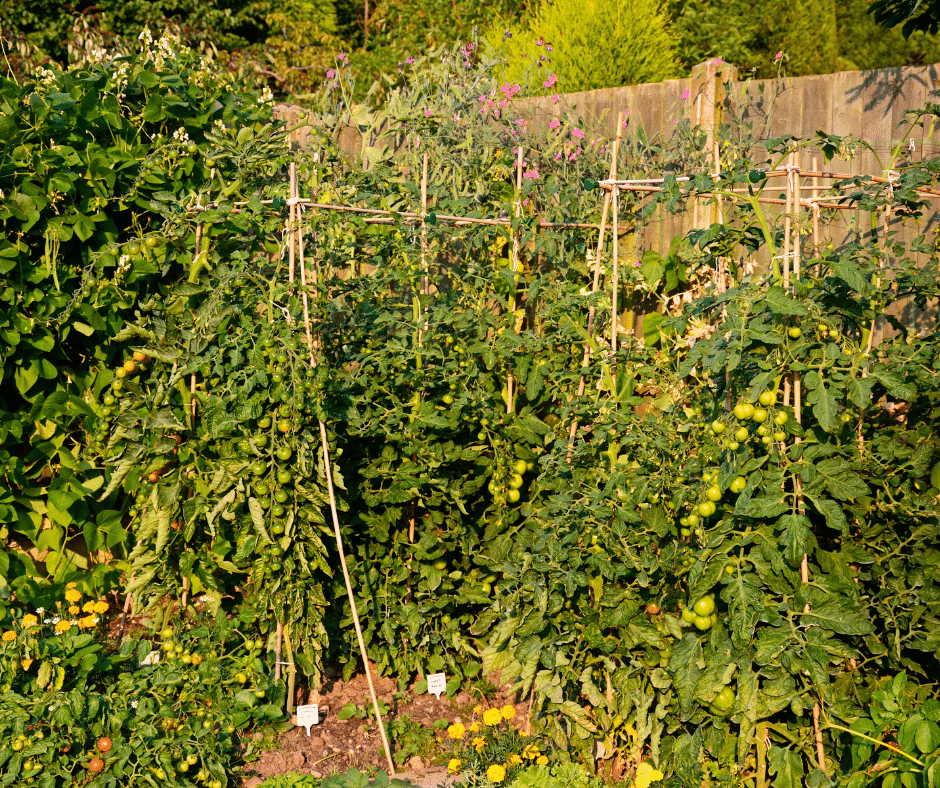
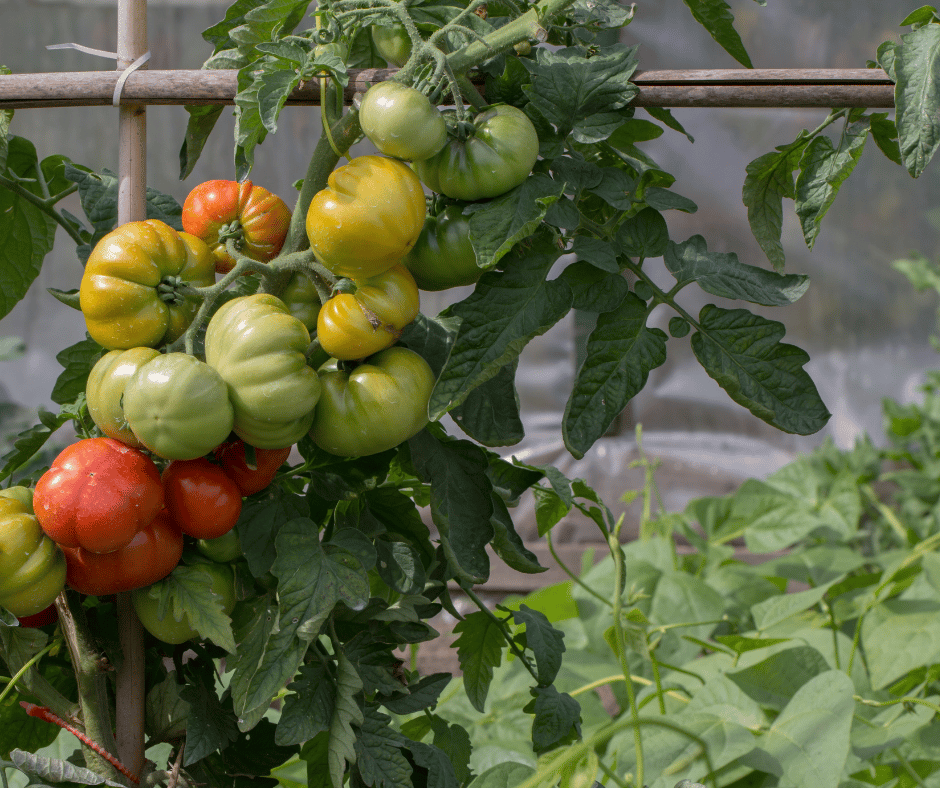
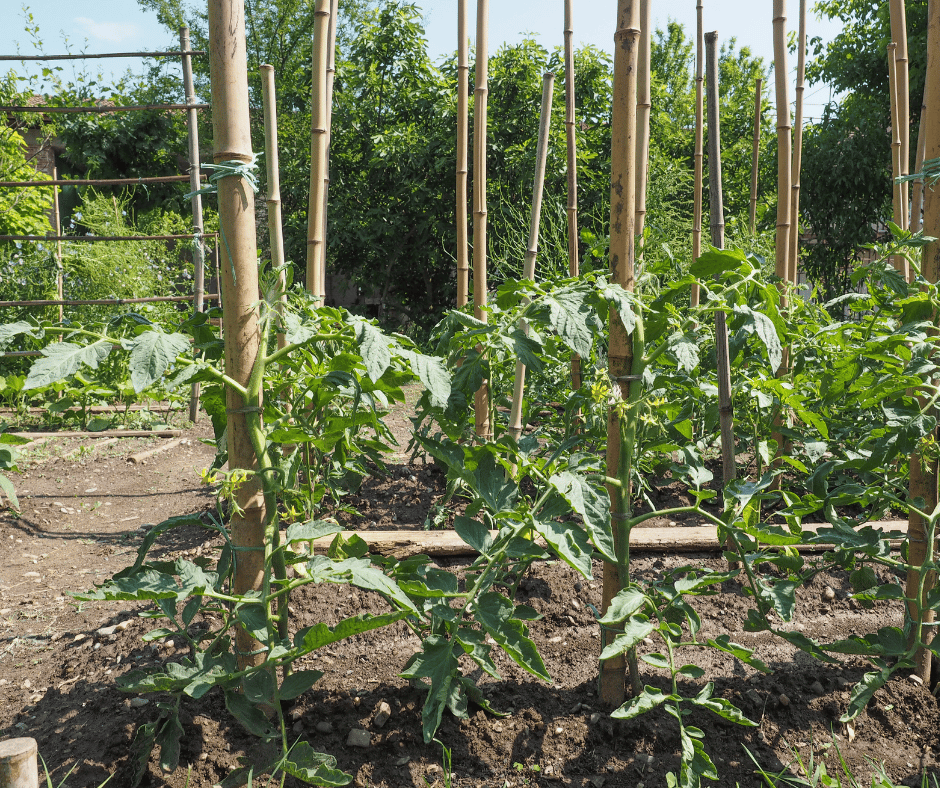
Growing tomatoes vertically is one of the best ways to make productive use of a small garden. By training indeterminate tomato plants up sturdy cages, stakes, strings, or trellises, you leave valuable open soil around their bases.
Instead of allowing that space to remain bare and vulnerable to weeds, heat, and moisture loss, you can fill it with carefully selected companion plants.
This practice is often called companion planting, intercropping, or underplanting. It involves growing two or more crops close together so that they use the garden space in different ways.
Tall tomatoes occupy the upper part of the garden, while shorter herbs, flowers, greens, and root crops make use of the lower level.
A well-designed tomato planting can therefore produce more than tomatoes alone. The same bed may also provide basil, parsley, lettuce, onions, carrots, radishes, flowers, and other useful plants without requiring much additional space.
Companion planting is not a magical system in which one plant automatically guarantees that another plant will be free from pests or produce sweeter fruit.
Many popular claims are based more on gardening tradition than strong scientific evidence. However, underplanting can still provide practical advantages when plants are selected and spaced correctly.
Low-growing companions may help cover exposed soil, reduce weed growth, shade shallow soil from intense sun, support pollinating insects, and increase the total harvest from a small area
. The most important principle is to avoid overcrowding. Tomato plants still need adequate airflow, water, nutrients, and access to their lower stems for inspection and pruning.
Here are 12 useful plants and plant groups to grow beneath or near tomatoes, along with guidance on how each one fits into the garden.
What Is Companion Planting?
Companion planting means growing different plant species near one another in a way that makes better use of the available space and resources. Plants may have different heights, root depths, growth rates, or harvest times, allowing them to share a bed without competing excessively.
For example, a tomato sends roots through a broad area and grows several feet upward. Lettuce remains shallow-rooted and low to the soil. Radishes mature quickly and can be harvested before the tomato reaches full size. Sweet alyssum spreads across the surface and produces flowers that attract small beneficial insects.
This layered approach can make a small bed more productive than planting only one crop. It may also protect the soil by reducing the amount of bare ground exposed to hot sun, heavy rain, and weed seeds.
However, every additional plant uses some water and nutrients. Underplanting works best when the bed contains fertile soil, a layer of compost, adequate irrigation, and enough space between plants.
1. Basil
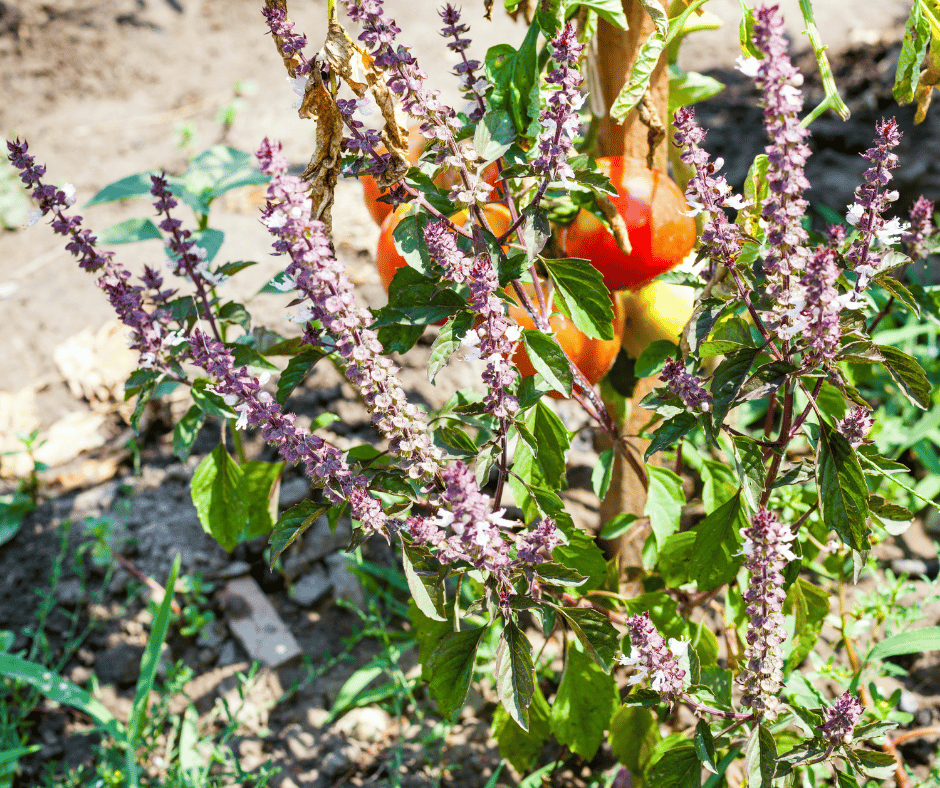
Basil is probably the most famous tomato companion. The two plants enjoy similar growing conditions, including warm temperatures, rich soil, regular watering, and plenty of sunlight. Basil also remains much shorter than a mature tomato, allowing it to grow near the base without shading the tomato canopy.
Plant basil approximately 10 to 16 inches away from the tomato stem, depending on the variety. Compact basil types can be planted closer than large, bushy cultivars.
Avoid crowding several basil plants tightly around a single tomato, as dense growth can restrict airflow near the lower leaves.
Basil flowers attract bees and other pollinating insects, but allowing it to flower reduces leaf production. For a steady culinary harvest, pinch the growing tips regularly and remove flower buds as they appear. This produces fuller plants and prevents tall, woody stems from crowding the tomato.
The strong scent of basil is often said to repel whiteflies, mosquitoes, and other insects. While it should not be considered guaranteed pest control, its flowers can support beneficial insects, and its compact growth makes it an efficient use of space.
There is also a popular claim that basil improves tomato flavor. Flavor is influenced much more strongly by the tomato variety, sunlight, watering, soil, and harvest stage. Still, basil and tomatoes remain excellent partners because they require similar care and are frequently used together in the kitchen.
2. Parsley
Parsley is a useful underplanting choice because it tolerates some shade from the tomato canopy, particularly during the hottest part of summer. It forms a leafy clump rather than an aggressive spreading root system and can remain productive for a long period when harvested regularly.
Plant parsley toward the outer edge of the tomato’s root zone where it receives morning sun or filtered light. If planted directly against the tomato stem, it may become shaded too heavily as the tomato grows.
Parsley flowers are especially valuable to small beneficial insects. If a few plants are allowed to flower during their second year, the flat clusters can attract hoverflies, parasitic wasps, and other insects that may feed on garden pests.
The leaves can be harvested from the outside of the plant while the center continues producing. Regular cutting prevents parsley from becoming too large and allows air to move more freely around the tomato.
3. Chives
Chives are compact perennial herbs that fit neatly along the edges of tomato beds. Their upright, narrow leaves occupy very little space, while their purple flowers attract bees and other pollinators during spring and early summer.
The onion-like scent of chives is often associated with discouraging aphids and other insects, although it should not be relied upon as complete protection. Their greatest advantage is that they provide a useful culinary crop without creating heavy shade or a large competing root system.
Because chives return each year, consider the layout carefully before planting them in a bed where tomatoes are rotated annually. They may be better positioned along a permanent border beside the tomato bed rather than directly in its center.
After flowering, cut the plants back if you want fresh, tender leaves. Dividing crowded clumps every few years keeps them vigorous and prevents them from becoming too dense.
4. Oregano and Marjoram
Oregano and marjoram can act as low aromatic ground covers near tomatoes, especially along the sunny outer edges of a bed. Their spreading foliage helps cover some exposed soil and produces flowers that are highly attractive to bees and other beneficial insects.
These Mediterranean herbs prefer drier, better-drained conditions than tomatoes, so placement matters. Do not plant them directly beside a tomato stem where frequent deep watering may leave the crown constantly wet. Position them toward the raised or better-drained edge of the bed.
Oregano can spread vigorously, particularly when grown as a perennial. Regular harvesting keeps it compact and prevents it from moving into the tomato’s main root zone. Marjoram is usually softer and less aggressive but may behave as an annual in colder climates.
Their value lies mainly in providing flowers, fragrance, edible leaves, and living soil coverage. They may also confuse or discourage some pests through their aroma, but healthy tomato care should still include regular inspection.
5. Sweet Alyssum
Sweet alyssum is one of the most useful flowering plants to grow around tomatoes. It stays low, spreads gently across the soil, and produces large numbers of tiny flowers with a sweet honey-like fragrance.
The flowers are especially attractive to hoverflies. Adult hoverflies feed on nectar, while their larvae consume aphids and other soft-bodied insects. Alyssum also attracts small parasitic wasps and bees, helping increase insect diversity around the vegetable garden.
Plant alyssum along the border of the tomato bed or between widely spaced plants. Its shallow roots make it less competitive than larger flowers, although it still needs water during dry weather.
In extremely hot climates, alyssum may slow down or become untidy during midsummer. Cutting it back lightly and providing some shade from the tomatoes can help it recover and flower again when temperatures moderate.
Its spreading foliage also shades the soil, reducing evaporation and helping prevent weeds from taking over bare spaces.
6. Lettuce
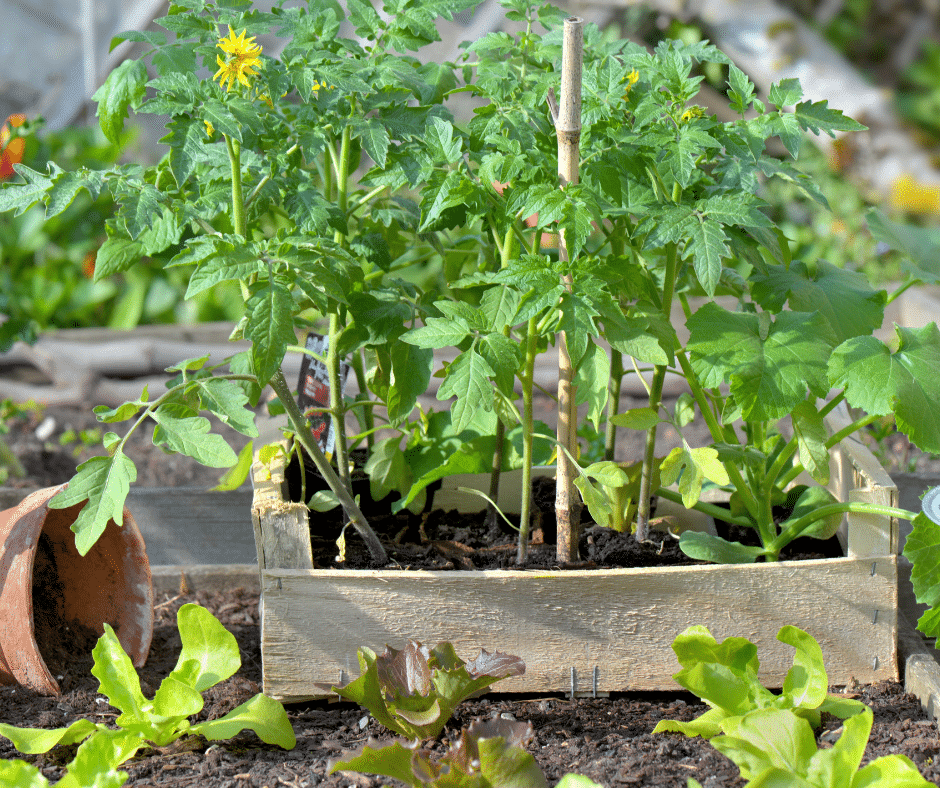
Lettuce is one of the best living mulches to grow beneath tomatoes. It has shallow roots, matures quickly, and appreciates the partial shade that a mature tomato plant creates during summer.
Tomatoes are usually still small when spring lettuce is planted. By the time the tomato canopy expands, the lettuce is close to harvest. A second planting of heat-tolerant leaf lettuce may then benefit from the developing shade.
Plant lettuce around the outer portion of the tomato’s base rather than tightly against the stem. This leaves room for watering, pruning, and checking the tomato for disease.
The leaves cover exposed soil, which may reduce weed germination and slow moisture loss. However, lettuce does not prevent disease from spreading. Tomato diseases are more effectively reduced by mulching, removing infected lower leaves, watering at soil level, rotating crops, and maintaining good airflow.
Harvest outer lettuce leaves as needed or remove whole plants once they begin bolting. This creates more space as the tomato reaches its largest size.
7. Bush Beans
Bush beans can be grown near tomatoes when the bed is large enough and the plants receive sufficient sunlight. They remain much shorter than pole beans and do not require a tall structure that might become tangled with the tomato support.
Beans form relationships with nitrogen-fixing bacteria on their roots. These bacteria convert atmospheric nitrogen into forms used by the bean plant. However, this does not mean a growing bean plant automatically provides large amounts of nitrogen to a neighboring tomato. Much of the nitrogen remains inside the bean’s tissues and roots until they break down.
Even so, beans can contribute to a diverse planting system and provide an additional crop from the same bed. After harvest, leaving healthy roots in the soil may gradually return organic matter and some nutrients as they decompose.
Place bush beans toward the sunny side of the tomato bed where they will not be completely shaded. Avoid planting them so densely that they block airflow around tomato foliage. Both crops need regular moisture during flowering and fruit development, so the bed should be watered deeply.
8. Radishes
Radishes are excellent short-season crops for the open spaces around young tomato plants. They germinate quickly and may be harvested in three to five weeks, long before the tomato canopy fills the bed.
Sow radishes in narrow rows or small clusters between newly planted tomatoes. Because the roots remain relatively small, they do not compete heavily when harvested promptly.
Radishes prefer cool conditions, so they are most successful before intense summer heat or again as temperatures begin cooling. Once tomatoes grow taller, their partial shade may help extend the radish season slightly, although hot weather can still cause roots to become tough or overly spicy.
Some companion-planting guides claim radishes repel specific tomato pests, but evidence is limited. Their clearest benefits are rapid production, efficient use of temporary space, and the loosening of the upper layer of soil as the roots develop.
9. Carrots
Carrots use a different layer of soil than many shallow-rooted greens, making them possible companions for tomatoes when the soil is deep, loose, and fertile. Their upright foliage remains relatively narrow and does not cast heavy shade.
Sow carrots while the tomatoes are still small. Tomato shade later in the season may help keep the soil cooler, although too much shade can slow carrot growth. Thin the seedlings carefully so the roots have room to develop.
Carrots do not literally “break up” compacted soil in the same way a digging tool does. In heavily compacted clay, they may simply become short, forked, or misshapen. Prepare the bed deeply before planting and remove stones or hard clods.
Water carefully because both crops need consistent moisture, but avoid disturbing the shallow carrot roots when cultivating around the tomatoes. Harvesting carrots may also disrupt nearby tomato roots, so pull them gently and avoid planting them directly against the tomato stem.
10. Onions and Garlic
Onions and garlic are useful companions because their narrow upright leaves occupy little horizontal space. They can be planted along bed edges or between widely spaced tomatoes without creating dense shade.
Their strong sulfur-containing aromas are often believed to confuse or discourage aphids, mites, and other pests. Results vary, and they should not replace monitoring or other pest-management methods. However, they provide a valuable edible crop while making efficient use of narrow garden spaces.
Garlic is usually planted in autumn and harvested in early or midsummer. Tomatoes can be transplanted into the same bed in spring while garlic is finishing its growth. Once the garlic is harvested, the tomatoes gain additional root space for the second half of the season.
Onions need good sunlight to develop large bulbs. If they become heavily shaded by tomato foliage, their bulbs may remain small. Scallions are often better suited to underplanting because they can be harvested young and do not need to form large bulbs.
Keep alliums several inches away from the main tomato stem and ensure the bed is well drained. Excessively wet soil can cause onion and garlic bulbs to rot.
11. Marigolds
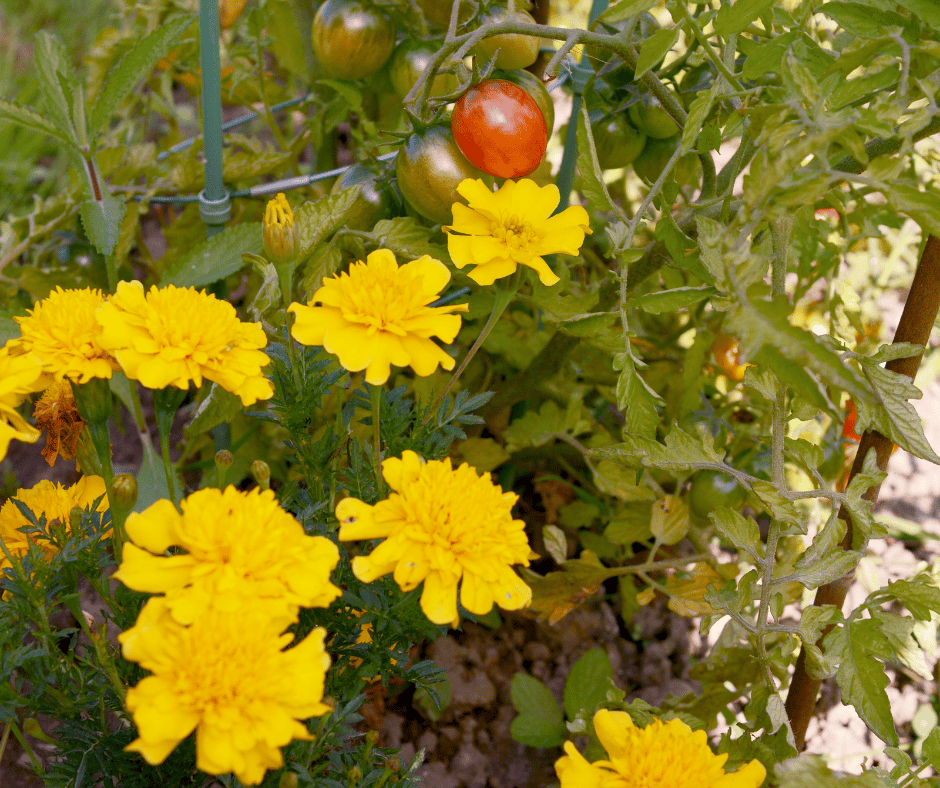
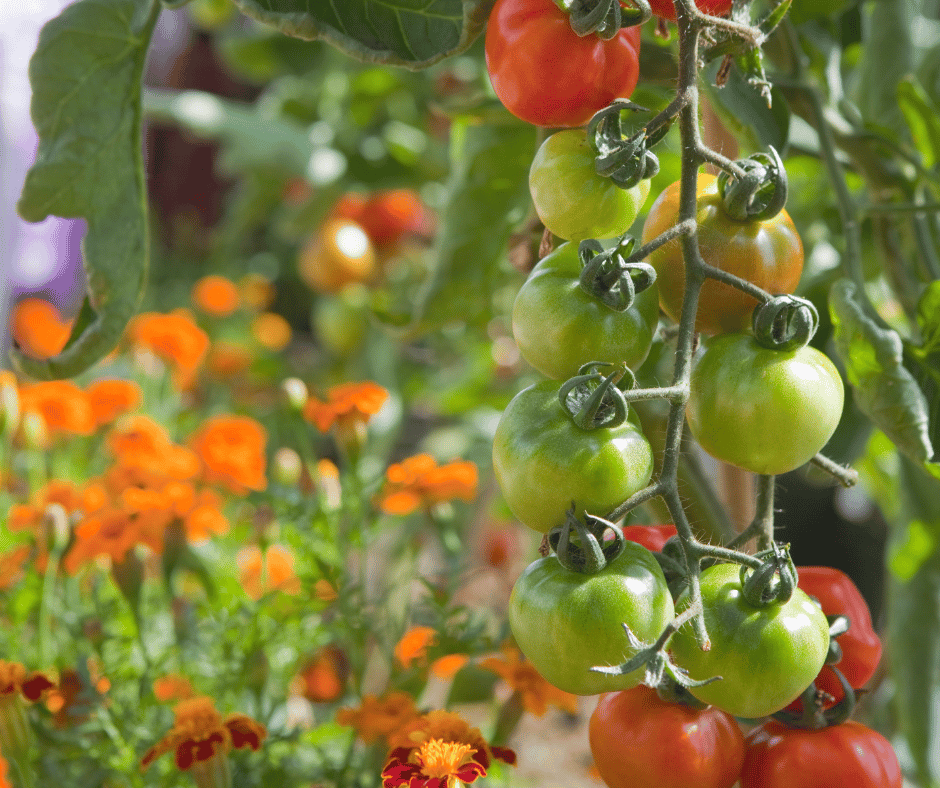
Marigolds are widely planted beside tomatoes because they add color, attract insects, and tolerate the same warm, sunny conditions. Compact French marigolds are usually better for underplanting than tall African varieties, which may compete more heavily for light and space.
Marigold flowers provide nectar and pollen for bees, hoverflies, and other beneficial insects. Their dense roots also help occupy open soil and reduce some weed growth.
Claims that marigolds repel every common tomato pest are exaggerated. Their most established use relates to certain root-knot nematodes. Specific marigold species may suppress particular nematodes when grown densely as a cover crop over a period of time. Simply placing one marigold beside a tomato does not guarantee nematode control.
Marigolds also do not reliably repel tomato hornworms. Regularly inspecting tomato leaves and removing caterpillars remains more effective.
Plant marigolds around the edge of the bed where they receive sun and do not restrict airflow. Deadhead faded flowers to encourage blooming until frost.
12. Borage
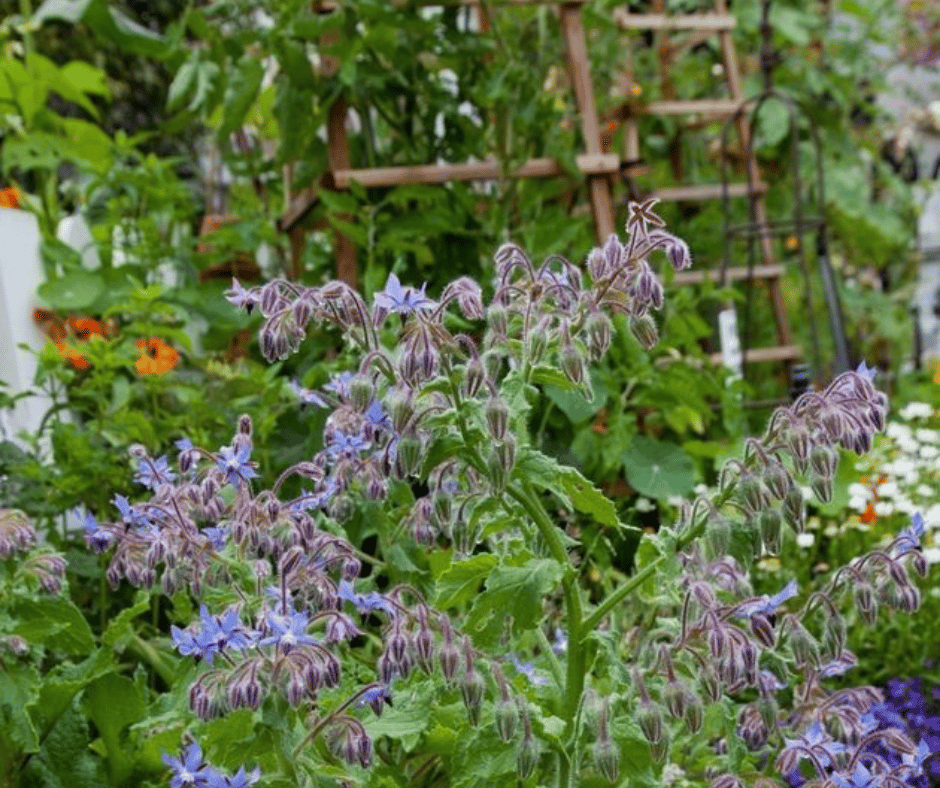
Borage is a vigorous annual herb with fuzzy leaves and star-shaped blue flowers. It is highly attractive to bees and can bring substantial pollinator activity into a tomato garden.
The plant is traditionally recommended as a companion for tomatoes and is often said to deter hornworms. Evidence for direct pest repellence is limited, but its flowers clearly support pollinators and beneficial insects.
Borage can become much larger than many gardeners expect, sometimes reaching two to three feet across. It should therefore be planted near tomatoes rather than directly beneath them. Give it enough room so that its broad leaves do not crowd the lower tomato foliage.
The plant self-seeds readily, so remove faded flowers if you do not want seedlings appearing the following year. Young borage flowers are edible, and the leaves are also traditionally used in small quantities, but the coarse texture and naturally occurring compounds mean it should not be treated like an everyday salad green.
Additional Possibilities: Beets, Turnips, Violas, and Amaranth
Beets and small turnips may fit around young tomato plants, but they require adequate sunlight and moisture. They are best used early in the season and harvested before tomato roots and foliage become dominant.
Violas and pansies can provide color during cooler weather, but they often decline once summer heat arrives. They are more useful as spring companions than permanent underplantings.
Amaranth can attract beneficial insects and provide edible leaves or grain, but many varieties grow tall and vigorous. Rather than planting it under tomatoes, position it nearby where it will not shade the crop or compete with the tomato support system.
Growing Tomatoes Near Asparagus
Tomatoes and asparagus are sometimes described as mutually protective companions. Tomatoes are said to discourage asparagus beetles, while asparagus is claimed to reduce nematode problems affecting tomatoes.
These relationships should not be treated as guaranteed pest control. More importantly, asparagus is a permanent perennial crop with an extensive root system. Frequent digging, transplanting, and cultivating tomatoes within an asparagus bed may damage the asparagus crowns.
Tomatoes may be grown near the edge of a mature asparagus bed after the asparagus harvest has ended, provided there is enough light, water, and space. Avoid planting directly over the crowns or disturbing the roots.
Plants to Avoid Growing Directly Under Tomatoes
Some plants are poor choices because they compete heavily, share disease problems, or grow too large for the available space.
Potatoes belong to the same plant family as tomatoes and are vulnerable to several of the same diseases, including late blight. Growing them closely together may make disease management and crop rotation more difficult. Harvesting potatoes can also disturb tomato roots.
Corn grows tall, feeds heavily, and may shade tomato plants. Corn earworm and tomato fruitworm are also the same insect species at different host plants, so combining the crops may support a pest that damages both.
Large cabbage-family crops, including broccoli, cabbage, cauliflower, and Brussels sprouts, require considerable space, nutrients, and water. They are unlikely to thrive directly beneath tomatoes and may create overcrowded conditions.
Fennel is commonly kept away from vegetable beds because it grows large and may compete heavily. Claims that it chemically inhibits every nearby plant are often overstated, but its size and growth habit still make it a poor underplanting choice.
Avoid placing large cucurbits such as pumpkins or full-size squash directly beneath tomatoes. Their broad leaves and vigorous vines may overwhelm the bed, reduce airflow, and complicate harvesting.
How to Underplant Tomatoes Without Creating Problems
The best companion planting begins with generous tomato spacing. Follow the spacing recommended for the variety and support the plant vertically from the beginning.
Keep the immediate area around the main tomato stem open. This allows you to water at the root zone, remove lower leaves, check for pests, and observe the stem for signs of disease.
Place companions mainly around the outer root zone. Short-lived crops such as lettuce and radishes can be planted closer early in the season because they will be harvested before the tomato reaches full size.
Use compost before planting and replenish nutrients as needed. A densely planted bed uses water and fertility faster than a bed containing tomatoes alone. Deep watering is generally better than frequent surface sprinkling because it encourages stronger roots and reduces moisture on the foliage.
Mulch remaining open spaces with straw, shredded leaves, or another clean organic material. Companion plants can cover part of the soil, but they rarely form complete coverage immediately.
Watch for overcrowding as summer progresses. A plant combination that looks spacious in May may become extremely dense by July. Harvest, prune, or remove companion plants when they begin touching tomato foliage or blocking air movement.
Growing useful plants beneath and around tomatoes can turn one garden bed into a layered, highly productive growing space.
Basil, parsley, chives, oregano, sweet alyssum, lettuce, bush beans, radishes, carrots, onions, garlic, marigolds, and borage can all contribute something valuable when they are placed carefully.