Simple kitchen ingredients often have more uses than most people realize. Long before modern cleaning products became widely available, households relied on natural ingredients such as citrus, salt, and herbs to keep homes clean and fresh.
One traditional trick that has gained renewed popularity is boiling lemon peels with salt. This simple mixture creates a natural solution that many people use to clean surfaces, remove odors, freshen indoor air, and maintain a healthier home environment.
The peel of the lemon comes from the citrus fruit Citrus limon, which contains aromatic oils known for their degreasing and refreshing properties.
Salt, especially coarse salt, has long been used as a natural cleaning and scrubbing agent because of its mild abrasive texture and ability to absorb moisture.
When lemon peels and salt are boiled together, the heat releases citrus oils into the water and air, creating a fragrant solution that can be used in several practical ways around the home.
Why Lemon Peels Are So Useful in the Home
Lemon peels contain high concentrations of natural oils. These oils are responsible for the strong citrus aroma and the fruit’s ability to break down grease and residue.
One of the main compounds in lemon peel oil is limonene, which is widely used in natural cleaning products because of its ability to dissolve oils and grime.
When lemon peels are heated in water, these oils are released into the liquid and steam.
This process creates a natural solution that combines mild cleaning power with a refreshing scent.
Because lemon peels are often discarded after using the fruit, repurposing them for household cleaning also helps reduce waste.
The Cleaning Power of Salt
Salt is one of the oldest cleaning agents used in households.
Its grainy texture provides gentle scrubbing action that helps remove stains and residue from surfaces.
Salt also has hygroscopic properties, meaning it attracts moisture. This allows it to absorb odors and help maintain dryness in certain areas.
When salt is combined with lemon peel, the result is a mixture that can both dissolve grease and scrub away dirt.
The combination of citrus oils and salt creates a surprisingly effective natural cleaner.
Why Boiling the Ingredients Makes a Difference
Heating lemon peels and salt in water enhances their effectiveness.
The heat releases the essential oils from the lemon peel, allowing them to disperse into the water and steam.
This process produces two benefits.
First, the infused water becomes a natural cleaning liquid that can be used on surfaces.
Second, the steam carries the citrus aroma into the air, helping freshen indoor spaces.
This dual effect makes boiling lemon peels with salt useful for both cleaning and deodorizing.
1. Naturally Freshening Indoor Air
One of the most noticeable benefits of boiling lemon peels with salt is the refreshing scent it creates.
Indoor air can sometimes become stale, especially during colder months when windows remain closed.
Simmering lemon peels releases a fresh citrus fragrance that spreads through the room.
Unlike synthetic air fresheners, which may contain artificial chemicals, this method relies entirely on natural ingredients.
Many people enjoy the clean scent of citrus because it makes a home feel brighter and more inviting.
2. Neutralizing Cooking Odors
Strong cooking smells can linger in kitchens long after meals are finished.
Fried foods, onions, garlic, and fish are particularly known for leaving persistent odors.
Boiling lemon peels with salt after cooking can help reduce these smells.
The citrus oils in the steam help mask and neutralize odors, while the heat spreads the fragrance throughout the kitchen.
This simple method provides a natural alternative to chemical odor sprays.
3. Creating a Natural Cleaning Solution
The water left after boiling lemon peels and salt can be used as a cleaning liquid.
Once the mixture cools slightly, it can be poured into a spray bottle or applied directly with a cloth.
This solution works well for cleaning surfaces such as:
• Kitchen countertops
• Stovetops
• Sinks
• Cutting boards
• Tables
The citrus oils help break down grease while the salt contributes mild scrubbing action.
Although this mixture is gentle, it can be surprisingly effective for everyday cleaning.
4. Cleaning Greasy Pots and Pans
Grease and food residue can make washing dishes difficult.
The lemon peel and salt mixture can help loosen stubborn grime from cookware.
After boiling the ingredients, the warm liquid can be poured into greasy pots or pans and allowed to sit for several minutes.
The citrus oils help dissolve grease while the salt acts as a mild abrasive when scrubbing.
This method often makes cleaning cookware easier and reduces the need for harsh detergents.
5. Deodorizing Drains
Kitchen and bathroom drains can develop unpleasant odors over time.
Food particles, grease, and soap residue often accumulate in pipes.
Pouring the warm lemon peel and salt mixture down the drain can help freshen the pipes.
The citrus oils help break down grease while the hot water flushes residue through the plumbing.
This method can be used regularly to maintain cleaner-smelling drains.
However, severe blockages should still be addressed with proper plumbing solutions.
6. Cleaning Cutting Boards
Cutting boards frequently absorb odors from foods such as onions, garlic, and fish.
The lemon peel and salt mixture works well for refreshing these surfaces.
After pouring the warm liquid over the board, sprinkle additional salt and scrub gently.
The citrus oils help remove odors while the salt cleans the surface.
This method is particularly useful for wooden cutting boards that require gentle cleaning.
7. Removing Stains from Sinks
Kitchen sinks often develop stains from food residue and mineral deposits.
The lemon peel and salt mixture can help loosen these stains.
Sprinkling salt onto the sink and scrubbing with lemon peel pieces can remove discoloration and restore shine.
The acidity of lemon helps dissolve mineral buildup while salt provides scrubbing power.
This combination creates a simple but effective sink cleaner.
8. A Natural Way to Reuse Food Scraps
One of the greatest advantages of this trick is that it repurposes kitchen waste.
Instead of throwing away lemon peels, they can be reused for cleaning and deodorizing.
This practice helps reduce household waste and encourages sustainable living.
Using ingredients that would otherwise be discarded also saves money.
Over time, small habits like this can significantly reduce the need for commercial cleaning products.
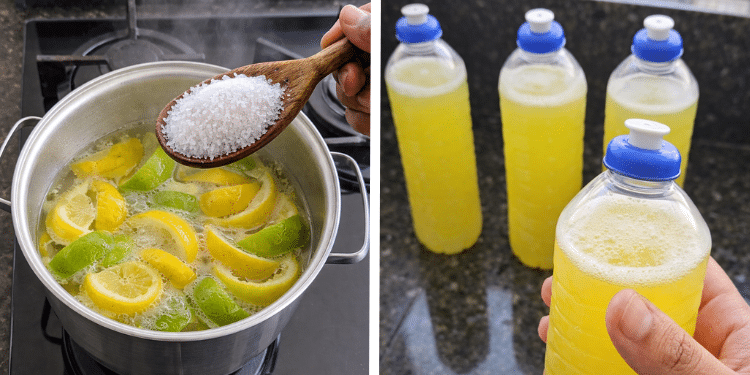
How to Prepare the Lemon Peel and Salt Mixture
Making this mixture takes only a few minutes.
Ingredients:
• Peels from 2–3 lemons
• 1–2 tablespoons salt
• 4 cups water
Instructions:
- Place the lemon peels in a pot.
- Add salt and water.
- Bring the mixture to a gentle boil.
- Reduce heat and allow it to simmer for 10–15 minutes.
As the mixture simmers, the citrus aroma will begin to fill the room.
After cooling slightly, the liquid can be used for cleaning.
Additional Ingredients That Can Enhance the Mixture
Some people add other natural ingredients to increase the fragrance or cleaning power.
Common additions include:
• Cinnamon sticks
• Bay leaves
• Vinegar
• Rosemary
These ingredients create a richer aroma while maintaining the mixture’s natural properties.
However, lemon peels and salt alone are often sufficient for most household uses.
When Not to Use Lemon-Based Cleaners
Although lemon cleaners are versatile, they should not be used on every surface.
Acidic cleaners may damage certain materials such as:
• Marble
• Granite
• Natural stone
• Waxed wood
These surfaces can be sensitive to acidic substances.
Always test a small area before applying lemon-based solutions widely.
Why Natural Cleaning Methods Are Becoming Popular Again
Many people are returning to traditional cleaning methods that rely on simple ingredients.
There are several reasons for this shift.
Natural solutions are often safer for households with children or pets.
They reduce exposure to synthetic chemicals and artificial fragrances.
They are also inexpensive and environmentally friendly.
Using kitchen ingredients for cleaning is an easy way to simplify household routines while reducing costs.
Boiling lemon peels with salt is a simple household trick that combines traditional wisdom with practical benefits.