In the realm of traditional home remedies and natural wellness practices, few methods have stood the test of time as robustly as respiratory therapy.
Long before the advent of modern over-the-counter nasal sprays and synthetic decongestants, ancient cultures spanning from the rocky coasts of the Mediterranean to Eastern Europe relied on a fundamental pairing of two foundational elements: pure water and mineral-rich sea salt.
Today, as modern households increasingly seek clean, non-invasive, and drug-free alternatives to manage daily respiratory comfort, this traditional practice is experiencing a significant resurgence.
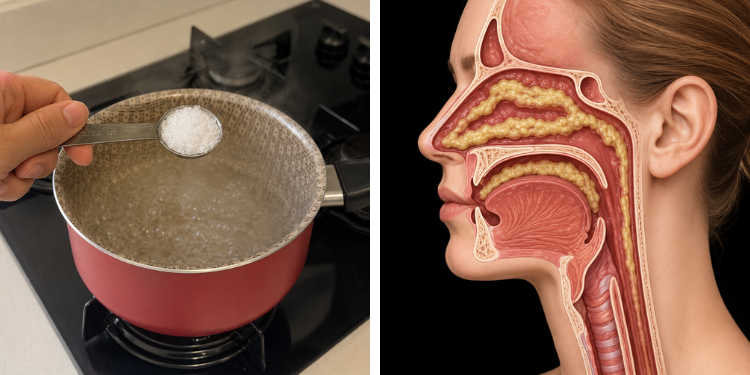
Boiling a single teaspoon of coarse sea salt and inhaling the resulting vapor is a simple, low-cost practice that leverages the principles of deep thermal hydration and mineral nebulization.
However, to understand why this simple kitchen ritual is so effective, we must look beyond the surface steam and examine the underlying anatomy of your respiratory system, the physical chemistry of unrefined salt, and the biological impact this mixture has on your mucous membranes.
The Chemistry: Why Coarse Sea Salt Matters
To understand the benefits of this therapy, it is crucial to recognize that not all salt is created equal. Many people mistake unrefined coarse sea salt for standard kitchen table salt.
However, from a chemical and biological perspective, these two ingredients are completely different.
When you use unrefined coarse sea salt, the steam carries microscopic trace minerals alongside the moisture particles.
Magnesium, in particular, is widely recognized in dermatological and respiratory science for its natural ability to soothe localized tissue and reduce surface irritation.
Introducing these specific unrefined minerals into a steam environment replicates the microclimate of a natural coastal shoreline. This approach delivers a gentle, therapeutic experience that processed table salt simply cannot match.
Step-by-Step Preparation Matrix
To practice salt steam inhalation safely and effectively, you must follow a precise sequence. Because you are dealing with boiling water and sensitive facial tissues, prioritizing safety and clean components ensures a highly beneficial session.
What Happens When You Inhale It? (5 Key Impacts)
When you lower your face into the warm, mineral-infused tent, a sequence of physical and biological reactions immediately takes place within your upper respiratory tract. Here is what happens inside your body during a 10-minute session:
1. Rapid Hydration of Parched Mucous Membranes
Your nasal passages and sinuses are lined with a delicate, highly vascular tissue called the mucous membrane. Environmental factors like dry winter air, indoor heating, and air conditioning can strip these tissues of their natural moisture. This causes them to become dry, cracked, and irritated.
As you inhale the warm salt vapor, millions of microscopic moisture droplets instantly coat these parched tissues. This deep thermal hydration delivers immediate comfort, soothing raw, dry nasal passages and restoring the natural moisture balance necessary for healthy respiratory function.
2. Gentle Thinning of Stubborn, Trapped Mucus
When your body experiences environmental irritation or seasonal congestion, your sinus cavities often respond by overproducing thick, stubborn mucus. This buildup blocks your airways, creating a heavy sense of sinus pressure across your forehead, eyes, and cheekbones.
The introduction of warm, moist air directly alters the physical consistency of this trapped fluid. The heat relaxes the localized blood vessels and liquefies thick secretions, while the microscopic salt particles help break the structural bonds of the mucus.
This process thins the trapped fluid, making it significantly easier for your body to drain naturally and relieving uncomfortable sinus pressure.
3. Support for Natural Ciliary Clearance
The entire length of your respiratory tract is lined with billions of microscopic, hair-like structures known as cilia.
These tiny structures function as your body’s built-in filtration system, moving in coordinated, rhythmic waves to sweep dust, pollen, and microscopic impurities out of your airways.
When your nasal environment becomes excessively dry or clogged with heavy secretions, these cilia become stagnant and sluggish, compromising your body’s natural defense mechanisms.
The warm, mineral-rich environment created by sea salt steam reactivates these cilia. By thinning overlying fluids and restoring moisture, the steam allows these microscopic sweepers to resume their rhythmic movement, facilitating natural airway clearance.
4. Soothing of Irritated Throat Tissues
As you alternate between breathing through your nose and inhaling through your mouth, the warm, mineral-infused vapor passes directly over your pharynx and down toward your larynx.
If you are managing a dry, scratchy throat caused by post-nasal drip or dry air, the warm moisture delivers targeted, local hydration.
The microscopic trace minerals in unrefined sea salt help calm irritated surface tissues on contact. This provides a gentle, comforting sensation that relaxes tight throat muscles and helps ease a persistent, dry tickle.
5. Calming of the Nervous System through Rhythmic Breathing
While the physical and chemical properties of salt steam target your airways, the practical structure of the therapy delivers a valuable secondary benefit: systemic relaxation. To sit quietly beneath a darkened towel tent requires you to pause your daily activities and focus entirely on your breath.
The enforced practice of slow, deep, and deliberate nasal breathing shifts your autonomic nervous system away from a stressed, sympathetic state and toward a calm, parasympathetic state.
This deep, rhythmic breathing lowers your heart rate, relaxes muscle tension in your shoulders and neck, and reduces overall physical stress, turning a simple respiratory treatment into a grounding wellness ritual.
Safety Thresholds and Critical Precautions
While sea salt steam inhalation is a safe, time-tested home wellness practice for most individuals, it must be approached with mindfulness and respect for your body’s physiological limits.
-
Avoid Excessive Salt Ratios: It can be tempting to assume that adding more salt will yield faster results. However, creating an excessively high salt concentration (a hypertonic solution) in a boiling pot can actually irritate your mucous membranes rather than soothing them. Stick strictly to the golden ratio of one teaspoon of coarse sea salt per two cups of water to maintain a gentle, supportive mist.
-
Prevent Thermal Burn Injuries: Severe steam burns are entirely preventable. Never place your face directly over a pot that is still sitting on an active burner or a rolling boil. Always allow the water to sit and cool for at least two to three minutes before beginning your session. Keep your face a safe distance of 8 to 12 inches away from the water’s surface.
-
Understand Respiratory Limitations: If you manage chronic lower respiratory conditions such as asthma, reactive airway disease, or severe COPD, consult your primary care physician or pulmonologist before trying steam inhalation. For some individuals with sensitive lower airways, a concentrated blast of warm, humid air can trigger localized bronchospasms or involuntary coughing fits. If you experience any chest tightness, wheezing, or breathing discomfort during your session, remove the towel tent immediately and move to an open room with cool, fresh air.
Embracing natural wellness does not require complex or expensive solutions. By utilizing the simple synergy of clean water, mineral-rich sea salt, and focused, intentional breathing, you can easily support your body’s natural respiratory defenses.