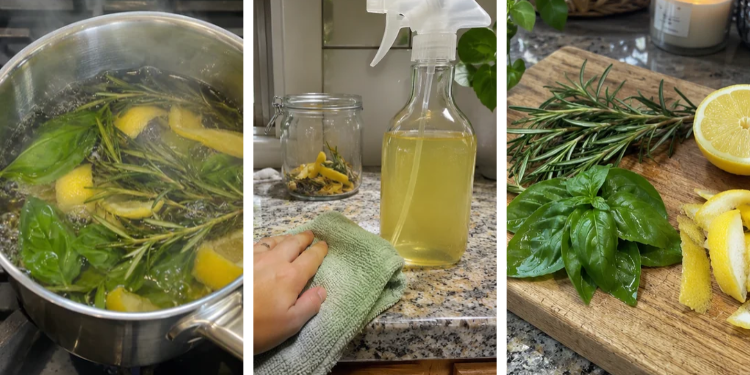
Stepping into a home where a pot of rosemary, basil, and lemon peels is gently simmering on the stove offers an immediate sensory shift: the air feels crisp, vibrant, and deeply refreshing.
While these three botanical staples are foundational in Mediterranean kitchens, simmering them together in water is a time-tested domestic practice used for indoor air purification, natural humidification, aromatherapy, and household cleaning.
Rather than relying on synthetic plug-in air fresheners, paraffin candles, or chemical surface sprays that release volatile organic compounds (VOCs) and phthalates into indoor spaces, boiling these kitchen botanicals uses simple thermal steam distillation to release therapeutic plant terpenes into the air and extract water-soluble antimicrobial compounds into a multipurpose liquid concentrate.
Here is a comprehensive look at the phytochemistry behind combining rosemary, basil, and lemon peels, the specific household and wellness benefits of boiling them, and a step-by-step protocol for both aromatic simmering and post-boil liquid reuse.
The Phytochemistry: How Heat Releases Botanical Volatiles
When fresh or dried plant materials are submerged in simmering water, thermal energy ruptures the microscopic oil glands and cell walls of the leaves and rinds.
Because essential oil molecules are volatile, rising water vapor acts as a natural carrier – a low-tech form of steam distillation – dispersing bioactive compounds throughout the room while leaving behind a concentrated hydrosol-like decoction in the pot.
Each of the three ingredients contributes distinct chemical constituents:
1. Rosemary (Salvia rosmarinus): 1,8-Cineole and Alpha-Pinene
Rosemary needles contain high concentrations of 1,8-cineole (eucalyptol) and alpha-pinene. When inhaled via warm steam, 1,8-cineole acts as a natural mucolytic and bronchodilator, helping loosen airway mucus and clear nasal congestion.
Simultaneously, alpha-pinene interacts with central nervous system pathways to support mental alertness, reduce brain fog, and lower subjective stress markers.
2. Sweet Basil (Ocimum basilicum): Linalool and Eugenol
Basil leaves are rich in linalool (the same calming monoterpene found in lavender) alongside eugenol and methyl chavicol (estragole).
Linalool helps modulate stress responses and promotes relaxation, balancing the brisk, stimulating edge of rosemary.
Eugenol adds broad-spectrum antimicrobial and antifungal properties that help neutralize odor-causing airborne microbes.
3. Lemon Peels (Citrus limon): D-Limonene and Citric Acid
The colored outer zest (flavedo) of lemon peels houses dense oil glands packed with D-limonene – a cyclic monoterpene renowned for its powerful degreasing, solvent, and mood-elevating properties.
Meanwhile, the white inner pith and residual juice release citric acid and polyphenols into the simmering water, lowering the liquid’s pH and creating a mild, natural descaling and antibacterial solution.
4 Main Reasons People Boil Rosemary, Basil, and Lemon Peels
1. Neutralizing Stubborn Cooking and Household Odors
Fried foods, fish, garlic, and damp indoor air leave behind lingering lipid particles and sulfur compounds that cling to curtains and upholstery. Commercial air sprays merely mask these smells with heavy artificial perfumes.
Simmering rosemary, basil, and lemon peels releases airborne D-limonene and phenolic terpenes that actively bind to and neutralize odor molecules in the air, leaving the entire home smelling clean and herbaceous without synthetic chemical residues.
2. Winter Humidification and Respiratory Comfort
Central heating systems during autumn and winter drastically strip moisture from indoor air, often dropping relative humidity below 30%. Dry indoor air irritates nasal passages, dries out skin, and increases susceptibility to seasonal respiratory discomfort.
A simmering pot of herbal citrus water functions as a therapeutic micro-humidifier, adding clean moisture back into the air while infusing the steam with soothing eucalyptus-like cineole vapors that ease dry throats and sinus pressure.
3. Repelling Indoor Flying Insects Naturally
Fruit flies, houseflies, and mosquitoes rely heavily on olfactory receptors to locate food and shelter. The combined aroma of airborne D-limonene, cineole, and eugenol overwhelms insect sensory receptors and masks human and food scents, creating an invisible, non-toxic olfactory barrier around kitchens and open windows.
4. Creating a Zero-Waste Multipurpose Cleaning Concentrate
One of the greatest advantages of this practice is zero waste: once the simmering session finishes and the liquid cools, the remaining amber-tinted herbal decoction is rich in citric acid, D-limonene, and plant polyphenols.
Strained into a spray bottle, it becomes an effective, food-safe surface cleaner for wiping down kitchen counters, stovetops, cutting boards, and glass surfaces.
Indoor Scent & Air Care Methods Compared
| Method | Active Mechanism | Indoor Air Safety | Added Benefits | Cost per Use |
| Rosemary, Basil & Lemon Simmer Pot | Thermal steam distillation of plant terpenes | 100% Non-toxic & VOC-free | Humidifies air + yields liquid cleaner | < 0.50$ (Uses kitchen scraps) |
| Paraffin Scented Candles | Combustion of petroleum wax & fragrance | Low (Emits soot, toluene, & benzene) | Ambient lighting | 1.00 – 3.00$ per burn |
| Plug-In Air Fresheners | Continuous heating of synthetic oils | Low (Releases phthalates & VOCs) | None | 0.50 – 1.00$ per day |
| Ultrasonic Essential Oil Diffuser | Cold ultrasonic mist dispersion | High (With pure therapeutic oils) | Cool mist humidification | 0.75 – 1.50$ per session |
Step-by-Step: How to Prepare and Use the Simmer Pot
Follow this structured protocol to extract maximum aroma and cleaning potency without scorching your cookware:
Safety Guidelines and Practical Tips
-
Stovetop Vigilance: Always set a 30-minute kitchen timer when running a stovetop simmer pot, and turn off the burner before leaving the house or going to sleep. If you prefer an unattended option, place the ingredients and water into a small slow cooker (crockpot) set on low with the lid off.
-
Pet Considerations: While passive room diffusion from a simmer pot is generally well-tolerated in ventilated spaces, concentrated essential oils and raw citrus rinds can irritate cats and dogs if ingested. Keep cooling pots and spray bottles out of reach of pets, and ensure pets can freely leave the room if the herbal scent is too strong for their sensitive noses.
-
Refrigerate Homemade Spray: Because the strained decoction contains natural plant sugars and organic matter without synthetic preservatives, store your repurposed spray bottle in the refrigerator and use it within 7 to 10 days.
Boiling rosemary, basil, and lemon peels is a simple, resourceful ritual that transforms everyday kitchen ingredients into a natural air purifier, gentle respiratory humidifier, and eco-friendly household cleaner—all in a single pot.