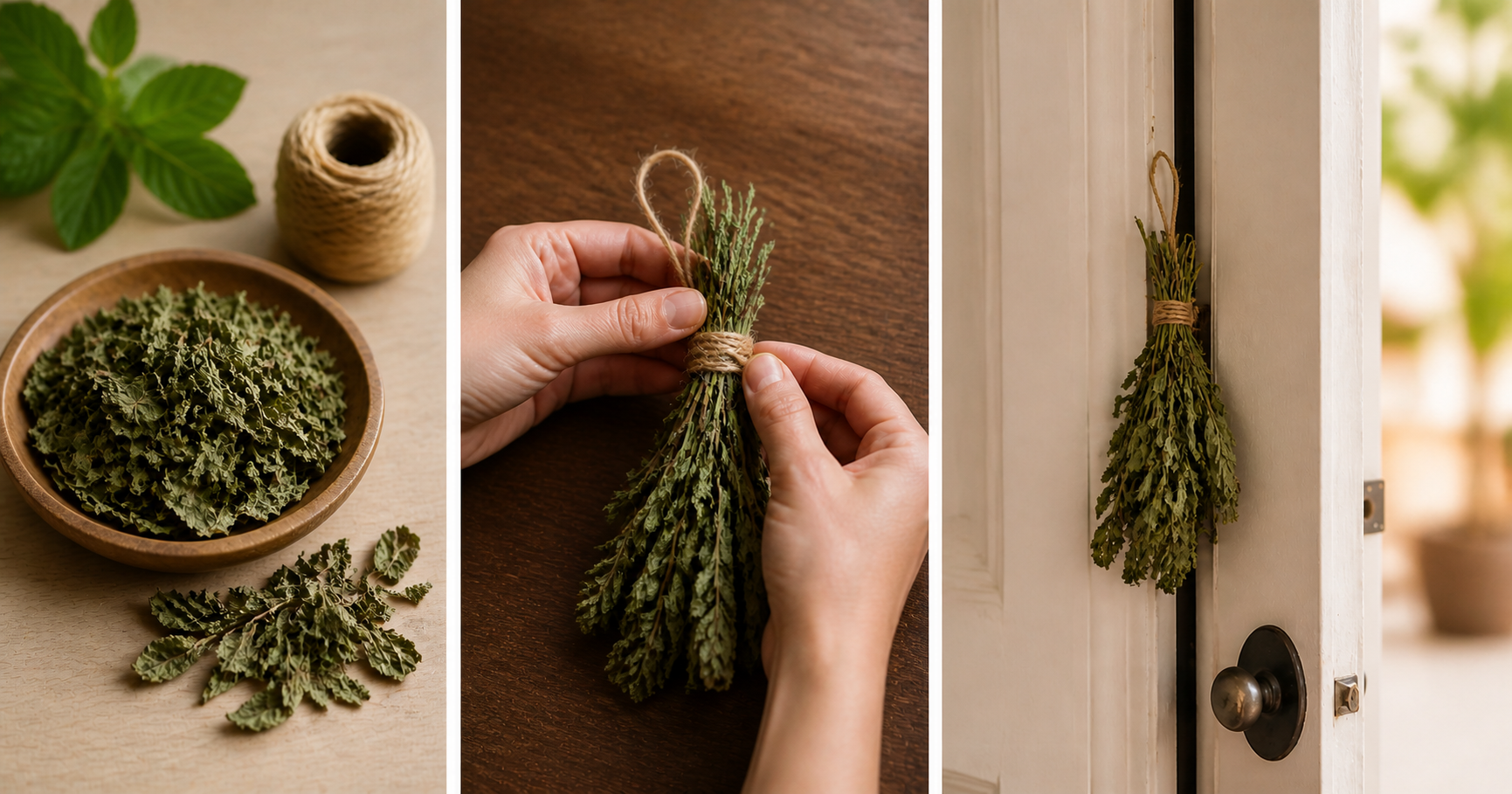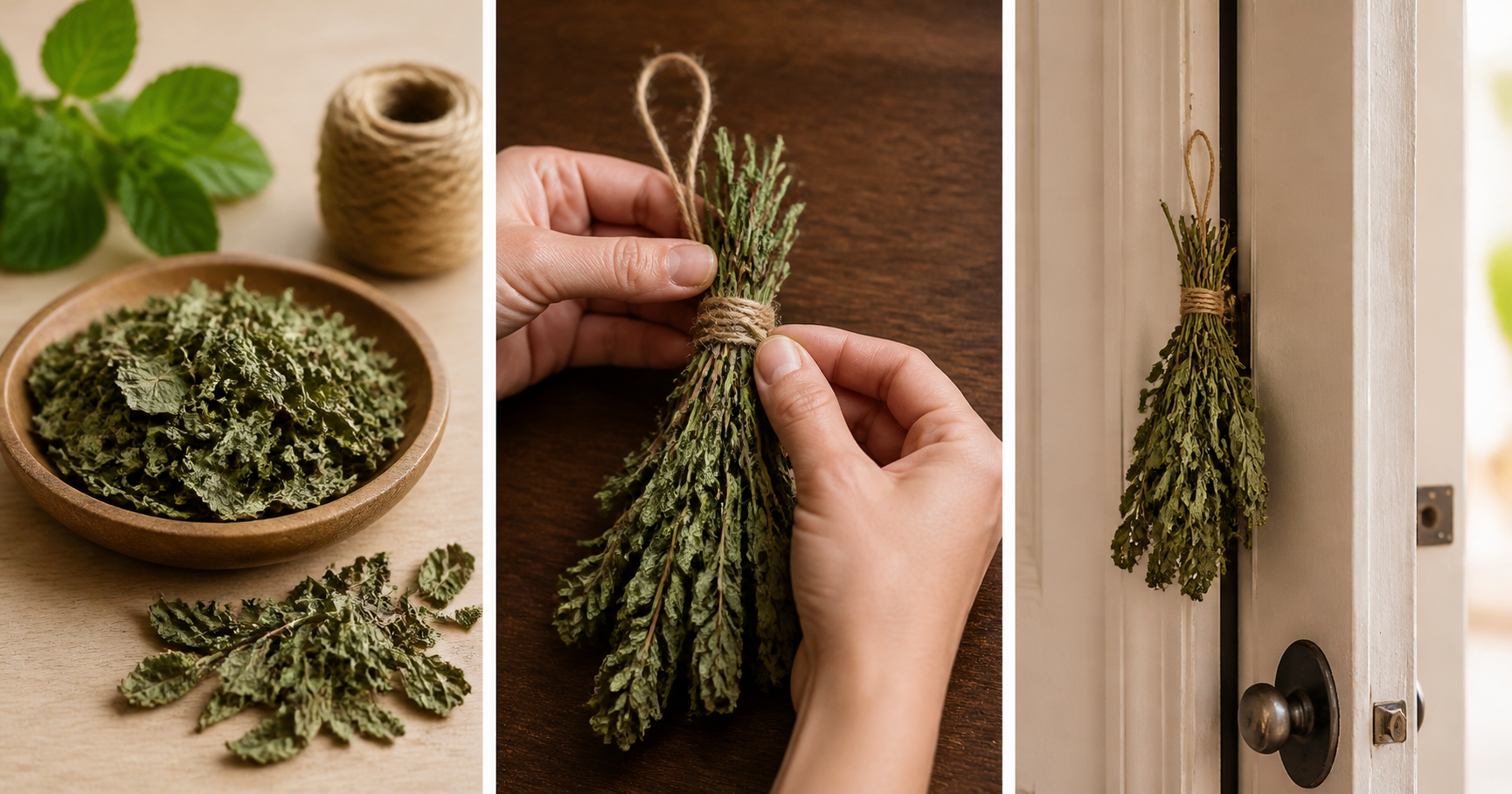
A small bundle of dried mint tucked behind a door is the sort of household custom that invites a question: Is it meant to freshen the house, keep trouble away, or bring good luck? Depending on the family and the place, the answer may be a little of each. The practice is simple, inexpensive, and easy to adapt—qualities that help old home traditions stick around.
There’s no reliable proof that mint behind a door can ward off bad luck or protect a home from pests. But the custom has practical appeal, too: dried mint offers a pleasant herbal scent, can be made into a tidy little decoration, and gives a familiar entryway a personal touch. Here’s what the tradition may mean, what the herb can realistically do, and how to try it without making a mess.
Why tuck mint near an entryway?
Mint has a long history as a useful, fragrant herb. In earlier households, people used aromatic plants to scent rooms and soften unpleasant odors. Fresh or dried herbs might be scattered on floors, hung in bunches, or kept near places where people gathered. Mint’s crisp smell made it a natural choice.
Putting a sprig behind a door may also have a symbolic meaning. Doorways are thresholds: the point where people and visitors enter, and where the outside world meets the home. In folk customs, herbs placed at entrances were sometimes treated as signs of welcome, good fortune, or protection. The details varied from household to household, so there isn’t one single, universally accepted explanation for the mint tradition.
That flexibility is part of its charm. One family may keep mint by the front door for a fresh scent; another may do it because a grandparent always did. A small ritual can be meaningful even when its history is hard to trace precisely.
What dried mint can—and can’t—do
Dried mint releases a light scent, especially when the leaves are gently crushed or warmed by air moving through the entryway. It may help a small area smell fresher, though it won’t cover a strong odor or perfume an entire house. Think of it as a subtle herbal accent rather than a room deodorizer.
Mint is also often described as a natural insect repellent. Some mint oils may affect certain insects in particular conditions, but a bundle of dried leaves is not a dependable way to keep ants, flies, or other pests out of a home. If insects are showing up, addressing food sources, gaps, or standing water is more useful than relying on an herb.
Three reasons people still recommend the custom
-
- It adds a gentle scent. A small bundle can make an entryway smell pleasantly herbal without a plug-in fragrance or aerosol spray.
-
- It makes use of a familiar ingredient. If you grow mint or have a jar of dried leaves in the pantry, it’s an easy way to use a little beyond cooking.
-
- It marks a welcoming space. A neat sprig can feel like a quiet reminder to make the home comfortable for the people who live there and the guests who arrive.
How to make a simple dried-mint bundle
You don’t need a special variety of mint or a complicated charm. Spearmint is a mild, familiar choice, while peppermint has a sharper scent. Use mint that is fully dry and pleasantly fragrant; leaves that smell musty or look moldy should be discarded.
-
- Gather a small handful. About 6 to 10 dried stems is enough for a modest bundle. If you have loose leaves rather than stems, put a tablespoon or two in a small breathable pouch.
-
- Tidy the stems. Remove any dusty, damaged, or discolored leaves. Keep the bundle compact so it won’t snag on the door or trim.
-
- Tie it securely. Use cotton string or a short piece of twine. Tie near the base of the leaves, leaving a loop if you want to hang it.
-
- Place it out of the way. Set the bundle on a shelf beside the door, or hang it from a hook on the wall or doorframe. If you want it truly behind the door, make sure it won’t be crushed when the door opens.
A small cloth pouch is a good option if loose leaves are likely to scatter. Choose a breathable fabric, such as cotton or linen, rather than an airtight plastic bag; the point is to let the scent drift out.
Where to put it and when to replace it
A bundle can sit near an entryway without being directly in the path of a swinging door. A shelf or hook beside the entrance is often more practical than wedging herbs behind the door itself. Keep it away from damp spots, since moisture can dull the fragrance and encourage mildew.
There’s no fixed schedule for replacing dried mint. When the scent has faded, gently rub a leaf between your fingers. If little aroma returns, swap in a fresh bundle or use the old leaves in compost. Some people refresh theirs with each change of season, while others wait until the herb has lost its fragrance.
If you gather mint from your garden, dry the stems thoroughly before bundling them. Tie small bunches loosely and hang them upside down in a dry, airy place out of direct sunlight. Once the leaves feel crisp, store extras in a labeled jar away from heat and moisture.
A tradition that can be practical or personal
Dried mint behind a door won’t change the luck of a household or solve a pest problem on its own. What it can do is offer a modest fragrance, reuse a common herb, and preserve a small custom that may connect one generation to another. For some people, that’s reason enough to keep the bundle; for others, it’s simply a pleasant detail by the front door.
Try it with a small, tidy sprig and see whether you enjoy the scent. The best old household tricks are often the ones that are easy to adapt—and that make home feel a little more like yours.