Every home gardener eventually encounters the frustration of battling persistent insect pests, hungry backyard wildlife, or sluggish seedling growth due to inadequate sunlight.
While synthetic chemical pesticides and expensive garden lighting setups offer commercial solutions, many gardeners favor simple, cost-effective, and non-toxic alternatives.
One of the most practical garden hacks recommended by master gardeners and organic growers involves an inexpensive item already sitting in your kitchen pantry: ordinary household aluminum foil.
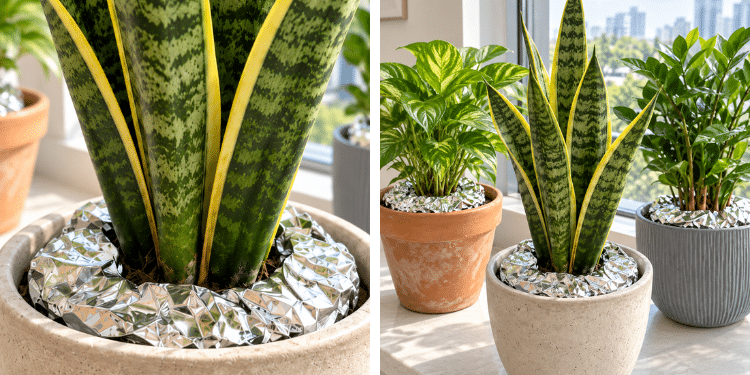
By strategic placement around plant bases, wrapped around container rims, or integrated into garden beds, aluminum foil serves as a multi-functional tool.
It acts as an organic pest deterrent, a passive light reflector, a temperature regulator, and a physical barrier – all without introducing synthetic chemicals to your soil.
1. How Aluminum Foil Acts as a Natural Pest Deterrent
The primary reason gardeners use aluminum foil is to repel garden pests without resorting to chemical sprays. The foil works through two distinct biological mechanisms: visual disruption and physical barrier protection.
Disorienting Flying Insects with Reflected Light
Pests such as aphids, whiteflies, thrips, and spider mites rely on natural sunlight and contrast cues to navigate, locate host plants, and land on the undersides of leaves.
When you place reflective aluminum foil around the base of a plant, it bounce sunlight upward onto the undersides of the foliage.
This upward reflection creates intense glare and disorients flying insects, disrupting their navigational senses and making the plant appear uninviting.
Studies in agricultural science show that reflective metallic mulches significantly decrease aphid colonization and reduce the transmission of insect-borne plant viruses.
Physical Defense Against Cutworms and Crawling Pests
Cutworms are nocturnal moth larvae that chew through the tender stems of young seedlings right at the soil line, felling entire plants overnight.
Wrapping a small collar of aluminum foil around the stem of a vulnerable seedling creates an impenetrable physical armor.
Soft-bodied larvae cannot chew through metal foil, keeping the plant stem safe during its most vulnerable growing stage.
2. Maximizing Light Exposure for Seedlings and Indoor Plants
Sunlight availability is crucial for healthy photosynthesis. Seedlings grown indoors on windowsills or in shaded garden spots often suffer from “legginess” – stretching tall, thin, and weak as they strain toward a single light source.
Aluminum foil acts as an effective, passive light reflector:
-
360-Degree Light Distribution: Placing a foil-lined cardboard shield or tray behind seedlings bounces natural window light back onto the shaded side of the plants. This ensures even growth, stockier stems, and stronger root development.
-
Lower Canopy Illumination: In mature, dense garden crops (like tomatoes, peppers, and squash), lower leaves are often shaded out by upper foliage. Foil laid on the soil surface redirects ambient sunlight into the lower canopy, boosting overall photosynthetic efficiency.
3. Deterring Birds and Small Backyard Mammals
Insects aren’t the only garden nuisance. Birds frequently peck at ripe berries, while squirrels, mice, and rabbits dig up newly planted bulbs or gnaw on young bark.
-
Visual Flashing & Movement: Strips of aluminum foil suspended from garden stakes flutter in the breeze and reflect sudden flashes of light. This unpredictable movement frightens birds and deters them from landing near fruit bushes or seedbeds.
-
Tactile and Auditory Discomfort: Mammals like squirrels and cats dislike the tactile sensation and crinkling sound of stepping on metallic foil. Placing loose sheets of foil around the perimeter of potted plants or seed beds discourages curious animals from digging in the soil.
Garden Foil Application Matrix
| Purpose / Goal | Method | Targeted Pests / Issues | Recommended Duration |
| Aphid & Thrip Control | Reflective soil mulch around base | Aphids, whiteflies, thrips | Spring to mid-summer |
| Cutworm Defense | 2inch foil collar wrapped around stem | Cutworms, vine borers, snails | Until stem hardens (3–4 weeks) |
| Seedling Light Boost | Foil-lined reflector board behind tray | Leggy growth, weak stems | Entire indoor seed-starting period |
| Wildlife Deterrent | Suspended foil strips or soil cover | Birds, squirrels, rodents, outdoor cats | Fruiting / seed germination phases |
Step-by-Step: 3 Ways to Use Foil in Your Garden
Depending on your specific garden challenge, follow these simple preparation steps:
Best Practices and Tips for Success
-
Avoid Overheating Roots in Extreme Heat: While foil mulch is beneficial during mild spring and early summer weather, extreme mid-summer heat combined with direct metal reflection can overheat plant roots. Remove foil mulch if ambient temperatures consistently exceed 90F (32C).
-
Reuse and Recycle: Heavy-duty aluminum foil can be wiped down, folded, and stored for multiple growing seasons, making it a reusable and economical addition to your gardening kit.
Using aluminum foil around your plants is a simple, effective technique that helps protect seedlings, deters unwanted pests, and maximizes natural light for healthier garden yields.