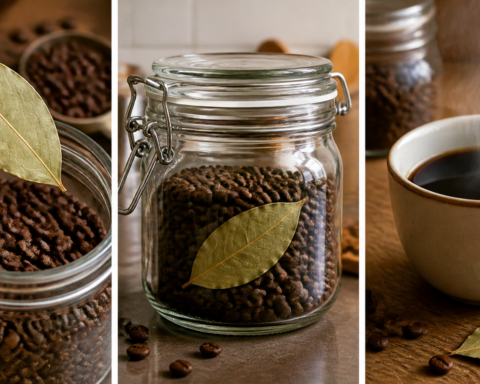
Bay leaves are probably sitting somewhere in your kitchen right now, waiting for the next pot of soup, stew, or sauce.
But as fall arrives, some people use these aromatic leaves for something completely different: placing them around the home.
At first, it might sound like another strange household trick. Why would anyone put bay leaves on windowsills, near doors, inside cabinets, or around the pantry?
The answer has a lot to do with their strong natural aroma.
Bay leaves (Laurus nobilis) contain aromatic plant compounds and essential oils, including compounds such as 1,8-cineole (eucalyptol) and other volatile substances responsible for their distinctive fragrance.
These compounds have been studied for various biological properties, including their effects on certain insects.
1. Their Strong Aroma May Discourage Some Insects
This is probably the most popular reason people place bay leaves around their homes.
Bay leaves contain aromatic oils that produce their characteristic spicy, herbal fragrance. While that smell is pleasant to many people, certain insects may respond differently to concentrated plant volatiles.
Research into essential oils and plant extracts – including those from bay – has found insect-repellent or insecticidal activity under experimental conditions.
However, there is an important distinction:
A dried bay leaf sitting on a windowsill is much less concentrated than bay essential oil used in a laboratory experiment.
So think of bay leaves as a possible mild deterrent rather than a guaranteed insect treatment.
Try placing dried leaves:
- Near windows
- Beside exterior doors
- In pantry corners
- Around cupboards
- Near small cracks where insects appear
Replace them once the leaves lose most of their fragrance.
Note:
If you have a significant pest infestation, bay leaves alone aren’t enough. Identify the pest, remove its food source, seal entry points, and use appropriate pest-control measures when necessary.
2. Bay Leaves Can Be Useful Around the Pantry
Fall is often when we begin stocking the pantry with more dry goods for cooler-weather cooking.
Flour, rice, pasta, oats, cereal, dried beans, and other foods can occasionally attract pantry pests.
This is one reason the bay-leaf trick has been passed around for generations.
People sometimes place dried bay leaves on pantry shelves or near sealed containers because the leaves’ aroma may make the area less attractive to some insects.
But there’s one important rule:
Don’t depend on bay leaves instead of proper food storage.
Dry foods should still be kept in tightly sealed containers.
If you discover pantry moths, beetles, or other insects inside food, inspect surrounding packages carefully and discard contaminated products as appropriate.
Then vacuum shelves, clean cracks and corners, and move vulnerable foods into sealed containers.
Bay leaves can be an additional measure—not the entire solution.
3. They Add a Subtle Natural Fragrance
Bay leaves don’t smell like artificial air freshener.
Their aroma is much more subtle: herbal, woody, slightly spicy, and somewhat reminiscent of eucalyptus.
That fragrance fits particularly well with fall.
You can place several leaves in small decorative bowls or combine them with other dried autumn ingredients.
Try combining bay leaves with:
- Cinnamon sticks
- Dried orange peel
- Cloves
- Rosemary
- Star anise
Place the mixture somewhere dry where air can circulate around it.
The fragrance won’t fill an entire house like a commercial spray, but that’s part of the appeal.
It’s a gentle background scent rather than an overpowering perfume.
4. Put a Few Near Windows and Doors
As temperatures fall, you’re not the only one looking for somewhere warm.
Various insects begin seeking sheltered locations as outdoor conditions change.
Doors, window frames, vents, and small cracks can become common entry points.
Placing bay leaves nearby is an easy experiment, but physical exclusion is much more important.
Take a few minutes to inspect the area while you’re placing the leaves.
Look for:
- Torn window screens
- Gaps around frames
- Cracks around doors
- Damaged weather stripping
- Openings around pipes
- Gaps beneath exterior doors
Seal appropriate openings and repair screens.
Then use your bay leaves as an additional aromatic deterrent.
Fall tip:
The best way to keep unwanted insects outside is usually to prevent them from entering in the first place.
A leaf may discourage something. A sealed crack physically stops it.
5. Bay Leaves Are Handy Inside Cupboards and Drawers
Kitchen cupboards can develop stale food odors, particularly when they’re filled with spices, dry goods, onions, garlic, and other strongly scented ingredients.
A few dried bay leaves can contribute a light herbal fragrance.
Place them in a breathable cloth sachet or small open dish rather than scattering crushed leaves everywhere.
This makes replacement easier.
Good places to try them:
- Spice cabinets
- Pantry shelves
- Kitchen drawers
- Storage cupboards
Check the leaves periodically.
If they become damp, moldy, or dirty, throw them away.
Dry leaves are the goal.
6. They’re an Easy Addition to Your Fall Cleaning Routine
There is something useful about seasonal household routines.
Spring cleaning gets most of the attention, but fall is another excellent time to inspect the home.
We’re closing windows, spending more time indoors, bringing blankets out of storage, and stocking cupboards for cooler weather.
Placing bay leaves around the home can become a reminder to check areas that are often forgotten.
While you’re putting them around the pantry, clean the pantry.
While you’re putting them beside a window, check the screen.
While you’re placing them near a door, inspect the weather stripping.
A simple fall checklist:
- Vacuum pantry corners.
- Discard expired foods.
- Transfer grains into airtight containers.
- Clean underneath appliances.
- Check windows and doors for gaps.
- Remove crumbs from cabinets.
- Inspect stored blankets and clothing.
- Replace old dried bay leaves.
The bay leaves themselves are only one small part of the routine.
The cleaning you do at the same time may be far more important.
7. You Can Make Simple Bay Leaf Sachets
If you don’t like the appearance of individual leaves scattered around the house, make small sachets instead.
Place several dried bay leaves inside a breathable cotton or muslin bag.
You can leave them whole or gently crush them to release more aroma.
Add other dried ingredients if desired.
Simple fall sachet:
You’ll need:
- 4–6 dried bay leaves
- 1 small cinnamon stick
- A few whole cloves
- Dried orange peel
- A breathable fabric bag
Gently break the bay leaves, combine everything, and place the mixture inside the bag.
Use the sachet in a dry cupboard, entryway, or another suitable area.
Note:
The fragrance will gradually weaken.
When you can barely smell the herbs anymore, replace the contents.
8. Bay Leaves Contain Interesting Aromatic Compounds
The reason this household trick isn’t completely random comes down to plant chemistry.
Bay laurel produces essential oils containing numerous volatile compounds. The exact composition varies according to factors such as growing conditions and processing.
One of the commonly identified compounds is 1,8-cineole, also called eucalyptol.
Other aromatic compounds contribute to the distinctive smell we recognize when crushing a bay leaf.
Plants don’t produce aromatic chemicals for our kitchens, of course. These compounds can play roles in plant defense and interactions with insects and microorganisms.
That helps explain why scientists are interested in essential oils as potential sources of botanical insect-management compounds.
But again, concentration matters.
Essential oil ≠ dried leaf.
Research demonstrating strong effects from concentrated extracts shouldn’t automatically be interpreted to mean two dried leaves will have the same effect in your pantry.
9. What About Cockroaches?
One of the most common online claims is that bay leaves will drive cockroaches out of a house.
This claim should be treated cautiously.
Aromatic plant compounds may influence insect behavior, but simply scattering dried bay leaves around an established cockroach infestation is unlikely to solve the underlying problem.
Cockroaches can survive in remarkably difficult conditions if they have access to food, water, and shelter.
If cockroaches are present:
- Store food securely.
- Clean crumbs and grease.
- Fix leaking water sources.
- Empty garbage regularly.
- Seal cracks and hiding places.
- Use proven pest-management methods.
Bay leaves can be tried as a supplementary deterrent, but don’t allow them to delay effective control.
10. What About Ants?
The same principle applies to ants.
Strong aromatic substances may disrupt or discourage some insects, but ants are often entering the house because they have discovered food or water.
If you see an ant trail, first determine where they’re going.
Clean the trail and remove the food source.
Seal the entry point when possible.
Then you can place crushed bay leaves around the area as an additional measure.
Remember:
Removing what attracts pests is usually more effective than trying to overwhelm them with smells.
11. Bay Leaves Are Better Than Some Popular DIY Pest Tricks
One advantage of trying dried bay leaves is that you’re not pouring harsh homemade mixtures all over the house.
Some online pest-control tricks recommend spreading salt, borax, concentrated essential oils, or other substances indiscriminately around floors and food-storage areas.
Those approaches may introduce their own safety problems, particularly around children and pets.
A few intact dried bay leaves placed thoughtfully are much simpler.
Still, keep them away from anyone likely to chew or swallow them.
Should You Burn Bay Leaves?
Burning bay leaves is another popular internet trend, often accompanied by exaggerated claims about “cleansing toxins,” improving health, or instantly reducing anxiety.
Those claims shouldn’t be taken at face value.
Burning any plant material creates smoke and airborne particles.
That can irritate the respiratory system, particularly for people with asthma or other breathing sensitivities.
You don’t need to burn bay leaves to enjoy their fragrance.
A safer option:
Gently crush dried leaves and place them in a bowl or sachet.
You get the herbal aroma without filling your home with smoke.
Can You Simmer Bay Leaves Instead?
If you want a stronger seasonal fragrance, simmering can be a pleasant alternative.
Add several bay leaves to a saucepan of water along with ingredients such as cinnamon sticks, orange peel, or cloves.
Heat gently and allow the steam to carry the aroma.
Important:
Never leave a simmering pot unattended.
Check the water frequently so the pot doesn’t boil dry.
This is primarily a fragrance technique—not a medical treatment or a reliable method of pest control.
Where Should You Put Bay Leaves?
If you want to try this fall household trick, concentrate on areas where their aroma makes sense.
Good locations include:
Pantry shelves
Place leaves near—but not mixed loosely into—stored dry goods.
Windowsills
Especially around windows where you’ve previously noticed insects.
Near doors
Use them alongside proper weather stripping and sealing.
Cupboards
A sachet keeps leaves neat and contained.
Under the kitchen sink
Only if the area stays dry.
Near storage areas
Again, use a small breathable sachet rather than scattering leaves everywhere.
How Often Should You Replace Them?
Dried bay leaves don’t maintain their strongest aroma forever.
Crush an old leaf between your fingers.
If there is almost no smell left, it’s time to replace it.
You might refresh them every few weeks or whenever the fragrance becomes noticeably weaker.
Humidity can also damage dried leaves.
Discard any leaves that become:
- Damp
- Moldy
- Dirty
- Unpleasant smelling
Freshly dried, aromatic leaves are the better choice.
Fresh or Dried Bay Leaves?
Both contain aromatic compounds, but dried culinary bay leaves are more practical around the home.
They are:
- Easy to store
- Less likely to wilt
- Less messy
- Inexpensive
- Widely available
Gently crushing or tearing a dried leaf can release more fragrance.
You don’t need to grind it into powder.
Powder is harder to clean up and easier to accidentally spread onto food or floors.
So, should you place bay leaves around your home this fall? They’re certainly worth experimenting with.
Their naturally strong fragrance comes from aromatic plant compounds, and concentrated bay extracts and essential oils have shown interesting effects against certain insects in research settings.