Eggplant (Solanum melongena) is often treated as the underdog of the produce aisle.
Botanically classified as a berry, this versatile nightshade is staple fare across Mediterranean, Middle Eastern, and Asian culinary traditions – from Italian parmigiana and French ratatouille to Middle Eastern baba ganoush and Indian baingan bharta.
Yet beyond its silky texture and uncanny ability to absorb complex herbs and spices, eggplant packs a dense concentration of rare phytonutrients, dietary fiber, and organic bioflavonoids.
Incorporating this deep purple botanical into your regular meal rotation produces measurable shifts in metabolic health, vascular function, and cellular defense.
Here is an in-depth breakdown of the 7 surprising physiological changes that may happen to your body when you eat eggplant more often, along with the biochemical mechanisms driving them.
The Botanical Profile: What Makes Eggplant Unique?
Unlike leaf crops or sweet root vegetables, eggplant features a distinctive cellular structure. Its interior flesh is soft, porous, and high in water content (roughly 92%), while its skin contains one of the highest concentrations of anthocyanins found in nature.
-
Nasunin (The Skin Shield): The defining pigment giving eggplant its glossy dark-violet hue is nasunin, a powerful anthocyanin derivative. Nasunin acts as a potent free-radical scavenger, with a particular affinity for protecting lipid membranes in human brain cells.
-
Chlorogenic Acid (The Metabolic Acid): Eggplant flesh is rich in chlorogenic acid, a phenolic compound renowned for its anti-inflammatory, antimicrobial, and glucose-regulating properties.
-
Low Energy Density, High Volume: Containing just 20 to 25 calories per cup (raw, cubed), eggplant offers immense volumetric satiety without loading the body with simple sugars or heavy carbohydrates.
1. You May Shield Your Brain Cells from Oxidative Stress
One of the most profound, non-obvious benefits of frequent eggplant consumption takes place inside the brain.
The brain is extraordinarily susceptible to oxidative damage because it consumes nearly 20% of the body’s total oxygen while consisting largely of fatty acids susceptible to lipid peroxidation.
-
Lipid Membrane Protection: Nasunin, the primary anthocyanin in eggplant peel, acts as a specialized protector of cell membranes. It prevents free radicals from attacking the phospholipid layer of brain cells (neurons), which helps preserve cellular integrity and communication.
-
Iron Chelation: While iron is essential for oxygen transport, excess free iron can react with hydrogen peroxide to create hyper-destructive hydroxyl radicals. Nasunin acts as an iron chelator, binding to unbound excess iron in tissues and keeping oxidative reactions under control.
-
Cognitive Preservation: By mitigating neuro-inflammation and supporting microvascular circulation within cerebral tissue, regular intake of purple anthocyanins correlates with improved memory retention and mental clarity as you age.
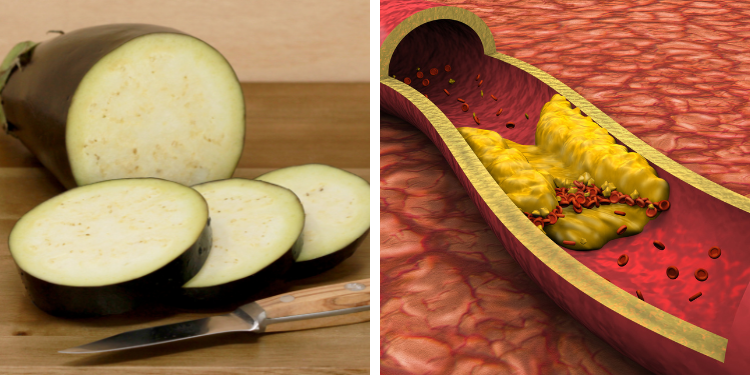
2. Your LDL Cholesterol and Arterial Health May Improve
If you struggle with elevated blood lipids, eating eggplant on a routine basis can serve as a natural dietary adjunct to cardiovascular wellness.
-
Bile Acid Binding: Eggplant flesh is rich in soluble dietary fiber, particularly pectin. During digestion, pectin forms a gel-like substance in the intestinal tract that binds to bile acids (which are manufactured from cholesterol). As this gel is excreted, the liver is forced to draw circulating LDL (“bad”) cholesterol out of the bloodstream to synthesize fresh bile acids.
-
Endothelial Function: Chlorogenic acid and flavonoids in eggplant encourage the vascular endothelium (the inner lining of blood vessels) to produce nitric oxide. Nitric oxide signals arterial smooth muscle to relax, promoting healthier arterial elasticity and maintaining balanced blood pressure levels.
3. Your Blood Sugar Levels May Become Significantly More Stable
Post-meal blood sugar spikes are a primary driver of insulin resistance, systemic inflammation, and metabolic fatigue. Eggplant works through multiple mechanisms to smooth out glycemic response curves.
-
Enzyme Inhibition: Polyphenols in eggplant have been shown to inhibit key digestive enzymes like alpha glucosidase and alpha amylase. By slowing these enzymes down, the rate at which complex carbohydrates are broken down into simple glucose in the gut is significantly reduced.
-
Delayed Gastric Emptying: High concentrations of soluble fiber slow down gastric emptying. Glucose enters the bloodstream gradually, preventing sharp blood sugar surges and subsequent insulin crashes.
-
Cellular Insulin Sensitivity: Chlorogenic acid helps optimize glucose uptake by skeletal muscle cells, allowing insulin to work efficiently without requiring excessive pancreatic output.
4. You May Experience Natural, Effortless Weight Management
For anyone seeking to manage weight without feeling deprived, eggplant is a secret weapon in volume eating (volumetrics).
-
Low Energy Density: With around 20 to 25 calories per cup, you can eat substantial volumes of cooked eggplant without overshooting daily caloric goals.
-
Satiety Signaling: The combination of water and soluble fiber expands in the stomach, stretching the gastric wall and triggering the release of satiety hormones like peptide YY and GLP-1 to signal fullness to the brain.
-
Dietary Replacement: When used as a meat-like, savory base in stir-fries, stews, or baked dishes, eggplant naturally reduces the total calorie density of meals while maintaining a satisfying, rich texture.
Eggplant Nutritional Impact Breakdown
| Targeted Physiological Domain | Primary Active Bioactive Compound | Biological Mechanism | Real-World Health Outcome |
| Cognitive Health | Nasunin (Anthocyanin) | Iron chelation; lipid membrane defense | Reduces neuronal oxidative stress |
| Cardiovascular Health | Pectin & Chlorogenic Acid | Bile acid binding; endothelial nitric oxide boost | Lowers serum LDL; supports blood pressure |
| Glycemic Control | Polyphenols & Soluble Fiber | Inhibits $\alpha\text{-glucosidase}$; delays gastric emptying | Prevents post-prandial glucose spikes |
| Gut Microbiome | Prebiotic Fiber & Phenolics | Short-Chain Fatty Acid (SCFA) synthesis | Enhances Bifidobacteria diversity; strengthens gut barrier |
| Cellular Defense | Solasodine Rhamnosyl Glycosides (SRGs) | Suppresses inflammatory pathways | Limits chronic cell degradation |
5. Your Gut Microbiome Diversity May Flourish
Your gut microbiome thrives on diverse plant fibers and complex polyphenols, both of which eggplant supplies in abundance.
-
Prebiotic Fuel Source: The structural carbohydrates in eggplant act as fuel for beneficial gut bacteria such as Bifidobacteria and Lactobacillus. As these microbes ferment eggplant fibers, they produce short-chain fatty acids (SCFAs) like acetate, propionate, and butyrate.
-
Intestinal Barrier Integrity: Butyrate serves as the primary energy source for colonocytes (cells lining the colon), helping maintain a tight mucosal barrier that keeps endotoxins out of systemic circulation.
-
Polyphenol Metabolism: Gut microbes break down complex eggplant polyphenols into active, bioavailable metabolites that exert anti-inflammatory effects throughout the body.
6. Your Joints May Experience Reduced Inflammatory Stress
Chronic low-grade inflammation is a major contributor to joint stiffness, muscle soreness, and metabolic fatigue.
By neutralizing systemic reactive oxygen species (ROS), eggplant polyphenols protect joint cartilage and synovial fluid from oxidative breakdown.
Clarifying the Nightshade Myth: A common concern is that nightshades like eggplant cause joint pain due to trace amounts of solanine. However, clinical evidence shows that unless an individual has a specific, diagnosed sensitivity to solanine or oxalates, cooked nightshades generally lower systemic inflammation markers due to their high antioxidant density.
7. Cooking Methods Dictate Your Actual Health Benefits
The seventh surprising outcome of eating eggplant more often depends entirely on how you prepare it. Because eggplant’s interior tissue functions like a sponge filled with micro-air pockets, it absorbs liquid – and cooking oils – very rapidly.
Chef & Nutritionist Tip: The Microwave Pre-Cook Trick
If you want to skip salting entirely, microwave cubed eggplant on high for 3 to 4 minutes before roasting or sauteing. This collapses the spongy cellular structure in minutes using steam, allowing you to cook delicious, tender eggplant using up to 70% less oil!
From protecting brain cell membranes with nasunin to binding cholesterol in the gut and stabilizing blood sugar, eating eggplant regularly provides far-reaching, whole-body rewards.
By keeping the skin on and using smart, low-oil cooking techniques, you can turn this classic purple vegetable into a daily cornerstone of vibrant metabolic health.