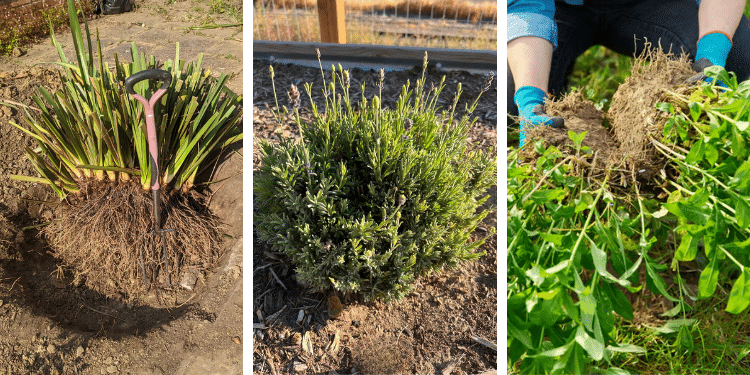
For many home gardeners, dividing perennials is an annual spring or autumn ritual. Splitting overgrown clumps of daylilies, hostas, or black-eyed Susans is a great way to revitalize tired plants and multiply your flower count for free.
However, applying this “slice-and-separate” approach across your entire landscape can lead to disappointment.
While fibrous-rooted perennials thrive on periodic division, a substantial group of long-lived perennials deeply resents having their roots disturbed.
Slicing through their underground structures can cause years of stunted growth, sulking foliage, loss of blooms, or outright plant death.
Here is a deep dive into the botanical science of why certain plants hate division, along with 11 popular perennials you should leave undisturbed – and how to propagate them instead.
The Botanical Science: Why Some Plants Hate Division
Whether a perennial tolerates division comes down to its root architecture and growth strategy:
-
Taproots: Plants with thick, central taproots (similar to a giant carrot) anchor deep into the subsoil to access moisture during droughts. Slicing a taproot longitudinally destroys its vascular system, introducing rot pathogens directly into the core of the plant.
-
Woody Crowns & Sub-Shrubs: Some perennials develop hard, semi-woody bases as they mature. Slicing through a woody crown leaves jagged wounds that do not heal quickly, inviting fungal decay.
-
Fleshy Tuberous Roots: Plants with thick, brittle storage roots often lack dormant buds along the length of their roots. Unless a division includes a precise piece of the central crown with an active “eye,” the severed root cannot push out new shoots.
11 Perennials You Shouldn’t Divide
1. False Indigo (Baptisia australis)
-
Root System: Deep, woody taproot system extending up to 12 feet into the subsoil.
-
Why You Shouldn’t Divide: Baptisia grows into a shrub-like mound that can live for decades. Because its deep taproot acts as a subterranean anchor, digging up or slicing into a mature clump inflicts fatal root trauma.
-
Alternative Propagation: Propagate via soft-wood stem cuttings in early summer using root hormone, or sow fresh seeds in autumn (scarify seeds first to break the hard outer coat).
2. Peonies (Paeonia lactiflora)
-
Root System: Thick, brittle, tuberous roots clustered beneath a central crown.
-
Why You Shouldn’t Divide: Peonies are legendary for their longevity and dislike being moved. While technically possible to split in late autumn, dividing a healthy peony sets it back by 2 to 3 years, during which it will refuse to bloom. Mature clumps can thrive in the same spot for a century without division.
-
Alternative Propagation: If you must move or multiply a peony due to construction or shading, lift the entire root mass carefully in October, ensuring each severed section retains at least 3 to 5 pink “eyes” (growth buds) along the crown.
3. Butterfly Weed (Asclepias tuberosa)
-
Root System: Long, vertical taproot with minimal lateral branching.
-
Why You Shouldn’t Divide: A favorite for monarch butterfly gardens, this native milkweed species puts almost all its energy into a thick, deep taproot to survive dry, poor soils. Splitting the crown vertically severs the taproot, which invariably kills both halves.
-
Alternative Propagation: Collect the distinctive seed pods in autumn just as they begin to split open. Sow seeds outdoors in late autumn, as they require a period of cold stratification ($\text{30 to 60 days below } 40^\circ\text{F}$) to germinate in spring.
4. Oriental Poppy (Papaver orientale)
-
Root System: Long, fleshy, carrot-like taproot that goes dormant in midsummer.
-
Why You Shouldn’t Divide: After blooming in late spring, Oriental poppies die back completely to the ground in summer, leaving behind a deep, sensitive taproot. Digging up the plant during or right after blooming destroys this delicate root reserve.
-
Alternative Propagation: Take root cuttings in late summer during dormancy. Carefully excavate around the main root, cut a 3-inch section of pencil-thick side root, insert it vertically into potting soil, and keep it moist until new leaves emerge in autumn.
5. Bleeding Heart (Dicentra spectabilis)
-
Root System: Extremely brittle, fleshy root mass that snaps easily under pressure.
-
Why You Shouldn’t Divide: Old-fashioned Bleeding Heart forms a dense mass of fragile, glassy roots. Inserting a spade or fork into the crown causes the roots to shatter, leaving you with useless fragments that easily rot in moist soil.
-
Alternative Propagation: Take stem cuttings in late spring after flowering, or harvest seeds from the hanging pods before they shatter.
6. Lavender (Lavandula angustifolia)
-
Root System: Woody, semi-shrub crown with a tough, fibrous root core.
-
Why You Shouldn’t Divide: Lavender is a woody sub-shrub, not a herbaceous perennial. It grows from a single main stem at ground level. Slicing down the center of a lavender plant splits the woody trunk, creating an unhealable open wound that leads to quick desiccation and death.
-
Alternative Propagation: Propagate via 3- to 4-inch semi-ripe softwood cuttings taken in midsummer. Strip the lower leaves, dip in rooting hormone, and insert into a 50/50 mix of coarse sand and perlite.
7. Russian Sage (Salvia yangii / Perovskia atriplicifolia)
-
Root System: Woody, spreading root structure with a hard, fibrous crown base.
-
Why You Shouldn’t Divide: Like lavender, Russian sage develops a stiff, woody base over time. Attempting to split the main crown usually results in splintered wood that fails to produce new growth nodes.
-
Alternative Propagation: Take softwood cuttings in late spring, or carefully sever natural underground runners (suckers) that pop up several inches away from the main mother plant, leaving the central crown intact.
8. Baby’s Breath (Gypsophila paniculata)
-
Root System: Extensive, deep taproot reaching several feet into the ground.
-
Why You Shouldn’t Divide: The airy cloud of white blossoms produced by Gypsophila is anchored by a massive, deep taproot designed to forage for water in limestone-rich soils. Attempting to dig and divide the plant snaps this main lifeline.
-
Alternative Propagation: Propagate easily from seed sown directly in early spring, or take softwood stem cuttings in early summer.
9. Sea Holly (Eryngium) & Globe Thistle (Echinops)
-
Root System: Long, taproot-driven systems adapted to dry, gravelly conditions.
-
Why You Shouldn’t Divide: Both Eryngium and Echinops rely on deep taproots to produce their metallic-blue, architectural blooms. Dividing the crown destroys the vascular taproot and causes severe leaf wilt from which the plant rarely recovers.
-
Alternative Propagation: Harvest seeds in autumn or take 2-inch root cuttings during winter dormancy.
10. Gas Plant (Dictamnus albus)
-
Root System: Woody, slow-growing taproot system that resents disturbance.
-
Why You Shouldn’t Divide: True to its reputation as one of the slowest-growing perennials, Dictamnus can take 3 to 4 years just to produce its first flowers. Once established, it can thrive untouched for 50 years. Disturbing its roots causes it to sulk and suspend blooming for years.
-
Alternative Propagation: Collect seeds in late summer and sow them immediately outdoors; they require fresh sowing and natural winter freezing to germinate the following spring.
11. Hellebores / Lenten Rose (Helleborus × hybridus)
-
Root System: Deep, tough, black fibrous root mass that penetrates deep into clay soils.
-
Why You Shouldn’t Divide: While mature hellebores can survive emergency division, they severely resent it. Splitting an established clump often halts flowering for 2 to 3 seasons, and the divided pieces take years to regain their original vigor.
-
Alternative Propagation: Allow the plant to self-seed naturally around its base. Gently lift and pot up the small, volunteer self-sown seedlings in spring rather than disturbing the parent plant.
Root Architecture & Propagation Cheat Sheet
| Perennial | Root Type | Primary Reason NOT to Divide | Best Alternative Method |
| False Indigo (Baptisia) | Deep Taproot | Fatal root trauma | Softwood cuttings / Seed |
| Peony (Paeonia) | Tuberous Crown | Causes 2–3 year bloom strike | Leave untouched; autumnal bare-root move |
| Butterfly Weed (Asclepias) | Single Taproot | Severing taproot kills plant | Cold-stratified seed |
| Oriental Poppy (Papaver) | Fleshy Taproot | Summer dormancy root rot | Late-summer root cuttings |
| Bleeding Heart (Dicentra) | Brittle / Fragile | Roots shatter and rot easily | Post-bloom stem cuttings |
| Lavender (Lavandula) | Woody Sub-Shrub | Single woody trunk cannot split | Midsummer semi-ripe cuttings |
| Russian Sage (Salvia yangii) | Woody Base | Splintered stems fail to shoot | Sever outlying suckers |
| Baby’s Breath (Gypsophila) | Deep Taproot | Deep root anchor fails to regenerate | Early spring seed |
| Sea Holly (Eryngium) | Taproot | Severe desiccation / crown rot | Winter root cuttings / Seed |
| Gas Plant (Dictamnus) | Slow / Woody | Suspends blooming for years | Fresh autumn seed sowing |
| Hellebore (Helleborus) | Deep Fibrous Mass | Causes long recovery delay | Transplant self-sown seedlings |
How to Handle Overcrowded “Do-Not-Divide” Perennials
If one of these non-divisible perennials is outgrowing its space, taking over a garden path, or shading out neighbors, slicing it in half shouldn’t be your first move.
Instead, try these steps:
Knowing when to step back with the garden spade is one of the hallmarks of an experienced gardener.
By recognizing which perennials rely on deep taproots, woody crowns, or fragile storage roots, you can avoid costly gardening mistakes and enjoy decades of healthy, low-maintenance blooms.