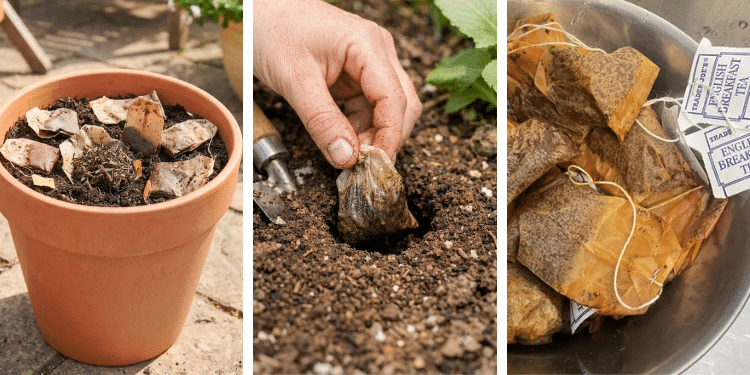
Every morning, millions of tea drinkers worldwide toss spent tea bags and loose leaves directly into the trash or green waste bins.
What most people consider simple kitchen scraps is actually a concentrated, nutrient-dense resource waiting to be unlocked.
Used tea leaves contain essential macronutrients – primarily nitrogen, alongside trace amounts of phosphorus and potassium.
They are also packed with organic matter, tannic acids, and natural polyphenols that can drastically improve soil structure, stimulate beneficial microbial life, and protect your crops.
Repurposing your spent tea leaves turns daily kitchen waste into a free, highly effective soil booster. Here are eight practical ways used tea leaves can transform your garden.
1. High-Performance Nitrogen Accelerator for Compost
In composting science, maintaining a balanced Carbon-to-Nitrogen (C:N) ratio – ideally around 30:1 – is critical for rapid decomposition without foul odors.
Dry garden leaves, straw, wood chips, and shredded cardboard supply carbon (“browns”). Kitchen scraps and green waste provide nitrogen (“greens”).
Spent tea leaves have a remarkably tight C:N ratio of roughly 20:1, placing them firmly in the high-performance nitrogen “green” category.
When you incorporate damp tea leaves into your compost heap, you provide an immediate fuel source for thermophilic (heat-loving) bacteria.
These microbes rapidly multiply, raising the internal temperature of the pile and breaking down tough, woody carbon materials much faster than passive composting allows.
2. Gentle Acidifier for Acid-Loving Crops
Tea leaves naturally contain tannic acid and astringent polyphenols. While the hot water extraction during brewing removes a portion of this acidity, used leaves retain enough residual tannic acid to subtly lower soil pH over time.
For plants that thrive in acidic soil environments, this slight acidity helps break the chemical bonds that lock up micronutrients like iron and aluminum in the soil matrix.
This prevents interveinal chlorosis—a common deficiency where plant leaves turn pale yellow while the veins remain dark green.
-
Acid-loving plants that benefit most: Hydrangeas (helps produce deep blue blooms), blueberries, azaleas, rhododendrons, camellias, gardenias, and ferns.
3. Soil Conditioning and Moisture Retention
Whether you are dealing with fast-draining sandy soil or heavy, dense clay, used tea leaves act as an outstanding biological soil conditioner:
-
In Sandy Soils: Sandy particles have large gaps that allow water and soluble fertilizers to wash straight through. The porous, cellular structure of decomposed tea leaves acts like microscopic sponges, holding up to 200% of its dry weight in moisture and keeping nutrients anchored near plant roots.
-
In Heavy Clay Soils: Clay particles pack tightly together, smothering roots and causing surface runoff. The fibrous, organic texture of loose tea leaves helps bind fine clay into crumbly aggregates, opening up micro-channels for oxygen, earthworms, and water infiltration.
4. Earthworm Magnet and Microbe Stimulant
Healthy soil is a living ecosystem powered by earthworms, beneficial bacteria, and mycorrhizal fungi. Earthworms are extraordinarily fond of decomposing tea leaves. As they consume the organic leaf matter, they convert it into worm castings – one of the most bioavailable, rich natural fertilizers on Earth.
Simultaneously, the trace minerals and complex carbohydrates in spent tea leaves serve as a steady food source for beneficial soil bacteria.
These microbes break down raw minerals into forms that plant roots can instantly absorb, creating a self-sustaining underground food web.
5. Natural Organic Top-Dressing and Weed Shield
Spreading dried, loose tea leaves across the surface of potted plants, seedling flats, or small vegetable beds creates a lightweight, protective top-dressing or mini-mulch.
This organic layer serves multiple protective functions:
-
It shields the delicate soil surface from harsh direct sunlight, reducing evaporation.
-
It buffers the impact of heavy watering, preventing soil compaction and crusting.
-
It suppresses weed seeds by blocking light from reaching the soil surface.
6. Nutrient-Rich “Second-Steep” Liquid Fertilizer
Instead of dumping leftover brewed tea or discarding spent leaves after a single cup, let them steep in a bucket of unchlorinated water for 24 to 48 hours to create a mild, amber-colored liquid fertilizer.
This second-steep liquid drench extracts lingering water-soluble trace minerals – including potassium, zinc, and manganese – without concentrated salts.
It is gentle enough to use on sensitive houseplants, delicate fern collections, or young seedlings without any risk of chemical fertilizer burn.
7. Pest Deterrent and Fungal Suppressant
The natural tannins and antioxidants remaining in tea leaves carry astringent, anti-fungal properties.
When sprinkled dried around the base of vulnerable plants, the coarse, bitter-tasting texture creates a physical barrier that discourages soft-bodied pests like slugs and snails.
Furthermore, working tea leaves into topsoil helps suppress harmful soil-borne fungal spores (such as Pythium and Rhizoctonia) that cause damping-off in young vegetable starters.
8. Root-Zone Moisture Reservoir for Containers
Container gardening presents a constant challenge: potting soil dries out quickly, shrinks away from the edges of the pot, and causes water to run straight down the sides without wetting the root ball.
Placing whole, biodegradable tea bags or a thick layer of spent tea leaves at the bottom of the container (just above the drainage hole) acts as an internal moisture reservoir.
It prevents fine potting mix from washing out during watering while retaining a buffer of hydration that roots can tap into during hot summer afternoons.
Application Methods & Ratios
Not every application technique yields the same results. Use this practical guide to apply your spent tea leaves correctly across your garden:
| Application Method | Ideal Use Case | Recommended Rate | Application Frequency |
| Compost Addition | General waste recycling | Up to 20% of total “green” inputs | Ongoing / Daily |
| Direct Soil Mixing | Acid-loving beds & shrubs | 1/2-inch layer worked into top 3 inches | Once every 4 to 6 weeks |
| Surface Mulch | Potted plants & garden borders | 1/4-inch thin layer on soil surface | Replenish as it decomposes |
| Liquid Soil Drench | Houseplants & delicate seedlings | 1 cup spent leaves per 1 gallon water | Bi-weekly during active growth |
3 Essential Safety Rules for Garden Success
While used tea leaves offer immense benefits, improper application can cause unintended issues in your garden beds.
Follow these essential rules:
Pro-Tip on Tea Selection: Pure black, green, white, and oolong teas (derived from Camellia sinensis) provide the highest nitrogen and tannin content. Herbal blends like chamomile or mint offer lower nitrogen levels, but make wonderful, gentle seed-starting amendments. Avoid using teas that contain added milk, sugar, or heavy artificial syrups, as these will attract ants, flies, and unwanted bacterial rot.
Repurposing your morning tea leaves bridges the gap between everyday habits and sustainable garden care.