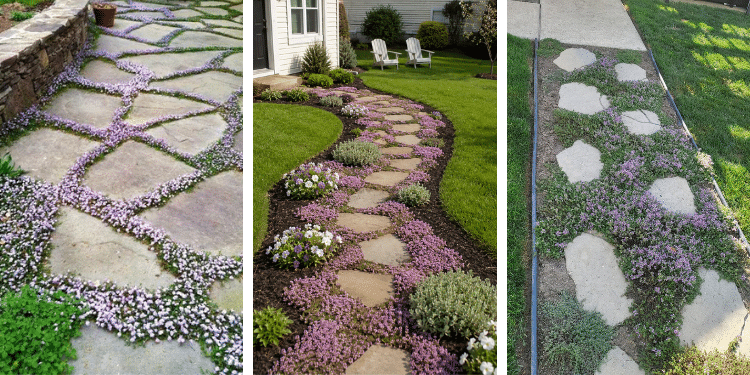
Few garden features are as classic and inviting as a flagstone, slate, or paver stepping stone path. It guides the eye through the landscape, breaks up expanses of turfgrass, and connects different outdoor living zones.
Yet, anyone who has installed one of these walkways knows the persistent challenge that follows: managing the empty gaps between the stones.
Left bare, these spaces quickly fill with opportunistic weeds like crabgrass and dandelions. If filled with gravel or bark mulch, the material inevitably spills onto the lawn or gets kicked away by foot traffic, requiring constant sweeping and tidying.
Fortunately, landscape designers and natural-living enthusiasts have a beautiful, hard-working solution: creeping thyme (Thymus serpyllum).
Planting this low-growing, aromatic groundcover between your stepping stones transforms a high-maintenance walkway into an eco-friendly cushion of color and scent.
From surviving heavy foot traffic to acting as a natural weed barrier, creeping thyme is the ultimate addition to your garden pathways.
1. The Prostrate Groundcover: Form and Mechanical Function
To understand why creeping thyme is so highly recommended for stone walkways, it helps to examine its growth habit.
Unlike culinary thyme (Thymus vulgaris), which grows as a small, upright woody shrub, creeping thyme varieties are completely prostrate. They hug the earth closely, rarely exceeding a height of 1 to 2 inches.
As the plant grows, it sends out horizontal stems called stolons that root down wherever they touch the soil. This creates a dense, interlocking carpet.
When tucked tightly between flagstones, it forms a flexible, living seal. This botanical “grout” locks the stones firmly in place, preventing them from shifting or rocking when stepped on, while still allowing heavy rainwater to filter naturally into the soil below.
2. 6 Major Benefits of Creeping Thyme Pathways
Integrating this hardy herb into your garden paths solves multiple landscape design dilemmas at once, reducing your weekend chores while elevating your garden’s charm.
1. High Foot-Traffic Resilience (The “Walk-On-Me” Herb)
Most delicate groundcovers, like baby’s tears or Irish moss, bruise easily and turn brown if repeatedly stepped on.
Creeping thyme, however, is structurally engineered to withstand foot traffic. Its tiny, leathery leaves and fibrous, flexible stems bounce back effortlessly from the weight of footsteps, dog paws, and children playing.
In fact, a moderate amount of walking keeps the plant compact, dense, and healthy.
2. A Sensory Explosion: Aromatherapy Underfoot
The most magical aspect of a creeping thyme path occurs when someone walks down it. The leaves contain high concentrations of essential oils, particularly thymol, which gives the herb its characteristic clean, medicinal, and slightly sweet scent.
When your shoes brush against or step directly on the plant, these microscopic oil glands rupture.
Walking down the path releases a fresh wave of herbal aroma that fills the air around your ankles, turning a simple stroll through the yard into a therapeutic sensory experience.
3. Natural, Living Weed Suppression
Weeds thrive on bare soil and direct sunlight. When you leave the gaps between your stepping stones open or loosely filled with bark mulch, you are providing the perfect environment for airborne weed seeds to land, germinate, and take over.
Creeping thyme grows into a tight, woven mat that completely blankets the soil. This dense canopy blocks out daylight and starves weed seeds of the energy they need to sprout, effectively ending the tedious chore of hand-weeding your walkway.
4. Exceptional Drought and Heat Tolerance
Stepping stones – especially dark slate or flagstone – act like thermal sponges. During hot summer days, they absorb solar radiation and radiate intense heat directly down into the surrounding soil gaps.
This heat quickly scorches the roots of traditional lawn grasses or delicate mosses.
Creeping thyme is a native of the rocky, sun-baked hillsides of the Mediterranean. It thrives in hot conditions, using its deep, tough root network to draw minimal moisture from underneath the stones long after shallow-rooted plants have withered.
5. A Paradise for Native Pollinators
During its peak blooming period in early-to-mid summer, a creeping thyme path undergoes a dramatic transformation.
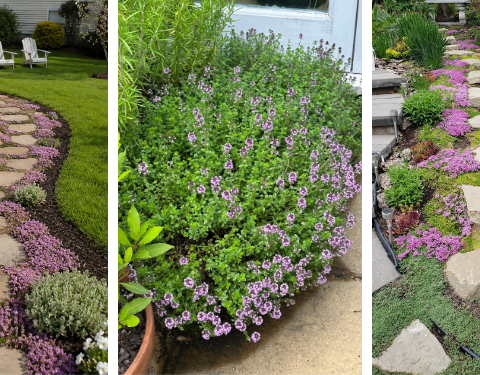
The green carpet disappears beneath a sea of tiny, nectar-rich flowers in shades of lavender, deep pink, or stark white, depending on the variety chosen.
These blossoms are packed with accessible sugars that attract native bees, honeybees, and beneficial hoverflies, boosting the overall biodiversity and health of your entire garden ecosystem.
6. Zero Mowing and Minimal Edging
Traditional grass paths require constant weekly mowing and tedious string-trimming along the irregular edges of flagstones to look neat.
Creeping thyme never needs mowing. It tops out at a uniform, ultra-low height, keeping your path looking pristine and manicured completely on its own.
Path Fillers Comparison
If you are deciding how to fill the joints of your garden path, here is how creeping thyme stacks up against other popular landscaping options:
3. How to Install a Creeping Thyme Path
Setting up a creeping thyme pathway is a straightforward afternoon project that pays massive visual and practical dividends for years to come. Follow this simple process:
4. Top Creeping Thyme Varieties to Choose From
Depending on the specific aesthetic you want to achieve, there are several outstanding creeping thyme varieties available:
-
Red Creeping Thyme (Thymus praecox ‘Coccineus’): Renowned for its spectacular, deep magenta-red flowers in summer and its flat, dark green foliage that turns a beautiful bronze color in the winter.
-
Elfin Thyme (Thymus serpyllum ‘Elfin’): The absolute lowest-growing variety available. It forms an ultra-tight, gray-green mat that looks like miniature moss and rarely grows more than 1/2-inch tall. It is ideal for narrow stone joints.
-
Woolly Thyme (Thymus pseudolanuginosus): Features tiny, silver-gray leaves covered in soft, velvety hairs. It creates an incredibly soft, felt-like cushion between stones, though it produces fewer flowers than other varieties.
Establishment Pro-Tip: For the first 4 to 6 weeks after planting, water your thyme path two to three times a week if it doesn’t rain. Once the root systems anchor deeply underneath the stepping stones, they become highly drought-tolerant, requiring water only during extreme, multi-week heatwaves.
Tucking creeping thyme into the spaces between your stepping stones is a simple, ecological design choice that solves multiple property maintenance issues at once.